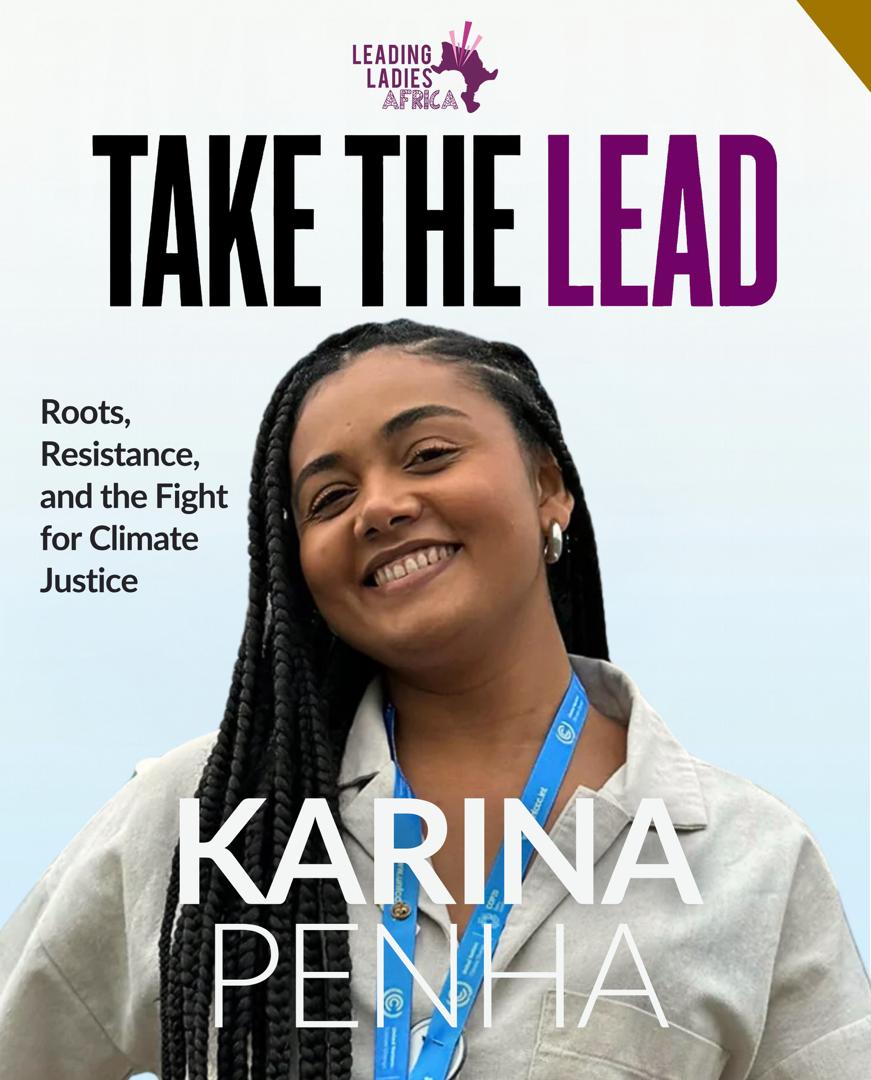
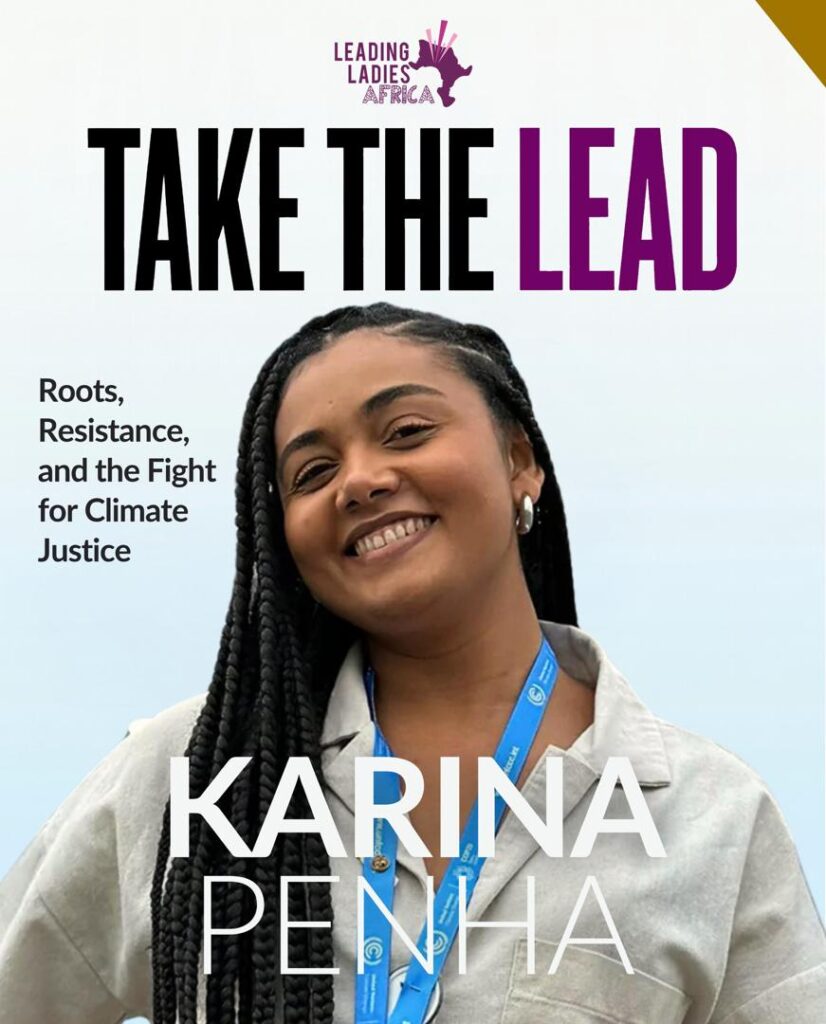
There are people who talk about change, and there are people who build it from the ground up — with their hands, their voices, and the full weight of where they come from.
Karina Penha is the latter.
Born in the Baixada Maranhense and raised in the periphery of Ribamar, Karina grew up surrounded by rivers, lakes, and forests and a deep, unshakeable sense that something was wrong with the world around her. She did not have a word for it yet, but she had a feeling. That feeling became a decade of some of the most important climate justice work happening in Brazil today.
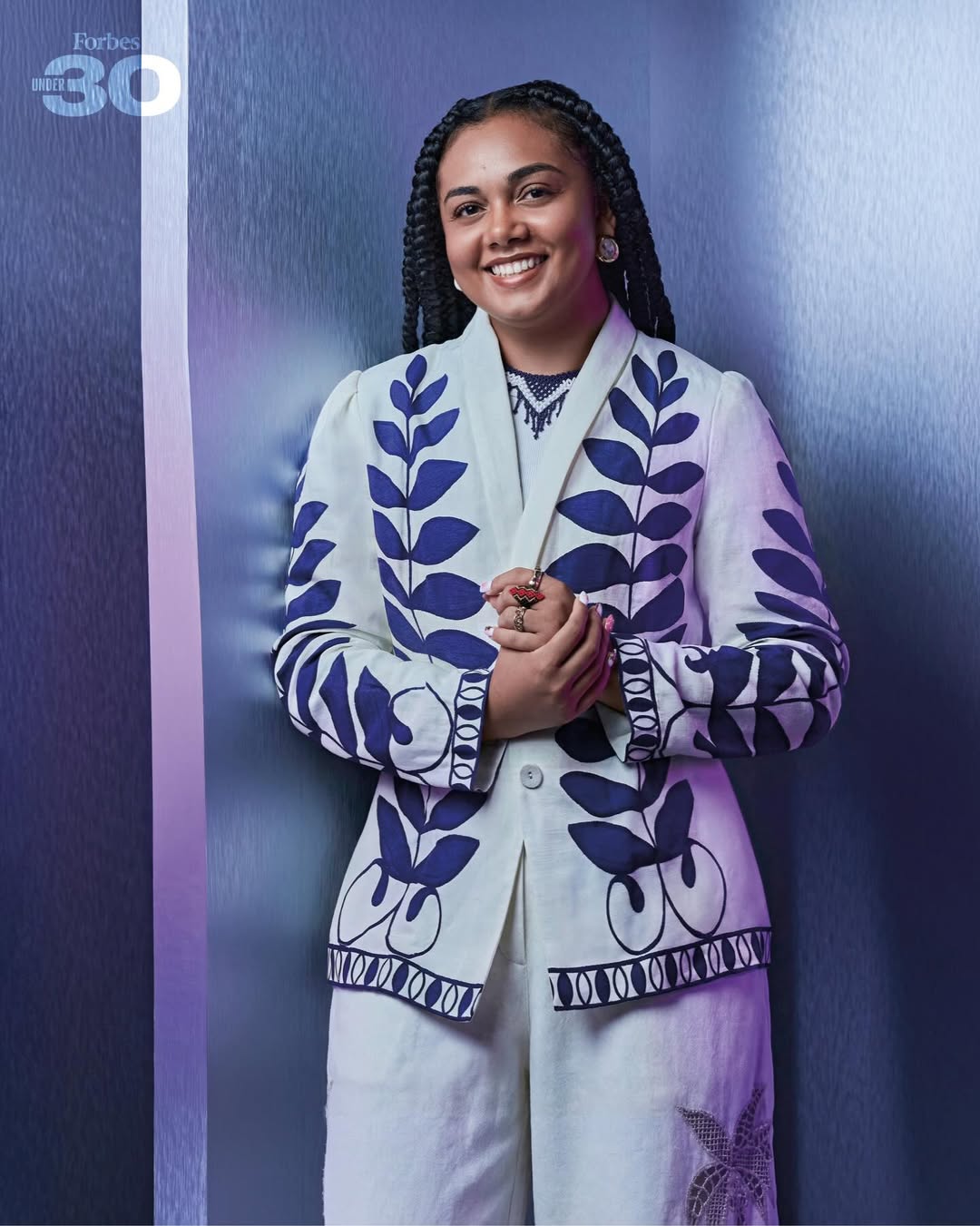
A biologist by training and an activist by conviction, Karina is the co-Executive Director of Amazônia de Pé, a member of the National Coordination of the Brazilian Climate Change Forum, and a board member of PerifaConnection. She was the first young person from Maranhão to attend a UN Climate Conference, has led multiple youth delegations to COPs around the world, and is now featured in Brazilian school textbooks as a reference for young environmental leadership.
Beyond the titles and the milestones, Karina Penha is a young Black woman from the periphery who decided her voice mattered and spent the last ten years proving it does.
In this conversation, she takes us through the childhood that shaped her politics, what it truly feels like to be in the room but locked out of the decisions, and what she wants every girl growing up in the periphery to know about the power of their own voice.
Karina, you grew up in the periphery of Maranhão and ended up reshaping national environmental policy. Who is the girl that started this journey and what did she see around her that made her decide to fight?
For me, growing up in a peripheral context in the Amazon was very important because it allowed me to understand that there are many different Amazons beyond the forest itself. I was born in the Baixada Maranhense, a place deeply connected to nature, surrounded by rivers, lakes, and forests.
But it was in the periphery of Ribamar that I truly recognized myself as a political agent. That was where I first understood environmental racism and later began working on these issues. Since I was a child, I used to say that I wanted to become an environmentalist because something inside me was already pushing me to think about and fight for environmental causes.
So becoming an environmentalist today is, in many ways, the realization of a dream my younger self had. But it is also an answer to all the questions and inquietudes I carried throughout my childhood, adolescence, and life.
You believe politics must be made with and for the people. Growing up where you did, what did the absence of that look like?
Yes, I truly believe that politics must be made with and for the people, and that was one of the main reasons why I started questioning political processes from a very young age. I used to feel very uncomfortable watching people on television speaking on behalf of communities like mine without ever having lived our reality or experienced our territories.
That discomfort motivated me to seek spaces for collective mobilization, especially youth groups, which have historically played a very important role in Brazil’s political history. That is exactly what I believe in: governments and systems of governance that involve people directly and are built from the experiences, knowledge, and leadership of local communities.
You have attended global climate conferences since 2016. What does it mean to bring a voice from Maranhão into those rooms?
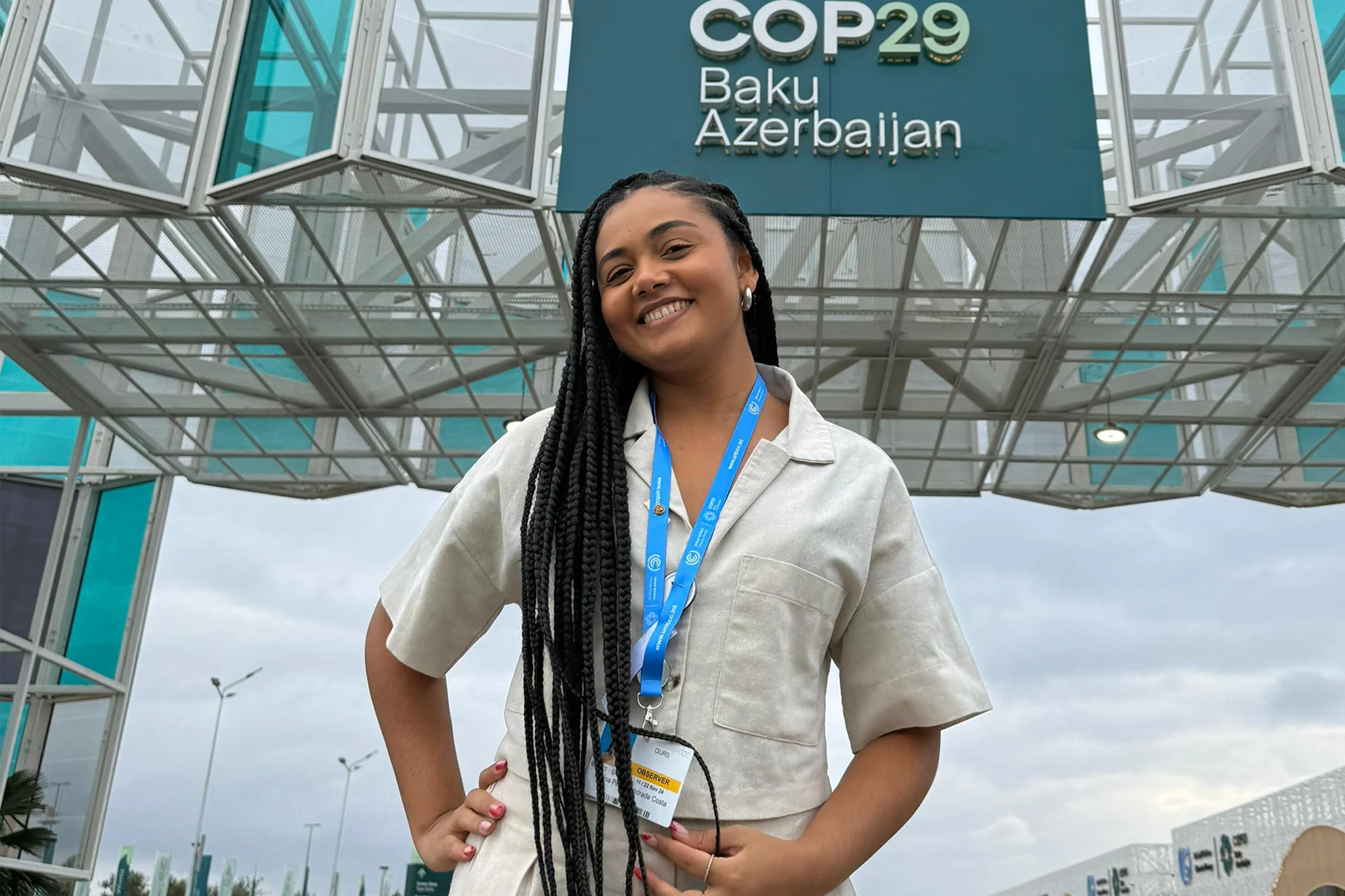
In 2016, I traveled to Morocco to participate in the United Nations Climate Conference for the first time. It was also the first time I had ever traveled outside Brazil. That experience was incredibly important for me in understanding the global climate context.
I was the first young person from Maranhão to participate in the conference as part of the climate youth movement. It was also very meaningful because I was one of the first young Black women to occupy and recognize herself in that space. At first, it felt strange to understand how young people from the Global South approached the idea of climate justice, but it also expanded my perspective tremendously.
That experience made me realize that we needed to build another understanding of climate justice for Brazil, because what we saw at the conferences did not fully reflect our realities, needs, and challenges back home. So that first experience was fundamental for me to work alongside the movement in building a response and a vision for climate justice rooted in our own context.
You have spoken about being present at negotiations but locked out of where decisions are actually made. How do you keep pushing?
Over the last ten years of following the COP conferences, I have seen many things change, especially regarding the strength of civil society. I believe there is enormous power in collective mobilization around climate policies.
We know that COP is also a space marked by many divisions. Sometimes we do not have access to the negotiation rooms, and we are not the ones making the final decisions. But popular mobilization is powerful because it can influence the decisions that are ultimately made.
Since the beginning, through the youth movement, I have worked a lot on campaigns focused on amplifying voices and engaging with decision-makers so they could hear directly from the people most affected by the climate crisis. And it is because of the collective strength and the results we have witnessed over these last ten years that we continue pushing forward.
You use social media to make complex political issues accessible to young people. How do you communicate urgency without losing people’s attention?
Since I started working on this issue, especially after returning from COP, I realized how important it was to communicate to Brazilian youth everything that was happening around the world, things that often did not reach us through traditional forms of communication.
That’s why I started using my social media platforms to talk about climate justice in everyday life, because for me the most important thing is showing how these issues affect our daily routines and realities. It has been a very meaningful process to build this conversation collectively with other people.
I believe social media has enormous power, but also enormous responsibility. It is very important to think carefully about how we communicate. The climate crisis is not the fault of those who are most affected by it, yet many forms of communication still create that impression. So my goal is always to communicate in a way that helps people understand their role and responsibility, while also making clear who should truly be held accountable.
Brazil’s government is mostly older white men, yet the population is majority Black, female, and young. What does that gap actually cost a country?
Unfortunately, in Brazil, governments have historically reflected the same profile of power. We have had only one woman elected president, and we have never had a Black president. That says a lot about how society still sees who can be a leader and who is considered worthy of being heard.
Right now, I am supporting a national campaign calling for the appointment of the first Black woman to Brazil’s Supreme Court. It has become a movement that is mobilizing many people across the country.
We know we are still far from having, for example, a president who is a Black woman from the periphery or a young person. And while that reality does not change, we remain disconnected from the real needs of the majority of the population.
But even before achieving that level of representation, it is essential to demand spaces for listening and participation within governments and institutions, including ministries. That is what we have been supporting and demanding from the Brazilian government.
As a young Black woman from the periphery, you navigate spaces not designed for you. What has that taught you about power?
Having access to these spaces was very important for me, but it also meant facing many forms of violence and exclusion. These were always spaces that felt very distant from my reality.
When I first became involved in the Brazilian environmental movement, I was often the only Black person there, the only person from the Northeast, the only Amazonian woman in the room. That had a profound impact on both me and my journey. But it also pushed me to create and strengthen spaces where people like us could belong.
Wherever I am, I try to ensure that these spaces are built, led, and shaped by the people who have historically been excluded from them. And I believe we have seen important progress and change over the last few years.
What needs to change for women from marginalised communities to not just participate in environmental movements but lead them?
I believe that what needs to change, above all, is the structure we live in, a structure that often discriminates against Amazonian women, even though they are some of the most important environmental leaders in the country.
A clear example is Brazil’s Environment Minister, Marina Silva, who has run for president several times and has constantly faced prejudice because of who she is and where she comes from.
As long as we continue believing that only white men from Brazil’s Southeast region are capable of leading, we will remain far from achieving the kind of solutions we truly need, solutions that are concrete and rooted in the realities of the territories themselves.
But I genuinely believe this change is already beginning. Many women are occupying leadership positions, building these spaces, and opening doors for the generations of women who will come after us.
What do you want your story to say to the next young woman growing up in the periphery, wondering if her voice could ever matter?
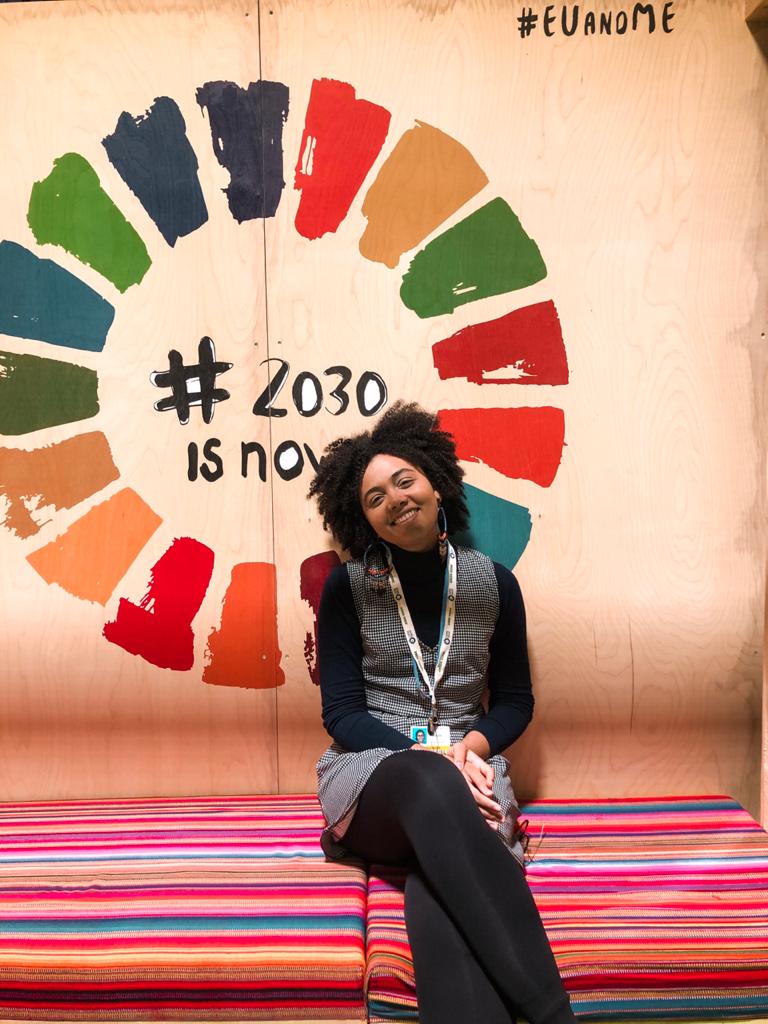
I would really like my story to become a source of inspiration. When I was a child, I did not have many examples of women like me to look up to. I did not see myself represented in those spaces, although having a few inspirations throughout my journey was incredibly important for me.
So what I hope my story can show young Black girls and girls from the periphery is that it is absolutely possible to build meaningful and impactful paths. Most importantly, I want them to know that they are allowed to dream and to become whoever they want to be.
When I was younger, I did not see myself in environmental debates, not on television, not in textbooks, not in the public imagination. One of my greatest joys today is knowing that I am now featured in some Brazilian school textbooks as a reference for young environmental leadership. That means many girls in public schools will be able to see themselves reflected in me.
That is exactly what I wish I had seen when I was their age, and I am happy that now they have that opportunity.
I also believe it is important to remember that opportunities matter deeply in shaping our journeys, but so does confidence in who we are and where we come from. Our voices matter, our ideas are powerful, and our actions are meaningful wherever we are. That is something we should never forget and always continue believing in.