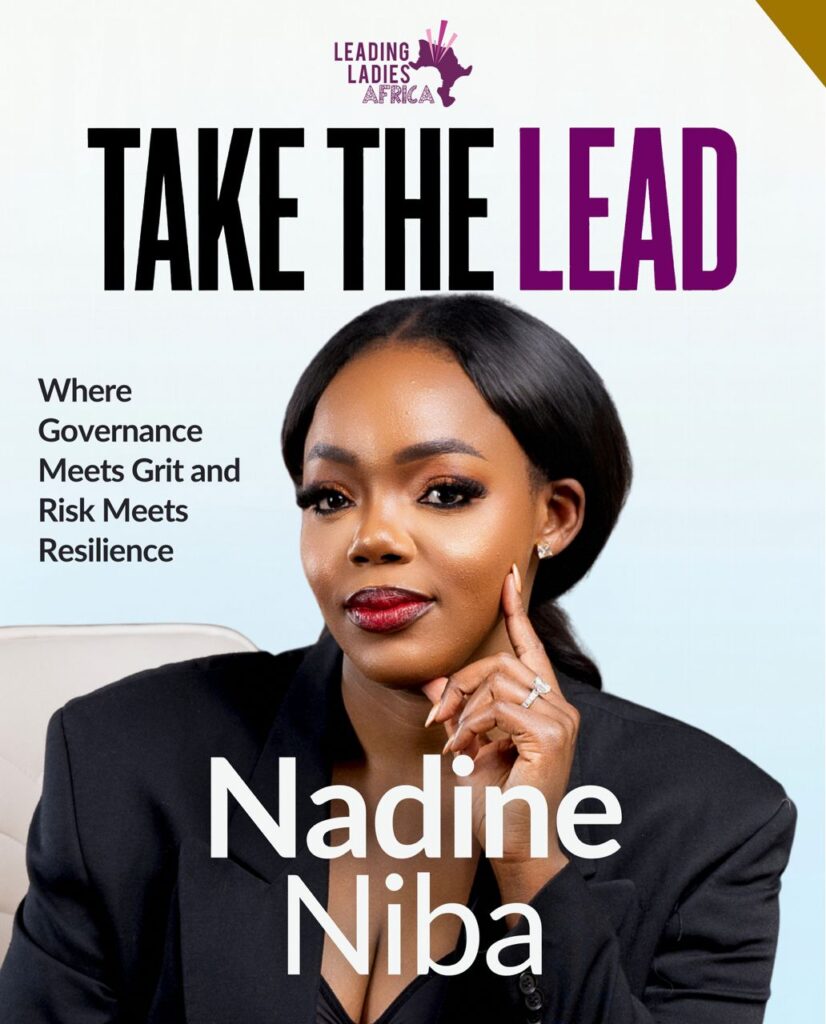
There is a moment in Nadine Niba’s story that stays with you long after you have read it.
She was exhausted. She had carried her vision for so long without seeing it take shape. She told her parents she was coming home and then, almost without warning, everything changed.
That moment did not break her. It became the turning point that built her.
Nadine Niba is the Alberta Market Leader for Risk Advisory at BDO Canada, one of the top five accounting firms in the world. A CPA and Risk Advisory executive with deep expertise across governance, risk, and compliance, she has built her career intentionally across some of the most prestigious professional services firms in the world; EY, PwC, KPMG, and now BDO Canada, sitting in boardrooms, advising executive teams and audit committees, and helping organizations move forward with clarity in the face of uncertainty.
She is also a published author. Her book, Quarterback: An Immigrant’s Guide to Corporate North America, became an Amazon Canada bestseller within 24 hours of launch, because it said out loud what thousands of immigrant professionals had been feeling in silence.
Born in Cameroon, Nadine arrived in Canada with a dream and very little else. She worked survival jobs. She questioned her path. She endured the slow, hard, uncertain early years that nobody photographs or celebrates. And through all of it, she held onto one conviction: her current environment would not define her future outcome.
That conviction took her from survival to strategy and from strategy to the boardroom.
In this conversation, Nadine opens up about what it truly took to build authority in spaces that were not designed for her, what the corporate world still refuses to say out loud about immigrant professionals, and what she wants every woman sitting in her lowest moment to know about the quiet work that happens in the dark.

Nadine, for anyone just discovering you today — who are you and what does your work stand for?
I am Nadine Niba, a CPA, business leader, and Risk Advisory executive specializing in governance, risk, and compliance.
I am the Alberta Market Leader for Risk Advisory at BDO Canada, where I work closely with executives, boards, and audit committees to strengthen internal controls, enhance governance frameworks, and navigate complex business and technology risks. My work sits at the intersection of business strategy and risk execution, ensuring that organizations are not only compliant, but resilient, scalable, and positioned for long term performance.
Over the course of my career, I have built deep expertise across both business risk and technology risk, advising on areas such as internal audit, IT controls, enterprise risk management, and large scale transformation initiatives. This dual perspective allows me to connect how decisions made at the executive level translate into operational, technological, and financial outcomes.
But beyond the technical work, what I bring into every room is clarity.
In high stakes environments, leaders are often dealing with uncertainty, competing priorities, and complex systems. My role is to help them see clearly, understand their risk landscape, and make informed decisions with confidence.
That is the foundation of my work. And it is also what led to the development of the Quarterback framework, which extends this same discipline of reading the field, anticipating risk, and making strategic decisions into how professionals lead their careers and operate within organizations.
You moved from Cameroon to Canada with a dream and very little else. What kept you going in those early days when everything felt impossible?
What kept me going was not certainty. It was conviction.
When I moved from Cameroon, I entered a reality that was very different from what I had imagined. I worked survival jobs. I questioned my path. There were moments when everything felt slower, harder, and more uncertain than I expected.
But I had something that anchored me. I had a vision.
At some point, I made a decision. I would not allow my current environment to define my future outcome. I would learn the system. I would adapt. And I would position myself intentionally.
That shift, from reacting to designing, changed everything.
Because when you have clarity, you can endure uncertainty without losing direction.
You have built your career across EY, PwC, KPMG, and now BDO, intentionally rotating between business risk and technology risk. What was the thinking behind that strategy, and what did it give you that most people in your field don’t have?
I approached my career the way a strategist approaches a game.
I was not chasing titles. I was building perspective.
Working across EY, PwC, KPMG, and now BDO Canada allowed me to see how different organizations think, operate, and manage risk.
But the most intentional decision I made was to move between business risk and technology risk.
Because the future of leadership sits at that intersection.
Organizations do not break down in isolated functions. They break down where strategy, operations, and technology collide. I wanted to understand that intersection deeply.
That is what allows me today to sit in a room and not just respond to problems, but anticipate them and provide logical solutions.

You are the Alberta Market Leader for Risk Advisory for one of the top five accounting firms in the world. How do you describe what enterprise risk management actually means, in a way that makes people understand why it matters?
Enterprise risk management, at its core, is about helping organizations make better decisions with a clear understanding of what could go wrong and what needs to go right.
Every organization is taking risks every day, whether it is entering a new market, implementing new technology, or scaling operations. What enterprise risk management does is bring structure and visibility to those risks. It helps leaders identify where the key exposures are, assess their potential impact, and put the right controls and mitigation strategies in place.
But more importantly, it connects risk to strategy.
It ensures that the decisions being made at the executive level are supported by a clear view of operational, financial, and technology risks, so the organization can move forward with confidence rather than uncertainty.
When done well, enterprise risk management is not about slowing the business down. It is about keeping the business on course.
It protects value, strengthens governance, and allows organizations to grow in a way that is controlled, sustainable, and resilient.

You sit in boardrooms advising executive teams and audit committees. As a woman and an immigrant in those spaces, what has it taken to command that level of trust and authority?
It has taken intentionality.
I understood early that I could not rely on proximity, familiarity, or assumptions of competence. I had to build trust deliberately.
That meant mastering my craft, yes. But it also meant mastering communication, presence, and preparation.
Every time I entered a room, I asked myself a simple question: what value will I add here?
Over time, people begin to associate you with clarity. With insight. With results.
And that is when something shifts. You are no longer trying to prove yourself. You are trusted to shape outcomes.
What needs to change in the finance and professional services industry for more African women to rise to the levels you have reached?
The first truth is that access is not the same as advancement.
We have made progress in opening doors. But opening a door without creating a pathway does not lead to leadership.
The second truth is more uncomfortable.
There are many African women with exceptional capability who have not been equipped with the tools to navigate these systems strategically. Not because they are lacking, but because those tools are rarely taught.
We need both systemic change and strategic empowerment.
Because talent alone is not what drives progression. Visibility, sponsorship, and positioning do.
You have spent years mentoring immigrants navigating the corporate world. What is the most common thing holding them back that nobody is talking about openly?
It is the belief that Execution will automatically be recognized.
Many immigrants come from environments where hard work is the primary currency. So they focus on execution. They deliver. They exceed expectations.
But corporate environments operate differently.
Delivery matters. Visibility matters. Communication matters. Alignment matters. – You need all 4.
I have seen incredibly talented individuals remain in the same position for years, not because they are not capable, but because they are not positioned.
That is a difficult truth. But it is also an empowering one. Because once you understand the system, you can navigate it.
Your book Quarterback: An Immigrant’s Guide to Corporate North America became an Amazon Canada bestseller within 24 hours of launching. What was the moment you knew this story had to be written?
The inspiration came from my own journey and the patterns I observed among many immigrant professionals.
I saw talented individuals struggling not because they lacked capability, but because they lacked clarity on how to navigate corporate environments.
The message of the book is simple. You are not just playing the game, you are the quarterback of your career. You must read the field, make decisions, adapt, and take ownership of your path.
It is about moving from uncertainty to clarity, and from participation to leadership.
You once told your parents you were coming home and that same week everything changed. What do you want the woman reading your book, sitting in her own lowest moment, to take away from your story?
I would want her to sit with this truth, quietly but deeply:
There are moments in life that feel like endings. Moments when the weight of disappointment, uncertainty, and fatigue presses so heavily that going back feels safer than pushing forward.
I had one of those moments.
I remember making the decision. I remember the exhaustion behind it. It was not a lack of vision. It was the cost of carrying that vision for so long without seeing it take shape.
And then, almost without warning, everything shifted. Not because the world suddenly became easier, but because the very moment I thought I had reached my limit… became the moment that stretched me into something stronger.
So to the woman reading this, especially the one sitting in her lowest moment, I would say this:
Do not confuse a season of pressure with a life of defeat.
You are not behind. You are not forgotten. You are not disqualified.
You are being prepared.
There is a quiet work that happens in the dark. A refining. A strengthening. A clarity that only comes when everything else has been stripped away. And while it may not feel like progress, it is often the most important kind.
But here is the part we do not always say out loud:
You must stay.
Stay long enough to see what this moment is trying to produce in you. Stay disciplined when it would be easier to disengage. Stay grounded in your vision, even when the evidence around you suggests otherwise.
Because when the shift comes, and it often comes suddenly, it will not ask if you are ready.
It will meet you exactly where you are.
And I want you standing, not retreating.
So hold your ground.
What feels like your lowest moment may not be the end of your story.
It may be the turning point that changes everything

When all is said and done, what do you want the name Nadine Niba to stand for?
LEGACY & IMPACT.