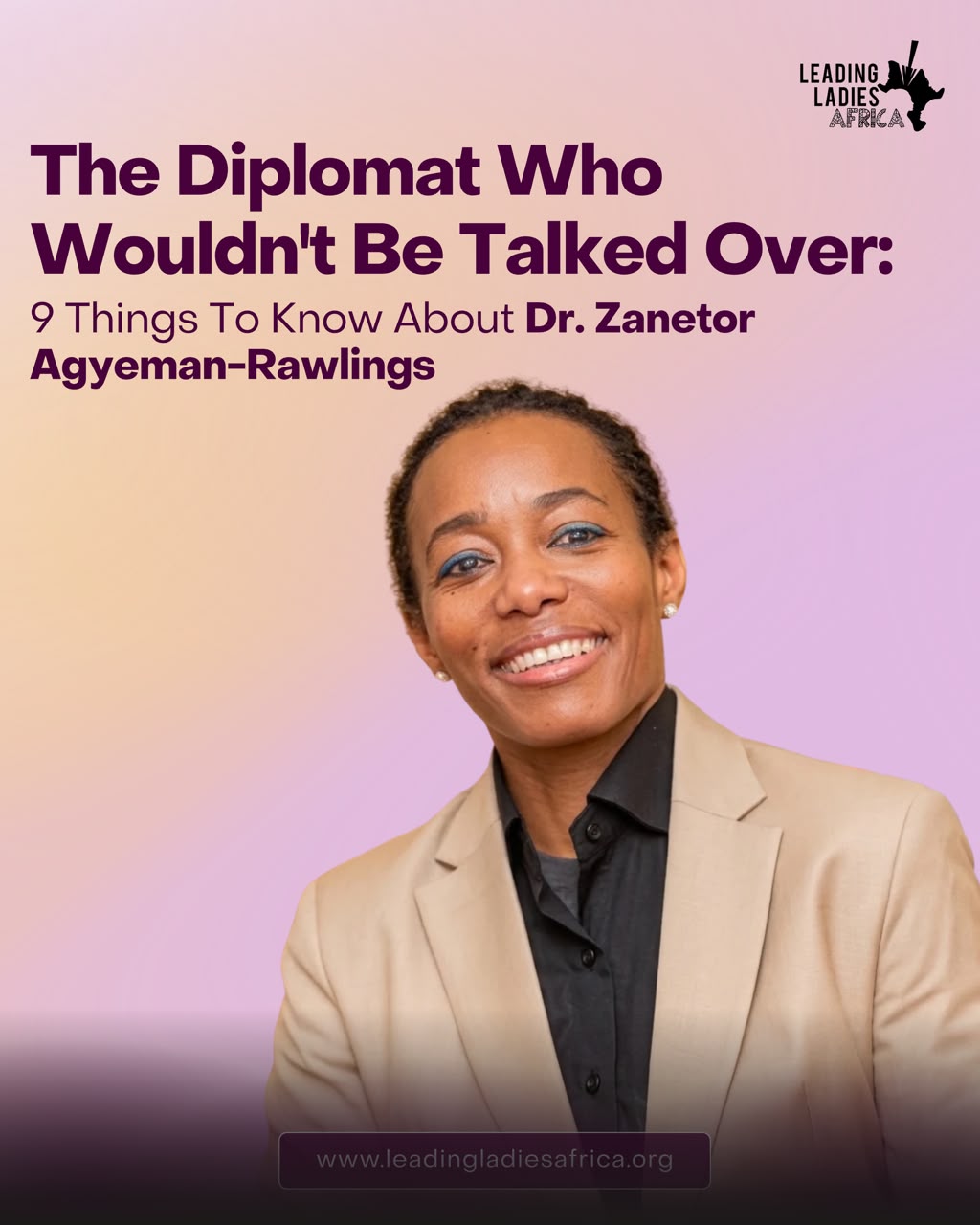
Dr. Zanetor Agyeman-Rawlings is a medical doctor, politician, activist, campaigner, and humanitarian, and that is only the short version. Born in Accra on 1 June 1978 and rooted in Dzelukope in the Volta Region, she is the eldest daughter of the late President Jerry Rawlings, who led Ghana’s Fourth Republic from 1993 to 2001, and former First Lady Nana Konadu Agyeman-Rawlings. She grew up with a famous surname and chose to earn her own.
Her path runs through medicine, peace and security, and public service. She trained as a doctor at the Royal College of Surgeons in Ireland and practised in both Ireland and Ghana. She went on to add certificates in defence management, conflict and crisis management, counter-terrorism, election observation, and Women, Peace and Security from institutions including the Ghana Armed Forces Command and Staff College, the Kofi Annan International Peacekeeping Training Centre, and the London School of Economics. Along the way, she championed women’s and children’s rights and sanitation, and led relief efforts for disaster victims.
In 2016, she won the Klottey Korle seat for the National Democratic Congress, and she has held it through the 7th, 8th, and 9th Parliaments. In 2026, she was elected Second Vice-President of the Pan-African Parliament Bureau and appointed Dr. Zanetor Agyeman-Rawlings. Weeks later, at the closing plenary of COP31, she was cut off while speaking for 54 countries, and she took the floor back. Here are 9 things to know about the woman behind that moment.
1. The Rawlings Name Opened Doors. She Did The Work Behind Them.
As a child, she spent most of her time with her mother, Nana Konadu Agyeman-Rawlings, while her father led the country. She attended North Ridge Lyceum and Achimota School before graduating from Wesley Girls High School in Cape Coast in 1996.
Growing up the daughter of a head of state could have meant a ready-made path. Instead, her public life began with her own work, in medicine, activism, and humanitarian relief, long before she stood for office.
2. She Was A Doctor Before She Was A Politician
She studied medicine at the Royal College of Surgeons in Ireland and worked as a medical doctor in general practice in both Ireland and Ghana before entering public service. The training shaped how she moves through the world.
At COP31, video showed her kneeling beside a woman who had collapsed during a meeting, giving CPR and first aid alongside two other people until emergency personnel arrived. Some instincts never switch off.
3. Her Other Training Is In Peace And Security
Beyond medicine, she holds certificates in defence management and in conflict and crisis management from the Ghana Armed Forces Command and Staff College. She also has a master’s-level certificate in Conflict, Peace and Security from the Kofi Annan International Peacekeeping Training Centre, and a Women, Peace and Security certificate from the London School of Economics.
It is not the usual résumé for a minister of environment, but it helps explain how she handles a tense negotiating room.
4. Her First Causes Were Women, Children, And Sanitation
Long before she joined cabinet, she took part in foundations and initiatives championing women’s and children’s rights and improving sanitation in Ghana. In 2014, she was a special guest at the exceptional Meeting of African Women at the Crans-Montana Forum in Dakhla, a gathering aimed at promoting a more humane and impartial world.
The causes came before the career, and they are still visible in the way she talks about who bears the cost of climate failure.
5. When Disaster Hit Accra, She Showed Up
After the June 2015 fire and flood disaster that claimed about 150 lives, she led a team that donated relief items to victims and served as an ambassador for TV3’s disaster support fund. She also built a bridge for the Osu Anorhor community, which has helped reduce flooding and made travel easier.
That kind of practical, on-the-ground relief work is what first got people asking her to run for office.
6. She Said She Had No Plans To Run. Then She Won.
When she filed her nomination papers in September 2015 to contest the Klottey Korle parliamentary primaries, she maintained she had no prior political ambitions. Her decision, she said, came from popular calls for her involvement, borne out of her clean-up campaign and environmental activism.
She won the primaries that November and the seat in the 2016 general election, and she was re-elected in 2020 and 2024. In Parliament, she has served on the Gender and Children Committee and the Environment, Science and Technology Committee.
7. Now She Runs The Ministry Of The Future
President John Dramani Mahama nominated her as Minister for Environment, Science and Technology on 7 August 2026. Parliament approved her on 27 August, and she was sworn in on 29 August at Jubilee House. Her ministry covers environmental governance and protection, science and technology policy, and the coordination of research.
At her swearing-in, the President charged her to put science, technology, and innovation at the heart of national development, and to make sure development creates jobs without compromising the environment future generations depend on.
8. Her Voice Now Carries Across The Continent
In April 2026, she was elected Second Vice-President of the Pan-African Parliament Bureau, representing West Africa. At COP31, she told African ministers to reject new climate obligations that come without financial and technical support and to speak with one voice. She called for tripling adaptation finance by 2035 and for every African to have access to early warning systems.
In a meeting between the UN Secretary-General and African heads of state, she warned that climate policy ignoring Africa’s circumstances risks becoming “a new form of colonialism.” Ghana chairs the African Group of Negotiators this year and is expected to take the African Union chairmanship in 2027.
9. And When She Was Talked Over, She Did Not Sit Down
On 22 November 2026, at the closing plenary of COP31, Dr. Agyeman-Rawlings was about a minute into the African Group of Negotiators’ statement when the summit president, Murat Kurum, interrupted her. She told him, “I was rudely cut off during my delivery by your good self,” and noted that another delegation had been allowed to finish without interruption. She said it did not respect multilateralism, reminded him the chair is “first among equals,” and said she had changed her flights twice and extended her stay to be there.
The chair of the African Group, Antwi-Boasiako Amoah, also objected, and delegates applauded in solidarity. Kurum apologised publicly and to her personally, she accepted, and she returned to the floor to deliver Africa’s position, including her disappointment at the limited progress on adaptation finance and the postponement of the just transition mechanism.