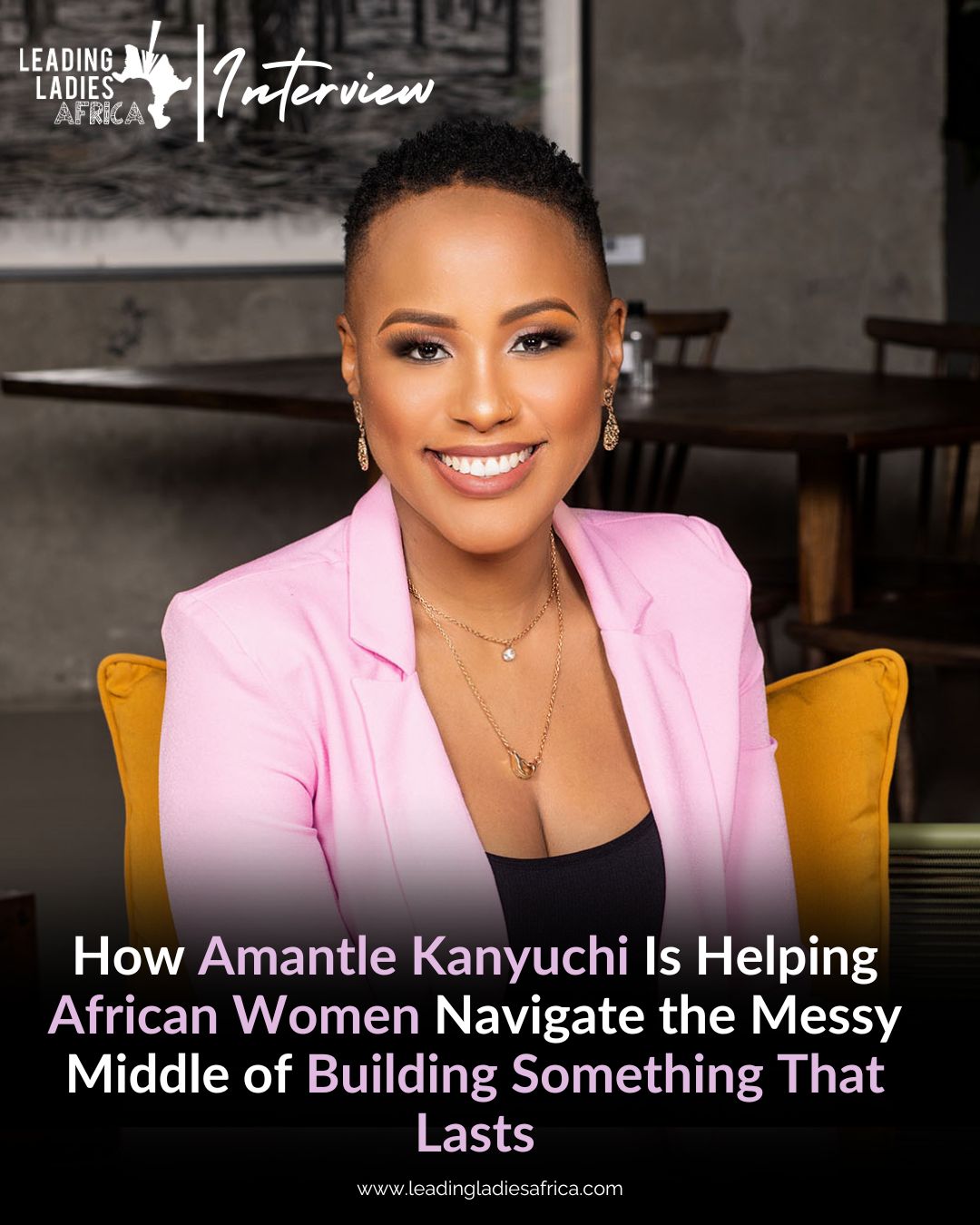
Most conversations about women in business focus on access to opportunity. Amantle Kanyuchi wants to talk about what happens after the door opens, because in her 15 years of working with women entrepreneurs across Africa, she has seen it repeatedly, the woman who gets the opportunity but does not have the confidence to fully step into it. The woman who has the idea but lacks the relationships to take it further. The woman who is somewhere in the middle of building something meaningful and has no map for the terrain she is navigating.
That middle, the messy, unglamorous, often invisible space between starting and arriving, is exactly where Amantle does her most important work.
Amantle Kanyuchi is a marketing strategist, entrepreneur, business coach, and the founder of She Empowers Afrika, a platform dedicated to mentorship, leadership development, and helping women build sustainable businesses and careers. Through her coaching work with the Future Females Business School, the Women Empowerment Network of South Africa, and independently, she has supported more than 200 women entrepreneurs across the continent. She holds a Master of Philosophy in Inclusive Innovation from UCT’s Graduate School of Business, graduating cum laude, with research that examined mentorship, intergenerational expectations, and how women access opportunity. She is also Head of Strategic Partnerships at Afrittude Communications and a sought-after speaker on women’s leadership, entrepreneurship, and navigating the realities of building in Africa, but what makes Amantle’s work distinctive is not the breadth of what she does. It is the conviction behind it, that opportunity alone is not enough. That without the confidence to act on it, the relationships to unlock it, and the knowledge to sustain it, access to opportunity can feel like standing in front of a door with no key.
She builds the keys.
In this conversation, Amantle opens up about what 15 years of working with women has taught her about what they actually need, what the research behind her MPhil revealed about mentorship and how it changes women’s trajectories, and what she wants every woman who is stuck in the messy middle of her journey to understand about where she actually is.
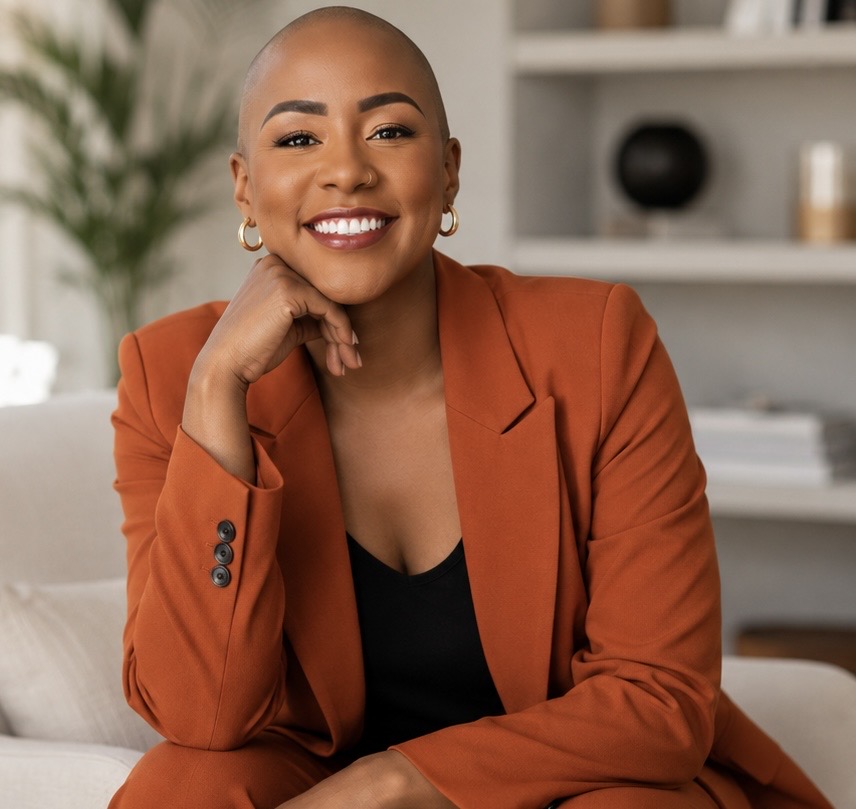
You have coached and mentored more than 200 women entrepreneurs across Africa, through Future Females Business School, the Women Empowerment Network of South Africa and your own work. Tell us about the work you do with women and what you have seen it make possible.
The work I do with women was really seeded in how I grew up. In my family, there was always a woman in our community that we were helping in some way, whether it was helping her find her first job, improve her CV, get her first ID or simply helping with taxi fare to get to work. We were empowering women long before I knew there was a formal language for it. Over time, I came to understand that what we were practising was social impact, mentorship and economic empowerment; helping women change how they see themselves, their capabilities and their contribution to their families and the economy.
That naturally evolved into business coaching in 2019 going into 2020, when I became involved with Future Females and later joined its Business School as a coach. Since then, I have seen firsthand what happens when you hold up a mirror for women and create the right environment for them to see their own potential. I have watched confidence grow, businesses become more structured and profitable, and women build communities around one another. For me, this work is very personal. I do it because I am a woman who believes in the power of women and because I have seen from an early age that when you invest in one woman, the impact rarely stops with her, it flows into her family, her business and her community.
So many talented African women are not short on ambition; they are short on access, to networks, information, mentors and rooms where decisions are being made. Where do you see this gap hurting women the most, and what needs to change?
I think women have to be intentional about seeking mentors, building networks and finding rooms where doors can open for them. But there also has to be a balance. Sponsorship comes from trust and trust is built through patience, time and genuinely nurturing relationships. People are more likely to put their name behind you or open a door when they know and trust your character.
Recently, an influential businesswoman and social entrepreneur who has been a mentor to me, without ever having the formal title, gave me feedback that stayed with me. I had sent her a thank you and an update on my progress, and she said it was the first time in decades that someone she had helped had come back to acknowledge the impact of her advice. It reminded me that genuine relationship-building is something we are losing in an age of instant gratification.
But I also think we need to be honest about how young women can recreate the very structures we say we want to dismantle. We see the same women on panels, in interviews and receiving opportunities, and we keep inviting the same people into those spaces. The door may be open, but the gap is not always wide enough for everyone to walk through.
So yes, seek the rooms and build relationships but for those already in the rooms, we also have a responsibility to make the circle bigger. Trust matters and so does creating enough space for more women to be trusted, seen and given an opportunity.
Mentorship is often presented as advice from someone who has already made it. After working with hundreds of women, what have you learned about the kind of mentorship that actually changes what a woman believes is possible for herself?
I have learned that what really changes a woman’s belief about what is possible for her is trying. It is making the first move. We can listen to podcasts, attend events, read books and sit in inspiring rooms but if we do not act on what we learn, we become walking libraries of great quotations and other people’s lessons.
For me, meaningful mentorship is about action and follow-through. It does not always have to be a formal, long-term relationship. Sometimes you have ten minutes or an hour with someone, ask the questions you really need answered, take that advice and go and do something with it. Then you come back months later and say, “This is what happened.”
The mentorship that makes a difference is the kind that moves a woman from “I wonder if I can” to “I tried, and I discovered I can.” That is where confidence, growth and real change begin.
You have spent years watching women navigate the invisible barriers that can make the next level feel out of reach, even when they have the talent to get there. What do you want more people to understand about what women actually need to thrive?
I think women need to see more women who look like them succeeding. I have had older women in my life whom I look at and think, “That could be me in the next few years.” Sometimes the most powerful mentorship has been being invited along to accompany someone to an event, sit in the room, have a conversation and see firsthand that what I aspire to is actually possible.
Women also need access to the truth about what it takes to get there. I am inspired by women like Sinovuyo Mondliwa (the founder of Lovekinks) and Mbali Sebapu (the founder of Heirmosa and Hermosa Flo), who are authentic about the highs, the setbacks and the rebuilding. That transparency gives other women permission to believe they can thrive too.
So I want more women to be visible, more honest about the journey and more willing to give another woman their time, their ear and most importantly, an opportunity.
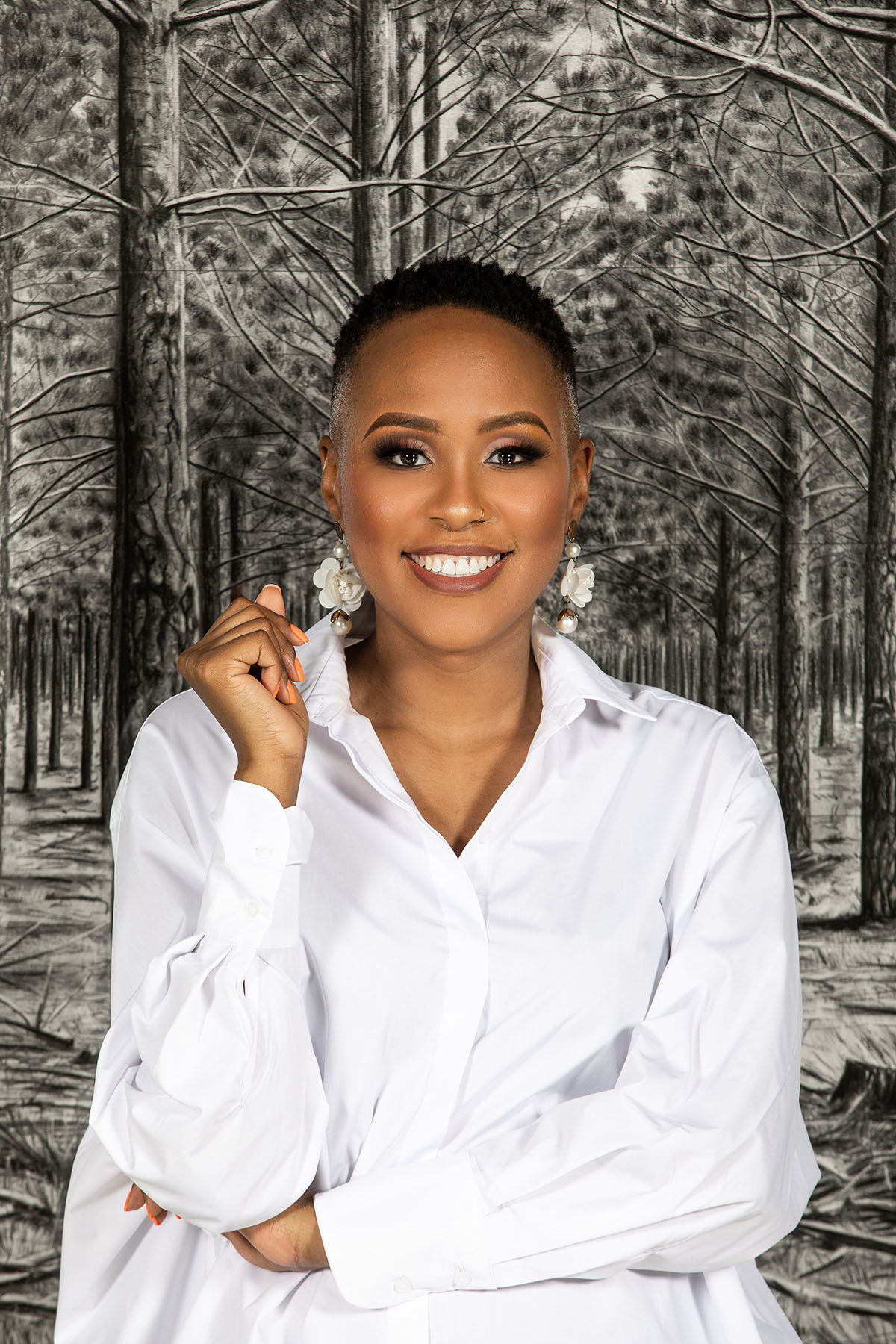
You have helped hundreds of women build businesses, develop their skills and see new possibilities for themselves. For the woman who knows she is capable of more but does not yet have the network, mentor or opportunity to get there, what would you want her to know?
I care a lot about the woman who needs a job, a mentor, an opportunity or simply someone to help her see what is possible. While access matters, I have also learned that sometimes you have to create what you are looking for before it finds you. When I go through periods of doubt, I remind myself that if I want to be surrounded by positive, ambitious people, I have to embody that energy too. That is often what attracts people who recognize your potential and are willing to give you a hand up. You don’t always need a network or a formal mentor to begin. Sometimes you just need yourself to attend the next event, listen to the next podcast, read the next book, send the next email or spend ten minutes looking for opportunities online. No one is coming to hand you the opportunity on a platter. Sometimes, you have to take the first step towards it and that first step can change everything.
When you look back years from now, what do you hope those women, and the women they go on to help, will say you made possible?
Years from now, I hope the women I have coached and the women they go on to help will say, “She made me believe I could.” I know that business requires strategy, discipline and a certain level of hard posture to move forward. I also believe that before a woman can build the business, she sometimes needs someone who can see the woman behind it, especially when she is struggling, doubting herself, starting again or on the verge of giving up.
My coaching is about seeing women in their entirety; their ambition, their softness, their uncertainty and their potential. I want women to leave feeling that someone really saw them, helped them peel back the layers that were holding them back and gave them the courage to become a better version of themselves. If that is what women say I made possible for them, then I will consider that a meaningful legacy.