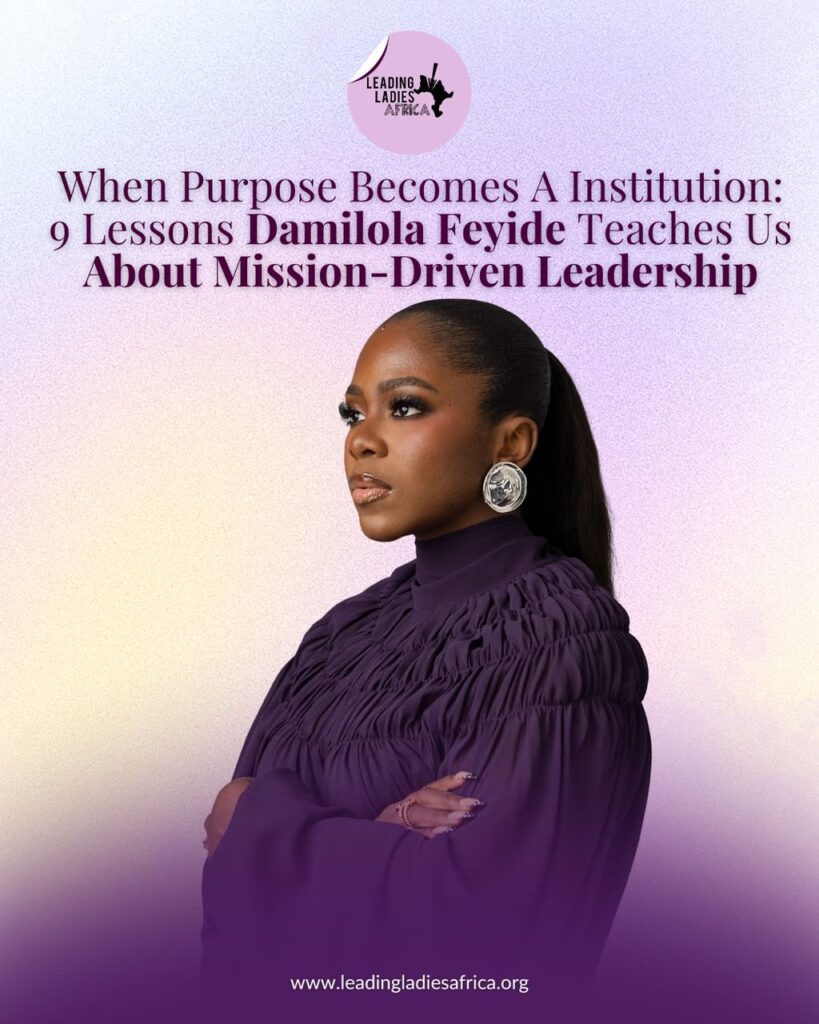
What does it take to look at Nigeria’s most forgotten children and decide that their future is your responsibility?
Not to write about them. Not to speak about them at conferences or include them in policy papers or add them to the list of problems that someone, somewhere, will eventually get around to solving, but to actually decide, with your own time, your own resources, and your own conviction, that the system’s failure is not their sentence, and that you are going to do something about it.
For Damilola Feyide, the answer to that question took the shape of a school. Not a pilot programme. Not a weekend initiative. A full boarding institution, Nigeria’s first completely free secondary boarding school, built from scratch in 2020 by a woman trained as an economist and working in banking, who looked at the children locked in correctional facilities, living in IDP camps, surviving on the streets, and growing up in communities the system had long stopped caring about, and decided that she was not going to look away.
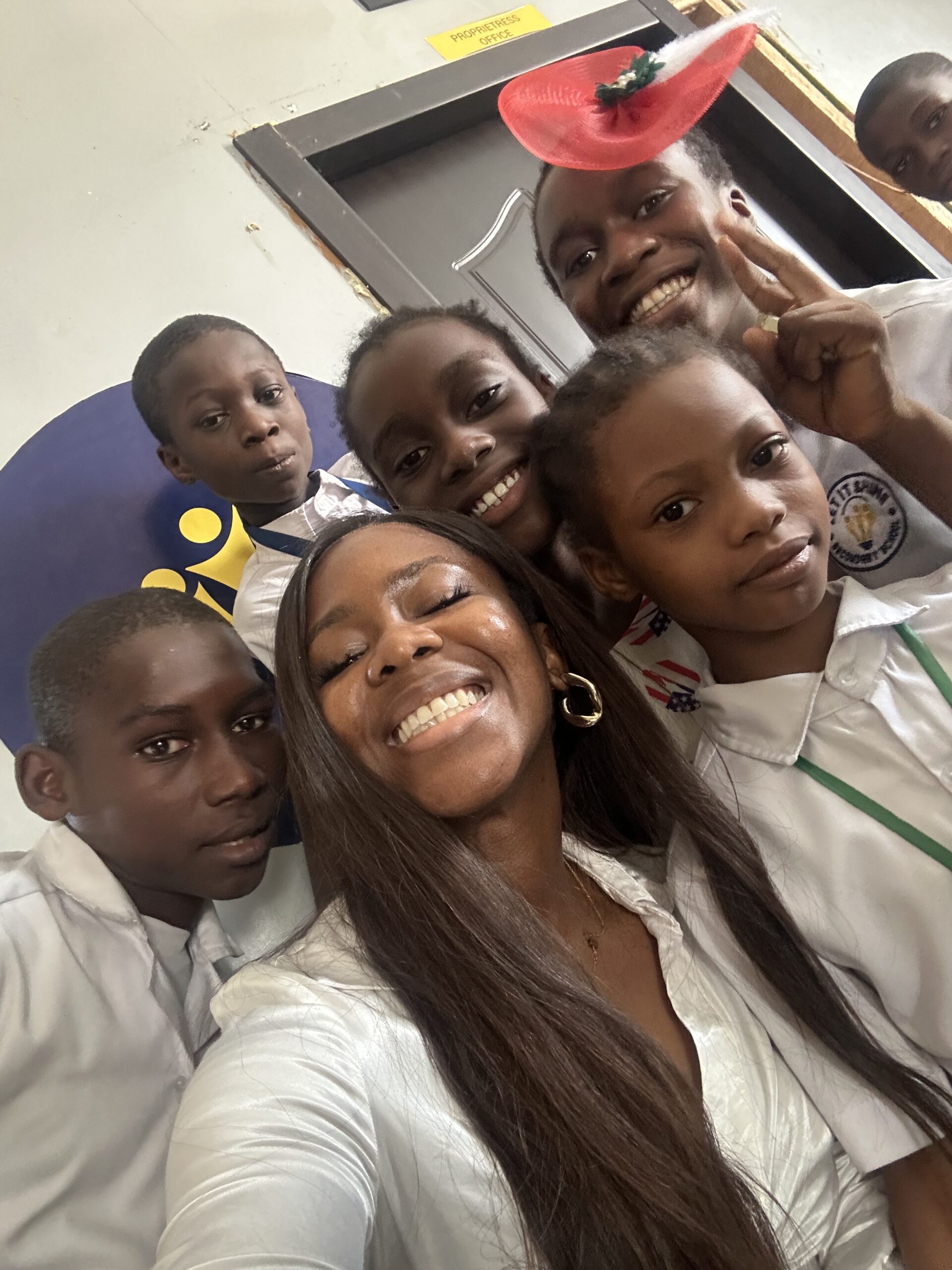
Five years later, Let It Shine Academy has reached over 500 children. It has transitioned over 50 young people out of correctional facilities and into full-time education. It feeds every child in its care three meals a day, approximately 180,000 nutritious meals every academic year. It runs a commercial school farm. It employs over 50 staff. It has earned the institutional trust of the Mastercard Foundation, Pan-Atlantic University, Access Bank, and BIC, and it is designed, deliberately, structurally, intentionally, to outlast its founder.
Dammy’s story is not just inspiring. It is instructive, because what she has built at LISA is a masterclass in what mission-driven leadership actually looks like when it is done with rigour, discipline, and a refusal to accept half-measures. Here are 9 lessons from her journey.

1. Sometimes Leadership Starts With Refusing to Look Away
Dammy did not set out to build a school. She set out to refuse something, the idea that Nigeria’s most vulnerable children were someone else’s problem. That the children in correctional facilities, IDP communities, and underserved families were simply casualties of a broken system, and that the most any individual could do was feel sad about it and move on.
In 2020, she channelled an economics degree, a banking career, and a deep personal conviction into Let It Shine Academy. She started in five Lagos communities with a mobile arts programme, not a school, not a boarding institution, just a vision and a refusal to accept the status quo. Five years later, over 500 children have walked through LISA’s doors, and the institution she built from nothing has become one of the most consequential models in African education reform.
The lesson here is not that passion is enough. It is that refusal, when it is combined with the discipline and commitment to back it up, is the most powerful foundation any institution can be built on. Dammy didn’t just care. She decided. And the difference between those two things is everything.
2. You Don’t Have to Start With the Whole Vision
There is a version of this story where Dammy waited until she had the funding, the infrastructure, the team, and the perfect conditions to launch something significant. That version of the story does not exist, because she didn’t wait.
LISA began as a mobile arts programme in five Lagos communities. Not a school. Not a boarding institution. Just Dammy, a vision, and five communities she decided to show up for, consistently, until something bigger became possible. That same model is now a full boarding institution with 330 students enrolled from across Lagos, the north, and the west of Nigeria, including children from some of the country’s most remote and forgotten villages.
What she understood from the very beginning is that the organisations that change the world are rarely the ones that launched with the most resources. They are the ones that started with the most clarity, about the problem they were solving, the people they were serving, and the kind of institution they were committed to building, no matter how long it took. She didn’t start big. She started committed. And it turns out that commitment, sustained over time, is what big looks like in the end.
3. The Problem You See Is Rarely the Whole Problem
One of the most common failures of well-intentioned education initiatives is that they address learning without addressing the conditions that make learning possible. They build classrooms without feeding the children who sit in them. They provide teachers without providing healthcare for the students they teach. They focus on academic outcomes while ignoring the reality that a hungry, sick, or unsafe child is not a child who can learn.
Dammy understood this before she laid a single brick. At LISA, every child receives free boarding, healthcare, uniforms, learning materials, and three daily nutritious meals, approximately 180,000 meals every academic year. The school is not just an academic institution. It is a holistic environment, built on the understanding that education reform is only meaningful when it addresses the whole child, their safety, their health, their nutrition, and their dignity, not just their curriculum.
This is what separates LISA from most education initiatives in its space. It is not just solving for learning. It is solving for everything that makes learning possible. And that distinction is the reason it works.
4. Go Where Nobody Else Is Looking
Most education reformers work around the edges of the problem. They serve the children who are almost there, the ones who just need a small push, a scholarship, a better school. The children at the absolute margins, those in correctional facilities, those living in IDP camps, those on the streets, are harder to reach, harder to serve, and harder to build institutions for. So most people don’t.
Dammy did. Over 50 children who the system had effectively written off, locked in correctional and juvenile facilities with no clear pathway to education or opportunity, have since transitioned into full-time education at LISA. She didn’t just advocate for them from a distance. She built an institution ready to receive them, care for them, feed them, educate them, and give them a future the system had decided they didn’t deserve.
That choice to go where the need is greatest, even when it is the hardest place to go, is one of the most defining things about who Dammy is as a leader. It is also one of the most important lessons she offers to anyone building in the social impact space. The most meaningful work is rarely the most comfortable work. She chose meaningful.
5. A Good Mission Still Needs a Strong Model
This is where Dammy separates herself from almost every other social entrepreneur in her space, and where the lesson is perhaps most urgently needed. Because the social impact sector is full of people with powerful missions and deeply inadequate models. Organisations that depend entirely on donor goodwill, that cannot articulate a path to sustainability, that are one funding cycle away from closing their doors.
LISA is not that. LISA runs a commercial school farm that supports its feeding programme and generates income. It has created over 50 jobs. It has attracted institutional partnerships with the Mastercard Foundation, Pan-Atlantic University, Access Bank, and BIC, the kind of credibility and rigour typically reserved for organisations far older, larger, and better resourced.
Dammy built LISA with enterprise thinking from the very beginning, not because she was trying to make money, but because she understood that a mission without a model cannot scale, cannot sustain itself, and cannot outlast its founder. She didn’t build a charity. She built a sustainable institution. And the difference between those two things is the reason LISA is still growing five years later, while so many comparable initiatives have quietly folded.
6. Nothing You’ve Lived Through Is Wasted
Dammy is not just the founder of LISA. She is also the Head of SME Development at ProvidusUnity Bank, a role that puts her at the intersection of corporate banking, entrepreneurship, and economic development every single day. For some, that might seem like a contradiction. For Dammy, it is the source code of everything LISA is.
She knows how businesses scale. She knows how institutions attract serious partners and maintain their credibility. She knows how systems are built to outlast the people who create them, and how organisations earn the kind of trust that translates into long-term, sustainable partnerships. She brought all of that knowledge, all of that discipline, and all of that strategic thinking into a sector that desperately needed it. And she built something the sector had never seen before.
The lesson is not that everyone building in the social impact space needs a corporate background. The lesson is that the skills, frameworks, and ways of thinking that make businesses successful are not only applicable to profit-driven organisations, they are desperately needed in mission-driven ones. Dammy proved it.
7. When the System Fails, Build Around It
When COVID-19 exposed the devastating depth of digital inequality affecting children in underserved communities, Dammy did not wait for someone else to respond. She built THEO — a child-safe, sponsor-a-tablet edu-tech initiative that delivers interactive digital learning to children aged 9 to 15 with zero internet connection required.
The thinking behind THEO is simple and powerful: in the communities LISA serves, waiting for reliable internet connectivity means waiting forever. Children in remote villages, IDP camps, and underserved urban communities cannot afford to wait for infrastructure that may never arrive. So Dammy built around the barrier rather than waiting for it to disappear — putting quality, interactive education directly into the hands of children who would otherwise have no access to it, regardless of whether they have a data connection.
It is a solution that reflects something essential about how Dammy thinks. She does not accept the constraints that the system presents as permanent. She finds ways to build around them, over them, or through them. And in doing so, she extends the reach of LISA’s mission far beyond the walls of the school itself.

8. Keep Studying The Problem While You’re Solving It
Dammy holds a degree in Economics and Business Management from the University of Sheffield. She has since earned HarvardX certifications in Child Rights and Children’s Protection. She is currently completing Harvard’s Public Education Reform: Saving Schools programme, deepening her expertise in the very field she has been transforming for five years.
She is not studying because she doesn’t know what she is doing. She is studying because she believes, deeply and consistently, that the work of protecting and educating children demands the same rigour, discipline, and hunger for continuous learning that she asks of her students every single day. She holds herself to the same standard she holds LISA to — and that standard is not comfort. It is growth.
It is a lesson that applies far beyond education reform. The most effective leaders in any field are not the ones who stopped learning when they became experts. They are the ones who understood that becoming an expert is a commitment to keep going deeper, keep questioning, and keep getting better at the work. Dammy has never stopped.
9. Build Something That Can Outlive You
Perhaps the most telling thing about what Dammy has built at LISA is not the numbers, though the numbers are remarkable. Over 159 students have progressed from junior to senior secondary school following their national examinations. Over 50 children have transitioned out of correctional facilities into full-time education. The school’s first full cohort of secondary school graduates is expected to complete SS3 and begin university in 2027. LISA has created over 50 jobs and runs a commercial farm that sustains its feeding programme.
The most telling thing is that none of this is designed to depend on Dammy. From the school farm to the institutional partnerships, from the replicable model to the systems and structures she has put in place, LISA is built to scale beyond its founder, because she has always known that the true measure of an institution is not what it achieves while the person who built it is watching. It is what it continues to do long after she steps back.
That is a rare thing to build. It requires a particular kind of ego, or more precisely, a particular kind of absence of ego. The willingness to build something bigger than yourself, and to make the deliberate, sometimes painful choices that ensure it will outlast you. Dammy made those choices from the very beginning. And the institution she has built is the proof.
Damilola Feyide did not wait for the system to fix itself. She looked at Nigeria’s most forgotten children and decided that their future was her responsibility, and then she spent five years proving, with measurable, replicable, institution-grade results, that one person with the right combination of mission, model, and discipline can change the trajectory of hundreds of lives.
That is what mission-driven leadership looks like when it is done right. And LISA is proof that it is possible.