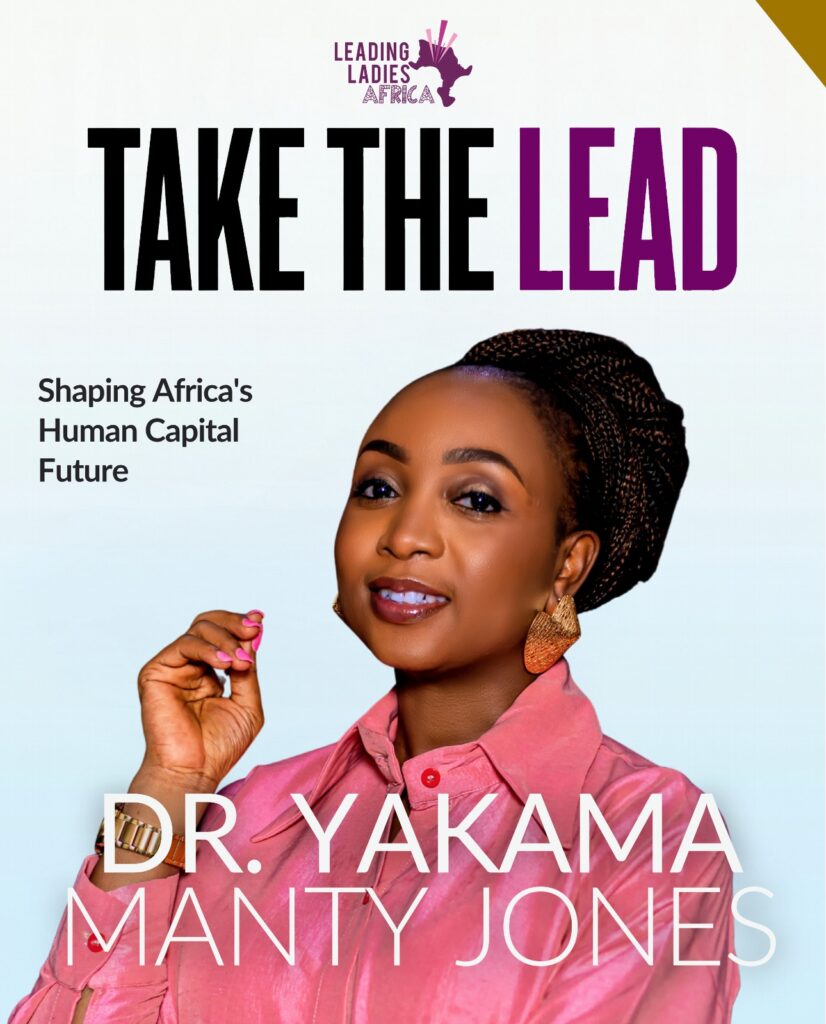
Dr. Yakama Manty Jones does not have a single job title. She has a Northern Star.
At the centre of everything she does, advising governments, lecturing at Fourah Bay College, founding the Yak Jones Foundation, building Data Mansah, sitting on boards, and consulting to the Presidency, is one enduring question: how do we help people live fuller, more empowered lives?
Yakama is an economist, finance professional, entrepreneur, philanthropist, and public policy expert with over a decade of experience advising governments and institutions across Africa. Currently on secondment from her role as Director of Research and Delivery at Sierra Leone’s Ministry of Finance, she works as a consultant providing delivery advisory to the Presidency in the human capital development and technology space. She is Sierra Leone’s focal person for the World Bank’s Human Capital Project. She has been named among the 50 Most Influential Women in Sierra Leone, the 100 Most Influential Young Sierra Leoneans, and the 100 Women in West Africa. She holds executive training from Oxford, Harvard Kennedy School, and MIT but perhaps what defines her most is the conviction.
She grew up in Sierra Leone understanding that education affects health, governance affects opportunity, and gender equality affects economic growth. She has spent her career refusing to separate those threads. Her PhD cracked open the uncomfortable relationship between Africa’s natural resources and its poverty. Her foundation is investing in literacy and data skills for children in the communities she grew up in. And her work in public policy is anchored in a single belief: the real wealth of nations is human capability.
In this conversation, Yakama opens up about what it truly means to live a portfolio career, what African leaders need to hear about their natural resources, and what she wants every young girl in Sierra Leone to know about what is possible from exactly where she stands.
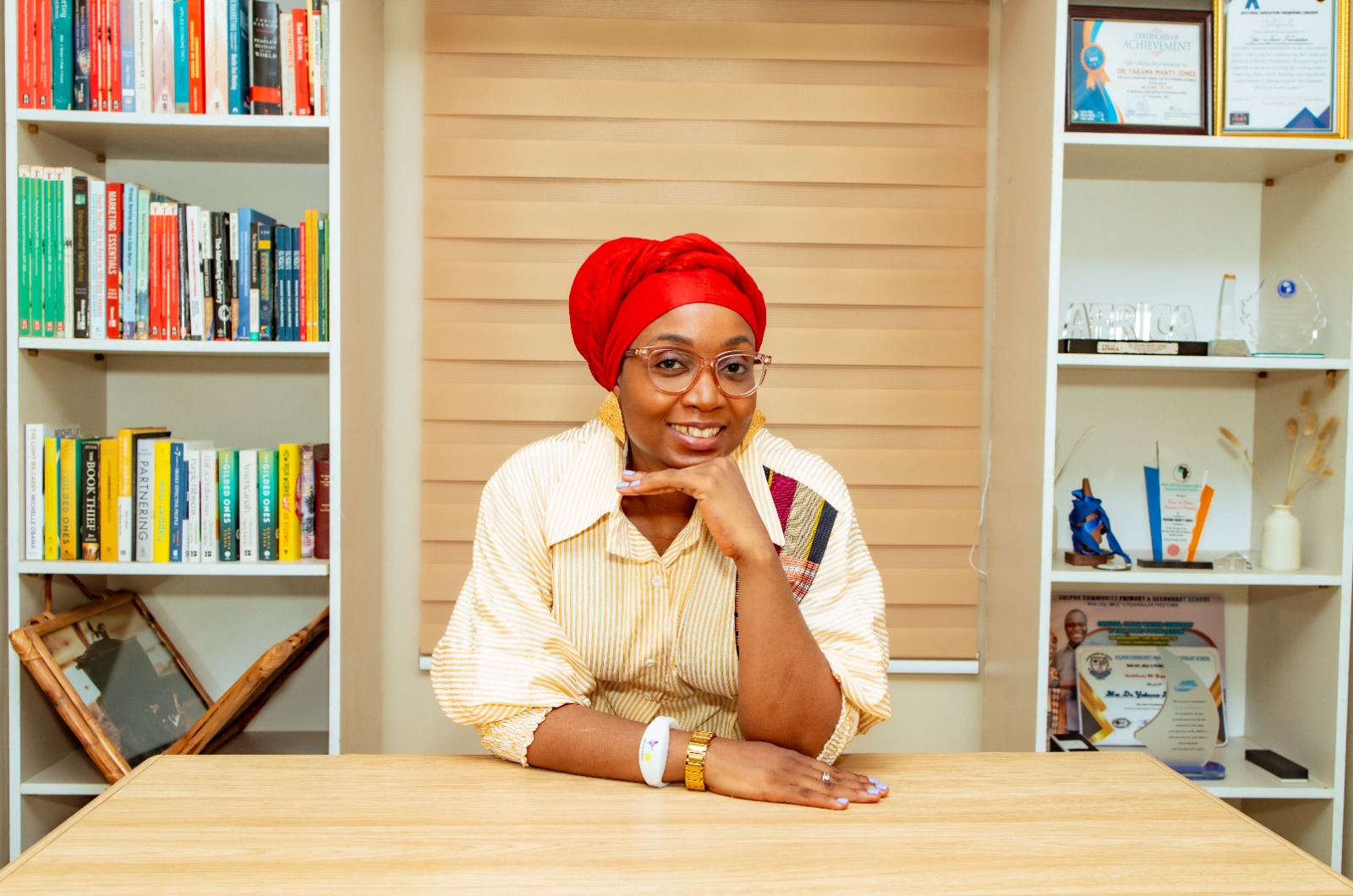
Yakama, you describe yourself as a multipotentialite living through a portfolio career — economist, entrepreneur, philanthropist, lecturer, board member, author. What does it actually feel like to be all of those things at once?
The word multipotentialite gave me language for something I had always lived but never quite been able to explain. For a long time, I worried that not committing to a single path made me unfocused. The world does try to put you in a box. You are an economist. You are an entrepreneur- choose one, and I have not been able to do that. So, most days it feels like the most natural thing in the world, and then occasionally it feels like organised chaos. However, I have made peace with both of those feelings. Being a multipotentialiste feels layered, demanding, and deeply purposeful.
In practice, the truth is, I think in systems. Growing up in Sierra Leone shaped my worldview. I quickly learned that our challenges are interconnected. Education affects health. Governance affects opportunity. Data affects accountability. Gender equality affects economic growth. Thus, I never felt comfortable staying in one lane because the problems themselves do not stay in one lane.
I see how a policy decision in a ministry affects a woman trying to run her small business, which affects whether her child stays in school, which shapes the future of a community. You cannot separate those threads. So I do not. I do not experience my roles as separate identities competing with one another. To me, they are different expressions of the same calling: investing in people and systems. The economist in me asks what the evidence says. The entrepreneur asks what is practical and sustainable. The lecturer asks how knowledge can be transferred, always thinking about how to make the complexity accessible to the next generation. The philanthropist asks who is being left behind. The public servant in me asks whether institutions are actually delivering for ordinary people. The board member in me asks whether the organisations I serve are being held to the highest standard of accountability in their decisions and their impact.
So, I have my ‘Northern Star’. At the centre of everything I do is human capital development — helping people expand their capabilities and helping systems function better around them. Whether I am lecturing students at Fourah Bay College, advising governments, supporting young people through Data Mansah, or promoting reading through the Yak Jones Foundation, I am ultimately answering the same question: how do we help people live fuller, more empowered lives? So yes, it can be exhausting. But it also feels honest. I am not one thing because life has never asked me to solve one thing.
You sit at the intersection of government, academia, entrepreneurship, and philanthropy. Most people pick a lane, why didn’t you, and what has that refusal to choose one thing given you?
Refusing to choose gave me perspective. A perspective that most people in any single room do not have. Each space sharpened the others.
When I sit in a government meeting, I bring the discipline of academic rigour but also the practicality of someone who has co-founded businesses and felt what it means to make payroll, to bet on a market, to build something with your own hands. When I am in a boardroom, I bring the accountability that comes from running a foundation and knowing that real communities are affected by those decisions.
Government taught me that good intentions are not enough; execution matters. Academia taught me to interrogate assumptions and respect evidence. Entrepreneurship taught me speed, innovation, and resilience. Philanthropy reminded me that behind every statistic is a human being. Too often, these worlds operate in silos. Policymakers design solutions disconnected from reality. Academics produce brilliant work that never reaches implementation. Entrepreneurs scale without thinking deeply about equity. Philanthropy becomes reactive instead of systemic.
Having a portfolio career, moving across those spaces, has allowed me to connect ideas to implementation and has also made me more empathetic. I can sit in a rural community and understand lived realities, then walk into a policy meeting and translate those realities into systems language and measurable priorities. I understand the constraints ministers face. I understand the pressures young people face entering the labour market. I understand the frustrations of entrepreneurs trying to navigate weak systems. I understand the hopes parents carry when they invest everything in their children’s education.
It has not always been easy. There is a real tax that comes with living across multiple worlds. However, I truly believe that transformation happens at intersections. That is where innovation lives. I would not trade that for anything.
You are Sierra Leone’s focal person for the World Bank’s Human Capital Project. For the woman reading this who has never heard that term, why should she care, and what does it have to do with her life and the lives of her children?
Human capital sounds technical. However, at its core, it is deeply personal. It is about whether people have the health, education, nutrition, protection, and skills they need to live productive and meaningful lives. The Human Capital Project,, is about this question: are our children getting everything they need to live a full, productive, dignified life? It measures whether children survive their early years, whether they are healthy enough to grow and learn, whether they get a quality education, and whether they eventually enter the economy with real skills. It then puts a number on what a country loses when the answer to any of those questions is no.
What excites me about the Human Capital Project is that it pushes governments to think differently — not just about spending money, but about investing intentionally in people. Countries do not become prosperous simply because they have natural resources. They become prosperous because they develop healthy, educated, skilled populations capable of innovation and productivity. So for the woman reading this, it is everything. It is about whether her pregnancy is safe. Whether her child survives beyond age five. Whether her daughter learns in school rather than simply attending. Will there be a dignified job waiting for her when she finishes? Whether illness or poverty permanently limits the future of her family.
When we improve education, reduce maternal mortality, invest in girls, strengthen nutrition, expand digital access, and improve skills development, we are not doing charity. We are building the future workforce, future entrepreneurs, future leaders, and future stability of our world.
My role as Sierra Leone’s focal person is essentially about coordination — bringing the whole of government together around a shared human capital agenda. Health, education, social protection, finance, all these planning ministries cannot work in isolation if we are serious about developing our people. My job is to ensure they are aligned, that the right data is being collected, and that we are reporting and making decisions based on evidence rather than assumptions. Because what gets measured gets done, and what gets done changes lives.
Your PhD cracked open the uncomfortable relationship between Africa’s natural resources and its poverty. What is the most inconvenient truth you found in that research that African leaders need to hear?
The most inconvenient truth is that natural resources do not automatically create development. Institutions do. And debt makes everything worse when those institutions are weak.
My PhD examined what I called the Debt Overhang and Resource Curse link — something that had rarely been studied simultaneously. What I found, across a panel of 153 countries spanning four decades, and then through a deep case study of Sierra Leone specifically, is this: resource rents alone can have a positive bearing on growth, but those gains are systematically displaced by the costs of debt servicing. Countries borrowed against their natural resources as collateral, commodity prices fell, and they were left with mountains of debt and a trickle of income. That is the debt overhang trap. And Sierra Leone — rich in diamonds, iron ore, bauxite, rutile and gold, yet historically sitting at the bottom of the Human Development Index — has been a painful illustration of it.
What troubled me most during the fieldwork I conducted in Sierra Leone’s mining communities was the distance between what was being extracted and what communities were actually experiencing. In some cases, mining companies had negotiated tax rates a fraction of what the law required. One estimate found that of $179 million in mineral exports in a single year, only around $10 million reached the Government in royalties and taxes. Less than five cents of every dollar. That gap between resource wealth and public benefit is not accidental. It is the product of weak contract negotiation, inadequate monitoring, corruption, and at times, donor conditionalities that worked against the country’s own revenue interests.
That finding has never felt more relevant than it does today. We are at a global inflexion point. The clean energy transition has made Africa’s critical minerals strategically indispensable to the world. Sierra Leone holds significant deposits of exactly these resources. However, Africa still captures only a fraction of the value generated from its own resources. We cannot afford to repeat past mistakes in a new mineral cycle.
The recommendation I made then, and which I still stand by, is that the real wealth of nations is human capability. Countries that transformed successfully did not simply extract resources. They converted resource revenue into human capital, infrastructure, institutional strength, and long-term investment. Sierra Leone and countries like her must do the same: enhance governance of the mining sector, review mining agreements, insist on transparency, hold companies to account, diversify away from raw export dependence, and above all invest in the people above the ground, not just the minerals beneath it. It means ensuring that every mining agreement is negotiated in the national interest, that companies are audited independently, and that infrastructure built for mines serves surrounding communities and not just the concession. Every stage of mineral processing retained within a country creates more jobs, more skills, more revenue, and more industrial capacity. No amount of extraction, however well governed, substitutes for investing in educated, healthy, skilled people. That is not a comfortable message, but it is the only honest path to lasting prosperity, and the data bears it out.
You have been named among the 50 Most Influential Women in Sierra Leone, the 100 Most Influential Young Sierra Leoneans, and the 100 Women in West Africa. What does that kind of recognition mean when you know how many equally brilliant women will never be seen?
Recognition is meaningful. It is also sobering. It means a great deal, and it weighs a great deal, and I try to hold both at the same time.
The truth is that talent is evenly distributed. Opportunity is not. I know many brilliant women whose names may never appear on a list because they lacked access, networks, visibility, financing, or simply someone willing to open a door for them. I am visible partly because I have had access. Access to education, to networks, to opportunities that many women in Sierra Leone will never have. The woman who is equally brilliant and equally committed but was born in the wrong province, or could not afford university, or was married off before she could build her career, is not less. She is just less seen.
So I try to receive recognition as responsibility rather than arrival. It reminds me that visibility should not stop with me. I should recommend other women, mentor intentionally, create platforms, and ensure rooms become more inclusive after I enter them.
I am especially conscious of this because I come from Sierra Leone, a country where many women continue to navigate structural barriers whilst carrying enormous responsibility within families and communities. I therefore use recognition and visibility to speak about the structural barriers that keep women invisible. I use it to mentor young women. I use it to influence stakeholders in policy environments that systematically underinvest in girls. I always try to use whatever room I am in to make that room less exclusive.
I also think we need to redefine influence. Influence is not only about titles or public recognition. Some of the most influential women I know are teachers, mothers, community organisers, nurses, market women, and quiet builders of institutions whose impact may never trend online but changes lives every single day. Any list that does not find a way to honour that kind of leadership is telling an incomplete story.
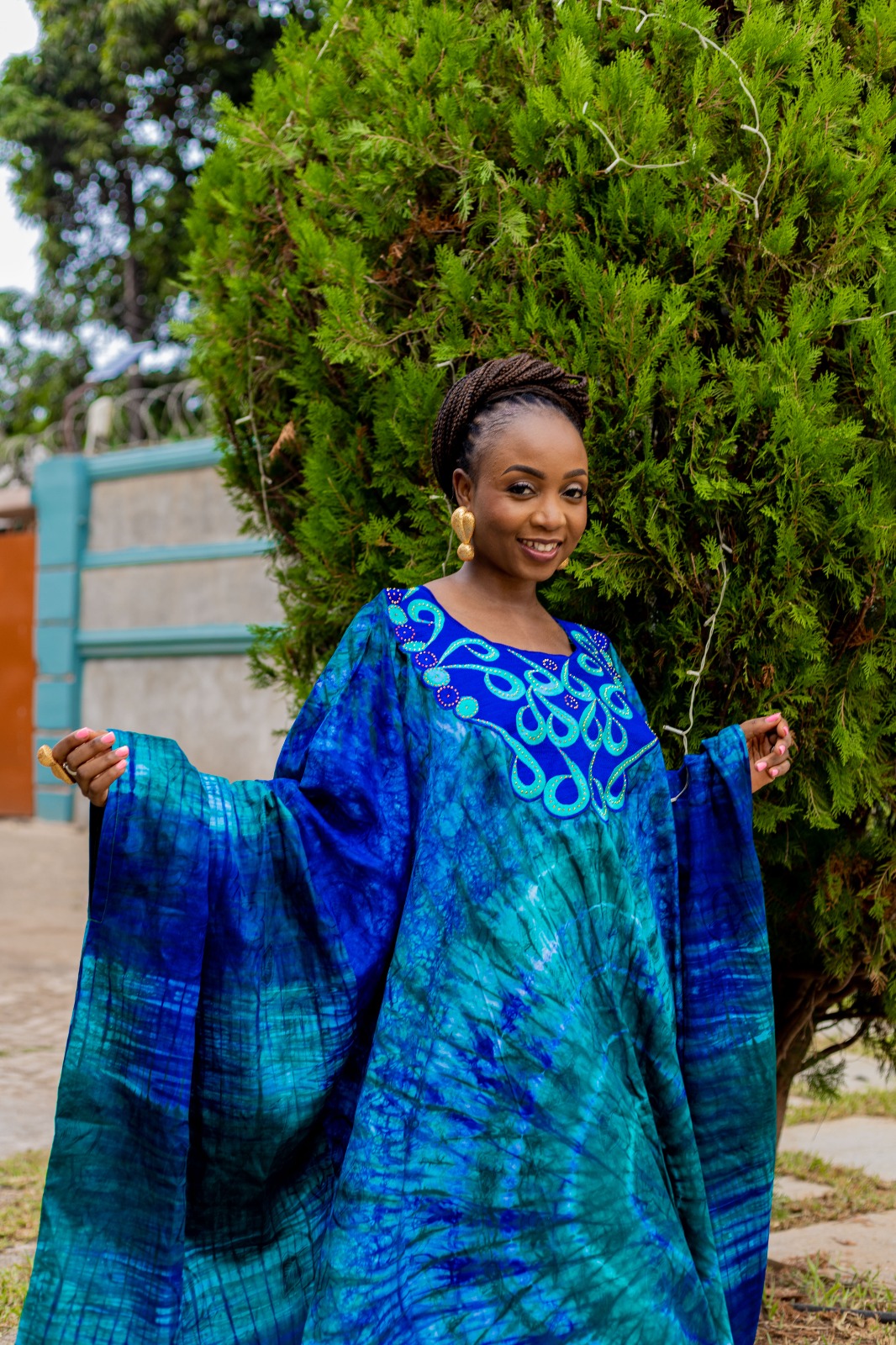
You were selected as an Amujae Leader, a programme grooming women for the highest levels of public office in Africa. What is the real reason African governance still looks the way it does and what is it going to take to truly change that?
The real reason is that the systems were designed without women in mind, and they have been actively maintained that way. It is not simply that women are not qualified. That argument collapsed a long time ago. The real barriers are structural and cultural, and they reinforce each other. Politically, access to power in most African countries still runs through networks of patronage, financing, and influence that were built by men, for men, over generations. To enter those networks, women are often expected to either conform entirely to those rules or are simply not invited in at all.
The Amujae Initiative, founded by President Ellen Johnson Sirleaf, is significant because it explicitly names that problem and builds something to address it. It recognises that talent alone is not enough. Systems matter. It is not just training. It is network building, sponsorship and positioning. It is saying: here are women who are ready, and we are going to make sure the world knows it.
African governance still looks the way it does because power tends to reproduce itself unless it is intentionally disrupted. What is it going to take to truly change things? Two things, simultaneously. First, the women who are already inside must use their positions to remove the barriers for those who follow. Not quietly. Loudly. Policy by policy, appointment by appointment. Second, men in leadership need to be allies, actively choosing to dismantle systems that privilege them. Some are doing that. Not enough.
I am not naive. Changing this skewed system requires more than symbolic inclusion. It requires reforming political financing, strengthening mentorship pipelines, building institutional protections, investing in girls’ education, supporting women’s economic participation, and normalising women in leadership from an early age.
This is generational work. But I have seen what is possible when women govern — better outcomes across education, health, and social cohesion. Perhaps most importantly, societies must stop treating female ambition as something unusual. Women should not have to justify wanting to lead. Leadership is not a male inheritance. It is a human responsibility. The evidence is not ambiguous. The only question is whether we have the collective will to act on it.
Data shows that when women lead in government and policy, outcomes improve for entire communities. So why are we still having this conversation about getting women into these rooms, what is the real resistance?
We are still having this conversation because changing it requires both structural reform and cultural transformation, and neither of those things is fast or comfortable. The data challenges power, but power does not surrender evidence.
If governance were simply a technical problem, then the evidence would have solved it by now. The research is overwhelming and consistent. Women have demonstrated competence repeatedly, across sectors and countries. When women are in decision-making rooms, budgets are more likely to direct resources towards health, education, and the basic needs of ordinary families. Communities become safer. Children do better. Even men benefit. We know this.
The resistance is not intellectual. It is about who controls access to power and resources, and who stands to lose when that changes. The gatekeeping is real, it is deliberate, and it is dressed up in all sorts of language: qualifications, readiness, cultural values etc.
When women enter decision-making spaces meaningfully, priorities shift. Conversations around healthcare, education, social protection, inclusion, gender-based violence, and community welfare gain stronger visibility. Resource allocation patterns can change. Leadership cultures can change. For some systems, that shift feels disruptive, and those who benefit from the current arrangement are not always enthusiastic about disrupting it.
There is also a persistent global tendency to hold women to higher standards whilst simultaneously giving them fewer opportunities to fail, recover, and grow politically. Men are often judged on potential. Women are judged on perfection.
There is also another challenge worth mentioning: the way we have collectively socialised women to doubt themselves. The internal voice that says you are not ready, your ideas are not good enough, you do not belong in that room. That voice is not organic. It is the product of systems that have told women, generation after generation, that leadership is not theirs. Undoing that is as important as changing the laws.
You lecture, mentor, sit on boards, and show up in some of the world’s most powerful rooms. What do you deliberately do to make sure the women coming behind you don’t have to fight as hard as you did?
I do multiple things, deliberately. I try to be intentional about opening doors, not just walking through them. This means mentoring younger women honestly, recommending them for opportunities, supporting confidence-building, and helping them navigate spaces that can feel intimidating or exclusionary. In some cases, I sponsor, not just mentor. Mentoring is advice. Sponsorship is advocacy. It is walking into a room and saying her name when she is not there. It is recommending her for the board seat, the panel, the contract. I try very consciously to be a door-opener, not just a well-wisher.
I also believe deeply in transferring skills rather than dependency. Through my teaching, public policy work, and youth initiatives, I try to help young people build analytical capability, communication skills, confidence, discipline, and strategic thinking. At the Yak Jones Foundation, we are investing in literacy because reading changes how children see themselves and the world around them- raising critical thinkers who become leaders. Through Data Mansah, we are helping young people, especially girls, build data and research skills that create real economic and leadership pathways. Both are about equipping the next generation before the fight even begins.
I also share information. This sounds simple, but it is radical in practice. Opportunities, fellowships, grants, connections. I was not always told things in time. I make sure that where I could change that for someone else, I do.
I also speak openly about the realities of leadership. Young women do not just need inspiration. They need preparation. They need to understand resilience, discipline, emotional intelligence, negotiation, and the importance of building strong support systems. Most importantly, I try to model that women do not have to shrink themselves to succeed. Your full self is not a liability. It is your greatest asset.
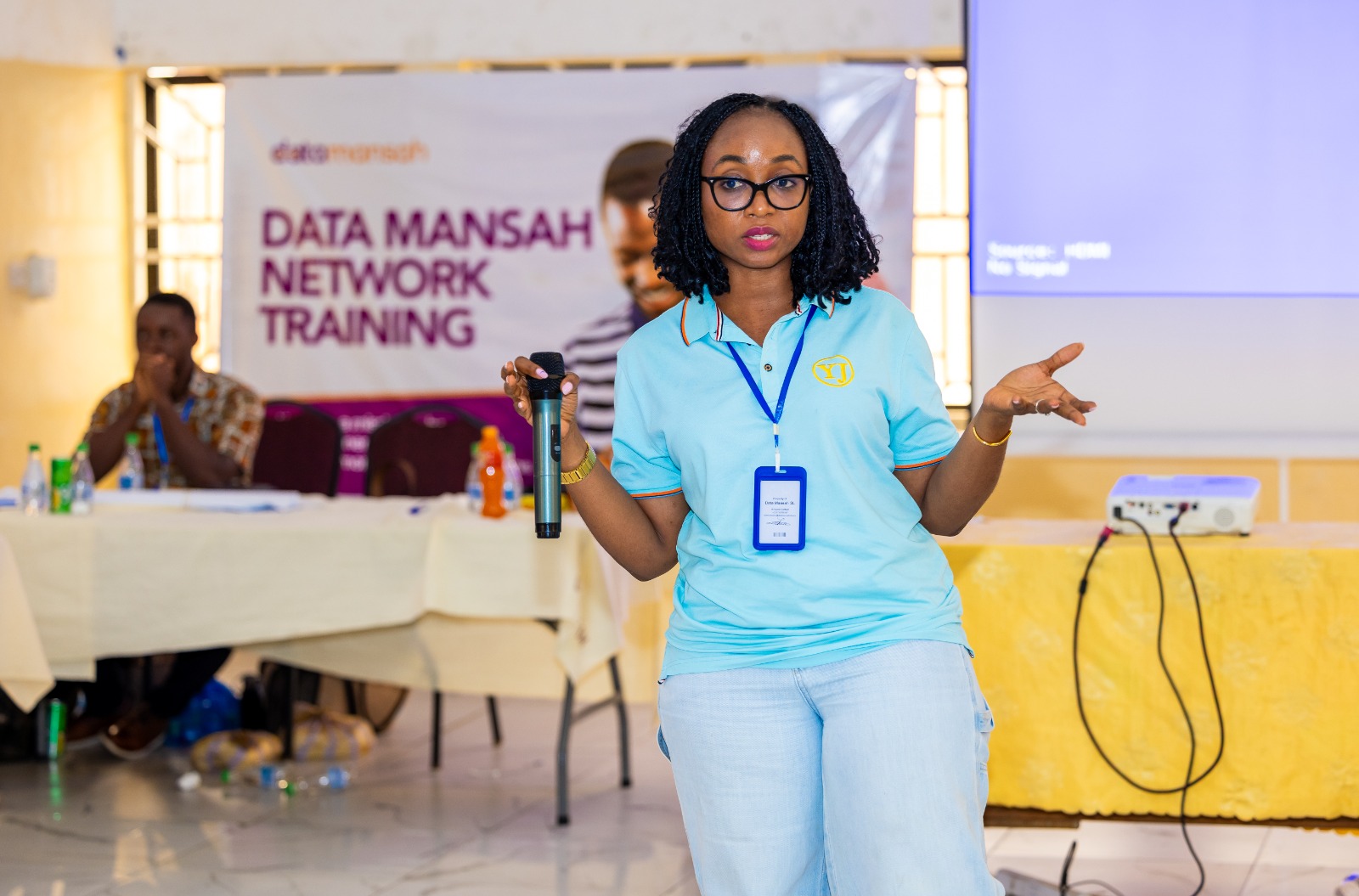
When all is said and done — what do you want the name Yakama Manty Jones to mean to a young girl in Sierra Leone who is just beginning to dream?
I want my name to mean possibility: Yakama was from here, she dreamed from here, and she built from here. Not from a borrowed identity. Not because someone in another country gave her permission, but because Yakama understood that where you begin does not have to define where you end.
I want a young girl from Kabala, my hometown or anywhere in Sierra Leone, to know that she can be intellectually ambitious and still compassionate. That she can lead and still remain grounded. That she can dream globally without losing her local identity. That she can occupy rooms that once felt impossibly distant from girls who looked like her.
If a young girl hears my name and thinks she was an economist, a mother, a founder, and a public servant, and that she did not have to choose between being powerful and being kind, then I will have done something useful. If she thinks Yakama built a foundation for children who looked like me, in communities like mine, and she believed those children were worth investing in, then I will have done something that matters.
More than anything, I want my life to communicate that education matters, integrity matters, discipline matters, and service matters. I want every girl to understand something this life has repeatedly taught me: you do not have to choose between excellence and humanity. The real goal is to use your gifts in the service of something larger than yourself.
That would be enough. That would be everything.