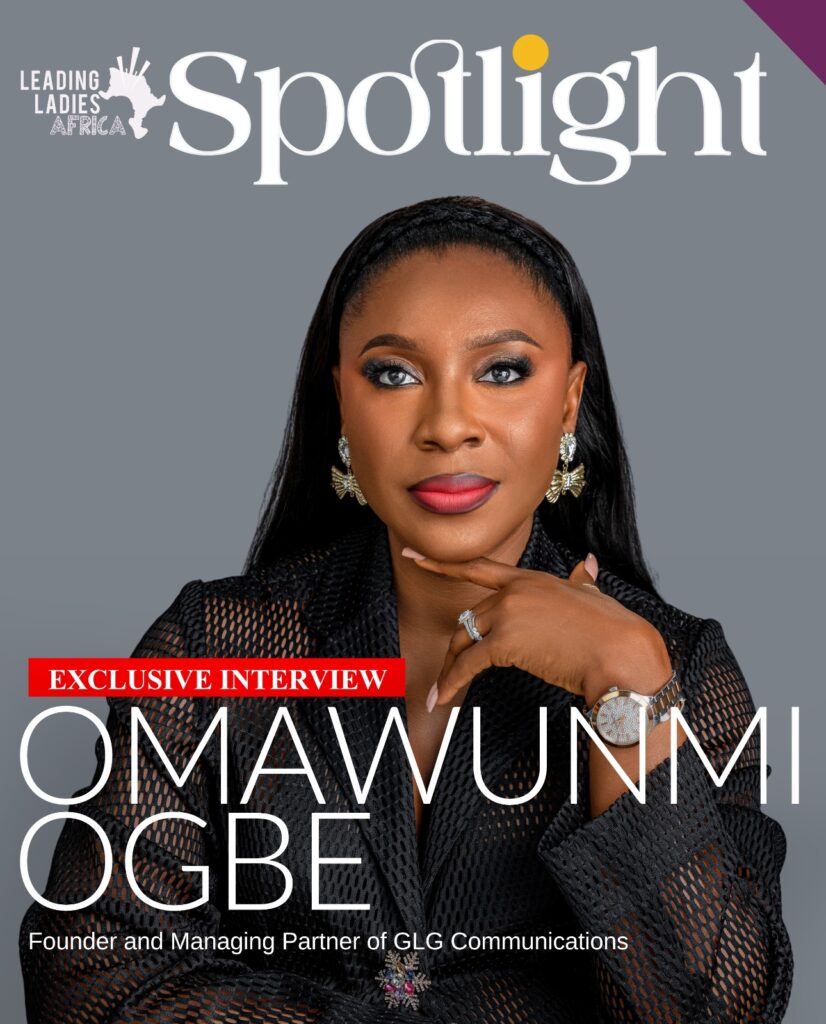
Omawumi Ogbe grew up watching her mother lead security committees full of men, and never once saw her shrink. That image stayed with her and it built her.
Today, Omawumi is one of Africa’s most respected strategic communications leaders, the Founder and Managing Partner of GLG Communications, an award-winning PR and reputation management consultancy; the Editor-in-Chief of GLAZIA, a leading African lifestyle and culture publication; the creator of the PR Power List, now in its fifth edition and widely regarded as Nigeria’s most credible recognition in communications; and a Board Member of the PRCA UK, the world’s largest professional body for public relations.
In 2026, she became one of the few Africans appointed as a PR Lions Juror at the Cannes Lions International Festival of Creativity, where she evaluated hundreds of entries and witnessed Nigerian work claim a Gold Lion and four Bronze Lions on the world’s biggest creative stage.
A graduate of Pan-Atlantic University where she finished as the overall best student, and an Executive MBA holder from HEC Paris specialising in Luxury, Omawumi has spent over a decade advising multinational organisations, high-growth businesses, and influential leaders across Africa and beyond. She has been named one of the 100 Most Influential People of African Descent by MIPAD, received the 2025 ELOY Award for Excellence in Public Relations, and been recognised as Marketing Edge’s Most Influential PR Personality of the Year.
Strip away every credential and every accolade, and what you find is a woman shaped by a mother who never made herself smaller, a father who demystified money before she knew what money meant, and an Itsekiri heritage that never taught her there was supposed to be a hierarchy between men and women. She never learned to shrink and she never did.
In this conversation, Omawumi opens up about the decade it took to build GLG Communications, what it truly means to sit in global rooms as an African woman who refuses to bring a token perspective, the real reason Nigerian communications is still struggling to put women at the top and what she is doing about it, and what she wants every young Nigerian woman entering PR today to understand before she starts.
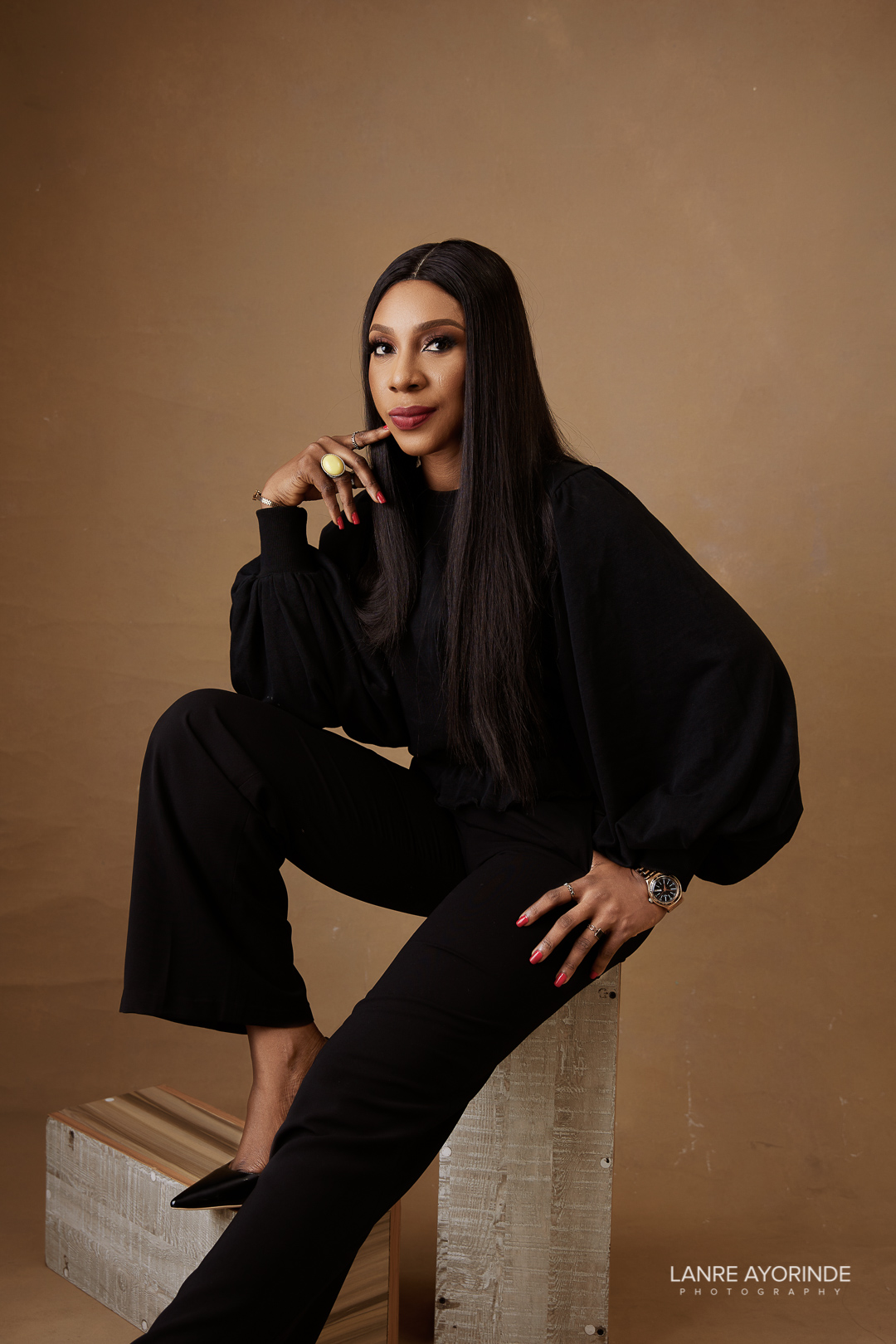
You are the founder of GLG Communications, the creator of the PR Power List, and the Editor-in-Chief of GLAZIA, and you are doing all of this as an African woman in an industry that has historically centred other voices. Before any of it, who is Omawumi, and what shaped her?
Before any of the titles, I am a woman who grew up believing that her voice mattered.
A lot of that comes from my parents. My mother was a strong example of what it meant to occupy space confidently. I remember growing up seeing her as the only woman on security committees made up largely of men, yet she was the one leading it and the person everyone depended on. I watched that and learned, without even realising it, that being a woman was never a reason to make yourself smaller.
My father was also a remarkable champion of women. He had tremendous confidence in women and in all his children, and that confidence filtered into us.
He also demystified money for us. I remember him giving my younger sister, who was about four or five, a bag full of cash to keep safely for our mother while he went out; and she kept it safely. Money was never presented to us as something mystical or intimidating. It was simply a tool.
That has stayed with me in business. I am not easily impressed by money, so I can negotiate confidently for my worth without being intimidated by the size of a number. I can say, “This is what I charge,” and stand by it, but I can also say, “Let’s waive this,” when I genuinely want to. I think that balance; to know your worth without allowing money to own you, has been incredibly valuable to me.
My Itsekiri heritage also shaped me. In our culture, both parents matter deeply. An Itsekiri child will tell you where both their father and mother are from, and a man can inherit from his mother’s side or take a title through his mother’s family. I grew up, therefore, without really understanding that there was supposed to be a “hierarchy” between men and women. I only became conscious of that inequality much later.
That upbringing gave me a certain fearlessness. I am not afraid to raise my hand, speak up or walk into a room believing I belong there. And there is also something very Nigerian about that. Nigerians have a remarkable ability to show up anywhere in the world and say, “I belong here.”
I’ve been in rooms where I was the only Black person, not just the only Nigerian or African, and I never felt the need to shrink myself. I believe my voice deserves to be heard.
When I think about who I am today, I realise so much of it was built into me very early: confidence, independence, a strong sense of self, respect for women, an understanding of money, and the courage to value myself.
I give a lot of that to my parents. It reminds me how important it is to think carefully about what we teach our children, because so much of who we become is shaped long before we understand that we are being shaped.
You have spent over a decade advising some of Africa’s most powerful organisations on reputation and communications. What is the one mistake you see leaders make over and over again when it comes to managing how they are perceived?
One of the biggest mistakes leaders make is failing to bring their communications and PR advisers into the room early enough.
Public relations is still misunderstood as just getting you into the newspaper, putting out a press release or arranging a television interview. That is only a fraction of what we do.
At its core, PR is about reputation management and strategic counsel. Your communications adviser should be in the room when important decisions are being considered, not brought in afterwards to figure out how to communicate a decision that has already been made.
I often tell clients: listen to your PR team. If you trust them enough to manage your reputation, you should trust their counsel when important decisions are being made.
The other mistake is the desire to be everywhere. Visibility without strategy is not necessarily a good thing. Sometimes the most powerful reputation is built through being intentional about where you show up, what you say and what you choose not to say.
You created the PR Power List because Nigeria’s communications industry had no definitive platform recognising its own excellence. What gap were you actually trying to close?
We wanted to recognise the people who spend their careers making other people and organisations look good.
PR professionals are often behind the scenes. We are comfortable with that; it is part of the job. But the irony is that the people doing the positioning are rarely positioned themselves.
The PR Power List was created to change that and, more importantly, to demonstrate the value of the profession.
We saw that very clearly during COVID. Beyond the medical professionals and other frontline workers, communications professionals were at the centre of helping organisations, governments and communities navigate an extraordinary period of uncertainty. We were communicating critical information, driving behavioural change, managing crises and helping people understand what was happening.
We wanted to celebrate that work. But we also wanted to do it on merit. The PR Power List looks at the previous 12 months of work. It isn’t about who was famous before, who knows whom or who has won previously. Some people make the list year after year because they continue to do exceptional work; others may not make it one year and return the next.
Ultimately, we’re saying: we see your work, and your work matters.
The PR Power List is now in its fifth edition and has become Nigeria’s most respected recognition in communications. What has it taken to build something that the industry now considers the standard?
It has taken a genuine love for the industry, a commitment to doing things properly and, perhaps most importantly, a willingness to protect the integrity of the platform.
I have no personal stake in who wins. I don’t win an award. I don’t decide the winners. We have a research team that independently identifies the pool of professionals, which is then evaluated by jurors. We have multiple rounds of judging, including international jurors and respected Nigerians who are not part of the PR industry.
That is important because we want people to be assessed on the strength and impact of their work, not simply because they are known within the industry.
We have also been incredibly fortunate to have some of the most respected professionals in Nigeria, Africa, Europe, the UK and the US serve as jurors.
And I have to acknowledge our media partner, The Guardian. They have been with us since we started in 2022, and that partnership has been incredibly important. The Guardian’s reputation gives the platform an additional layer of credibility.
Ultimately, building something people trust requires consistency. You have to be willing to protect the standard even when it is inconvenient.
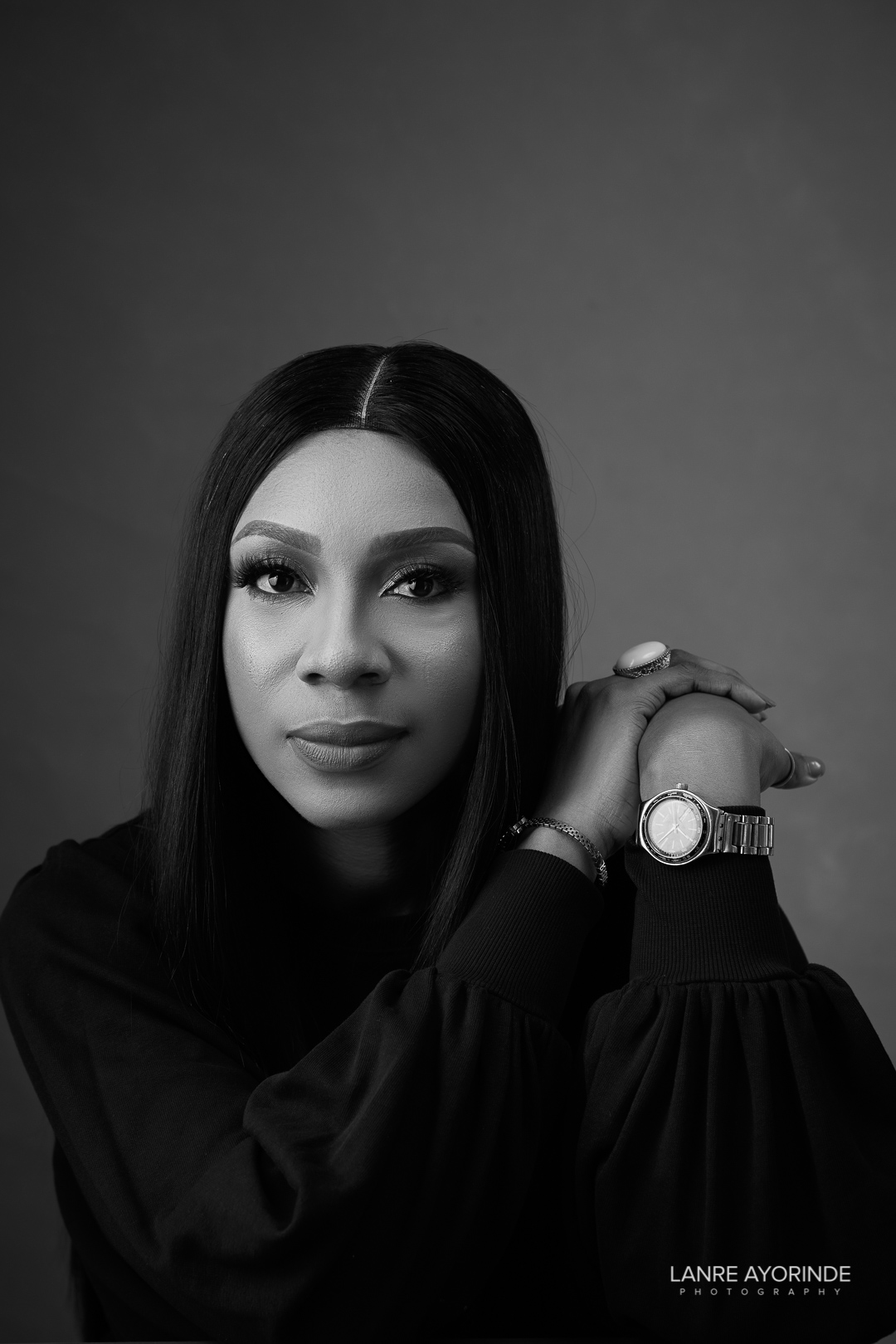
You sit on the board of the PRCA, the world’s largest PR professional body. As one of very few African voices on that board, what conversations are you making sure happen that were not happening before you walked in?
I have always said you have no right to be in the room if you don’t speak when you are there. Whether it’s a Zoom meeting with just your colleagues or a board meeting with global leaders, you need to contribute.
So I make sure I bring the African perspective, not as a token perspective, but as an equal one.
Sometimes a conversation may be framed around a UK policy or market reality, and I will say, “This is how I see it from where I sit.” I don’t live in the UK, so perhaps that particular policy does not affect me directly. Still, I can bring the perspective of an African communications professional working in one of the world’s most dynamic markets.
Africa is not coming to these conversations to be told what to do. We are coming as equal partners, with knowledge, experience and perspectives that are valuable to the global profession.
There is also a lot we can share with the world. We have the youngest populations, rapidly changing markets and communications environments that require incredible adaptability.
I’m also grateful for the relationships that have developed through these platforms, including our work with international organisations such as ICCO. It allows us to share what is happening in Nigeria and across Africa and, importantly, to create opportunities for African work and African professionals to be seen globally.
In 2026 you became one of the few Africans appointed as a PR Lions Juror at Cannes Lions. Sitting in that jury room, what did you see about how the world judges African communications work?
I was a shortlisting juror, so my work happened before we got to Cannes. We were responsible for evaluating and ranking the hundreds of works that would make the shortlist for consideration in our category.
Africa has the talent. What we need is more work at that global level and more of our best work entering and competing consistently.
This year was particularly exciting. The “Real Nigerian Prince” campaign for Vaseline, headlined by a real Nigerian prince who is also a renowned actor, won a Gold Lion and four Bronze Lions, and it was one of the entries that I evaluated. Seeing it recognised in my category and across other categories on the world’s biggest stage was incredibly gratifying.
A Kenyan agency also won Africa’s first Grand Prix award, the highest level of recognition at Cannes Lions. That was a significant moment. But we should not be satisfied yet.
One of the challenges is that Africa does not have enough large indigenous communications agencies with the scale, resources and infrastructure to develop work and take it through the entire global awards process. We have many talented professionals, but we need to build more institutions around that talent.
And I don’t want African work to be judged with an “African lens” because people feel sorry for us or want to give us a diversity vote. I don’t want pity. I want the work to be judged against the best work in the world and to win because it deserves to win.
I was also encouraged by the intentionality around diversity on the Cannes jury this year. There were more diverse voices represented, including people from markets that historically may not have had that level of representation.
Nigerian communications is producing brilliant women at every level, and still struggling to put them at the top. From where you sit, what is the real reason for that gap?
Let’s be honest, patriarchy and structural inequality are still very real.
We have an industry full of incredibly capable women. Yet, in its over 60 years of existence, Nigeria has never had a woman president of the Nigerian Institute of Public Relations (NIPR) at the national level. It is difficult to look at that and say the problem is a lack of qualified women.
The issue extends beyond PR and way beyond Nigeria. I saw a post from UN Women asking people to list the top 10 countries that have achieved gender equality, and it was an empty list that ended with 3 sad words: “there are none”. Women are still paid less, negotiated with differently, and often judged by standards that are not applied to men.
And there is still that famous glass ceiling that women are expected to shatter.
But I am encouraged because more women are refusing to wait for permission. Many are building their own companies, creating platforms and creating the spaces in which they want to lead. Platforms like Leading Ladies of Africa, the Nigerian Women In PR, and so many more.
I am one of those women. I created the PR Power List. And I love that, without setting out to make it a “women’s thing”, women continue to be strongly represented on the Power List purely because of the quality of their work.
We shouldn’t have to create opportunities because we are women. We should create opportunities because we are excellent. But until the structures are genuinely equal, we have to keep pushing those doors open, or breaking them down where necessary.
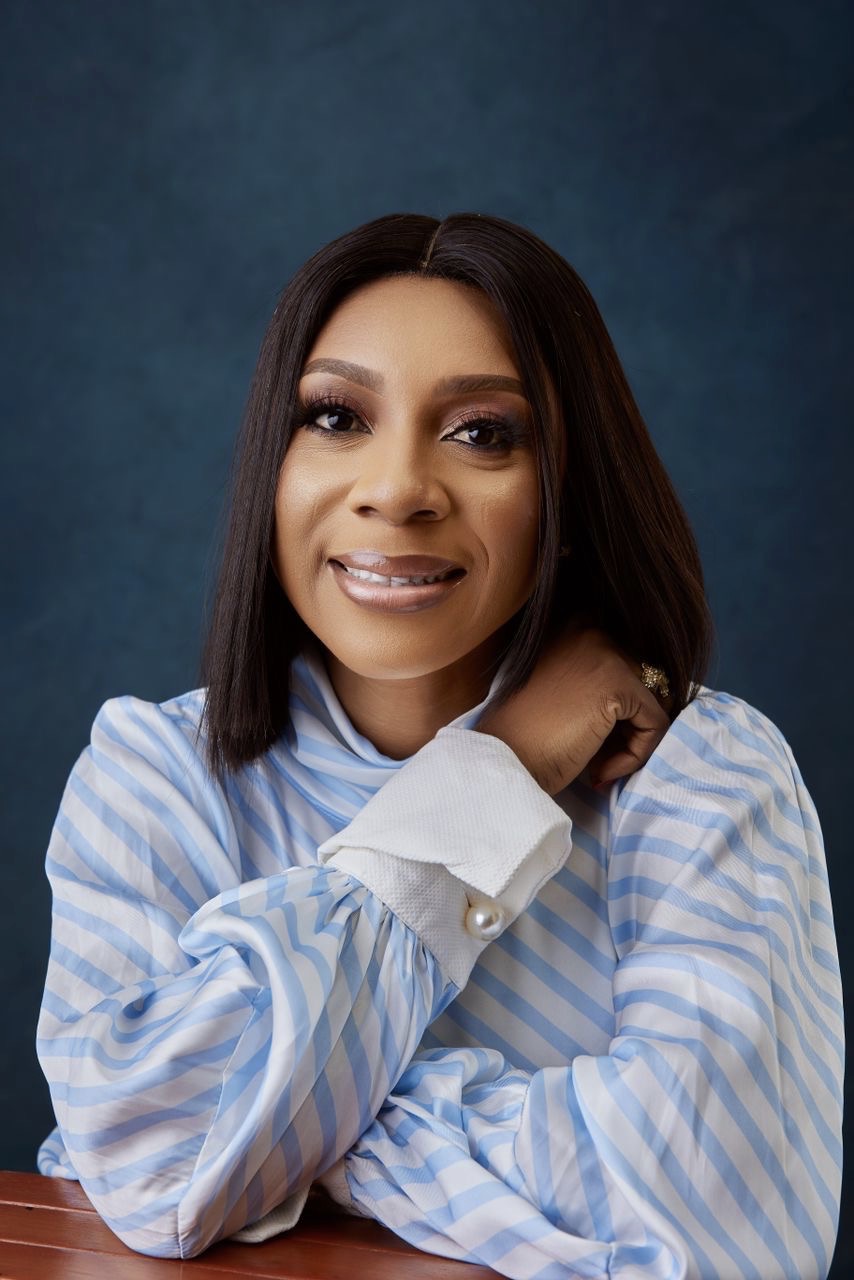
You graduated top of your class, built a consultancy, launched a publication, created an industry platform, and earned a seat on global boards. What has building that kind of career as a Nigerian woman actually required of you?
It has required excellence, hard work, intentionality and resilience.
From when I was in kindergarten, I was always top of my class. In secondary school as a boarding student, during prep times, you may find me drawing or writing stories, but I would never go into any exam hall unprepared. I may not read every day, but I will enter every exam hall ready, and that has helped me.
Career-wise, I genuinely love what I do. I can be on a two-hour train journey and think, “Great, I have two more hours to focus on work.” So I have never experienced hard work as something I was being forced to do. I enjoy the work.
But building a career as a Nigerian woman also requires knowing who you are.
When I started my business, I went into rooms where people often underestimated me because I was young or because I was a woman. Sometimes men would be inappropriate. Sometimes they would question why this “young girl” thought she had the authority to tell them something.
I learned to put my head down, do the work and let the calibre of my output speak so loudly that it silenced the noise. But I also learned to be assertive about my credentials when I needed to establish why my voice should be heard.
Looking back, the entrepreneurial seed was always there, even when I couldn’t see the full picture. When I graduated university, I planned to build a career in public health. Yet, in my university yearbook, under “Future Ambition,” I wrote that I wanted to become one of the most successful entrepreneurs to ever come out of the institution. I
I didn’t even have a business idea at the time. I thought I was going to get a corporate job, then pursue my master’s in public health and eventually build a big healthcare centre.
Life obviously had other plans. But when I look back, I guess part of me already knew.
PR eventually chose me. People began coming to me to solve communications problems, and I realised I had an instinct for seeing things before they became obvious. From there, the work began to speak for me. Clients referred me and opened doors for me. And I kept showing up.
I also believe in being intentional. When I look at my career now, there are things I once admired from a distance that have become part of my everyday reality. People I once hoped I could meet are now people I can call, invite to events and collaborate with.
That doesn’t happen by accident. You have to do the work and be intentional about where you are going.
You are passionate about developing the next generation of communications leaders. What do you want a young Nigerian woman entering PR today to know before she starts?
Boss before you brand.
Don’t enter PR simply because it looks glamorous or because the barriers to entry appear low. Enter because you actually want to do the work. Your voice matters. Your perspective matters. But you have to earn the authority that comes with them.
I see a lot of people putting “PR professional” beside their names without developing the competence to back it up. There is nothing wrong with building your personal brand, but your work has to come first.
Do the work. Do it well. Learn the craft. Understand strategy. Build your expertise. Then tell people what you are doing.
When I started, I was very comfortable being invisible. I took my clients’ visibility seriously, but not my own. I left my LinkedIn untouched for years because I thought, “I’m doing the work; I don’t need to be seen.”
Eventually, I realised that I also needed to share my own perspective. I needed to be an ambassador for GLG Communications, for GLAZIA and everything else that I was creating.
So yes, build your brand. Leverage social media. Set goals, create a vision board. Dream big. But get ready to do the work.
And don’t be discouraged by how far ahead someone appears to be. Some of the people I once admired from a distance are now people in my circle. Do the work, and your world will expand.
You have spent your career shaping how others are perceived. What do you want people to say about Omawumi Ogbe, not as the professional, but the woman?
Interestingly, I think the things people say about me as a professional are also reflections of who I am as a woman.
I would hope people say that I am hardworking, kind, honest and solution-focused. You can’t come to me with a problem and leave the same. I may not solve it totally for you, but you will leave with greater clarity about what to do next.
You can count on me to always show up. A lot of that comes from my parents, who are two of the kindest people I know. They both taught us that how you treat people matters, regardless of what they can do for you.
My mother taught me some very important lessons about kindness and generosity. I remember once, when I was in primary school, a classmate broke my beautiful water bottle. They replaced it, and I took the new one home. My mother looked at it and said, “No. Take it back.” She taught me that you don’t demand things from people simply because something happened to you.
Another time, she was preparing gifts for a very wealthy friend. I asked her why she was going to the trouble when this woman could afford anything. My mother reminded me that people who have everything don’t necessarily have many people who think to give them something.
Those little lessons stayed with me.
My personal motto has always been “do unto others as you would have them do unto you”. I actually put that on my Facebook profile many years ago after seeing the principle in the Bible as a child.
That is how I try to live – with kindness, honesty and excellence.
I genuinely believe people are the most important part of anything we do. You cannot build a company, a career, a movement or a life without people.
So when I leave a room, a relationship or an institution, I want to know that I left in good faith. Not because I have calculated how someone will speak about me later, but because that is how I want to live.