Every month, hundreds of millions of women and girls across the world face a choice no one should have to make, managing their period with dignity, or eating. In low and middle-income countries, 613 million people who menstruate are still turning to rags, toilet paper, and leaves because purpose-made menstrual products are either unavailable, unaffordable, or both. Period poverty is not a niche issue. It is a health crisis, an education crisis, an economic crisis, and it has been hiding in plain sight for too long.
Across Africa, a new generation of women is refusing to look away. They are building enterprises, designing innovations, and dismantling the systemic barriers that have kept menstrual health off the agenda for generations. They are building enterprises, designing innovations, and dismantling the systemic barriers that have kept menstrual health off the agenda for generations. They are not waiting for the world to fix it. They are fixing it themselves.
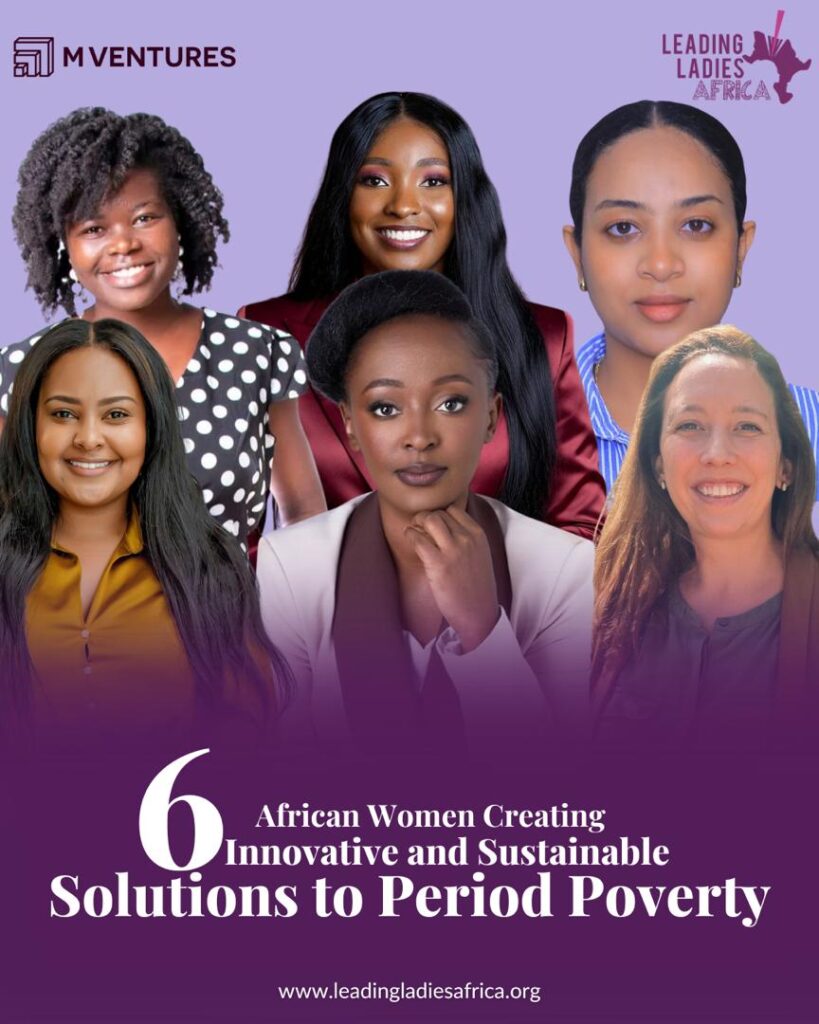
Meet 6 African women creating innovative and sustainable solutions to period poverty. And if you have been building something just like this, here’s something for you.
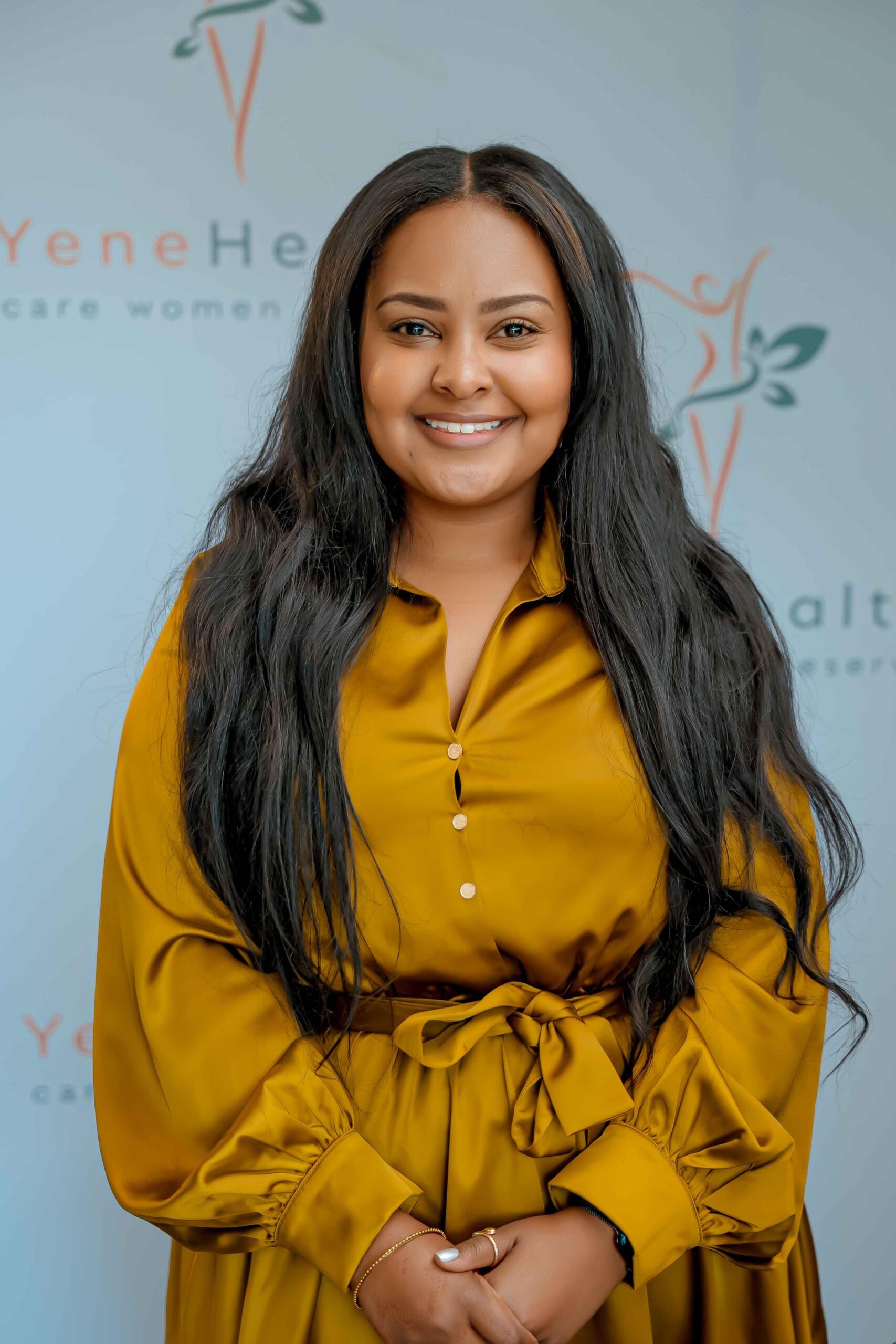
Kidist Tesfaye — As the Founder and CEO of YeneHealth, Kidist Tesfaye is doing something that sounds simple but has never been done at scale in Ethiopia, putting every tool a woman needs to manage her health in one place. Period tracking, telehealth, an online pharmacy, health education, and a wholesale distribution platform for pharmacies and health facilities, all under one roof, all built specifically for African women, by an African woman who understood the gaps from the inside. Born in Ethiopia and raised in the United States from the age of two, Kidist spent years in American banking before transitioning into healthcare and returning to Ethiopia in 2016, driven by a conviction that her birth country needed her expertise more than any boardroom in the US did. She went on to serve as Director of Innovative Strategies at St. Paul’s Hospital Millennium Medical College and as an Advisor to the Minister of Health before founding YeneHealth in 2022.
A Harvard Master’s graduate with a focus on entrepreneurship and doing business in Africa, Kidist is now launching YenePads, YeneHealth’s own line of reusable and disposable menstrual products, deepening the company’s commitment to last-mile delivery and women-centered design. A founding member of the Ethiopian Sanitary Napkins Association, Co-President of the Harvard Alumni Entrepreneurs Africa Chapter, and advisory board member to startups across the continent, Kidist Tesfaye is not just building a company, she is building the infrastructure that women’s health in Africa has always deserved.

Mitchelle Njoroge — Virtuous Life founder and CEO, Mitchelle Njoroge looked at the menstrual care industry and saw two crises hiding in one product; chemicals irritating women’s bodies and plastic choking the planet then decided to solve both at once. Her solution is elegant, practical, and long overdue: ultra-thin, leak-proof, biodegradable period underwear that lasts up to 3.5 years, replaces hundreds of single-use products, and works for everybody. Founded in 2024, Virtuous Life has already designed three distinct product lines serving teenagers, young professionals, Islamic, Indian, and intersex communities across urban and peri-urban East Africa, making it one of the first period underwear brands distributed at scale across the region.
Since inception, the company has diverted over 4.4 tonnes of non-biodegradable, chemical-heavy waste from the environment. A Kenyan tech professional turned menstrual health innovator, Mitchelle Njoroge is not just redesigning a product, she is redesigning the conversation around what women deserve from their period care.
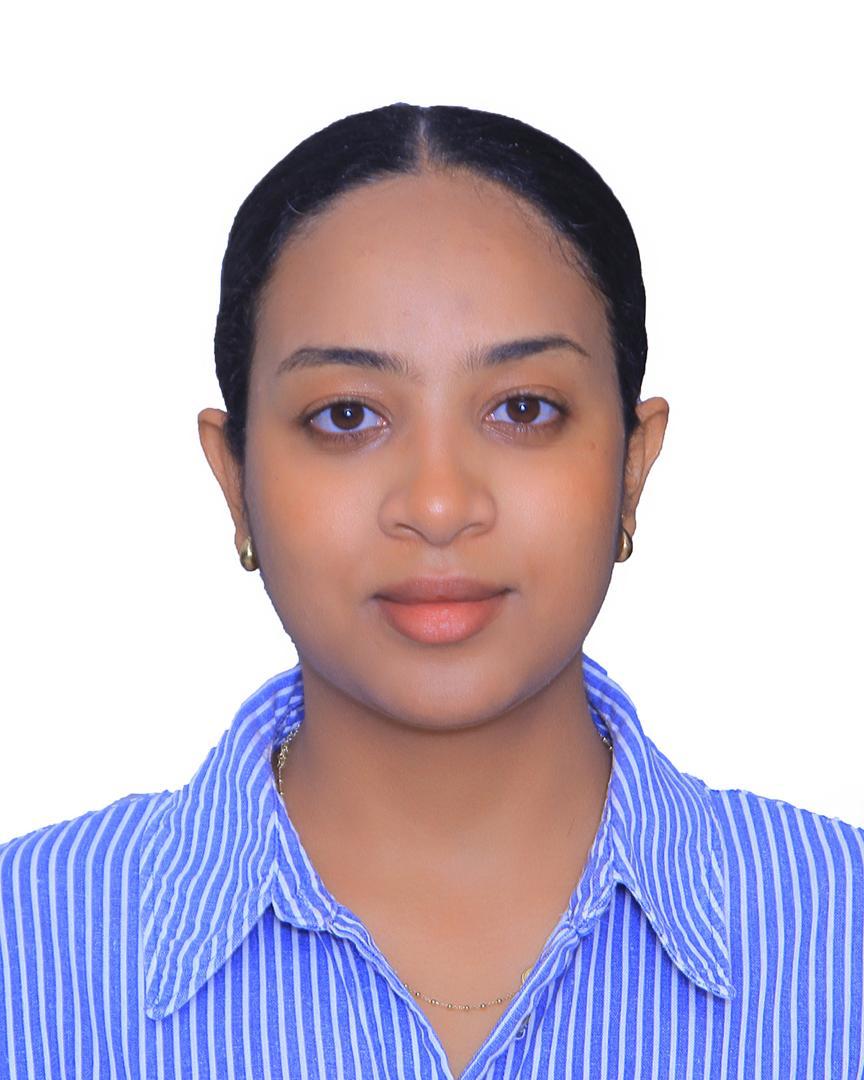
Dr. Tsebaot Asmelash — When Dr. Tsebaot built Ngat reusable pads, she didn’t start with a business plan. It started with a moment of personal struggle in rural Ethiopia, where stigma and scarcity made accessing a sanitary pad feel like an impossible task. That moment didn’t just stay with her. It became the foundation of Ngat, an Ethiopian women-led social enterprise that manufactures reusable sanitary pads, baby diapers, adult diapers, postpartum underwear, and related hygiene products, all designed to give women and girls affordable, dignified access to the products their bodies need. Operating at the intersection of period poverty, sustainability, and menstrual health education, Ngat is not just making products, it is dismantling the stigma and systemic barriers that have kept menstrual health off the agenda in communities across Ethiopia for far too long.
Dr. Tsebaot Asmelash started with a personal experience that should never have happened and built a company determined to make sure it never happens to anyone else.

Blandine Umuziranenge — Kosmotive founder and CEO, Blandine Umuziranenge grew up knowing what hardship felt like, and she built an entire enterprise to make sure that hardship never has to include something as fundamental as access to a menstrual pad. She has reached 8 million people and distributed over 2 million reusable KosmoPads across Rwanda, Kenya, DRC, and Central Africa, one wash at a time. Growing up shaped by early hardship and an unrelenting hunger for education, Blandine forged a path that crossed IT, filmmaking, social innovation, and global leadership, earning more than 70 fellowships including the Obama Leaders Program, the Mandela Washington Fellowship, and the Clinton Global Initiative. Her product, KosmoPads, is engineered to last up to 120 washes, delivering an affordable, eco-friendly alternative to disposable products in a country where 18% of women and girls experience period poverty.
In 2025, her work exploded onto the global stage, a Top 20 Africa’s Business Heroes finalist, FemSTEM Africa Award winner, featured on the Nasdaq billboard in Times Square, and selected to represent Rwanda and Africa at Goalkeepers in Abu Dhabi and the CGI Annual Meetings in New York. Blandine Umuziranenge is not just manufacturing pads, she is manufacturing a world where menstrual justice is non-negotiable.

Nancy Nyaleso — As the Executive Director of Empower HER Initiative, Nancy Nyaleso has done something quietly revolutionary, she took the financial barrier standing between women and their menstrual health and dismantled it with a bracelet. DIGNIFY, EHI’s flagship innovation, is a menstrual health e-wallet connected to payment-enabled bracelets and smartcards that allows women and girls to save as little as KES 5 a day toward menstrual products, removing the crushing burden of upfront costs and making consistent, dignified access to period care possible for low-income communities across Kenya. Since inception, Empower HER Initiative has directly impacted over 14,337 families, facilitated the distribution of over 18,000 menstrual products, and built a model that combines menstrual health education, local manufacturing, and innovative financing into one integrated system.
A Kenyan social entrepreneur currently pursuing a Master’s in International Development at the University of Edinburgh, Nancy understands that period poverty is not just a health issue but an education issue, an economic issue, and a dignity issue and she is building scalable solutions that treat it like all three.
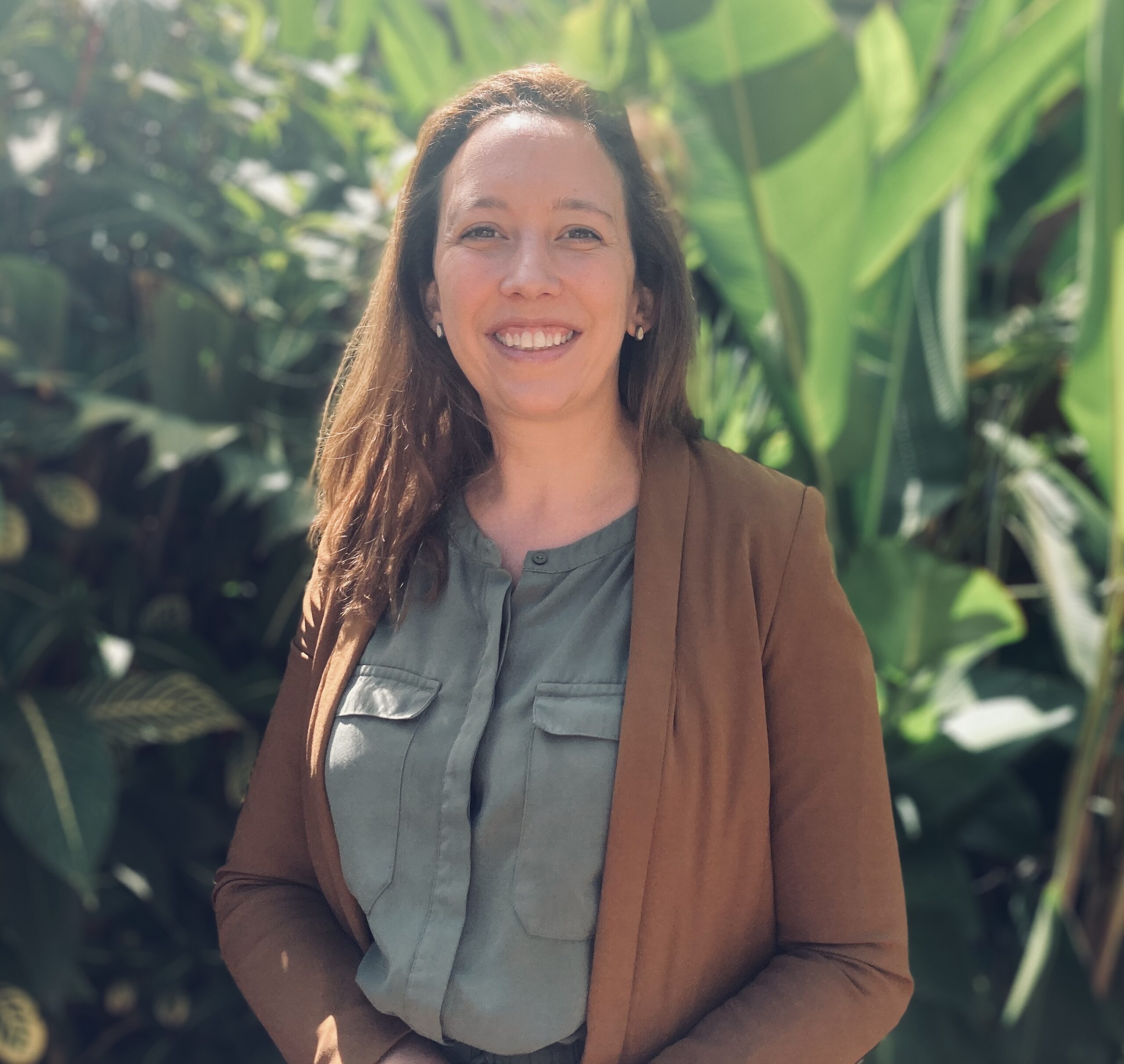
Michelle Tjeenk Willink — At AFRIpads, the company Michelle Tjeenk Willink leads as CEO, the belief is straightforward and uncompromising, overcoming menstrual barriers brings the world one step closer to gender equality, and everything the organisation does is built around that conviction. A Ugandan-based manufacturer of reusable sanitary pads, underwear, and waterproof bags exported across Africa, AFRIpads sits at the intersection of product quality, menstrual health education, and real evidence from the lived experiences of women and girls. With 15 years of global experience spanning financial education, entrepreneurship, gender equality programming, and the private sector, Michelle arrived at AFRIpads with a conviction that has only deepened with time, that public-private partnerships are the most powerful tool available for building pragmatic, scalable solutions that can actually move the needle on gender inequality. At AFRIpads, she oversees not just manufacturing but advocacy, data collection, and menstrual health education, because she understands that a pad alone is not enough.
The product has to be accompanied by information, evidence, and a shift in the culture that surrounds it. AFRIpads under Michelle’s leadership is not just making products, it is making the case that menstrual health is a gender equality issue that demands serious investment and serious solutions.
These six women are proof that the solutions to period poverty already exist and that African women are building them. What they need now is what every entrepreneur needs to scale: funding, technical support, and access to the right networks.
If you are building a menstrual health enterprise in West Africa, that support exists. M Venture, an initiative by the UN Sanitation and Hygiene Fund and Bopinc is currently accepting applications for its Cohort 4 Product Innovation Track, offering selected enterprises up to USD 30,000 in catalytic grant funding, one-on-one expert coaching, and a peer learning network of menstrual health innovators across the region. The programme is open to legally registered enterprises in Nigeria, Ghana, Côte d’Ivoire, and Senegal working on reusable or biodegradable menstrual products.
The deadline to apply is 1 June 2026. If the work you are doing belongs on a list like this one, do not wait. Apply here