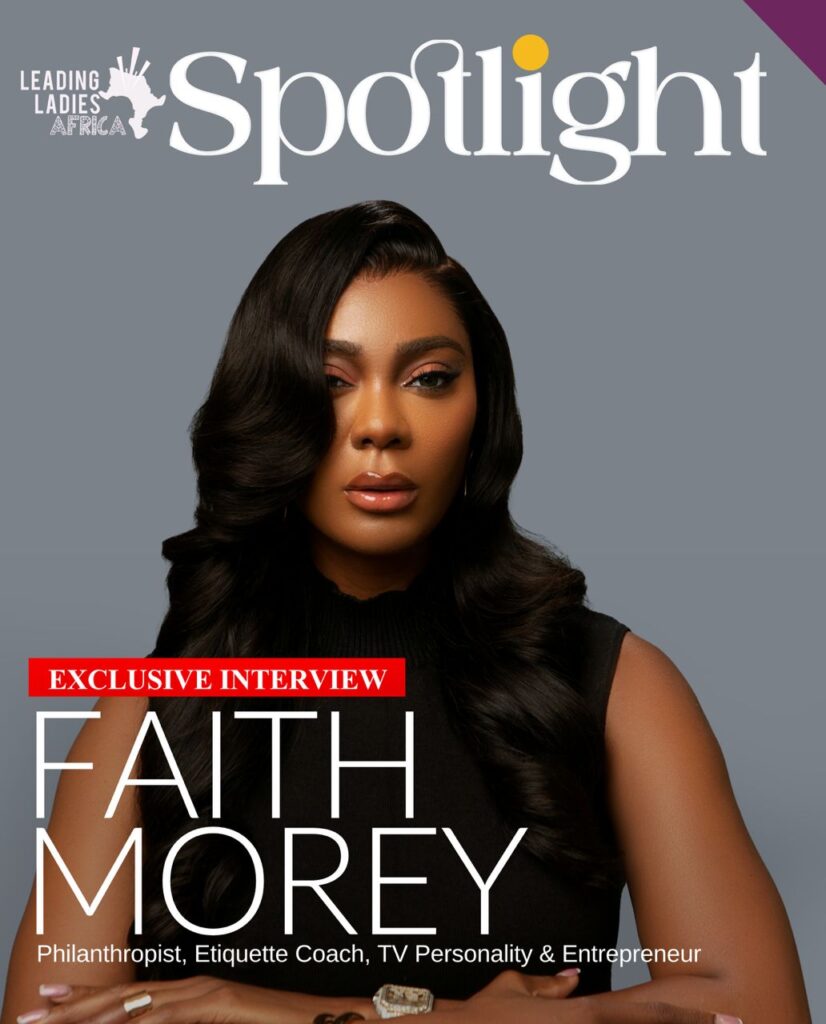
There is a particular kind of woman who refuses to be summarized. Who moves across industries, identities, and continents not out of restlessness, but out of a deep, unwavering sense of purpose. Faith Morey is that woman.
Born and raised in Port Harcourt, Faith entered the world’s attention through the runway — Nigeria’s Next Super Model, Arise Fashion Week, New York Couture Fashion Week, Johannesburg Fashion Week. She built a premium clothing line, carved a niche in lifestyle and entrepreneurship, and established herself as a figure of influence across fashion and entertainment. But even as the world was busy defining her by her visibility, Faith was quietly building something far deeper.
Today, she is the founder of two institutions that together tell the fullest story of who she really is.
Okachi Charity Foundation is her response to a discomfort she could not pray away, the sight of public schools across Nigeria treated as afterthoughts, holding the majority of the country’s children in classrooms without desks, without toilets, without books, without hope. OCF goes in, rehabilitates classrooms, builds sanitation facilities, provides uniforms, sandals, learning materials, and structured academic recovery programs and restores belief. Faith understands something profound: among the children sitting on those bare floors are future doctors, lawyers, policymakers, and educators. Sometimes all that stands between them and that future is one desk. One pair of shoes. One person who refused to look away.
Gracefully Faith Morey is her answer to a different but equally urgent gap, the women, men, and children who are qualified, capable, and ready, but who lack the social intelligence, emotional composure, and confident presence to occupy the spaces they deserve. It is a life skills movement built on the conviction that confidence is not a personality trait, it is a discipline. And it can be taught.
Across both platforms, Faith’s philosophy is the same: preparation changes outcomes. Access changes lives. And a woman who knows who she is does not need the world’s permission to lead.
This is Faith Morey, builder, changemaker, and one of the most quietly powerful voices in a generation that desperately needs her.
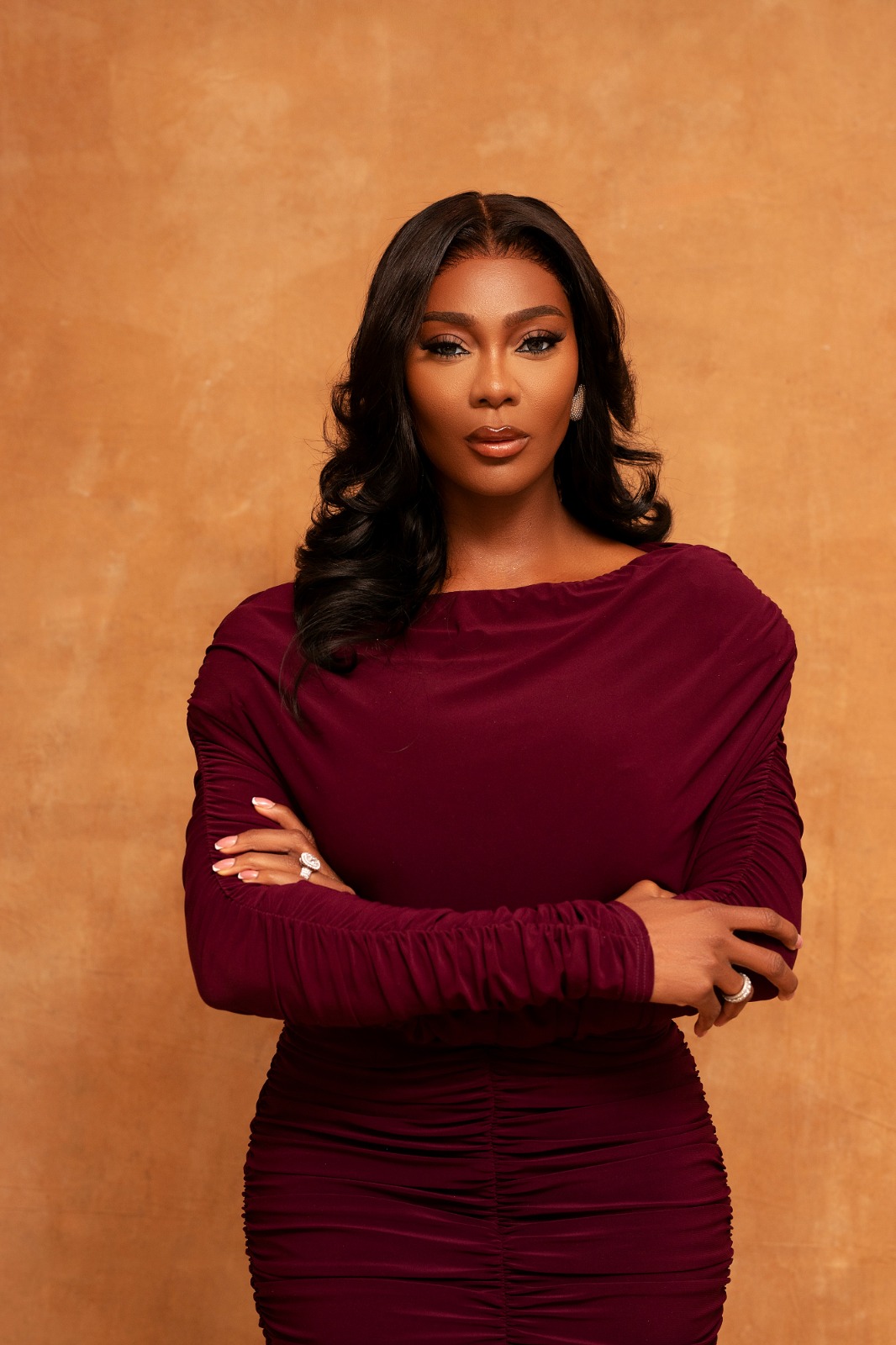
You’ve built two impactful brands, one focusing on underserved schools and the other on women’s leadership. Who is Faith behind the work, and what drives you to do what you do every day?
Faith behind the work is a builder, first; not of impressions, but of outcomes. I am a woman shaped by contrast. I know what it means to come from “not enough,” and I also know what it means to sit in rooms where opportunity is being negotiated in real time.
I see both as leadership gaps, one in policy and resources, the other in confidence and social capital. My work is my response: build the ladder, then teach people how to climb it with grace and strategy.
Every day, I am motivated by the faces Okachi Charity Foundation has met in public schools in rural areas. Our mission is simple: a child’s future should not be decided by their postcode. I am equally driven by the women who message me quietly saying, “I am trying to level up, but I do not know where to start.” A woman’s leadership should not be restricted by the world’s comfort with her voice.
What drives me daily is accountability to the people I serve and the life I believe is possible. Okachi Charity Foundation exists to strengthen public school ecosystems, and Gracefully Faith Morey, our social etiquette platform, exists to strengthen individuals who must navigate those systems with confidence, composure, and clarity.
While many associate Gracefully Faith Morey primarily with women’s development, it is not limited to women. It is for women, men, and children. Social etiquette, emotional intelligence, presence, and self mastery are not gendered skills; they are life skills. These principles must begin early. Many of the disciplines that shape confidence and leadership are meant to be taught from childhood.
Across the United Kingdom, character education, manners, and structured personal development have been increasingly integrated into school culture. In parts of Europe and Asia, schools intentionally reinforce comportment, communication, and civic behavior among both boys and girls, recognizing that leadership begins with how a child carries themselves long before they enter a boardroom.
If we want confident adults, we must nurture confident children. If we want responsible leaders, we must model and teach responsibility early. For young boys especially, social etiquette and emotional intelligence are critical foundations that shape how they engage power, partnership, and responsibility in adulthood.
One is infrastructure and learning recovery. The other is dignity, presence, and emotional intelligence. Both are about access.
Okachi Charity Foundation is making a real difference in public schools across Nigeria. What inspired you to start this work, and what continues to drive you to keep building it?
OCF began with a discomfort I could not pray away. I kept seeing public schools treated like an afterthought, even though they hold the majority of our children. You walk into a classroom and immediately understand that the issue is not only poverty. It is neglect, governance gaps, and a normalization of “manage it.” I could not accept that as a national culture.
What keeps me going is progress and sustainability, even when it is incremental.
When you enter some of the schools we have worked in, you see children sitting on bare floors because there are no desks. You see classrooms where the roofing sheets are unstable, where toilets do not exist, and where children dig holes behind buildings to relieve themselves in 2026. You see schools without running water, where pupils are sent home to fetch water and often do not return that day. You see overcrowded classrooms with four teachers managing over two hundred pupils. You see schools teaching only four core subjects while the broader Universal Basic Education curriculum in Nigeria includes Civic Education, Cultural and Creative Arts, Computer Studies, Physical and Health Education, and introductory vocational subjects that are never delivered because there are no qualified teachers or materials.
We live in a technology driven age, yet we have met children in upper primary classes who have never touched or seen a computer. We have met pupils in Primary Four and Five who cannot spell their own names because their parents cannot either, and there has never been structured academic intervention to correct the gap. We have met children attending school without shoes, wearing torn uniforms held together with rubber bands. In Abuja, we have seen pupils attend school in freezing harmattan weather with only short sleeved shirts. We have seen children who have never owned a toy, whose faces light up at the sight of something as simple as a trick or a doll .
Infrastructure is not cosmetic; it is foundational. That is why OCF’s interventions include rehabilitation of classrooms, reconstruction of unsafe learning spaces, building and renovation of toilets, provision of water access, roofing repairs, donation of desks to remove children from the floor, and structured school supply drives. Our supply initiatives go beyond exercise books. We provide uniforms, sandals, socks, backpacks, writing materials, teacher resources, learning aids, and toys because psychosocial stimulation is part of child development.
Through our Free Summer School Learning Recovery Program, we support pupils who failed or barely passed the academic year. We deploy qualified private school educators to deliver structured remedial instruction in literacy and numeracy, supported by supervised feeding to ensure concentration and inclusion. We integrate skill acquisition modules such as sewing, culinary basics, martial arts discipline training, creative arts, and introductory enterprise exposure to build confidence and life skills alongside academic recovery.
We have worked with children who are highly intelligent but repeat the same class because their parents cannot afford examination fees. When those children are supported, and you watch their confidence return, you realize education is not just academics. It is identity. It is possibility.
Exposure widens aspiration. When a child sees beyond their immediate environment, their imagination expands.
On a personal level, what sustains me is continuity. These are things that someone once did for me when I was younger. To return after twenty years and replicate that cycle is deeply meaningful. My hope is that in the next ten to fifteen years, some of these same children will return to their communities, their states, and their country to do the same. That is how permanent change happens when beneficiaries become builders.
I am driven by the knowledge that among the children we serve are future doctors, lawyers, local government chairpersons, commissioners, policymakers, and educators. Sometimes all that stands between them and that future is one teacher who cares, one classroom that is safe, one pair of shoes, one desk, one opportunity to believe they are not “slow,” but simply unsupported.
As a mother, I see my son in them. I see all eight thousand plus children we have reached as ours ; our responsibility, our champions. I can say the same for our volunteers who serve with dedication and empathy.
Education, for us, is not charity. It is nation building. And we choose to build.
Working with OCF, you’ve seen firsthand the challenges in public schools. What are some of the biggest gaps you’ve noticed, and how can communities, educators, and policymakers work together to address these issues?
OCF have seen firsthand that the gaps in public schools are both structural and relational.
Structurally, the gaps are visible ; inadequate infrastructure, unsafe sanitation, overcrowded classrooms, limited teacher capacity, learning loss, lack of digital exposure, and insufficient teaching materials. But relationally, there are also governance gaps, communication breakdowns, delayed approvals, and sometimes competing interests at the community level.
The reality is that no single actor can fix this alone.
Communities are often more eager than people assume. In many of the schools we have worked with, local leaders and parents are deeply invested. They want their children to succeed. When community leadership is aligned, implementation becomes smoother and more sustainable.
However, we have also encountered situations where approvals are delayed unnecessarily, where internal politics slow down urgent interventions, or where certain stakeholders view the school as a passive system rather than a living institution requiring stewardship. In such cases, progress requires patience, diplomacy, and persistence.
Educators play a central role. Principals and teachers who genuinely care often advocate fiercely for their pupils. We have worked with school leaders who fight for every desk, every book, every opportunity. Their commitment accelerates change.
Policymakers are indispensable. Without policy alignment, infrastructure improvements, curriculum enforcement, and teacher deployment cannot scale. We cannot act independently of education authorities. Our approach is to complement government frameworks, not override them. We write formally, we seek approvals, and we ensure transparency. Sustainable reform must sit within policy, not outside it.
One overlooked challenge is invisibility. Many of the schools in underserved areas are unknown to the broader public. They are not profiled. They are not documented. Bridging that awareness gap is part of our work introducing these schools to stakeholders, partners, and decision makers who can influence change.
Real progress requires shared accountability. When communities, educators, and policymakers see themselves not as separate actors but as co stewards of children’s futures, sustainable transformation becomes possible.
When collaboration replaces competition, reform becomes possible.

How do you engage teachers and school staff in the change process, so that improvements last beyond OCF’s direct involvement?
Lasting change comes when the school can run effectively without us.
At Okachi Charity Foundation, we are clear that we are not designed to remain in one school indefinitely. Our intervention model is catalytic. Within two to five years, a school should be stronger structurally, academically, and administratively. Before launching any project, we ask a guiding question: will this outlive our physical presence?
We engage teachers as collaborators. We listen before we intervene. We identify what is already working and build on it. We introduce simple but structured routines attendance registers, progress benchmarks, mentorship support, and performance reflection so that improvement is measurable, not assumed.
In many of the schools we serve, teacher shortages are significant. Where necessary, we provide volunteer educators and specialist support, particularly in areas like digital literacy and skill acquisition. However, we are careful not to create dependency. Our role is to reinforce, not replace. However, our long-term objective is to strengthen internal systems so the school does not depend on external presence.
Most importantly, we look for teachers who genuinely care. Reform cannot last if those inside the classroom are disengaged. A teacher who sees teaching as stewardship rather than just employment creates transformation that no external funding can manufacture.
Our objective is clear: a school that no longer needs us because it has absorbed the structure, discipline, and standards required to thrive.
You’ve created programs that identify early gaps and provide tools, support, and community partnerships. How do you inspire collective accountability among stakeholders to make real change happen?
For me, accountability begins with respect.
My grandmother taught me something I have carried into development work: you cannot enter a house through the back door. You come through the front, and you speak to the man of the house. In this context, the “man of the house” is not one person. It is the stakeholders the education authorities, the school leadership, and the community gatekeepers who carry both responsibility and influence.
That principle shapes how we inspire collective accountability at OCF. Before we implement anything, we do proper introductions. We meet the relevant stakeholders, explain our intent, ask questions, and listen. We do not arrive with assumptions.
Then we translate goodwill into accountability by making roles clear. Who provides approvals, who safeguards materials, who maintains what after the intervention. We set expectations early, document agreements, and keep communication consistent.
Accountability is sustained through visibility. We show progress , When stakeholders can see the plan and witness outcomes, it becomes harder for responsibility to be vague or abandoned.
We remain diplomatic but consistent because the children cannot afford institutional silence.
That is how real change happens: respect the house, engage the stakeholders, clarify roles, maintain transparency, and keep everyone accountable to the child.
Gracefully Faith Morrey emphasizes grace, clarity, and emotional intelligence. How have these qualities shaped your own journey as a leader?
Grace, to me, is not softness. It is self control. Emotional intelligence has shaped my leadership by teaching me how to stay effective under pressure, how to listen without absorbing chaos, and how to communicate truth without burning bridges.
In development work, relationships matter. You can be right and still lose the room. Gracefully FaithMorey is the discipline of presence, clear language, respectful boundaries, and strategic calm. It helps me lead across different personalities, institutions, and cultures while keeping the mission steady.
Emotional intelligence has also made my leadership more humane. I can hold high standards and still be compassionate. I can be firm without being harsh. That balance is what sustains long term work, especially in environments where people are fatigued by promises and disappointed by inconsistency.
Many women struggle to be seen and heard in leadership spaces. What advice do you give them about showing up intentionally and being respected without losing their authenticity?
If you want to be respected in leadership spaces, stop trying to be liked in them.
Many women believe respect requires becoming colder, louder, or more masculine. It does not. What it requires is social intelligence: understanding the rules of the room, then choosing how you want to play without betraying yourself.
At Gracefully Faith Morey, the message is that authenticity is your foundation, but intentionality is your strategy.
So I tell women to keep their personality, but upgrade their delivery:
Here are three practical shifts that change everything:
- Be authentic, but edited. Not every emotion deserves a microphone.
- Be visible, but not noisy. Speak early in meetings, not at the end when decisions are made.
- Let your boundaries do the talking. How you respond to disrespect, teaches people how to treat you.
This is what Gracefully FaithMorey is designed to reinforce: etiquette as social intelligence, not aesthetics. It is the discipline of presence, communication, and self mastery, whether you are a founder, a teacher, a new graduate, or a parent. The goal is not to become a different woman. The goal is to become an intentional woman.
And yes, this is exactly the reason our Gracefully FaithMorey sessions are built to be practical and intimate, including upcoming engagements in Lagos. Not theory. Real life. Real rooms. Real tools.
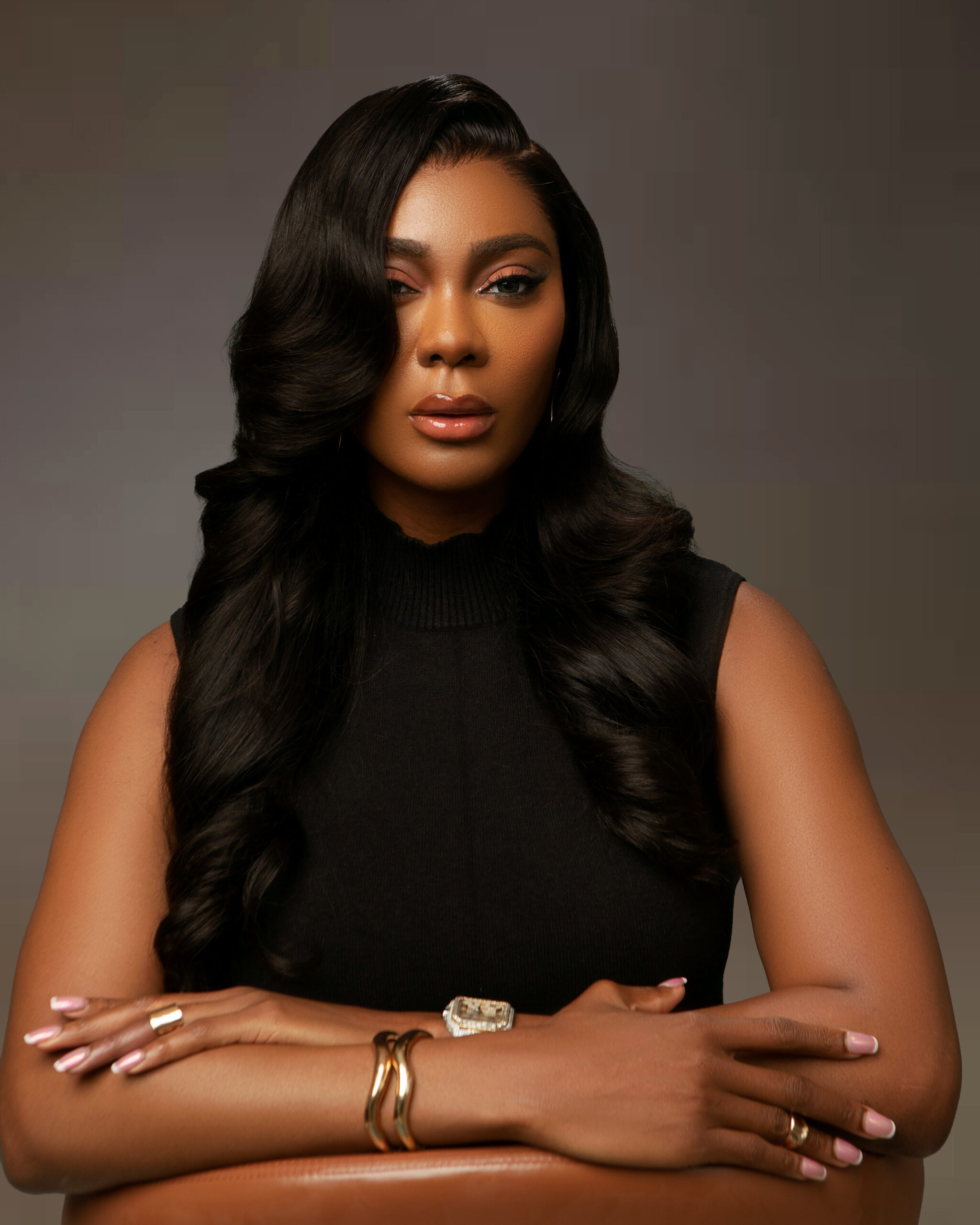
Both your brands are about preparation changing outcomes. How do you help others see the power of preparation in action?
Preparation is quiet power practiced long before the spotlight finds you.
What I have learned over the years is this: what most people call “luck” is usually just readiness meeting an opportunity that arrived fast.
Gracefully FaithMorey exists because I kept hearing the same question in different forms: How were you able to remain composed on The Real Housewives of Lagos through arguments, accusations, and public scrutiny? How did you sit calmly, unshaken, while chaos unfolded around you? How do I carry myself with confidence? How do I stop shrinking?
The answer is emotional and social intelligence. Social etiquette, at its highest form, is self mastery in motion.
Preparation looks different depending on who you are.
I make preparation visible through real life scenarios. I make preparation visible through real life scenarios. A college student does not need a louder personality; they need clarity about their value, the confidence to articulate it, and the emotional steadiness to hold eye contact when opportunity is in front of them. A single mother re entering the workforce does not need perfection; she needs self trust, emotional regulation, and a clear plan for how she will show up consistently even on the days she feels uncertain . A burnt out entrepreneur does not need another motivational quote; they need disciplined systems that protect their energy and sharpen their decision making.
So we break it down into practical tools people can repeat: how to enter a room with presence, how to speak with clarity and brevity, how to build social confidence without arrogance, how to regulate emotion under pressure, and how to present yourself in a way that reflects the life you are building.
Some people call it “fake it until you make it.” I call it practicing who you’re becoming.
That is the heartbeat of Gracefully FaithMorey, intentional elegance and confidence that is trained,not assumed.
This is not about performance,logos or status ; it is about how you think before you speak, how you respond when challenged, and how you carry yourself when no one is applauding. It is about becoming steady enough that your presence speaks before you do.
And yes , it is for women, men, and children. Because preparation , emotional intelligence and composure is not gendered they are life skills .
I see the same truth through OCF. When children receive structure, teaching support, and the right learning environment, you literally watch preparation change outcomes in real time.
Preparation is not glamorous. But it is generational.
What motivates you to keep pushing forward , even when the challenges in both education and women’s leadership feel overwhelming?
If your vision never overwhelms you, it probably isn’t big enough.
I get overwhelmed. There are nights when the weight of building across countries, industries, expectations, and time zones sits heavy. There are days when I feel the stretch of being visible and responsible at the same time.
But overwhelm is not a red flag to quit. It is often the receipt that you are carrying something meaningful.
Big vision comes with big weight. That is the trade.
What I refuse to do is romanticize burnout. I rest. I recalibrate. I disappear when I need to. Because sustainability is more powerful than speed.
What keeps me going? Memory.
I remember what it feels like to start with nothing but belief. I remember what access changes. Once you’ve seen transformation up close, you cannot pretend it does not matter.
So no, I do not quit when it gets heavy. I adjust. I strengthen. I delegate. I return clearer.
Because leadership is not about being unbreakable. It is about knowing when to bend and still refusing to collapse.
If you could give a message to young women watching you lead , what would it be about stepping into leadership with intention and confidence ?
If you want to lead, learn how to sit still when others are shaking. One of the most powerful things I ever learned was that composure is louder than chaos.
When I moved from modeling to TV reality to philanthropy, people underestimated that transition. When I launched Gracefully Faith Morey, people thought it was about aesthetics. When I built OCF, people underestimated its structure and depth .
And through all of that, I remained the same woman. I am a mother. I am a founder. I am a public figure. I have sat in rooms where I was loved and rooms where I was criticized. The constant has been this: when you know who you are, you do not over explain yourself.
And no, you do not lose your authenticity. You refine it.
Young women need to understand this:
Your reaction is your résumé.
Leadership is not about dominating rooms. It is about stabilizing them.
Train your emotions, learn when to speak and when silence will do more work.
And when you enter the room, enter like you belong not like you are grateful to be tolerated. That is how you protect your dignity while still being powerful.