“If you empower a woman, you empower a community. When women lead, things change.”
— Ngozi Okonjo‑Iweala, Director‑General, World Trade Organization
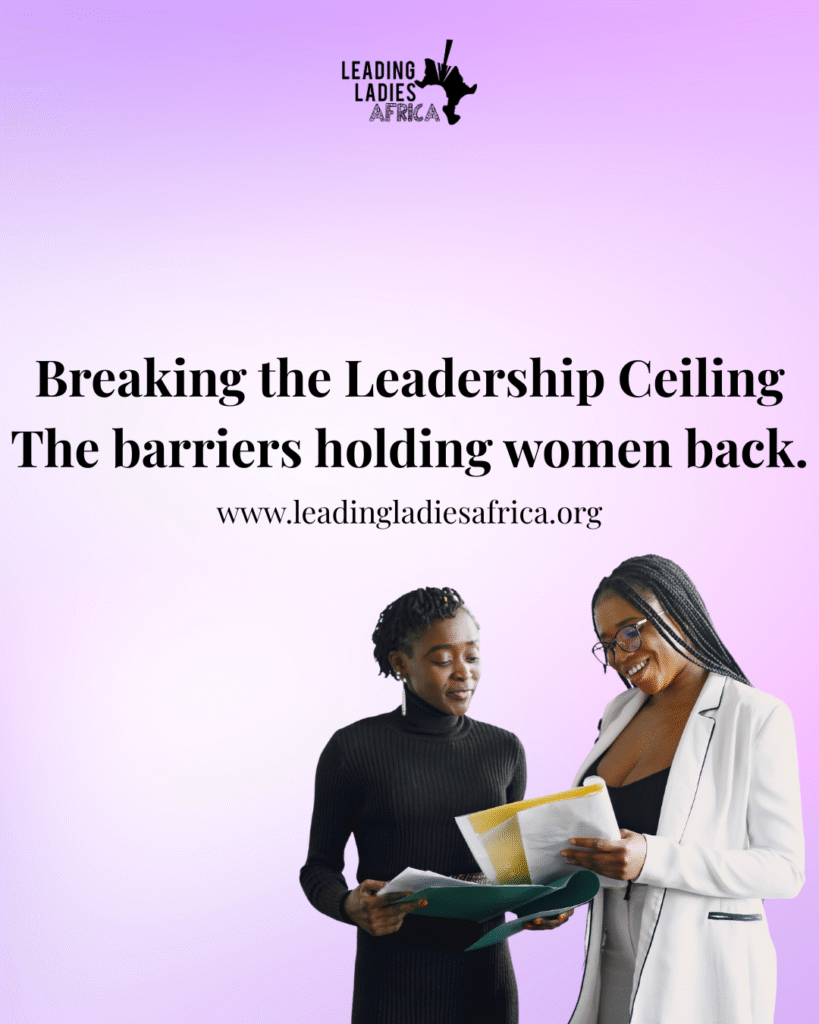
And yet, even now, women are still being held back from leadership roles.
There’s a glass ceiling everywhere, at work, in schools, in governance. And it’s not just personal limitations holding women back; it’s systems, structures and cultures that refuse to evolve.
According to UN Women and the Inter‑Parliamentary Union, as of January 1, 2025, women hold only 27.2% of parliamentary seats globally. Fewer than 23% of cabinet positions are led by women. If we continue at this pace, gender parity in parliaments may only happen by 2063, and equal cabinet representation not until 2077.
The business world isn’t any better. Women hold just 30% of managerial roles, and only 6% of CEOs are women (ILO)
What’s Holding Women Back from Leadership?
We’ve heard countless women talk about the barriers they’ve faced, and honestly, the list is long. But here are a few that come up again and again:
Gender Bias
When Ethiopian Prime Minister Abiy Ahmed appointed Sahle-Work Zewde as the country’s first female president, it was groundbreaking, not because women weren’t capable, but because the opportunity had never existed before.
Too often, women are seen as “too emotional” or “not tough enough”, regardless of their skills or experience. This bias isn’t just unfair, it’s deeply limiting.
Harassment and Hostile Environments
A UN Women report found that 1 in 3 women globally has faced workplace harassment. That’s not just a statistic, it’s a sign that many workspaces are unsafe and unsupportive. It’s hard to aim for leadership when you’re constantly trying to survive the day.
Imposter Syndrome
Even the most accomplished women sometimes question themselves. Michelle Obama once admitted:
“I still have a little \[imposter syndrome]. It never goes away… but you have to push through it.”
When society constantly tells women they’re “lucky” to be in the room, it’s no surprise that many internalize that message.
Workplace Discrimination
In Nigeria, fewer than 5% of CEOs of major companies are women, even though women make up a huge portion of the workforce. From unequal pay to being passed over for promotions, many women are sidelined simply because they’re women.
How Do We Change This?
Let women lead, not as a favour or as a checkbox, but because they’re capable, qualified, and ready.
Let’s normalize women in power. Let’s question systems that exclude them. Let’s call out bias when we see it, and dismantle the cultures that keep women playing small.
Because here’s the truth:
When women lead, communities thrive, workplaces transform, and the world moves forward.
It’s time to stop talking about potential and start clearing the path for women to rise.