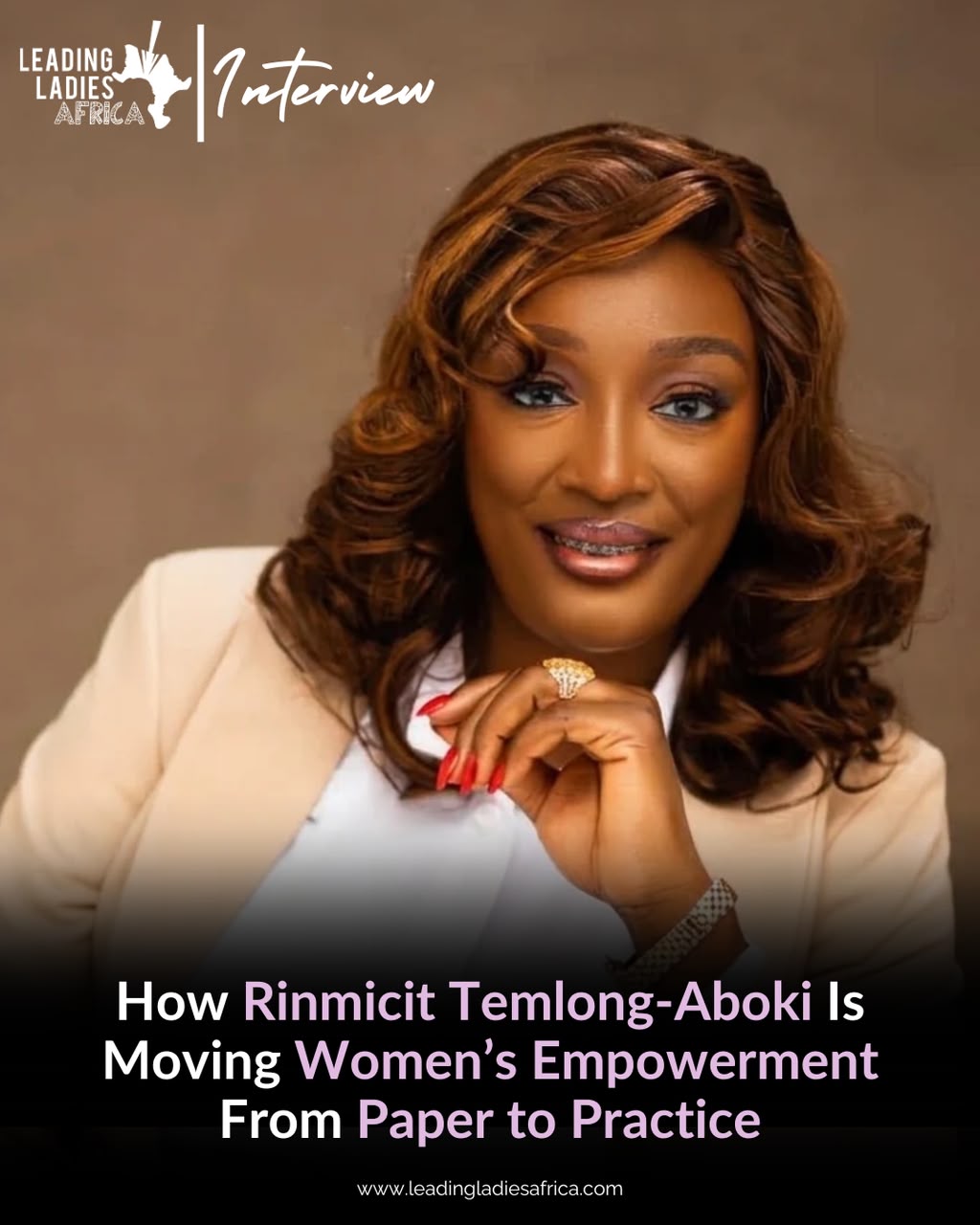
Nigeria has never had a shortage of policies. What it has too often had are promises that women could not feel in their everyday lives, and Rinmicit Temlong-Aboki has spent years working to make sure one of them does not end up that way.
She came to this work sideways. Her background was in research on conflict, peacebuilding and security, and she began by trying to understand why communities fall into conflict and what it takes to build a lasting peace. But in every community she visited, the same questions followed her. Who is calling the shots here, whose voices are shaping the decisions, and who is left living with the consequences? Women were putting shattered lives back together, farming through the effects of a changing environment and keeping families and markets running, yet they were almost entirely missing from the policies and budgets that shaped their lives.
That gap took her into gender advocacy and policy, and eventually into the drafting of Nigeria’s first National Women’s Economic Empowerment Policy and Action Plan, adopted in 2023 with targets running to 2028. She has served as a Technical Adviser and Consultant to the Federal Ministry of Women Affairs, sits on the Presidential High-Level Advisory Council on the Support of Women and Girls in Nigeria, is a Partner at Afrique Insights and works as a Consultant and Gender Lead at Albright Stonebridge Group.
What makes her voice worth hearing is how honest she is about what comes next. A policy on paper, she will tell you, is only the beginning, and the April 2026 mid-term review was “not a statement of victory” but “a call to action.” Alongside the policy work, she runs Mentor Monday and the L.E.A.DHer Initiative, where she is building something she believes Nigerian women need even more than encouragement: sponsors who will put their names forward in rooms they have not yet entered.
In this conversation, Rinmicit talks about what it takes to move from policy commitments to results women can see in their income and their choices, why economic empowerment cannot succeed without confronting the expectations around work, money and care, and what she wants young women to know before they walk through the doors where decisions are made.
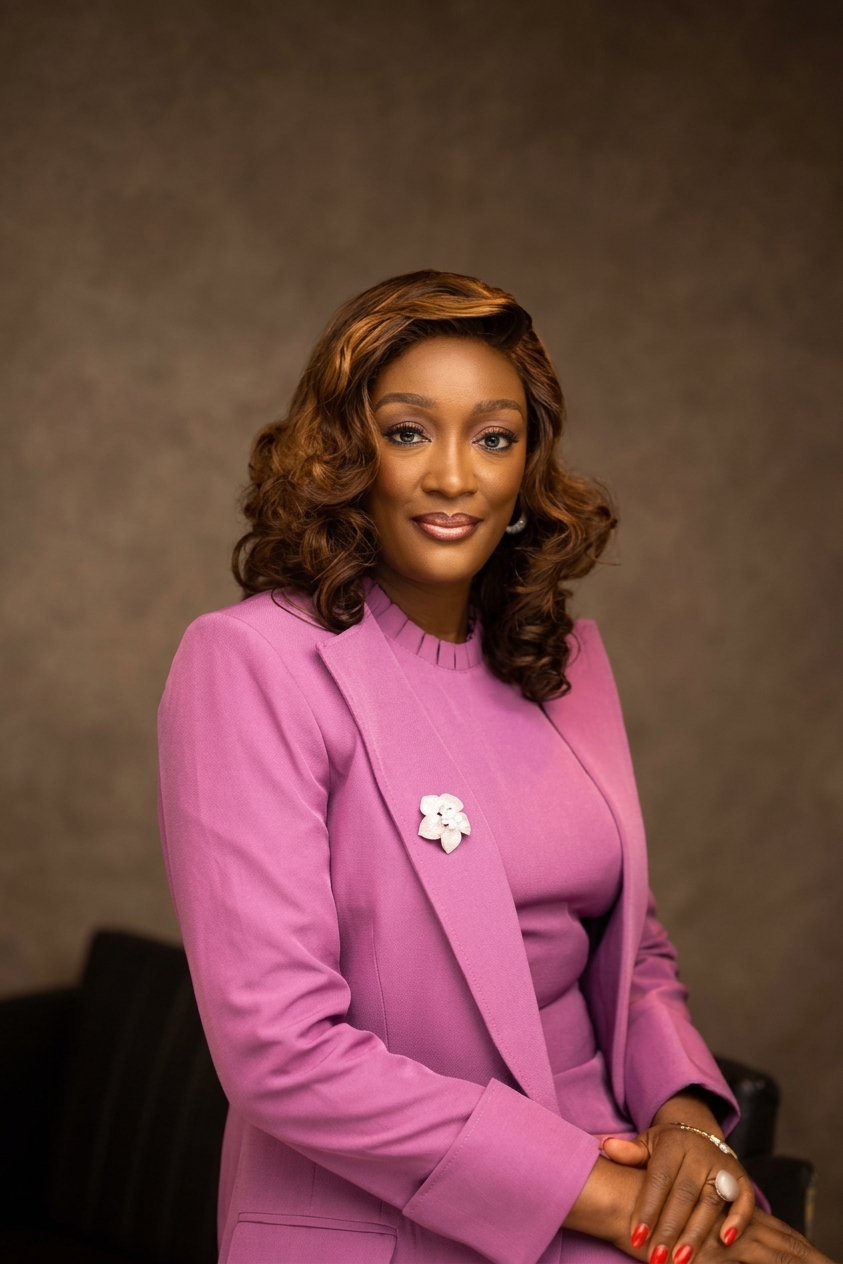
You’ve spent over 15 years working in gender advocacy, policy and development. What first drew you to this work, and was there a particular experience that made you realise you wanted to dedicate your career to advancing women’s rights and opportunities?
I never consciously set out to have a career in women’s rights and gender issues. My professional background was in research on conflict, peacebuilding and security systems. I wanted to explore why conflicts happen, what communities go through when they are in conflict, and what it takes to establish durable peace. Over time, I became more and more interested in the linkages between the environment and livelihoods, and specifically the vulnerabilities of communities and women, whose livelihoods are closely linked to natural resources and farming.
But with each step of my research, and from the communities I encountered, I felt a pattern developing. I kept asking: who is calling the shots? Whose words are we heeding? Whose narratives are informing our policies? And who is dealing with the consequences of those decisions?
Women were at the heart of their communities through hard times. Women in conflict-affected areas were putting their shattered lives back together, from caring for their families to informal trade to community rebuilding. Women in rural communities were grappling with the effects of environmental change on their families, with reduced access to the services, information and support that could help them adapt. But in official policies, decisions and access to finance, women were totally absent.
That disconnect resonated with me. Women were carrying so much of the load to keep their families and communities alive and functioning, yet they had very little voice in the policies and processes that affected them directly. It made me realise that conversations on peacebuilding, economic development, climate resilience and good governance cannot be had without women.
I began to see that gender is not something to be put on the back burner as an afterthought. It is fundamental to whether any of the work we do will be successful at all. If we are to bring about sustainable change, it is not enough to focus on getting women involved. We also have to examine the systems that create barriers to opportunity and resources.
That realisation led me to my professional path. It deepened my engagement with gender work, research, advocacy and policy, and reaffirmed my belief that what women face “on the ground” needs to drive what we do at the institutional and national levels. I carry that firmly in mind today in whatever I do: economic empowerment, gender equality, peacebuilding and climate-related work.
You’ve been involved in Nigeria’s National Women’s Economic Empowerment Policy and Action Plan. For women who may not be familiar with it, what does this policy aim to change about the way women participate in Nigeria’s economy?
The National Women’s Economic Empowerment Policy and Action Plan is, in my opinion, an attempt to change the status quo around how Nigerian women work, earn and participate in our economy. I have a good sense of this when I look at the lives of women in this country. Nigerian women work very hard. They run businesses from home, work in our markets and on our farms, and look for ways to provide for their families and communities. Yet many of them are not being paid, protected or given access to the economic opportunities that come with working hard.
I kept observing the same thing during the Women’s Economic Empowerment Policy Dialogue, conducted by the Federal Ministry of Women Affairs in collaboration with the then Federal Ministry of Finance, Budget and National Planning. In different states and areas, women are engaging, serving and producing, but most do not have access to what will make them thrive: markets, information, affordable financing, land, productive resources and a voice in decisions affecting their own lives.
That experience was substantive proof of our theory: that you cannot keep tinkering with women’s economic hardship through sporadic subsidies, starter kits and training programmes while disregarding the deeper, larger challenges that limit their success in the first place. Although these measures have their moment, they are not enough to get to the heart of the problem. What if a woman can grow her business, for example, yet cannot access capital? What if a woman is growing food for the market but cannot influence input prices or access land and markets?
The Policy brings on board cross-cutting accelerators that can contribute to women’s economic participation: strengthening women’s financial inclusion and digital financial literacy; improving access to technology opportunities in the digital economy; fostering conducive environments through household, workplace and community policies and practices; and improving the use of gender data to make government processes gender responsive. The Policy was developed to guide the response to these questions. Agriculture, entrepreneurship, the labour market, emerging industries, and education and skills acquisition are the five pillars of the National Women’s Economic Empowerment Policy and Action Plan, adopted in 2023.
Another area where I am quite opinionated is the need for government to change the way it plans, budgets and measures progress. How can policies meet the needs of women if the data never reflects their lived experiences? How can we expect resources to reach the women who need them if gender inequality is not considered in budget proposals? That is why the policy includes gender-responsive budgeting, better data, measurable goals and an action plan to 2028.
To me, the real importance of this approach is that it shifts the focus from what we can do for women to what has to change so that women get the credit for their ideas, their energy and their effort. Women’s economic empowerment is not a favour or charity. It will help make our economy more resilient.
Yet, if women cannot live the policy, it will have no effect. So implementation is extremely important, particularly at the state and lower levels of government. Women have to be able to tap into the benefits, know what those benefits are and hold institutions accountable for them.
I still want to know what must happen to ensure that the Nigerian woman’s perseverance pays off in the end, as we asked during the consultations. We have the means to answer that with this policy. Now it is up to us to ensure that the answers are tangible beyond the pages of the policy.
A policy can look promising on paper but have little impact on the women it was designed to serve. What does it take to move from policy commitments to real outcomes, and how do we know when women are actually benefiting?
Nigeria has never had a shortage of policies or good intentions. What we have had too often are commitments that people cannot tangibly feel in their lives. As we were drafting the National Women’s Economic Empowerment Policy, we were worried that it would become just another policy document gathering dust on a shelf. From ideation to the Policy Dialogue, we took a multi-sectoral approach because we wanted the institutions that will implement the policy to own it and identify with it.
In my observation, four elements will make or break this policy. The first is finance. It is hard to deliver on promises when the government lacks the resources to back the commitment. That is why this policy has a costed implementation plan, and why gender-responsive budgeting is central to it: the government must be able to demonstrate what it has promised women and how it is going to deliver.
The second is state ownership. The limits are very different for a woman who grows or sells food in a rural community, one who owns a boutique in Lagos and one who works in a nascent industry in Abuja. So states must domesticate the policy and interpret it for the women in their own context.
The third is coordination. How can women’s economic empowerment be achieved if agriculture, finance, trade, education, technology and other sectors all have a part to play? No government can do this on its own. It needs to move beyond its own borders and coordinate with the private sector and civil society.
The fourth is awareness. Women can only demand opportunities and hold institutions accountable for commitments if they are aware of both.
The policy has targets up to 2028: raising women’s participation in the labour force from 55 per cent to at least 65 per cent; increasing women’s share of workers in the agricultural sector from 19.6 per cent to 30 per cent; increasing the proportion of financially included women to 75 per cent; increasing women’s representation in senior management in listed companies to 30 per cent; and increasing women’s representation on corporate boards to at least 25 per cent. Targets allow us to judge progress, but let us not conflate targets with achievement.
We are in the third year since the policy was launched in 2023, and since then we have intensified state uptake, strengthened institutional traction and set up financing arrangements. Only a handful of states, like Kaduna, Kano, Lagos and Kwara, have domesticated the policy, and a few others are working on it. The mid-term review in April 2026 was a crucial moment to reflect on the gaps and on what needs to happen in the years ahead. It was not a statement of victory. It was a call to action.
We also need to be clear on how we are measuring progress. It is not just about the number of women trained or the number given access to a loan. Has the training helped them develop their businesses? Are their incomes increasing? Can she access markets? Does she have autonomy over her earnings? Can she make her own choices about her economic future? We need data that tells us who is getting ahead and who is not, within and between states, rural and urban, young and old, and women with and without disabilities.
What I want to see is not whether this policy is easier to defend at a conference or whether more institutions have signed on. I want to know whether the woman who has worked hard for years now has a better chance of building a secure livelihood, expanding her business and making choices over her own resources. We will know the policy is working when these shifts are apparent in women’s lives and we have the evidence to demonstrate it.
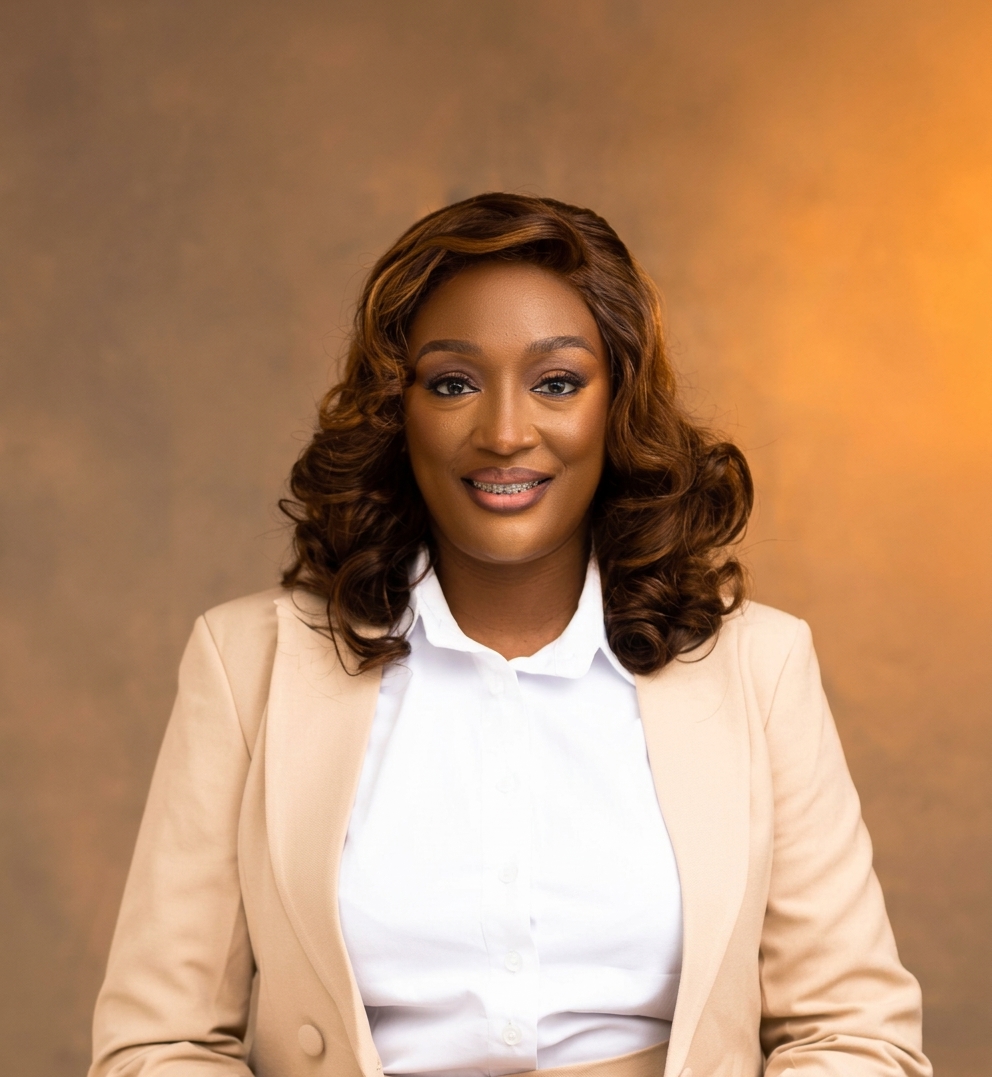
You also work in mentorship and women’s leadership development. What have you learnt from working with women at different stages of their journeys, and what do you think holds many capable women back from pursuing leadership opportunities?
From working with women and young people at various points in their journeys, I have learnt one thing: possibility is all around, but there is no guarantee that access and opportunity will be available. I have encountered women with innovative ideas, real skills and the best intentions, but they often do not know whether they meet the criteria, whether they are experienced or qualified enough, or even whether they are entitled to be in the room.
I get it. I have been there. When I entered research, I was frequently the youngest person in the room, at times the only woman, still finding my way in a largely male environment, stumbling over my words in meetings and doing my best to find my voice. I questioned whether I belonged at times, and I now know that having a champion who told me I was doing okay, who had experienced the same thing or could help me navigate the room, was exactly what I needed.
In my mentoring experience, through Mentor Monday and the L.E.A.DHer Initiative, I have learnt that women need more than a nudge. They need the information, the network, the opportunities and the right people who will believe in their potential. Perhaps she knows what she would like to do but does not know how to get into that space. Maybe she knows how but has simply not been given the space to use those skills.
So it is not enough to only mention structural barriers. Societal pressures relating to marriage, motherhood and other unpaid care responsibilities can limit women’s time. Even in the workplace, in some organisations, women have to put in more effort to show their worth, and leadership is often associated with attributes “normally” exhibited by men. This can influence how women perceive themselves and the opportunities they seek. But I would be cautious about framing all of this as a confidence issue. The question is whether the spaces women are entering are prepared to identify and nurture their leadership.
What I have realised is that women at different stages of their journeys require different things. A woman just starting out needs experience, mentorship and opportunities to accelerate her career. A woman with years under her belt needs access to networks, visibility and opportunities to lead. A woman established in her field needs sponsorship and institutional support to influence decisions, and room for others to grow.
That is why I take mentorship seriously, but I believe we need to push for sponsorship. We need to be willing not only to recommend women but also to endorse them, invite them to be involved in assignments, and talk about their work in rooms they have not yet been invited into.
I do not think the solution is to keep telling women to “be more confident” when the world around them is still hardening. We have to empower women to lead, and at the same time, the institutions and communities they exist in need to be more receptive to her strength and to step aside and let her lead. Sometimes what a talented woman really needs is not a pep talk. It is a chance.
When we talk about women’s economic empowerment, how important is it to address the social and cultural expectations that shape women’s choices around work, money, family and leadership? Can economic policies succeed without confronting some of these realities?
Social and cultural norms are a crucial part of the debate around women’s economic empowerment, because economic decisions are always made within a context. Those decisions are influenced by the families, communities and institutions that make up the environment in which women live and work.
Empowerment, for me, means freedom and choice. A woman having a job, a business or access to finance is not sufficient if she does not have control over how her income is spent, is not involved in important family decisions, or is discouraged from taking leadership roles because of gender stereotypes. She might have the education, skills and motivation to launch and grow a thriving business, but if she carries the bulk of household and childcare responsibilities, or needs permission to make economic decisions about how she spends her income, how free is she really?
That is one of the reasons we were very intentional about how we articulated and conceptualised this policy. We did not want it to be just a policy conversation in Abuja among people who are relatively well informed on policy but far removed from the experiences of the women it is supposed to benefit. So through state engagements and roadshows, focus group discussions and key informant interviews, we sought out women in different sectors and walks of life. We spoke to women in academia, the private sector, the social sector, agriculture, entrepreneurship, trade and the traditional labour market. What we found is that very often the barriers women face are not just financial. They are expectations about women’s roles, about what they should be responsible for at home and about the degree to which they should be involved in decision-making.
We also knew that we needed to change these realities by working with the people and institutions that have the power to change them. That is why traditional and religious leaders were involved in the consultations. They are among the most influential groups when it comes to community perceptions and attitudes, and if they understand the importance of women’s economic engagement, they can be catalysts in conversations about women’s choices, work and leadership.
Unpaid care work is another element we must continue to address. Looking after children, caring for a loved one and managing the home are vital, fulfilling roles, but women still shoulder most of that burden. If care work is viewed through the lens of “women’s work,” it affects what women can do in paid work, in building a business, in being educated or in taking on a leadership role.
Can economic policies and interventions succeed without taking social and cultural realities into consideration? I think they can improve, but they cannot reach their full potential. Access to finance, skills and markets is important, but so is a woman’s ability to choose how she lives her life and to reap the benefits of the opportunities that come with it. We cannot keep asking women to be part of the economy without challenging the expectations and structures that make it impossible for them to be.
For young women who want to work in policy, advocacy or development but do not know where to begin, what skills and experiences would you encourage them to build, and how can they find their way into spaces where decisions are made?
My first advice would be: begin from where you are. You do not have to be a leader or hold a senior role in government to begin working in policy, advocacy or development. Volunteer with an organisation, join a local project, promote a cause you are passionate about or pursue an internship. Those early experiences will teach you lessons a classroom never can about how policies and programmes really affect people.
I also advise young women to learn how to make their ideas clear, which often means learning to write. The National Women’s Economic Empowerment Policy that I helped draft has shown me that when we understand an issue well, we can translate that understanding into words that speak to someone else and convince them it should matter. Learn to write policy briefs, memos and reports. Learn to get your point across in simple words, argue it, back it with facts and present it to others.
Be familiar with figures and budgets too. You do not need to be an economist, but you should be able to interpret a number, ask where it came from and understand how public money is spent. Policies are not carried out by good plans alone but by money, and someone has to track where that money is going. Initiatives like BudgIT offer great resources for young people who want to understand budgets and track funds.
To be honest, above and beyond technical skills, learn to listen. Some of the most valuable lessons I have learnt have come from community conversations, state roadshows, focus group discussions and interviews. Community women sometimes know better than we do, even with all the policy papers in hand, what the real issues in their lives are. Religious and traditional leaders also have a lot of influence over their followers, so you will need to take them into consideration.
Build your experience, learn from a mentor and grow that relationship over time. It could start in a public consultation, policy dialogue or stakeholder meeting. Follow the work of ministries, civil society organisations and development partners, and look for opportunities to build your skill set. Do not wait to be fully qualified before engaging. Speak up, show up and participate in whatever is in front of you. That is how you learn.
And remember that you will need patience with yourself. Policy work and advocacy can be slow, at times hard to bear, and things do not always happen when you want them to. Do not make the mistake of thinking that slow work is work that does not matter. Take every experience as a lesson, and you will learn where you can make a difference.
As you walk through the doors where decisions are made, think of the women still outside. Leave space for their stories, share your own and open the door for them when possible. We need young women who are interested not only in sitting at the table but in expanding the table itself.
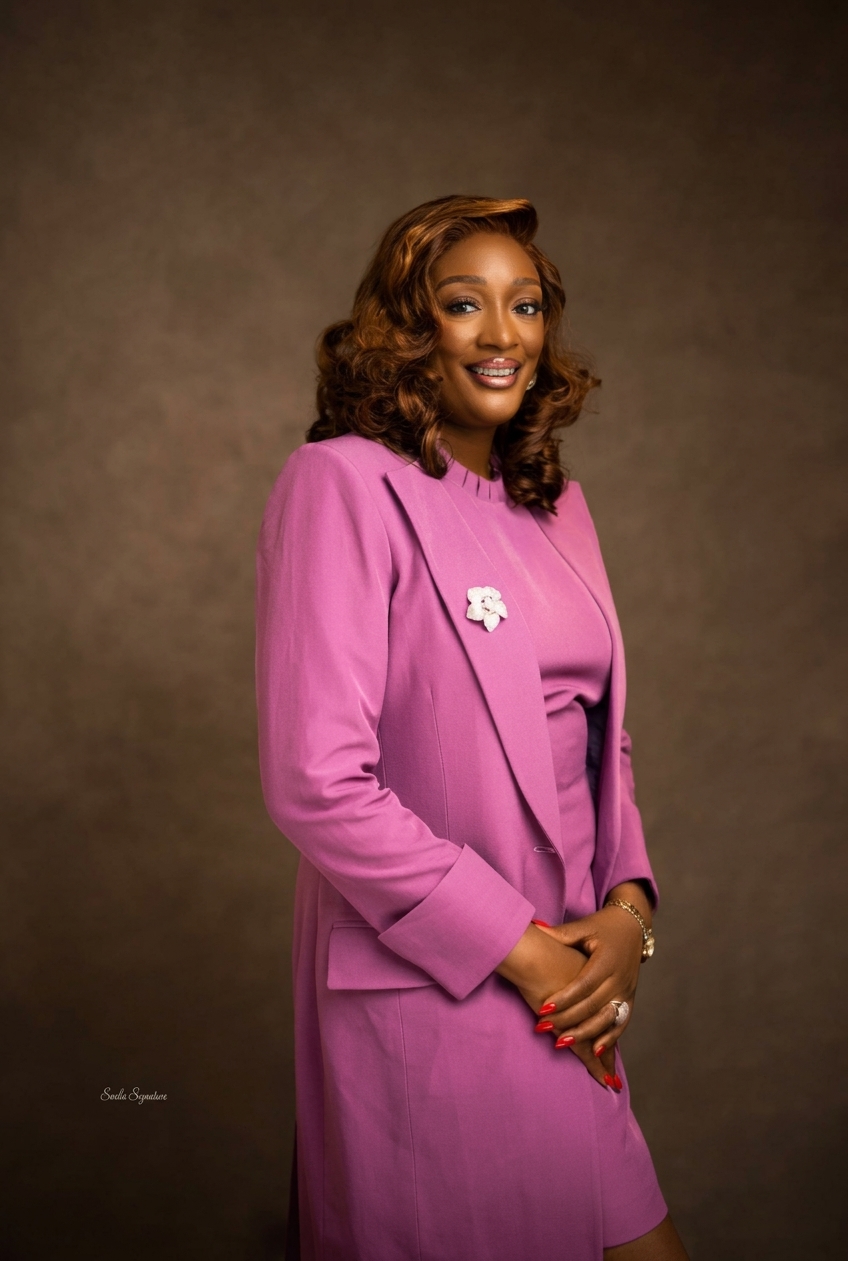
When you look at the work you are doing through policy, advocacy and mentorship, what do you hope will be different for Nigerian women because you chose this path? What would you like your lasting contribution to be?
I have paid the price of starting. I entered this line of work as a greenhorn, without the experience and confidence I have now. My entry into research was into a largely male domain. I travelled to far-flung communities and walked into rooms where I was rarely the oldest and was often the only woman, trying to find my footing in a field of research, development and policy that I was still learning. On one occasion, I questioned whether I knew enough to speak or whether I belonged in that room.
I have made mistakes, like we all do when we are growing. Some of those lessons were expensive in terms of my time, energy, faith and the opportunities I was not prepared to receive. But I am glad I did not give up. I continued to show up, even when I was scared, and that is who I am today.
At some point, I made a promise to myself: if I managed to walk through those doors, I would keep them open for the next woman.
In 2019, in partnership with the Plateau State Youth Council, I set up a mentorship group of four girls and five boys to mentor young men and women from all walks of life. It has been an absolute blessing to see most of those young people grow into leaders. I started the L.E.A.DHer Initiative, my mentorship programme for early-career women, on my birthday in 2026, to make sure young women in the early stages of their careers are informed, supported with the right networks, and equipped with the confidence and practical tools to move from simply noticing a problem to taking action, whether by contributing to policy or in public spaces.
Mentorship, for me, is not a foggy phrase. It is working with a woman before her debut on a major project and tweaking her speech so she can bring her A game. It is making a call to get her in the door. It is telling her she is meant for the room when she is asking herself whether she belongs there. Often it is not a rah-rah speech that turns a life around. It is another person believing in a woman’s potential.
My work on the National Women’s Economic Empowerment Policy has reinforced this for me. It is just a start, and the policy alone cannot get a woman through the door. We need to know who is inside those doors. That is why I want to push beyond mentoring into sponsorship. A good mentor will support you and help you access opportunities. A good sponsor will also put your name forward where you have not yet arrived. It is about putting your own access and influence into the mix: recommending a woman for a project, including her in a meeting, making sure her name is around when decisions are being made. It is about sharing your access, not just your expertise.
For the future, I want to see more Nigerian women with the space and the power to influence their own economic lives, to shape discussions, make decisions and sit in the rooms where policies and priorities are set. I want to be part of places that acknowledge and value what women do and that address the things holding them back from playing the roles they want to play in our society and economy. But I also want to see the young women behind me be bolder, more confident and more ready to sit at the table.
My ultimate legacy will not be a title or a piece of paper with my name on it. It will be the women I have sponsored and mentored, who were given opportunities and will go on to climb even higher because someone opened a door for them and invested in them.