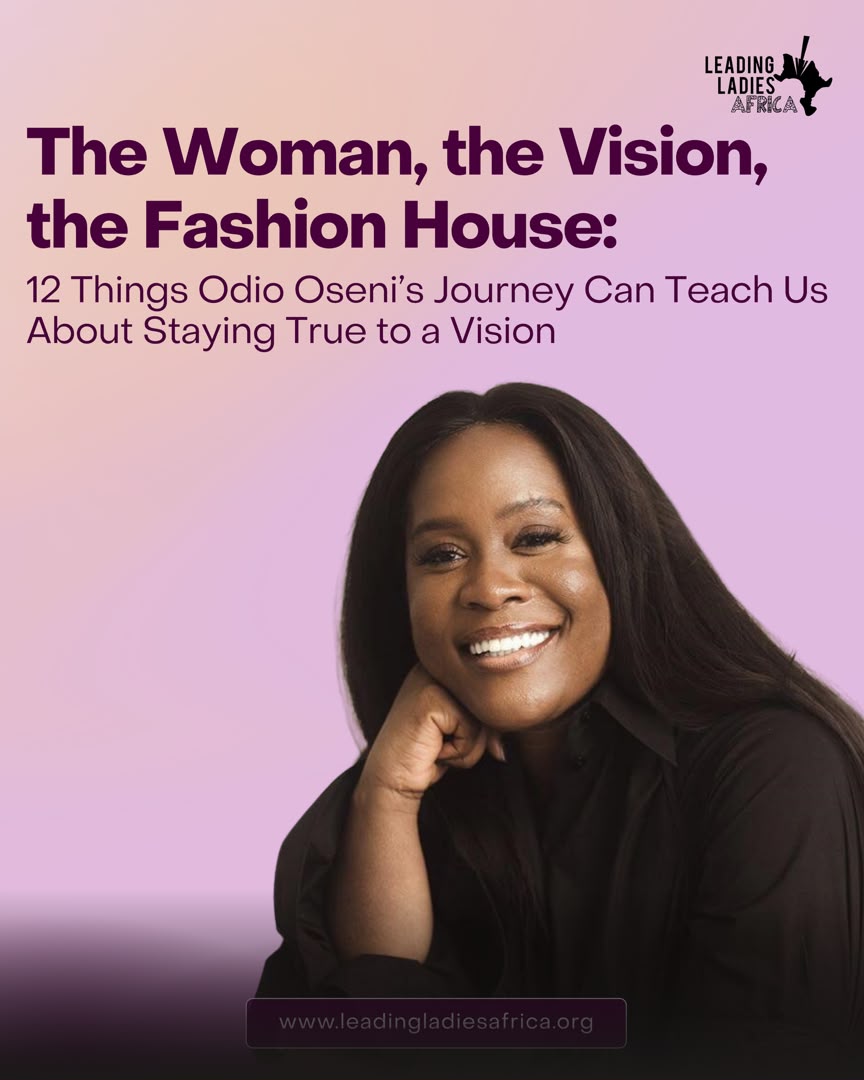
For three decades, Odio Oseni has built a fashion house around a distinct vision of African women, cultural identity and contemporary luxury. As Odio Mimonet unveils a new brand identity inspired by Nigerian architecture, her journey offers a powerful story about creative conviction, longevity and the courage to keep evolving.
Building a creative business is one thing. Building one that retains its identity through changing trends, shifting tastes and new generations of customers is another.
For Nigerian designer Odio Oseni, that journey began in Lagos in 1995 with the founding of Odio Mimonet, a fashion house shaped by her vision of how African women could dress, express themselves and occupy space. Over the years, the label has developed a distinctive design language rooted in bold artistry, sculptural silhouettes, vibrant prints, intricate embellishment and an appreciation for the women who wear its creations.
Now, as Odio Mimonet enters a new chapter with a refreshed brand identity, we look at 12 defining elements of Odio Oseni’s journey and what they reveal about building a creative vision that can stand the test of time.

1. She Saw a Gap and Chose to Fill It
Every meaningful idea begins with noticing something that could be different.
When Odio Oseni founded Odio Mimonet, she saw an opportunity to create clothes that reflected African women, their proportions, their identities and the way they wanted to present themselves. Rather than wait for the fashion industry to make room for that vision, she began building a fashion house around it.
Her story is a reminder that the things we wish existed can sometimes become the very things we are called to create.
2. She Invested in the Craft Behind the Vision
A compelling idea needs the skill and discipline to bring it to life. Odio trained at Yaba College of Technology before continuing her fashion education at the London College of Fashion, developing the technical foundation behind her creative ambitions.
Her journey illustrates the relationship between imagination and preparation. A vision may show you where you want to go, but developing your craft helps you build something capable of getting there.
3. She Reimagined Tradition Without Losing Its Meaning
One of Odio’s notable contributions to Nigerian fashion has been her reinterpretation of the agbada, a garment traditionally associated with men’s formal dressing, as an expression of women’s power dressing.
It is an example of what becomes possible when designers engage with cultural traditions as living sources of inspiration rather than fixed forms that cannot be reconsidered. By approaching a familiar garment through a different lens, Odio expanded the possibilities for how women could wear and interpret it.
4. She Kept the Woman at the Centre of the Work
Odio has described designing for women she could see in front of her: her mother, her friends and self-assured women who moved through the world comfortably in their own skin.
That personal understanding of the women she was designing for gave the brand a clear point of reference. Behind the silhouettes and embellishments was a deeper consideration of how a woman wanted to feel in what she wore.
For any creative business, understanding the people at the heart of the work can be just as important as the work itself.
5. She Developed a Signature of Her Own
Sculptural silhouettes, bold colours, vibrant Ankara prints and intricate embellishments have helped distinguish Odio Mimonet in the fashion landscape. Rather than relying on a single trend, the house developed a recognisable aesthetic that draws on its own creative language.
In 2012, Odio received the Innovative Designer of the Year award at Arise Magazine Fashion Week, recognition of her approach to design.
In a crowded industry, a distinctive point of view gives people something to recognise, remember and return to.
6. She Made African Identity Central to Her Idea of Luxury
Odio Mimonet draws inspiration from Nigerian culture, heritage textiles and the creative energy of Lagos. These influences are central to the brand’s expression of contemporary luxury.
That choice carries a wider significance. African designers do not have to set aside their cultural identities to create work that resonates beyond their home markets. Local references, interpreted with intention and skill, can become part of what makes a creative brand distinctive.

7. She Continued Building Beyond the First Milestone
Fashion is an industry defined by constant change. New trends emerge, tastes shift and attention moves quickly. Sustaining a fashion house across three decades requires more than an exciting debut; it calls for continued creative work, a clear identity and the ability to respond to a changing world.
Odio Mimonet’s journey offers a perspective on longevity that extends beyond fashion. Building something that lasts means continuing to make decisions, develop ideas and put in the work long after the excitement of starting has passed.
8. She Took Her Creative Vision Beyond Its Starting Point
Odio Mimonet’s work has reached audiences beyond Nigeria. Teyana Taylor wore the label on an ESSENCE cover, while the brand has also received attention from international fashion publications.
These moments have helped bring the fashion house to wider audiences while keeping its Nigerian identity at the centre of its work.
The story is a reminder that a business can grow its reach without having to abandon the qualities that made it distinctive in the first place.
9. She Is Thinking About the Future of the Craft
A fashion industry cannot thrive on designers alone. It also depends on the artisans, makers and emerging creatives whose skills sustain the work behind each collection.
Through Mimonet Threads, Odio Mimonet has also pursued creative skills development and support for emerging talent. This points to another dimension of building a legacy: considering how the knowledge, opportunities and creative infrastructure developed today can contribute to the industry’s future.
The work of building a fashion house can extend beyond the label itself to the people and skills that help an entire sector grow.
10. She Is Willing to Evolve an Established Name
In August 2026, Odio Mimonet unveiled a new brand identity, featuring a new logomark, logotype and colour system.
For a fashion house with an established history, a rebrand is an opportunity to consider how its visual identity can communicate its vision to new audiences while remaining connected to the work that came before it.
The move signals a new chapter for Odio Mimonet. It also demonstrates that longevity does not require standing still. An established vision can continue to find new ways to express itself.
11. She Found Inspiration in Nigerian Architecture
One of the most distinctive elements of the new identity is its connection to the arched colonnades of Obafemi Awolowo University, a landmark of Nigerian modernist architecture.
The resulting logomark features an inverted-crown silhouette and interlocking M–I–M letterforms. The architectural reference brings a distinctly Nigerian influence into the brand’s visual identity, linking its next chapter to a built environment with its own history and character.
It is a fitting creative choice for a fashion house whose story has been shaped by the relationship between contemporary design and cultural identity.
12. She Is Treating the Milestone as a Beginning, Not an Ending
Odio Mimonet’s next chapter includes plans for new collections, a new retail presence and an expanding international footprint, alongside continued investment in Nigeria’s creative talent.
After decades of developing a recognisable fashion house, Odio Oseni is still looking ahead. The vision that began in Lagos continues to evolve, with new possibilities for where the brand can go and who it can reach.
Her journey offers an important reminder for anyone building something of their own: reaching a milestone can be a moment to celebrate how far you have come, but it can also be an opportunity to ask what you want to build next.
A Legacy Still in Motion
Odio Oseni’s story is about more than longevity in fashion. It is about building around a clear vision, developing a distinctive creative identity, drawing confidently from one’s cultural environment and remaining open to change.
From her early work in Lagos to Odio Mimonet’s new identity inspired by Nigerian architecture, the journey reflects a fashion house that continues to define and redefine its place in African luxury.
Three decades on, the story is still unfolding.