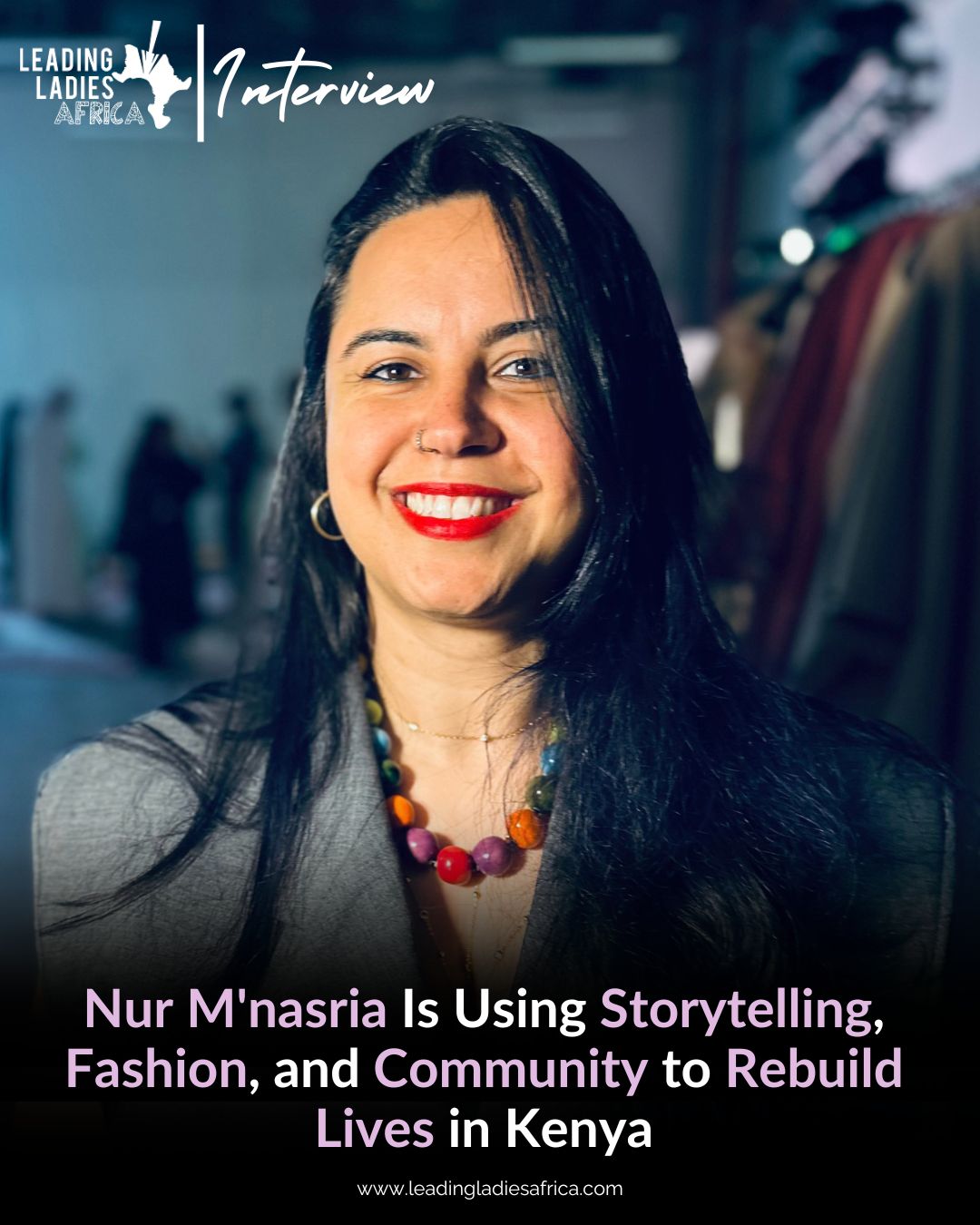
In 2015, Nur M’nasria went to Nairobi on a filming assignment. She did not go intending to stay. She did not go intending to build anything. She went because her work as a television producer had taken her to over 30 countries, and Kenya was simply the next one, but something happened when she walked into a slum and saw children living in conditions that no child should have to survive. Something shifted that she could not shift back.
A decade later, she has built Nisria, a registered nonprofit in both the US and Kenya, whose Kwetu Haven rescue program has reunified 100 children with their families in four years. She has built Maisha by Nisria, a sustainable avant garde fashion studio whose work has been featured in Vogue Italy. She has built AHADI by Nisria, a jewelry initiative run by artisans in Kibera. And she has built Kipenzi by Nisria, a handmade pet accessories brand made from upcycled textilesm all three social enterprises run by the women she serves, all three funding the rescue and reunification work.
Most recently, she produced SHE_IS_RED, a fashion film designed and made entirely by young women from her vocational training programme, following women through rage, power, and kindness, and already drawing international attention.
Nur M’nasria is a Tunisian-American storyteller, media producer, philanthropist, and social entrepreneur raised across six countries and based in the UAE for over 26 years. She began her career producing Khawatir on MBC, the Arab world’s most watched Ramadan show, across six seasons, and has since worked as a producer, executive producer, and media consultant for organisations including the BBC, the United Nations, Mastercard, and Sephora, but the work she is most known for now is the work nobody hired her to do. The work she started because a filming assignment broke something open inside her, and she decided to do something about what she saw.
Her guiding philosophy has never changed: when we do good, we do it with dignity.
In this conversation, Nur opens up about what Nisria and Kwetu Haven are really doing for children and families in Kenya, why keeping families together is more powerful than building more children’s homes, what it means to build enterprises where vulnerable women are the builders not the beneficiaries, and what she wants every woman who feels too small to solve a problem this big to know.
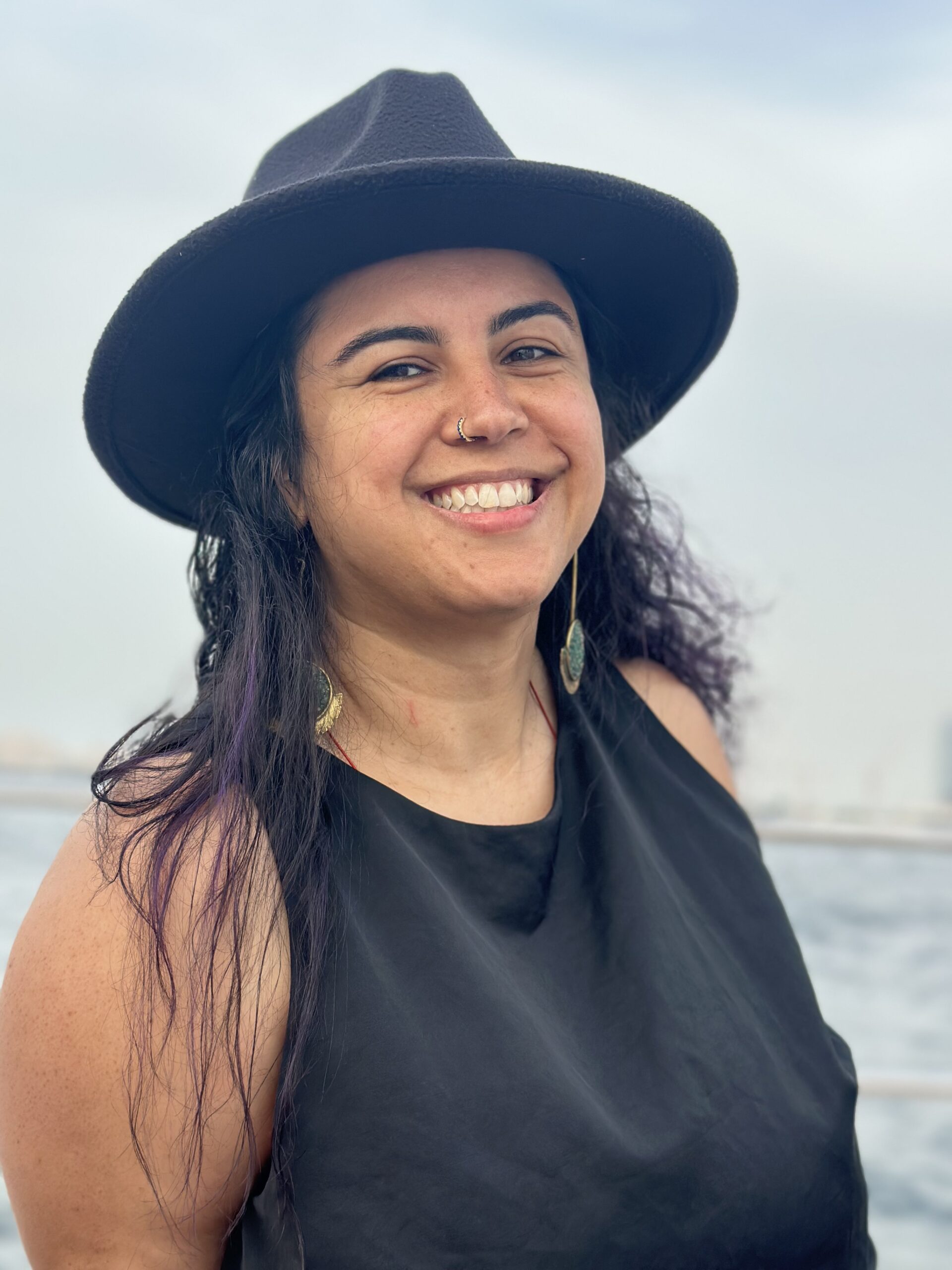
You founded Nisria in 2016 after watching children’s homes across Kenya cause more harm than good; neglect, exploitation, children abandoned the moment they aged out. Tell us about Nisria and Kwetu Haven and what it means to you.
I watched children age out of institutions into nothing, no family, no one to call when life got hard, no future, no safety or protection. This is abandonment on a delay.
Nisria is a nonprofit organization based in Gilgil, Kenya that believes children should not stay in institutions rather than be reunited with their families and loved ones. A child needs a family to be seen, grow, and thrive. Hence we work with the local police station and children’s office to trace and track where every abandoned or lost child comes from, and according to the story and background we work on a solution that is in favor of the child.
Kwetu Haven means “our home” and it’s the name of our rescue home program.
Instead of building another institution, you reunite children in crisis with their own families and support those families to stay together. What do most people still not understand about why keeping families together is more powerful than building more children’s homes?
Most people assume a family fell apart because someone stopped caring. In my experience, that is rarely the case and many children that are at children’s homes are actually lost cases. A mother does not give up her child because she stopped loving them. She does it because she ran out of income, or resources, or shelter, or support, and saw no other option.
So when we find that family, we do not just hand the child back. We work with the mother or guardian through our Micro Fund, vocational training, sponsoring the child’s education, or providing food support, so the same crisis does not repeat itself. A children’s home can house a child, but only a family, given the right support, can raise that child with love, safety, and dignity.
That is why family reunification is not a softer option to institutional care. It is more demanding and more costly. It asks us to fix the actual problem instead of just removing the child from it.
You built three social enterprises; a fashion workshop featured in Vogue Italy, a jewelry line made by artisans in Kibera, and a pet accessories brand, all run by the women you serve, all funding the rescue work. What does it mean to build a model where the women are not the beneficiaries but the builders?
The vulnerable women we work with were never short on creativity. They were short on resources and access, to training, to markets, to capital. So instead of giving them aid, we built them a workshop.
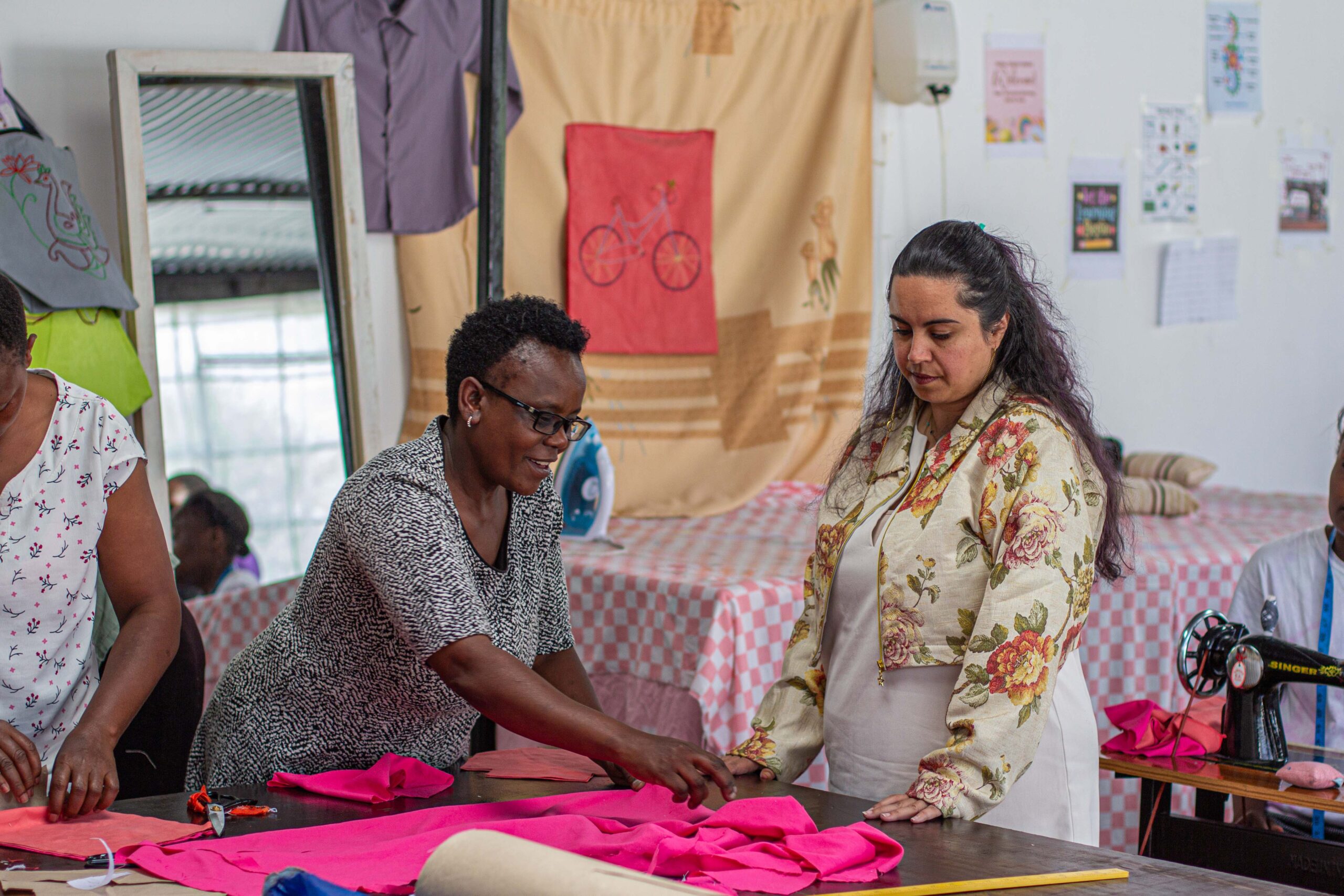
Maisha, AHADI, and Kipenzi are social enterprise programs under Nisria. The women who train, sew, and craft go through six months of vocational training, then produce real collections and products that sell, in Nairobi stores, online, and in pop-ups across Kenya and the UAE. Their income supports those we hire full time, and most of the share funds the rescue and reunification work.
When a woman is the one building the product and earning from it, she is empowered and is capable of doing anything to keep her family together and her children safe and contained. She breaks generational cycles of poverty.
Your newest fashion film SHE_IS_RED follows women through rage, power, and kindness, designed and made entirely by young women from your vocational training program. What do you want the world to feel when they watch it?
I wanted the film to tell the story of our new collection SHE_IS_RED, where it embodies the different emotions a woman goes through. A woman can have rage that fuels her power, yet can still be soft and kind. Red is a color used across our cultures and traditions. Women wore it in weddings, they gathered in red tents, they made it into lipstick, they had it in their hands and hair as henna. Red is the color of blood, red is the color of fire, red is the color of the land, and all these are elements that represent the feminine in her rage, power, and kindness.
Every piece in that film was designed and made by young women from our vocational training program. They chose the fabric, the cut, the story it tells. When someone in London, Dubai, or Nairobi watches it, they could feel these emotions and stages a woman goes through and can relate to it without any words, and this is exactly what the director of the film, Bashir Bashir, managed to translate into this visual representation.
You have rescued and reunified 100 children in four years, built sustainable enterprises, and produced an internationally recognised fashion film, all rooted in one conviction. What do you want every woman who feels too small to solve a problem this big to know?
I did not start with a plan to reunify and support hundreds of children. I started with one child, and a curiosity about why our systems kept failing at-risk children. I didn’t know what I was doing, or if I was doing the right thing. Yet I listened carefully to my intuition, trusted it, and followed it. The work we do is very much based on a woman’s instinct to care, protect, love, and nurture. It is built so much on trusting the process, believing in the team, and doing the work by showing up every day, even when nobody believed in us or thought we could do it with the limited resources we had. People didn’t think we could turn a broken system around and make it work in favor of the children we serve.
So to a woman who feels too small for a problem this size, I would say: you do not need to solve the whole problem on day one. You need one working solution, done properly, for one person. Do that, learn from it, then do it again. And most importantly, believe in yourself, believe in your community, and just show up every day with persistence and consistency, and the whole world will eventually follow through.