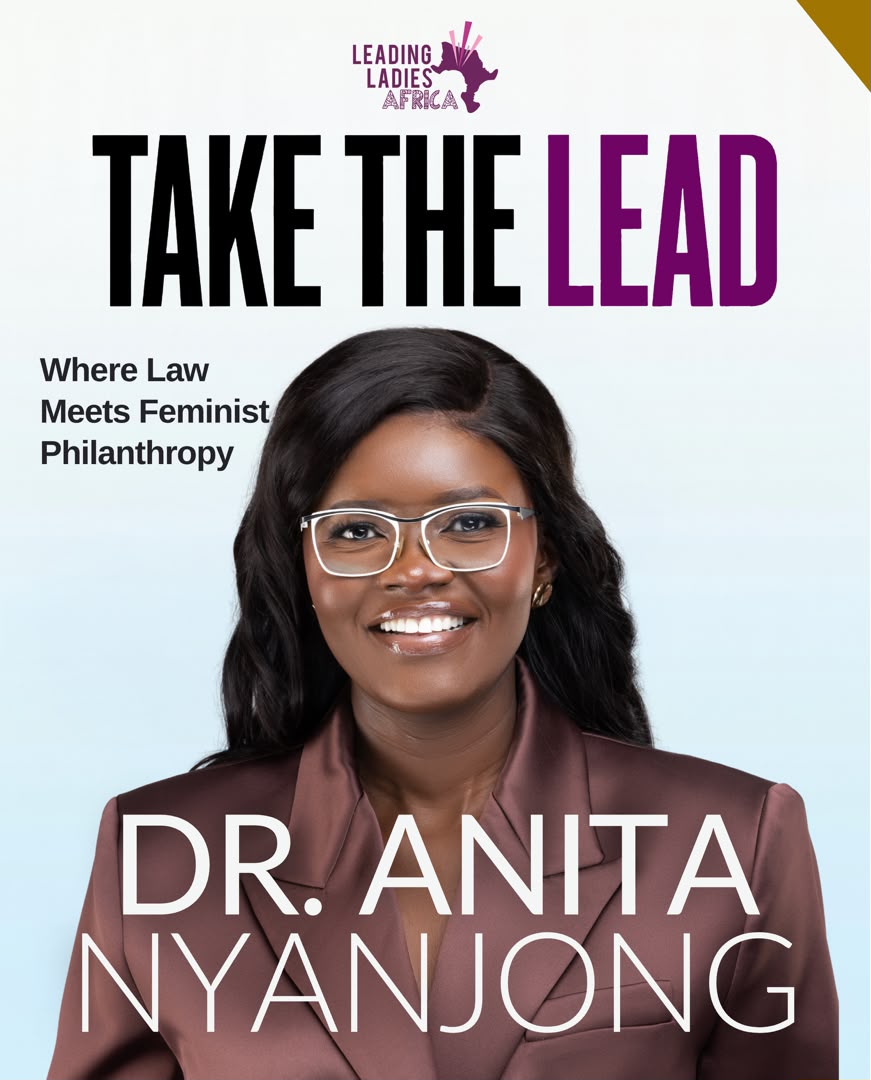
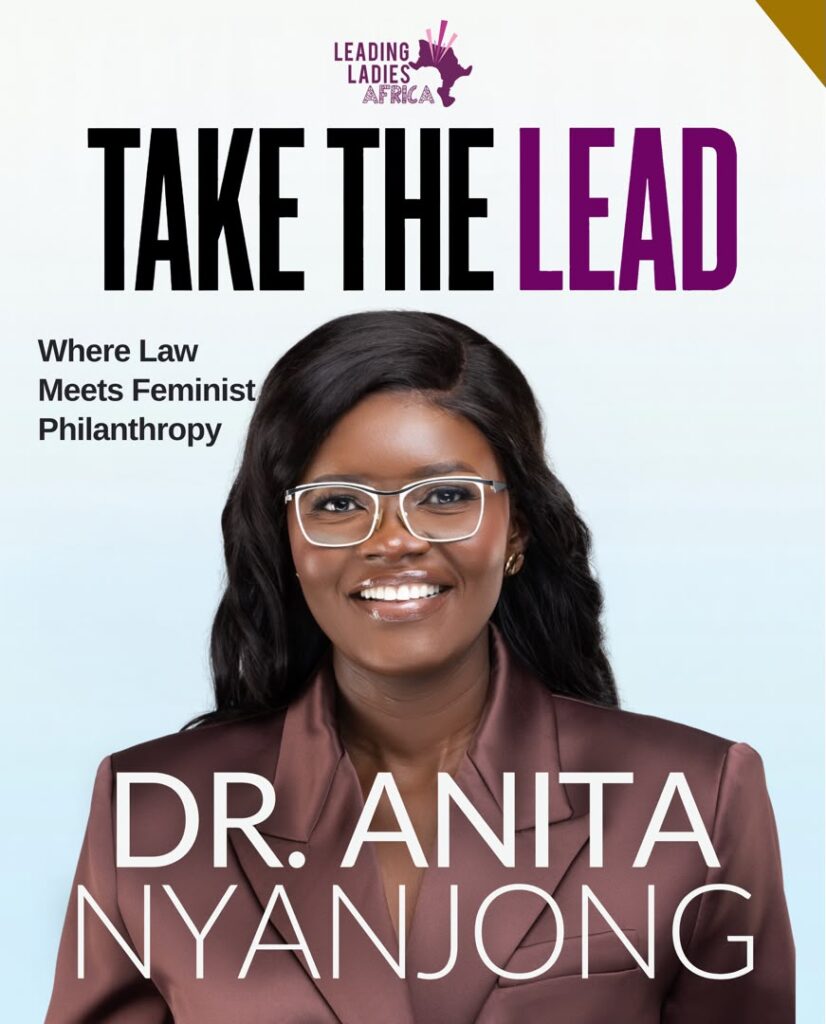
Dr. Anita Nyanjong has a way of describing her career that makes it sound like one continuous conversation with a single question: what will actually change someone’s life?
She became a lawyer because she believed in justice. Then she learnt that justice is much bigger than what happens in a courtroom. It is about who has power, whose voice matters, who has access to resources, and whether the institutions that are supposed to serve people actually do. That understanding took her from Kenya’s High Court to human rights advocacy, from training judges across Africa on gender-based violence to leading global resource mobilization at Ipas, and now, to becoming the first-ever Director of the Ipas Collaborative Fund, a global grantmaking platform that resources locally led organisations and movements advancing reproductive justice.
Dr. Anita Nyanjong is a Kenyan lawyer, feminist, and philanthropy and international development leader with over 17 years of experience advancing women’s and girls’ rights, reproductive justice, and access to justice across Africa and globally. She holds a PhD in Law from the University of Pretoria, where her research explored African feminist approaches to justice and traditional dispute-resolution systems in Kenya. She holds an LLM in Public International Law from Queen Mary University of London and an LLB from Moi University. She is an Advocate of the High Court of Kenya. And she led the development of Kenya’s first Judicial Bench Book on Trafficking in Persons, a landmark resource that has strengthened how judicial officers across the country handle some of the most vulnerable cases in the legal system, but what defines Anita most is not the titles she has accumulated or the institutions she has led. It is the question she has never stopped asking, and the stubbornness she brings to believing the answer is always possible.
She started small. She built herself over time, chapter by chapter, one opportunity and one lesson at a time. And now she is leading a platform that is reimagining how philanthropy moves resources, shifts power, and strengthens the movements and locally led organisations that are doing the most difficult, most necessary work in the world.
In this conversation, Anita opens up about what justice has meant across every chapter of her career, what she believes philanthropy gets fundamentally wrong, and what she wants every young African woman building a career in law, human rights, or international development to understand before she starts.
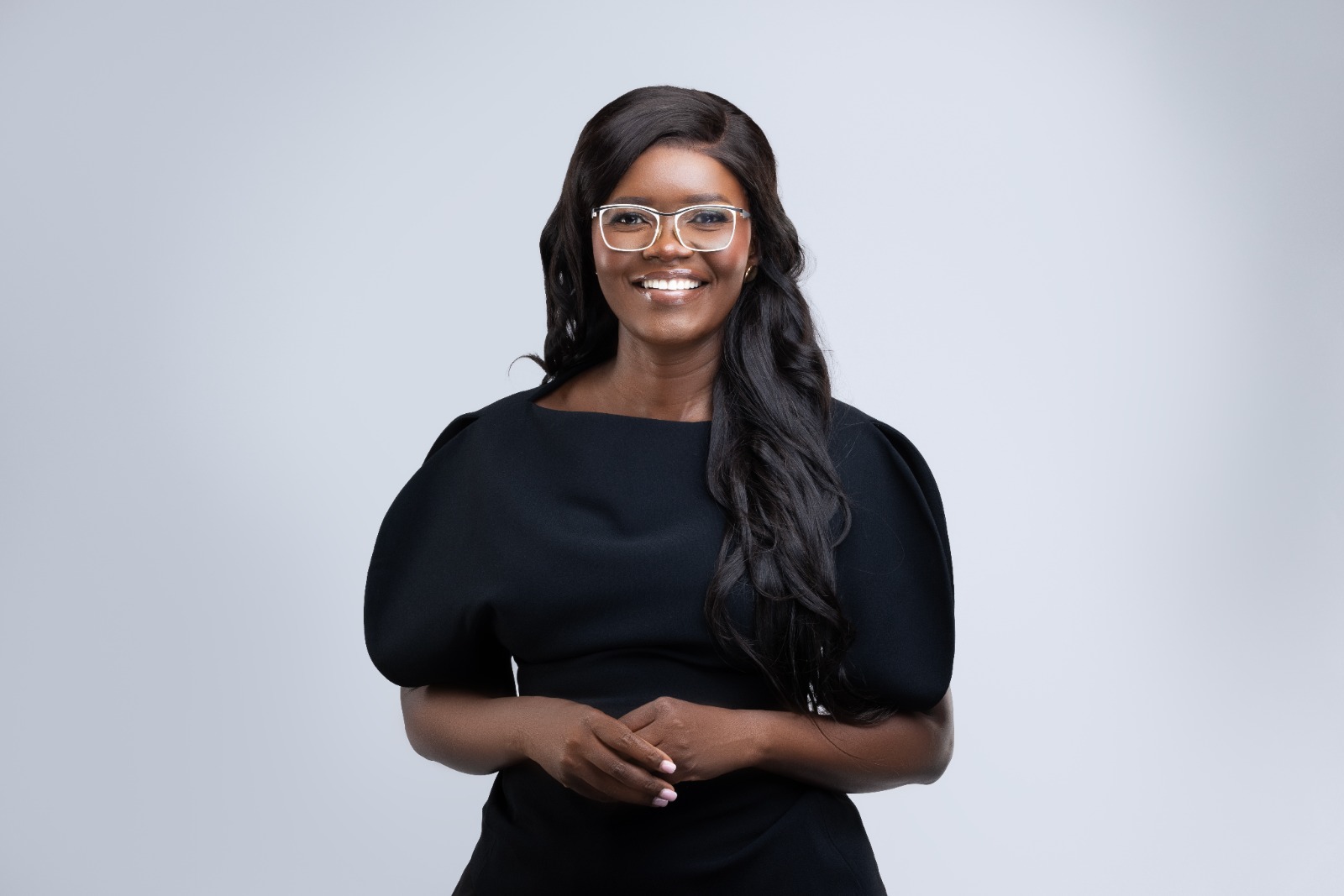
Beyond your work and professional achievements, what has shaped the woman and leader you are today?
Family, without question. I come from a big family—my mum, my dad and Four sisters—and we are incredibly close. Three of my sisters and I are lawyers, so you can imagine what some of our conversations are like! My other sister is much calmer than the rest of us, so she has somehow become the family umpire when the arguments get a little too heated.
Growing up in that environment shaped me enormously. There was always a strong sense of justice, hard work and speaking your mind—and, apparently, having someone sensible enough to tell the lawyers when to stop arguing!
My mother, especially, has been an extraordinary influence. Her wisdom, strength and prayers have carried me through many seasons of my life. My family has given me something very important: a place where I am simply Anita, regardless of the title I hold or what I have achieved.
I have also been shaped by the experience of building my life and career gradually. I started small, and that taught me never to despise beginnings. I didn’t start with a big title or a perfectly mapped-out career. I grew into the woman and leader I am over time—through opportunities, mistakes, learning, persistence and people who believed in me along the way.
I think I have also been shaped by curiosity and a certain stubbornness about possibility. I believe we can make things better. Perhaps I am still a bit of a dreamer in that sense—but I have learnt that dreams, when accompanied by discipline and persistence, can become very powerful things.
You’ve built a career across law, human rights, gender justice, philanthropy and international development. What has kept these different chapters connected for you?
Justice.
When I look back, my career may appear to have moved through different worlds—law, human rights, women’s and girls’ rights, reproductive justice, philanthropy and international development—but to me, it has always been one journey.
I became a lawyer because I believed in the possibility of justice. Over time, I learnt that justice is much bigger than what happens in a courtroom. It is also about who has power, whose voice matters, who has access to resources, and whether our institutions actually work for the people they are supposed to serve.
That understanding has taken me from working with justice systems and the formal and informal justice mechanisms, to advocating for women and girls, to working on sexual and reproductive health and rights, and eventually into philanthropy and grantmaking.
I still believe there are things worth fighting for in this world. I have simply learnt to fight for them in different ways.
You are the first-ever Director of the Ipas Collaborative Fund. What does stepping into a role like this mean to you, and what are you hoping to build in this new chapter?
Being the first person to hold a role is exciting, but I also feel the responsibility that comes with it. You are not simply inheriting something—you are helping to imagine what it can become.
I am entering this chapter with a lot of ambition, but also with humility and a willingness to listen. I would love to help build the Ipas Collaborative Fund into a globally respected platform that remains deeply connected to local realities and to the movements and organisations doing the difficult work of advancing reproductive justice, including protecting and expanding abortion rights and access.
I am particularly interested in what becomes possible when philanthropy is more collaborative: when we move beyond simply transferring money and think seriously about power, trust, relationships, learning and who gets to make decisions.
Ultimately, I hope we can contribute to a model of philanthropy that moves resources and decision-making closer to communities, strengthens movements and locally rooted institutions, and recognises that those closest to injustice are often also closest to the solutions.
What do you think traditional philanthropy gets wrong about the communities and organisations it is trying to support?
Sometimes philanthropy can fall into the trap of assuming that providing the resources also means having all the answers.
It doesn’t.
Communities and local organisations often understand their political, social and cultural realities far better than anyone sitting thousands of kilometres away. That local expertise matters. Yet funding systems can still require organisations to continuously prove themselves, fit their ambitions into externally designed frameworks, and respond to priorities they had little role in defining.
I think we need to ask a different question: What if philanthropy saw communities not simply as beneficiaries or implementers, but as leaders, experts and partners?
That changes how we fund. It changes who makes decisions. It changes how we think about risk, accountability and evidence.
Funders absolutely have a responsibility to steward resources well, and they also bring expertise, networks and knowledge that can be enormously valuable. But accountability and trust are not opposites. The best philanthropy, in my view, is rigorous and relational. It brings different forms of expertise together while respecting the knowledge, leadership and agency that already exist within communities.

You’ve worked extensively on women’s and girls’ rights, reproductive justice and access to justice. What is one misconception about this work that you wish people understood better?
That it is easy!
I sometimes meet fellow lawyers or people outside this field who imagine that human rights work is somehow softer than other forms of legal practice. It is anything but.
This work requires a different kind of lawyering. You have to understand the law, but also understand politics, culture, institutions, evidence and power. You may be reading jurisprudence in the morning, sitting with a community in the afternoon, engaging government officials the following day and then translating all of that into policy, advocacy or funding strategy.
My academic work has deepened this understanding for me. There can be a significant distance between what the law says and how justice is actually experienced, particularly by women and girls.
That complexity is also what makes the work exciting. You are constantly learning and asking: What will actually change someone’s life?
What has been one of the most difficult challenges you’ve encountered in your work, and how did you navigate it?
When I was younger, I trusted very easily. I assumed that people generally meant exactly what they said. Life and leadership have taught me to be a little more discerning!
I have learnt that good intentions are important, but you must also pay attention to actions, incentives and power. People and institutions can say all the right things and still behave very differently when interests are at stake.
But I have been careful not to allow those experiences to make me cynical. There are also extraordinary people who are principled, generous and deeply committed to change, and I have met many of them throughout my career.
So perhaps the lesson has been about balance: trust people, build relationships and remain open—but develop judgement. Listen carefully. Observe. And understand that discernment is an important part of leadership.
You’ve spent years working within systems that are often slow to change. How do you balance the patience required for systems change with the urgency of the issues women and girls are facing?
I actually love systems-change work because I have seen what happens when it succeeds.
Some of my earliest work involved engaging the judiciary and informal justice institutions in Kenya, East Africa and across the continent. That taught me that changing a system can be painfully slow—but once something shifts inside an institution, the impact can reach people you may never meet.
The challenge is that women and girls cannot wait indefinitely for institutions to catch up with their lives. So you have to work at several levels simultaneously: respond to immediate realities while also changing the laws, institutions, financing, social norms and power structures producing those realities.
And you have to be relentless.
Systems change is deeply relational. You need to build coalitions, sometimes across unlikely divides. You need to understand where power sits, find champions, generate evidence, keep showing up and know when to push and when to listen.
Patience in this work should never mean complacency. For me, it means having the stamina to pursue change for as long as change requires.
What has leadership taught you about power, particularly the difference between having a position of power and actually using that power well?
Leadership has taught me that power is stewardship.
A title may give you authority, but it does not automatically make you a good leader. The more power you are entrusted with, the greater your responsibility to ask what you are doing with it.
Are you creating opportunities for other people? Are you opening doors? Are you listening to people who have less institutional power than you? Are you willing to share credit? Can people disagree with you? Are you leaving the institution stronger than you found it?
I have become increasingly interested in power not simply as something we accumulate, but as something we can share and use to create space for others to lead.
That is especially important for women in leadership. I don’t want simply to occupy spaces that women before me struggled to enter. I want my presence there to make it easier for other women to enter, lead and transform those spaces too.
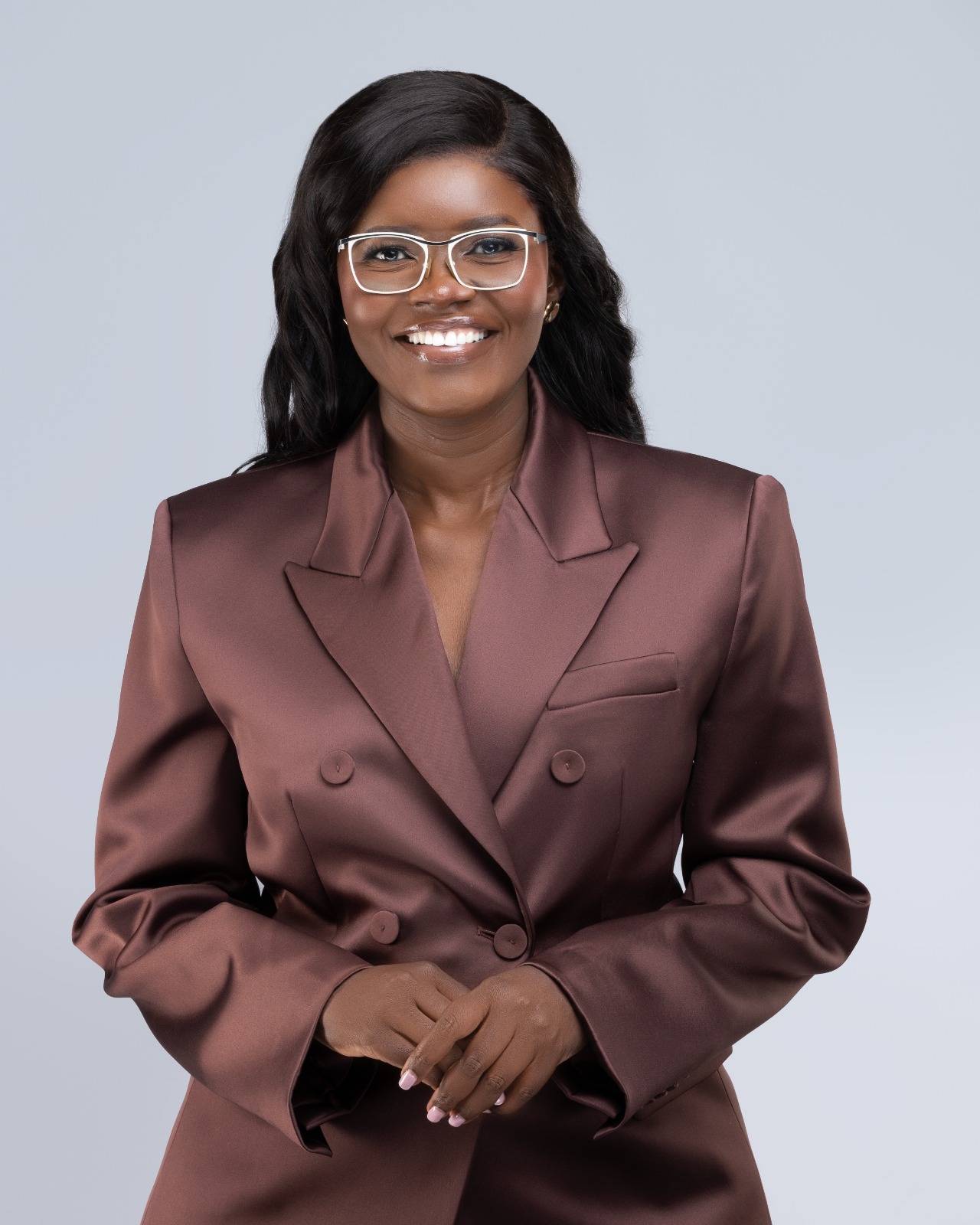
For a young African woman who wants to build a career in law, philanthropy, human rights or international development, what would you tell her to focus on early in her career?
First, I would tell her that everyone starts somewhere. I certainly did.
I didn’t begin my career with a big title, a global platform or a perfectly mapped-out plan. I started small and built myself over time—one opportunity, one experience and one lesson at a time.
Sometimes we look at people when they are further along in their careers and assume they somehow arrived there fully formed. We don’t see the years of learning, the smaller roles, the disappointments, the people who gave them a chance, or the times they had to prove themselves.
So start where you are. Take the opportunity in front of you seriously, even if it feels small. Learn everything you can from it. Small beginnings do not determine the size of your future.
Find what you love and pursue it relentlessly. Become exceptionally good at something. Read. Write. Ask questions. Volunteer for the difficult assignment. Go into the field. Understand how institutions work. Learn from people who know more than you do. And never imagine that you have finished learning.
I would also tell her not to be intimidated by rooms that were not originally designed with her in mind. I have worked across different countries, institutions and global spaces, and one thing I know is that African women bring knowledge, experience and perspectives that the world needs.
But confidence should be accompanied by competence. Do the work. Know your subject. Build relationships. Protect your integrity.
And don’t rush your journey. Careers are built chapter by chapter. Some opportunities will make sense only when you look backwards.
If the women and girls who come after you could inherit one thing from the work you’re doing today, what would you want it to be?
I believe in being the captain of my own ship and the master of my own soul.
Life will always present circumstances we cannot control, but we can choose how we respond to them, how far we are willing to go, and how boldly we are willing to dream.
I hope the women and girls who come after me inherit that sense of agency—the belief that their circumstances do not have to define the boundaries of their ambition.
But I hope they inherit something more tangible too: stronger institutions, better systems, more resources in the hands of women and communities, and more doors already open.
Dream enormously. Keep learning. Keep showing up. Be willing to begin again.
And when someone tells you something cannot be done, don’t accept that too quickly.