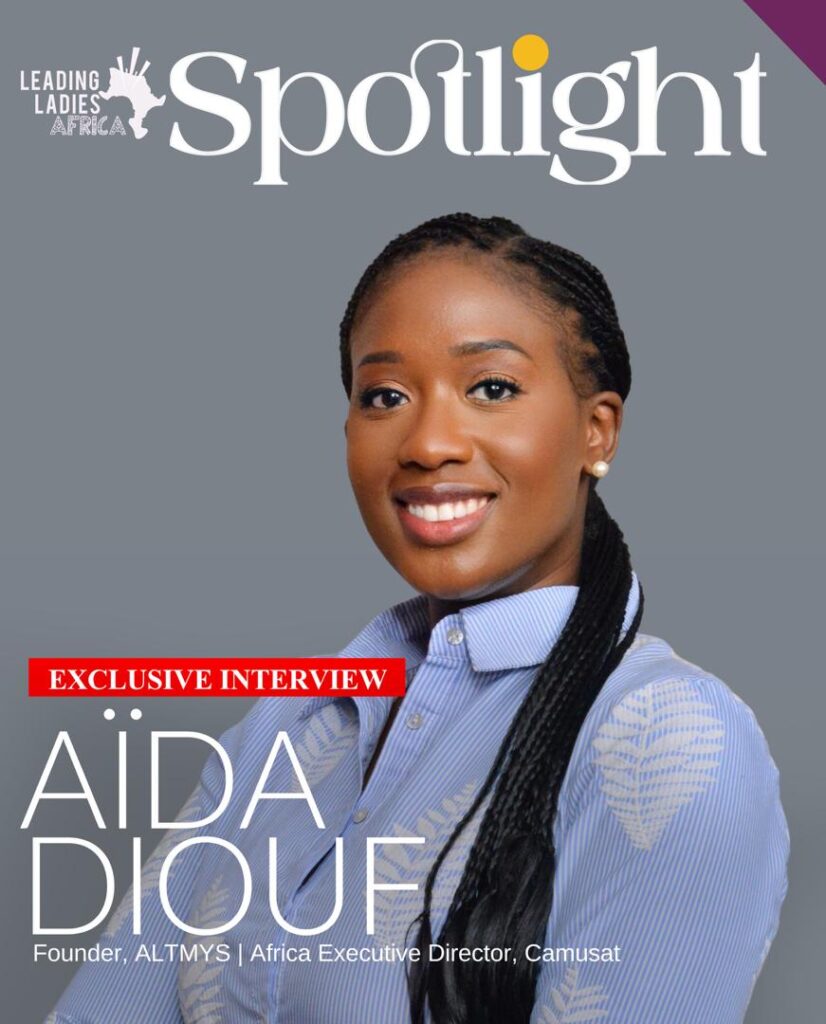
Aïda Diouf has spent over a decade building infrastructure across Africa. Towers. Networks. Systems that connect people, enable opportunity, and shape how entire societies function, and then she built something else entirely.
A Letter to My Younger Self is a pan-African storytelling movement, a book bringing together 17 remarkable women from across industries, countries, and generations to share not just their achievements, but the choices, convictions, and lessons that made their paths possible. It was born from a quiet realisation that the most powerful thing a leader can do is not just perform, it is pass something on.
Aïda Diouf is the Africa Executive Director and Group Chief Ethics and Compliance Officer at Camusat — a global leader in telecom and energy infrastructure with a footprint spanning multiple African countries. She began her career as a financial auditor at Mazars in Paris, built expertise in financial controlling at BNP Paribas, and honed her skills in corporate litigation and forensic consulting at Eight Advisory before joining Camusat in 2018. She holds an Executive MBA from HEC Paris specialising in Sustainable Leadership in Africa. She has been nominated to the World Economic Forum’s Young Global Leaders Class of 2026. She is a Forbes Africa Top 50 Most Inspiring Women honouree. And she is a regular Choiseul Africa Top 100 Laureate for her leadership in digital inclusion and clean energy sovereignty across the continent, but what drives her most is not the infrastructure she has built. It is the stories she wants to make sure are told.
She knows what happens when young African women do not see enough proof that they belong in the rooms they are reaching for. She knows that when visible reference points are missing, dreams do not stop, they simply become smaller, less precise, less confident. And she decided to do something about that.
In this conversation, Aïda opens up about the moment that quietly changed everything for her, what she was looking for in the 17 voices she brought together, and what she hopes a young African woman feels when she closes the last page of this book.
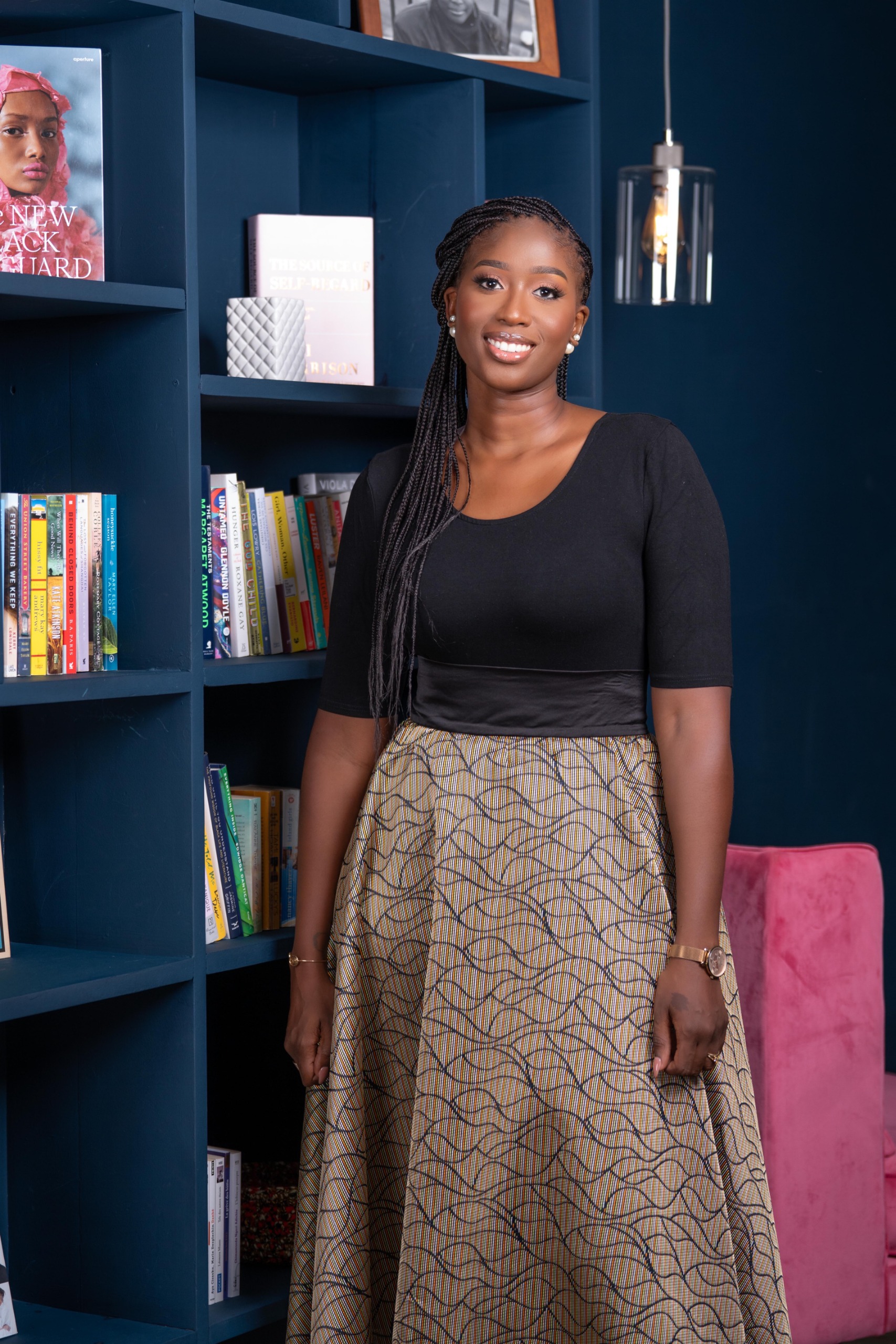
You’ve built a career across finance, governance, and executive leadership, but today, you’re also leading a deeply personal, pan-African storytelling movement. Who is Aïda Diouf at this point in your journey?
At this point in my journey, I would say I am a woman who has learned that leadership is not only about position, performance, or achievement. It is also about what we choose to pass on. My career has taken me through structured environments where decisions, governance, and results matter deeply. But with time, I have also understood the importance of memory, representation, and transmission. Today, I see myself as a bridge between worlds: corporate and social, personal and collective, African and global. A Letter to My Younger Self is, in many ways, a reflection of that evolution.
“A Letter to My Younger Self” begins with a simple but powerful reflection, “If only I had known…” What was that moment or realization for you?
For me, the realization was not a single dramatic moment. It came quietly, overtime. I began to look back at my own path and think about the words I would have needed when I was younger, ambitious, but sometimes uncertain. I thought about the doubts I carried, the questions I did not always dare to ask, and the pressure many young women feel to have everything figured out. “If only I had known” became less about regret and more about responsibility. If certain words could have helped me earlier, perhaps they can help someone else today.
You operate in highly structured, corporate environments, what made you step into something as personal and emotional as storytelling?
I do not see storytelling as separate from leadership. Over the past ten years, working in the African telecom infrastructure sector, I have had a front-row seat to how deeply infrastructure can shape societies, connect people, enable opportunities and support broader transformation.
That experience taught me something important about impact: the most meaningful change often happens when a clear vision meets execution, scale and collective action. At Camusat, I have seen how an entire ecosystem can come together around a greater purpose. In many ways, I applied the same logic to A Letter To My Younger Self: bringing together voices, experiences and partners to create something that could resonate beyond individual stories.
Corporate environments teach you strategy, structure, governance and execution. Storytelling brings another dimension: meaning. It helps people understand not only what was achieved, but what shaped the journey. With this project, I wanted African women to share not only their success, but the choices, convictions and lessons that made their paths possible. That truth can be deeply powerful for the next generation.
Why did this initiative feel urgent, not just for you, but for African women at this moment in time?
We are living at a moment when African women are leading, building, creating and transforming entire sectors, yet their stories are still not visible enough. Many young women are growing up with ambition, talent and energy, but without enough accessible reference points that reflect their realities. At the same time, the continent is young, fast-changing and full of possibility. We cannot afford for a generation of girls to shrink their dreams because they have not seen enough women who look like them, come from where they come from, and still dared to go further.
You’ve spoken about how many young African women lack visible reference points, how does that absence quietly shape their ambitions?
When visible reference points are missing, young women do not necessarily stop dreaming, but their dreams can become smaller, less precise, or less confident. They may begin to believe that certain spaces are not meant for them, not because they lack talent, but because they have not seen enough proof that they belong there. Representation is not decoration. It shapes imagination, self-belief and ambition. When a girl sees a woman from her continent leading in finance, technology, art, sport, media or public life, something shifts. The question moves from “Can I?” to “How do I get there?”

You brought together 17 remarkable women across industries and countries, what did you intentionally look for in the voices you chose to include?
I wanted plurality. I did not want a book that presents one definition of success, one kind of leadership, or one polished version of African womanhood. The 17 authors come from different countries, generations and sectors: finance, technology, literature, sport, art, media, fashion, civil society and more. What connects them is not only excellence, but depth. I looked for women whose journeys carried lessons, impact, courage and generosity. Women who could speak authentically about ambition, failure, identity, legitimacy, resilience, freedom and power. Young women deserve the honesty of real stories, not only the distance of achievement and in this book, each author was generous enough to share her vulnerability as an act of transmission.
This isn’t just a book, it’s a movement, what does real impact look like for you beyond people simply reading it?
Real impact begins when the book becomes a conversation. I want a young woman to read a letter, pause, and feel less alone in her questions. I want teachers, mentors, parents, associations and institutions to use these stories as tools for dialogue, confidence and orientation. Beyond publication, our ambition is to distribute thousands of copies for free across African countries, through schools, universities, libraries, associations and NGOs. We also want to create readings, talks, workshops and encounters. For me, impact is when a story leaves the page and becomes a spark in someone’s life.
If a young woman reads this book and still feels uncertain about her path, what would you want her to hold onto?
I would want her to know that uncertainty does not mean she is lost, nor that her aspirations are out of reach. It often means she is growing, questioning, and learning to listen to herself. Many of the women in this book did not have a straight path. They changed direction, doubted themselves, failed, started again, and sometimes built their confidence while already moving forward. I would tell her not to confuse hesitation with incapacity. She does not need to have the full map today. She needs courage, curiosity, discipline, and the belief that her path can unfold step by step, in her own way.
Years from now, when a young African woman picks up A Letter to My Younger Self and sees herself in those pages, what do you hope she understands about what was possible and about the women who came before her?
I hope she understands that possibility was never abstract. It was built by women who dared, often without perfect conditions, without full permission, and sometimes without seeing anyone ahead of them. I hope she sees that the women who came before her were not unreachable figures. They were girls once, with fears, questions, dreams and moments of doubt. But they moved forward, and by doing so, they widened the road for others. More than anything, I hope she closes the book with a quiet certainty: my story matters too, and I am allowed to build something that will outlive me.