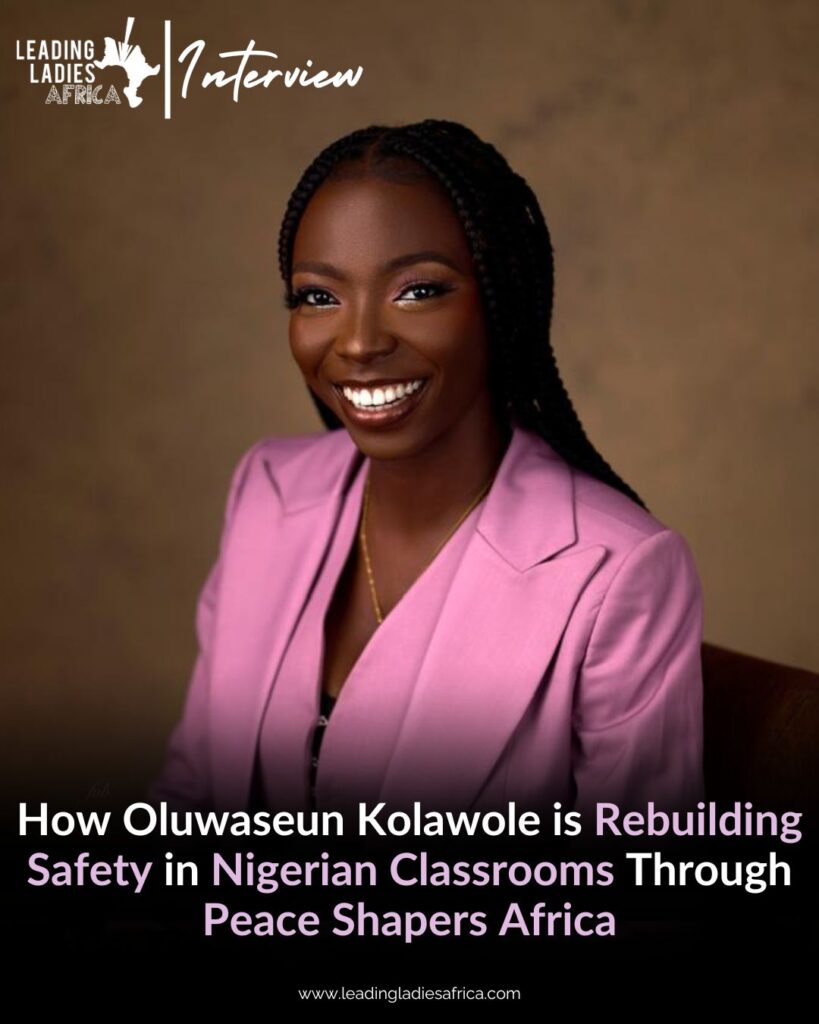
Oluwaseun Kolawole did not set out to build a movement. She set out to teach young people about peace. But in 2021, a wave of school bullying incidents kept appearing in the news, one after another, and she could not look away.
What started as research turned into a reckoning. The scale of violence quietly normalised in Nigerian schools bullying, humiliation, corporal punishment, fear dressed up as discipline was far greater than she had imagined, and far more preventable than anyone wanted to admit.
That recognition became Peace Shapers Africa, a consultancy and training organisation helping Nigerian schools move beyond fear-based discipline toward systems that actually protect children. In five years, Oluwaseun and her all-female team have equipped over 5,000 students and trained more than 200 teachers across Abuja, Lagos, and Ogun State.
In this conversation, she opens up about the moment she stopped seeing school violence as normal, what real transformation looks like inside a classroom, and the one question she believes every Nigerian parent should be asking their child.
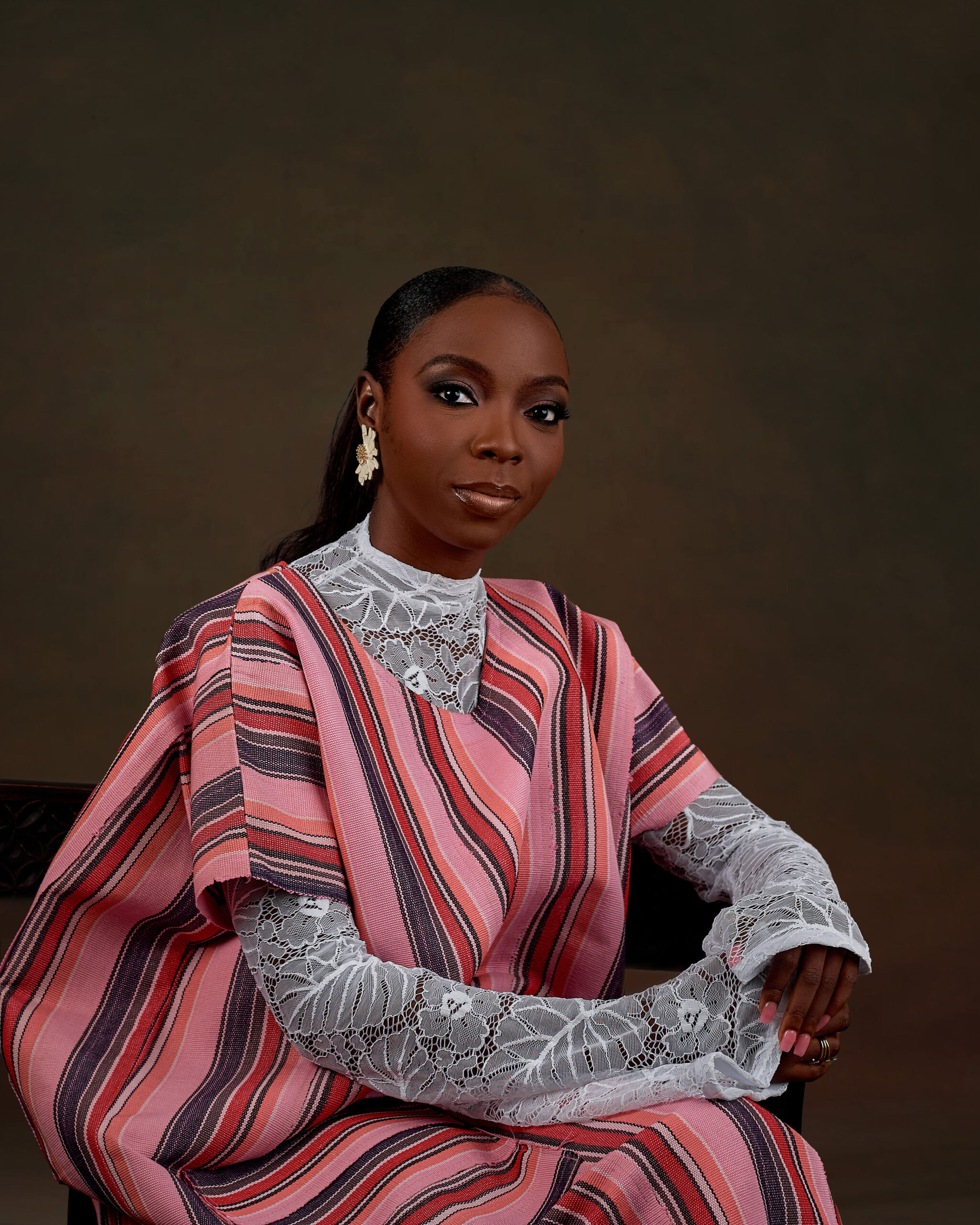
You are building safer schools across Nigeria with an all-female team. Tell us about Peace Shapers and the work you are doing!
Peace Shapers Africa was born out of a growing concern I had about the safety of children in our schools and communities. For years, conversations around education in Nigeria have focused on academic performance, infrastructure, and access, all of which are important. But one question often gets overlooked: Are our children actually safe where they learn? As we began engaging schools, we discovered that many well-meaning institutions lacked the systems, training, and structures needed to prevent violence, respond appropriately to safeguarding concerns, and create environments where children can truly thrive. That realisation changed everything for me. I stopped wanting to raise awareness and started wanting to build systems. In five years of working with schools, the pattern we encounter most is not resistance; it is unawareness. School leaders who have never heard the word safeguarding. Teachers who care deeply but have never been trained to respond when a child discloses abuse. Policies that exist on paper but have never been translated into practice. Our work is not about shaming schools. It is about equipping them. Today, Peace Shapers Africa helps schools strengthen safeguarding systems, prevent violence, train educators, and build cultures where children are safer. We have reached over 5,000 students across 3 states in Nigeria through our WAVE Campaign and are currently installing our first proof-of-concept school through the 100 Safe Schools Project, a national initiative to bring comprehensive safety systems to public schools through corporate sponsorship. One of the initiatives I am most proud of is our Shapers Ambassadors Programme. In 2025, we trained our first cohort of students in leadership, conflict resolution, and peer mediation. Beyond teaching skills, we expose them to opportunities that expand their sense of possibility. We want young people to understand that their background is not a limitation and that they have a role to play in shaping the future of their communities. I did not intentionally set out to build an all-female team. These were simply the people who showed up, cared deeply about the work, and committed themselves to the mission. But I have come to appreciate the significance of it. For generations, women have quietly carried much of the responsibility for protecting children in homes and communities. What we are doing at Peace Shapers is taking that instinct and turning it into systems, structures, and solutions that can outlive us. Ultimately, we are working toward a future where every child can learn in an environment that is safe, supportive, and free from violence and where every school has the systems needed to protect the children entrusted to its care.
Most people walk past the problem of school violence without blinking. What made you stop, turn around, and decide to build a solution?
Honestly, I didn’t stop because of one dramatic moment. I stopped because of a slow realisation, and once I had it, I couldn’t unsee it. I had started out simply trying to equip young people to promote peace within their communities. That was the work. But then in 2021, within what felt like a concentrated period of time, I kept seeing school bullying incidents in the news, back to back, impossible to ignore. I became extremely concerned, and I decided to look more closely. So I did. I went into the research, and what I found was a gap I wasn’t prepared for. The scale of it. The consistency of it. The near-total absence of structured, contextually relevant responses to it in Nigerian schools. And that research led me somewhere deeper, to a recognition that the things we dismiss as normal in schools are actually forms of violence. Bullying, humiliation, corporal punishment, and intimidation – children living in daily fear, not of strangers, but of their classmates or the very adults who are supposed to keep them safe. We have spent years telling ourselves that this is just how growing up works. That suffering is a rite of passage. That children who endure it come out stronger. And because we all passed through it, we stopped seeing it as something that needed to be named, let alone stopped. But the more I listened to children, the more I realised that violence leaves a mark. It shapes how they see themselves, how they learn, how they relate to others, and sometimes even who they become. What struck me most was how preventable so much of it was. That was the moment, a quiet, unsettling recognition that we had collectively agreed to look away from something real. School violence is not inevitable. Safer schools can be built. But first, we have to stop treating violence as normal. Once you see violence dressed up as normalcy, you cannot keep walking. At least, I couldn’t. And I think the question stopped being “Why build a solution?” and became “How have we gone this long without one?”
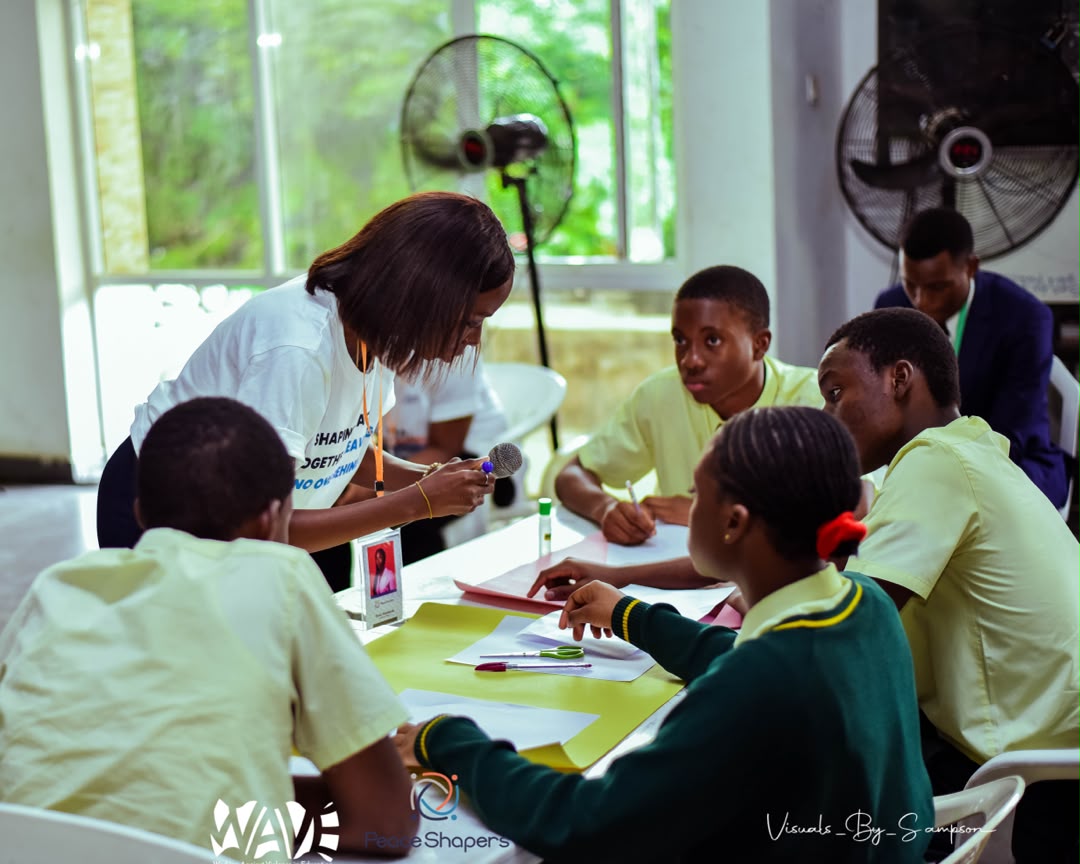
You have reached over 5,000 students and trained more than 200 teachers in five years. What is the most powerful shift you have seen happen in a school after Peace Shapers came in?
The most powerful shift is always when people move from seeing safety as an event to seeing it as a responsibility. Many schools invite us in, expecting a workshop. What often happens instead is a change in how they see their role. I remember speaking with a group of teachers who initially saw bullying as a normal part of school life. By the end of our engagement, the conversation had completely changed. They were no longer asking, “How do we punish students who bully?” They were asking, “What is happening beneath this behaviour, and how do we create an environment where it is less likely to happen in the first place?” That shift is powerful because it changes everything. The same thing happens with safeguarding. Teachers begin to understand that child protection is not the responsibility of one person or one department. It becomes everyone’s responsibility. For me, the biggest victories are not always the numbers. They are the moments when a teacher tells us, “I would have handled that situation very differently before this training,” or when a school leader begins to see safety as something that must be intentionally built into the culture of the school. Those are the moments that tell me change is happening. Because once people start seeing differently, they start acting differently. And when enough people do that, entire school cultures begin to change.
Leading a 100% female team doing some of the most important work in education today, what is your superpower as a leader, and what does your team bring out in you?
My superpower as a leader is seeing connections that other people often miss. I have a habit of looking beyond the immediate problem and asking, “What is the system underneath this?” Whether it is school violence, safeguarding failures, teacher burnout, or student behaviour, I am rarely satisfied with addressing symptoms. I want to understand what is causing them and how we can build something that prevents the problem from recurring. That systems-thinking mindset has shaped a lot of what we do at Peace Shapers. We are not interested in one-off interventions. We want lasting change. As for my team, they bring out both my courage and my softness. The work we do can be emotionally heavy. We spend a lot of time thinking about violence, harm, and the realities children face. My team constantly reminds me that while systems matter, people matter too. They bring empathy, creativity, thoughtfulness, and a deep sense of care to everything we do. One of the things I love most is that there is very little ego in our work. We challenge each other, laugh together, pray together, and hold each other accountable to the mission. Because we are all deeply committed to the same vision, there is a level of trust that allows us to dream bigger than any one of us could on our own. Leadership can sometimes feel lonely, but this team has made it feel deeply collaborative. They remind me that building safer schools is not my work, it is our work.
What is the one piece of advice you would give to a woman who wants to build something that creates real, lasting change in her community?
Start with a problem that genuinely breaks your heart, not one that is trending, popular, or likely to attract applause. The work of creating lasting change is often slower, harder, and less glamorous than people imagine. There will be seasons when nobody is paying attention, celebrating your work, or even understanding why it matters. In those moments, passion is not enough. Conviction is what keeps you going. I would also encourage women to think beyond awareness and ask, “What system needs to exist for this problem to become less likely tomorrow than it is today?” Real change happens when we move from reacting to problems to building solutions that outlive us. Finally, do not wait until you feel fully ready. Most of us begin before we have all the answers. Clarity often comes through action. Take the first step, learn as you go, stay close to the people you want to serve, and allow the work to shape you as much as you shape it. The communities we want to build are not transformed by perfect people. They are transformed by people who care enough to start.
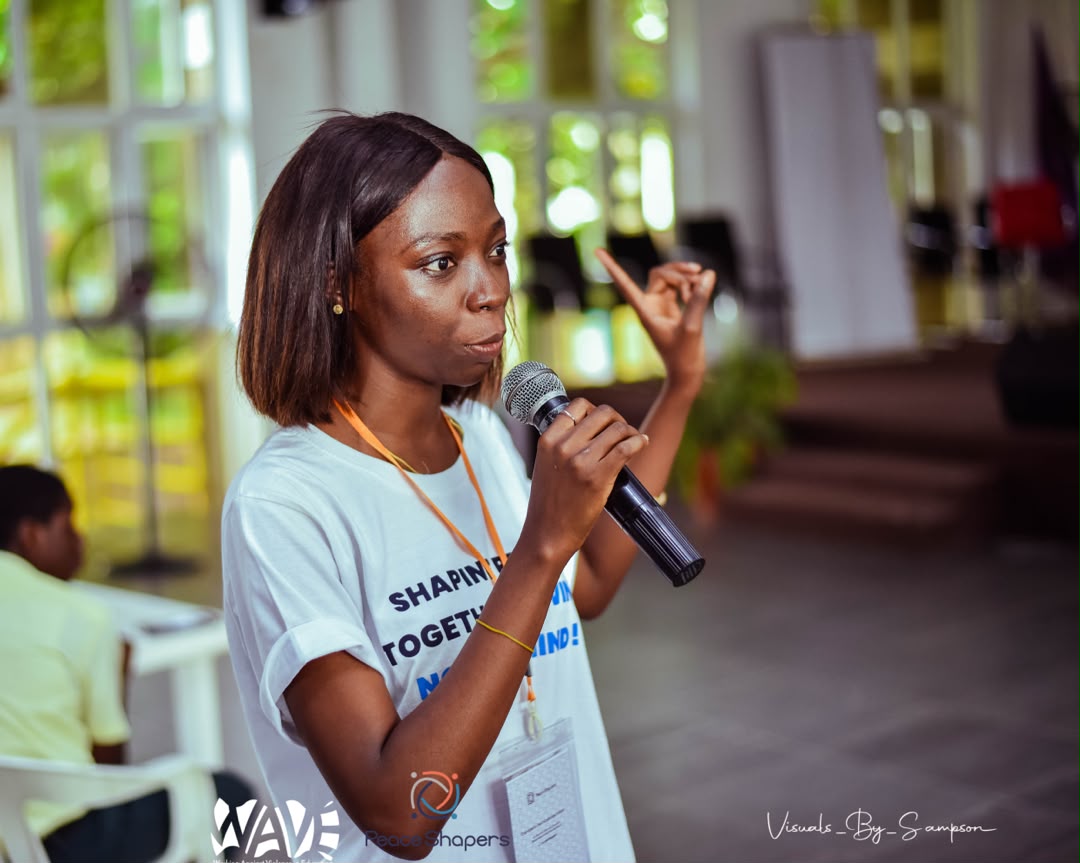
If you could tell every Nigerian parent one thing about what their child experiences at school, what would it be?
I would tell every Nigerian parent this: Your child is having an experience at school that you know very little about. You know their grades. You know when they are late. You know what subjects they struggle with. But do you know who they are afraid of? Do you know who makes them feel seen? Do you know whether they feel safe speaking up when something is wrong? Do you know what happens on the playground, in the school bus, in the hostel, or in the moments when adults are not watching? One of the greatest lessons this work has taught me is that children rarely experience school the way adults imagine they do. Many children carry burdens quietly. Sometimes it is bullying. Sometimes it is humiliation. Sometimes it is loneliness. Sometimes it is something far more serious. That is why I encourage parents to spend less time asking, “How was school?” and more time getting curious about their child’s world. Because the safest children are not necessarily the children whose parents know everything. They are often the children who know they can tell their parents anything.