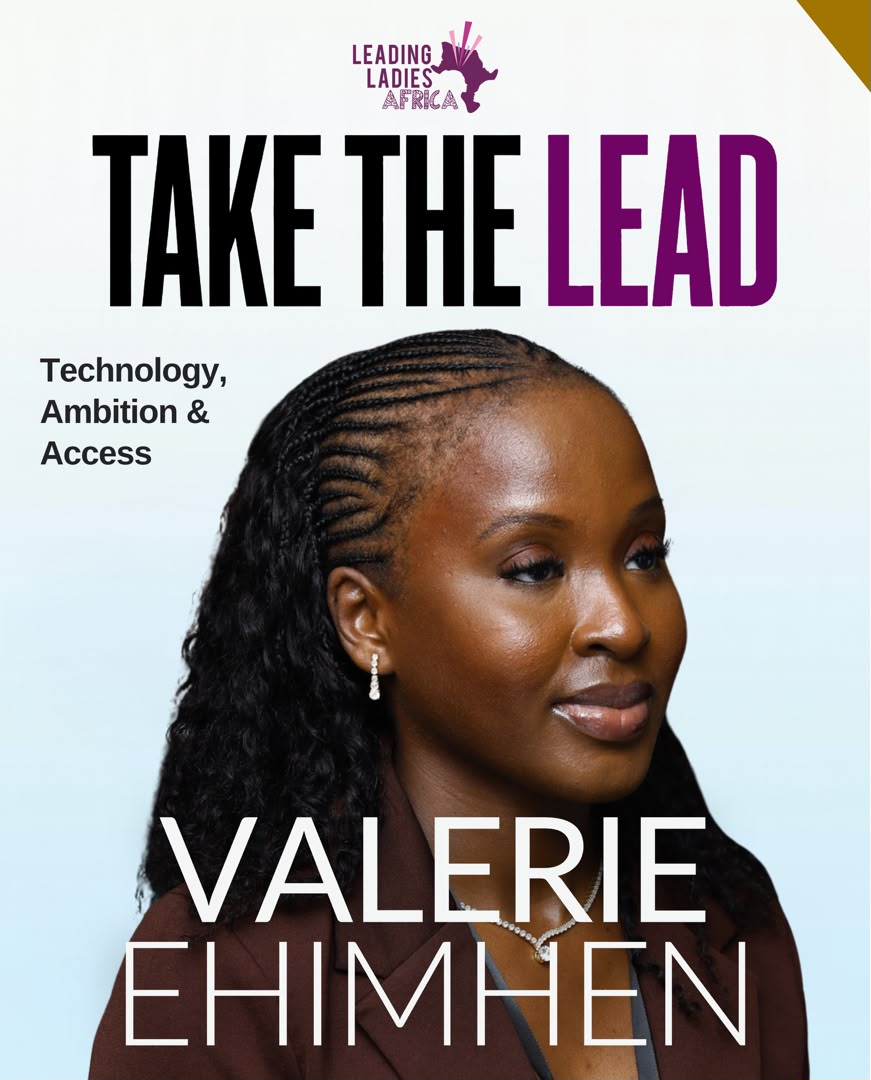
Picture being the youngest person in every classroom you walk into, then the only Black woman in the room once you get to the technical spaces, and deciding that this is the most useful thing about you. That is how Valerie Ehimhen tells her own story, and it took her from Lagos to the engineering work behind NASA’s Mars 2020 mission and then to Google’s Quantum AI team.
She grew up in Lagos loving maths and puzzles, surrounded by family, community and ambition. She started school early and skipped a grade, so she was always the youngest person in her classes. At 14, she moved to the United States on her own to continue her education, and by 20 she had finished her degree in Computer Science. Her early twenties went into aerospace engineering, working with NASA on a rover destined for another planet, where she learnt that even impossible goals are just a series of smaller problems you solve one step at a time.
Today she is a Technical Program Manager at Google, where she works on large-scale hardware initiatives in Quantum AI. She holds a Master’s in Systems Engineering from Johns Hopkins University and is an MBA candidate at USC Marshall, because in her view technology alone does not change the world; the strategy behind how it is deployed does. In between, she has walked runways in New York, Los Angeles, Paris and Milan, and she will happily tell you about her sourdough bread served with homemade blueberry jam.
Behind all of that is a conviction that brilliance is universal and opportunity is not. At 25, she co-founded the Petga Initiative to bring STEM education and mentorship to public school girls in Nigeria, and this year she established a scholarship at Frostburg State University, her alma mater, because someone once did the same for her.
In this conversation, Valerie talks about what imposter syndrome really feels like and how she moved through it, why being the only one in the room can become a superpower, and what she wants every quietly brilliant girl in Nigeria to hear

Before NASA*, before Google, before the runways of Paris and Milan, who is Valerie Ehimhen, and what shaped her?
Before the titles and the global platform, I have always been a curious dreamer and a problem solver. I grew up loving math, enjoyed solving puzzles and spending time with my brothers & family. I grew up in Lagos, Nigeria, grounded in a rich heritage of community, discipling and ambition. Growing up in Nigeria, I was surrounded by an environment that taught me to look beyond constraints. I often say growing up in Nigeria taught me to not give up on my dreams. My upbringing instilled in me a drive to explore, create, and excel across various interests and fields, hence my diverse portfolio. I was simply a girl fueled by a belief that curiosity knows no boundaries. I worked at Northrup Grumman (an aerospace company) – in collaboration with NASA.
You started your undergraduate degree at 16 and graduated at the top of your class. What kept you going in environments where you were often younger, and often one of very few people who looked like you?
Because I grew up in Nigeria, I started school early. Coupled that with a double promotion (skipped a grade), I naturally became the youngest of my peers in all my classes all through college/university. Being the youngest person and often the only Black woman in technical spaces can initially feel like an added weight, but I reframed it as a strength. I realized that my perspective was a distinct lens that allowed me to approach problems in a unique way. What kept me grounded was my sense of purpose which was knowing that my success was not just about my own ambitions, but about proving that young African women belong at the absolute forefront of technical innovation and academic excellence.
You contributed to NASA’s Mars 2020 project as an aerospace systems engineer before transitioning to Google. What did working on something as extraordinary as a Mars mission teach you about what you are capable of, and what did it cost you to get there?
This was such an extraordinary project! Working on the Mars 2020 rover was indeed a profound experience because when you are engineering & testing systems destined for another planet, there is zero margin for error. It however taught me that complex goals are a series of smaller, solvable engineering challenges. 1 step at a time! That experience expanded my definition of potential and gave me the conviction that I could tackle ANY hurdle, technical or personal. The cost was immense discipline, countless late nights, and sacrificing comfort to continuously operate at the highest level of performance. However, the confidence and clarity it gave me were invaluable.
You now manage ML fleet quotas and TPU allocations for some of the world’s most powerful AI models at Google, including Search and Gemini. For the woman reading this who has never heard those terms, what does that work actually mean, and why does it matter?
My first role at Google was managing ML fleet TPU & compute quota across the company. This was also such a complex problem to solve and carried immense pressure. Managing the foundational computational engine that drives advanced artificial intelligence at scale, was no small feat. When billions of people perform a search or use Gemini to learn, write, or solve complex problems, those requests require massive infrastructure behind the scenes. My job is to ensure that these resources are strategically allocated so that these groundbreaking AI models run efficiently, reliably, and seamlessly at a global scale. It matters because high-performance computing is the backbone of modern innovation.
You are an MBA candidate at USC Marshall while working at Google’s Quantum AI team. What is driving you to keep building your academic foundation even when your career is already exceptional by any measure?
I don’t want to live life with regrets! I often say when I’m 90, I want to look back on my life and know that I gave everything I want to do a shot! I have BIG goals and I’m a constant learner. Technical mastery and business acumen must go hand in hand to drive true impact, whether as I grow in my career at Google or with my entrepreneurial aspirations. Being a part of Google’s Quantum AI team allows me to build and scale breakthrough technologies, AND pursuing my MBA at USC Marshall equips me with the strategic, financial, and organizational frameworks to lead transformational businesses. Technology alone doesn’t change the world, I think it’s the strategic vision behind its deployment and distribution that does does. An MBA equips me with that. I want to build a foundation that enables me to lead at the intersection of deep tech, executive leadership, and global enterprise.
You have spoken openly about navigating imposter syndrome in male-dominated technical environments. What does imposter syndrome actually feel like when you are the only woman, or the only African woman in the room, and what has helped you move through it?
Imposter syndrome feels like a constant whisper asking if you truly earned your place at the table, especially when no one else in the room shares your background or journey. What helped me move through it was grounding myself in data, my competence and impact. I remind myself of the rigorous work, preparation, and achievements that brought me here. Over time, I came to realize that being unique in a room is actually a superpower. When you internalize that your presence adds irreplaceable value, the self-doubt goes away.
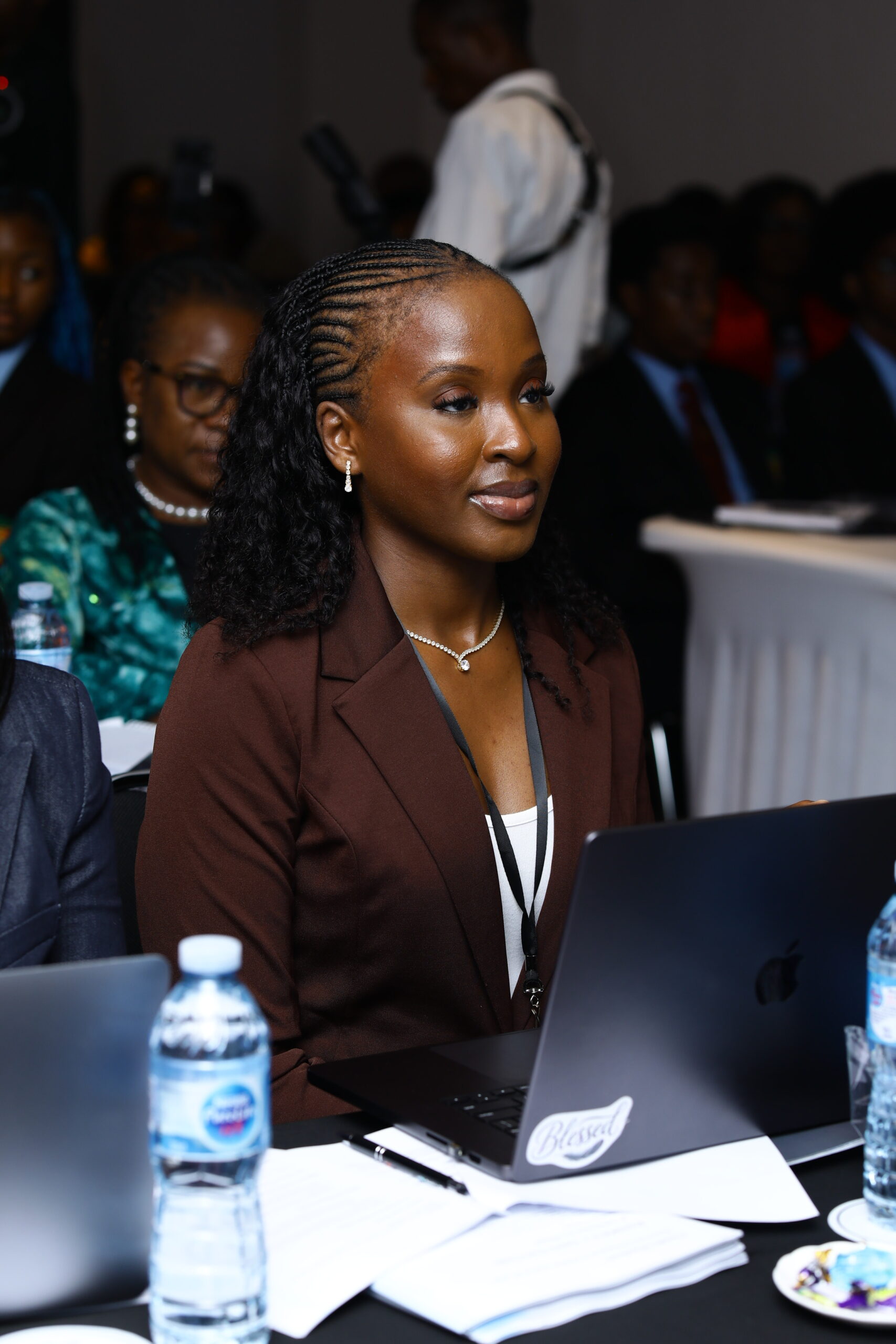
You co-founded the Petga Initiative to promote STEM education among public school girls in Nigeria. What do you want every girl in a Nigerian public school to understand about what a career in tech can look like, and what it can give her?
I want every young girl in a Nigerian public school to know that tech is not an abstract, distant world reserved for a privileged few. It is a powerful tool for problem-solving and economic independence. A career in tech gives you the ability to build solutions to local and global challenges from anywhere in the world. Through the PETGA Initiative, we are demystifying STEM & Tech, building confidence, and giving students the foundational skills and mentorship to see themselves as future engineers, creators, and technology leaders.
You established the Valerie C. Ehimhen Computer Science Scholarship at Frostburg State University in 2026 to support diverse and low-income students pursuing tech. What does it mean to you to build a pathway for someone who looks like the younger version of you?
Establishing my scholarship at Frostburg State University (my undergrad alumni) is one of the most deeply meaningful milestones yet. For me, it was about removing financial barriers so that talented, underrepresented students can focus entirely on their potential rather than their survival. Someone did this for me! So I’m giving back. Creating a pathway for students who share my background ensures that the door stays open behind me.
You believe that brilliance is universal but opportunity is not. What needs to change, in Africa specifically, for the gap between brilliant girls and access to opportunity to finally close?
Closing the opportunity gap in Africa requires heavy systemic investment in infrastructure, accessible quality education, and direct mentorship networks. We must bridge the digital divide by equipping every public schools with technology, internet access, and modern STEM curricula. Beyond infrastructure, we need to foster an ecosystem where young African talent is connected directly to global opportunities, funding, and career pathways.
Beyond Google, beyond the scholarship, beyond every milestone, what do you want the name Valerie Ehimhen to mean to every Nigerian girl who is quietly brilliant and waiting for someone to tell her she belongs?
I want my name to serve as living proof that where you start does not limit how far you can go. I want every young girl in Nigeria…and across Africa…to see my story and understand that her intellect, creativity, and dreams belong in every room, every boardroom, every laboratory, every creative room, and every high-tech facility in the world. If my journey can give even one girl the courage to step boldly into her purpose without fear or apology, then my work has achieved.