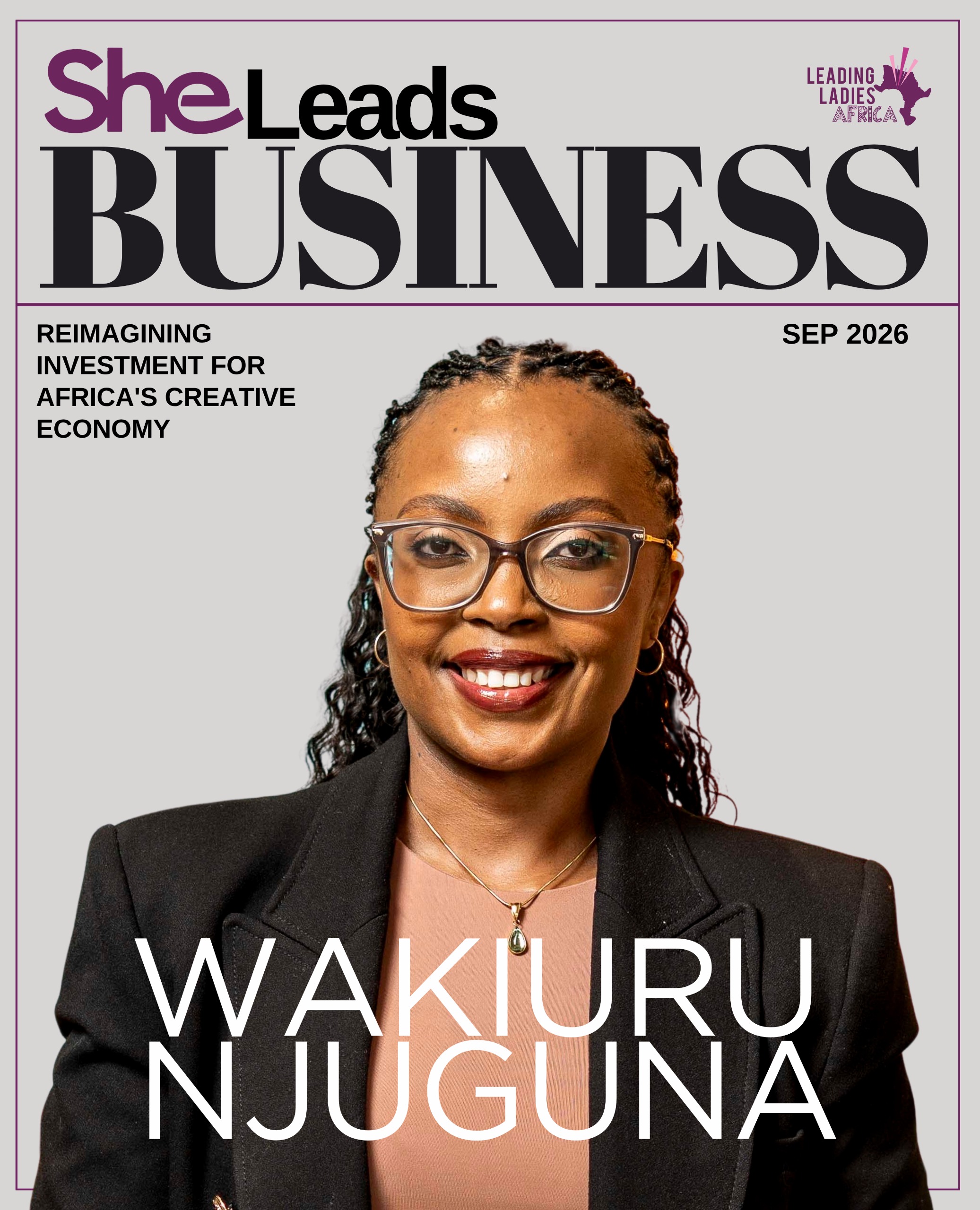
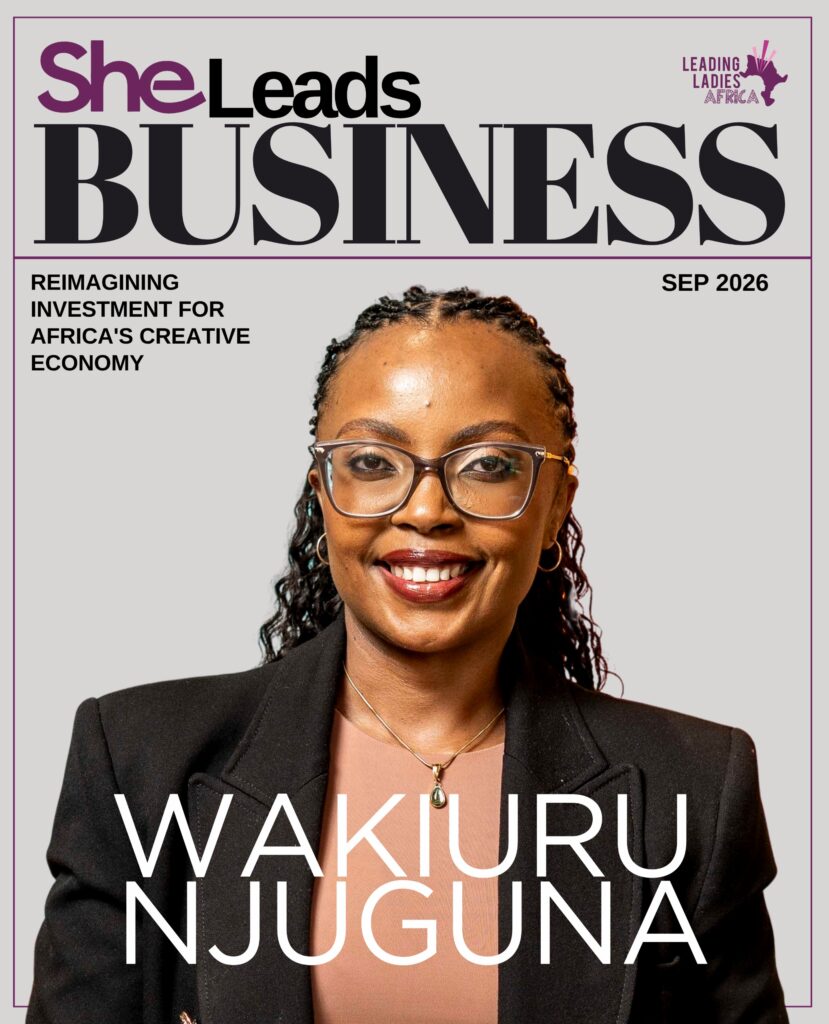
Wakiuru Njuguna has always been less interested in whether a system works and more interested in who it works for, and who it leaves out.
That instinct has shaped everything she has built. It is why she spent years sitting with artists and creatives early in her career, watching a sector full of talent, entrepreneurial energy, and economic potential be systematically overlooked by the financial system. It is why she kept asking what it would look like to build something more relevant to their realities. And it is why, over the past 12 years as Managing Partner at HEVA Fund, she has helped mobilise and deploy more than USD 40 million in capital into East Africa’s creative industries, supporting entrepreneurs across film and television, fashion, music, live performance, and creative technology, but Wakiuru will be the first to tell you that the work was never really about the money. It was about the question behind the money: why was one of Africa’s most dynamic sectors being treated as though it had nothing worth investing in?
Wakiuru Njuguna is a Kenyan investment and finance leader with over 12 years of experience at the intersection of capital and Africa’s creative economy. As Managing Partner at HEVA Fund, she has built one of East Africa’s most important institutions for creative enterprise, challenging traditional assumptions about who is investable, what constitutes a viable business, and how financial products can be designed to work for entrepreneurs whose assets and revenue models do not fit neatly into conventional frameworks.
Her work has not been about importing models from elsewhere and asking African creative businesses to fit into them. It has been about listening, testing, failing, learning, and building from the ground up, because she believes that the creative economy deserves financial infrastructure designed with it in mind, not as an afterthought.
In this conversation, Wakiuru opens up about what has kept her in this space for over a decade, what needs to fundamentally change about how African entrepreneurs are assessed for funding, the lesson she had to learn the hard way about urgency and speed, and what she hopes she leaves behind for the women and entrepreneurs who come after her.
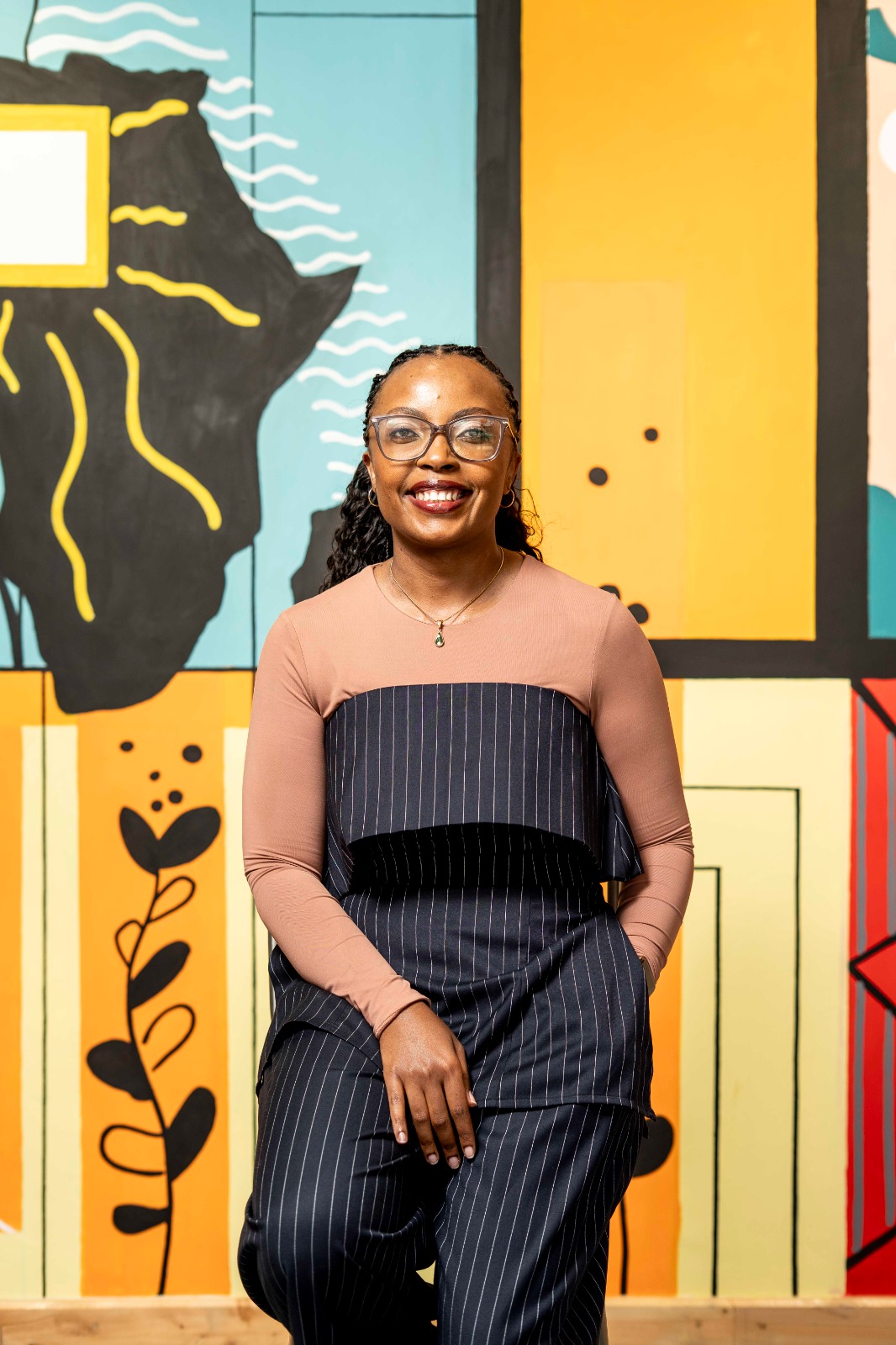
Who is Wakiuru Njuguna? Tell us about the woman behind the work.
I grew up watching people’s lives transform when systems, institutions and opportunities were designed to include them. When someone who had previously been overlooked was suddenly given access to capital, an opportunity, a platform or simply the chance to participate. I’ve seen how profoundly inclusion can change the trajectory of a person’s life.
It is probably why I’m less interested in simply asking whether a system works and more interested in asking who it works for, who it leaves out, and what we could do differently. That instinct has shaped much of my career. It is certainly at the heart of my work at HEVA, where so much of what we have done has been about questioning systems that were not designed with creative businesses and artists in mind and asking what it would look like to build something more relevant to their realities.
You’ve spent over 12 years working at the intersection of investment, finance and Africa’s creative economy. What first drew you to this space, and what has kept you here?
I spent quite a bit of time with artists and creatives early in my career, and that experience really shaped my belief in the potential of Africa’s creative economy.
As a finance person, I kept trying to connect the dots; mostly to understand why an industry with so much talent, entrepreneurial energy and economic potential wasn’t being seen in the same way by the financial system.
I was seeing young people and women building businesses, creating livelihoods and finding ways to turn their creativity into economic value, often with very little capital or institutional support behind them. I kept wondering why such a dynamic sector had so little financial innovation around it.
What has kept me here is the opportunity to keep trying to answer this question.
Over the last 12 years, through HEVA, we have spent a lot of time listening to creative entrepreneurs, understanding how their businesses work and experimenting with different ways of financing them. Some things have worked, some haven’t, and some have led us to questions we hadn’t even thought about when we started.
That process has changed my own thinking. I started out thinking a lot about access to capital and how we get money into the hands of creative entrepreneurs; Today, I think much more about the systems around that capital: how we assess businesses, how we structure financial products, how we build markets and institutions, and what it takes to make creative businesses sustainable and scalable.
That is what has kept me interested for so long because there is still so much to figure out.I enjoy difficult questions, and the creative economy is full of them. But more importantly, I enjoy the process of taking those questions and trying to build something that makes the answer a possibility
As Managing Partner at HEVA Fund, you’re making decisions around capital, businesses and people. What does leadership look like for you?
The more senior you become, the easier it is to believe that you are supposed to have all the answers. I actually think the opposite is true. The more responsibility you have, the more important it becomes to listen to your team, to the people you serve, to the market and sometimes to the things that aren’t being said.
At HEVA, we’ve spent the last twelve years listening to what creatives have been telling us about their businesses, their challenges and what they actually need. A lot of the financial innovations we have developed along the way have been a by-product of that listening.
We didn’t start with a fixed idea of what the sector needed and then try to convince creatives to fit into it. We listened, tested, learned and adapted. And sometimes what we heard challenged our own assumptions about what finance should look like.
I think that is also what leadership requires of me personally, being willing to evolve. The world changes, the market changes, the people you work with change, and sometimes you realise that something you were certain about five years ago no longer holds true.
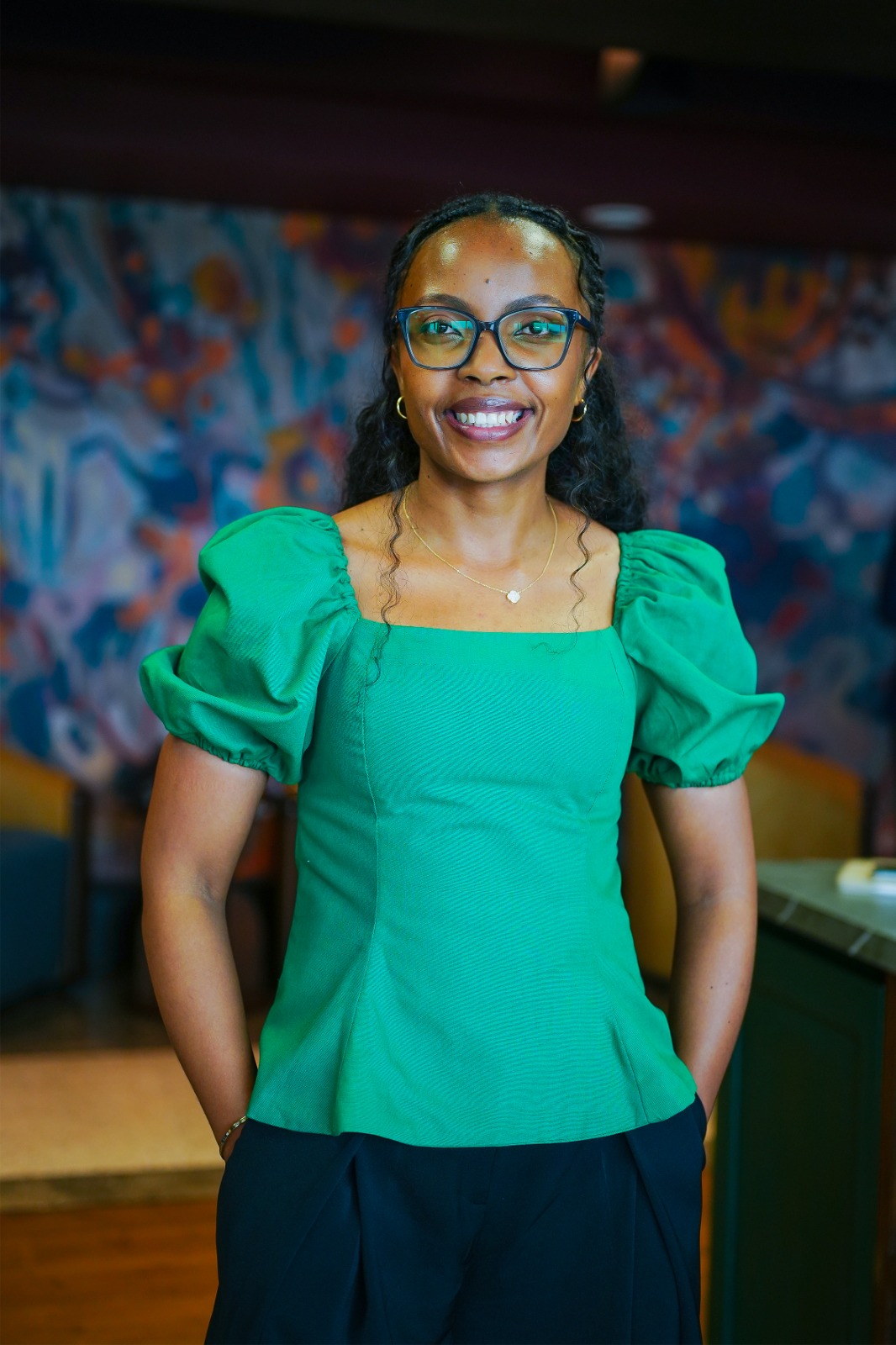
You’ve challenged traditional ideas around who is “investable” and what makes a viable business. What do you think needs to change about how African entrepreneurs are assessed for funding?
I think we need to question what we mean when we say a business is “investable.”Too often, investability is treated as though it is an objective measure, when in reality it is often shaped by what investors already know and are comfortable with. If a business looks familiar, we know how to assess it. If it doesn’t, we can very quickly label it risky.
That is particularly problematic in Africa, where many entrepreneurs are building businesses in markets and circumstances that don’t fit neatly into conventional models.I don’t think the answer is to lower the bar. Entrepreneurs still need to build good businesses. They need to understand their customers, manage their finances, demonstrate demand and have a credible path to growth.
So I think the shift we need is from asking, “Does this entrepreneur fit our financial product?” to asking, “What financial product makes sense for this entrepreneur and this business?”
That requires investors to be more curious, more willing to understand context and to build new ways of assessing risk.
What are some of the biggest mistakes creative entrepreneurs make when approaching investors, particularly when it comes to presenting their businesses and financials?
One of the biggest mistakes I see creative entrepreneurs make is not fully recognising the value of what they have already built. Creative businesses are often built around assets that don’t always show up neatly on a balance sheet. Your intellectual property, your catalogue, your audience, your brand, your community, your distribution relationships, your production capabilities – these can all have significant economic value.
But sometimes the entrepreneur sees them simply as part of the creative work rather than as assets that can underpin a business.That creates a problem when they approach investors because they may not be able to articulate what they actually own, what they have built, how those assets create value and, importantly, how that value can translate into revenue over time.
For example, a catalogue isn’t just a collection of creative work. It can generate licensing revenue, distribution opportunities and new forms of monetisation. An audience can represent a customer base or distribution channel or community and intellectual property can continue creating value long after the original work has been produced.I think creative entrepreneurs need to become much more deliberate about understanding and articulating these assets.
Women remain underrepresented among founders receiving significant investment. From your experience, where do you think the biggest barriers actually lie, access, networks, confidence, investor bias, or something else?
There are structural reasons why women have historically had less access to capital, networks, assets and the kinds of relationships that often lead to investment and those things compound. If you have less access to collateral, you may have less access to debt. If you have less access to early capital, it can be harder to build the track record that gets you larger capital later. If you are not in the networks where investment opportunities are discussed, you may not even know where the capital is coming from.
What have you learned about building investment vehicles and financial models that work within African markets rather than simply importing models designed elsewhere?
Over the years at HEVA, we’ve learned a lot by listening to entrepreneurs and understanding how money actually moves through their businesses. What looks like a simple financing problem on paper can be much more complicated in practice. Businesses may have irregular cash flows, limited collateral, informal and formal elements operating alongside each other, seasonal revenues or very different growth cycles.Creative businesses make this even more interesting because their assets and revenue models can be quite different from those of a conventional SME.
So for me, building financial models that work in African markets requires a willingness to design from the ground up rather than retrofit.
During the course of your career, what is one lesson about money, leadership or building in Africa that you had to learn the hard way?
My biggest lesson has been to not confuse urgency with speed.
I have always had a strong sense of urgency, particularly when I care deeply about something. When you can see the potential of an idea, or the cost of something not changing, you naturally want to move quickly.Building HEVA has taught me that there is a difference between moving quickly and building something that can last.
We have spent years trying to build things that didn’t have an obvious playbook; new financial models, new ways of thinking about creative businesses and evaluating risk and, ultimately, an institution that could become part of the infrastructure of Africa’s creative economy. Some things needed us to move quickly. Others needed us to slow down, listen, test, fail, learn and try again.
I’ve had to learn that you cannot rush the building of trust, strong institutions, good people or functioning markets simply because you are impatient for the outcome. I think this applies more broadly to building in Africa. We often talk about scale and speed, and of course both matter. But there is a danger in importing a sense of urgency that doesn’t leave enough room for context, experimentation and the time it takes to build something properly.
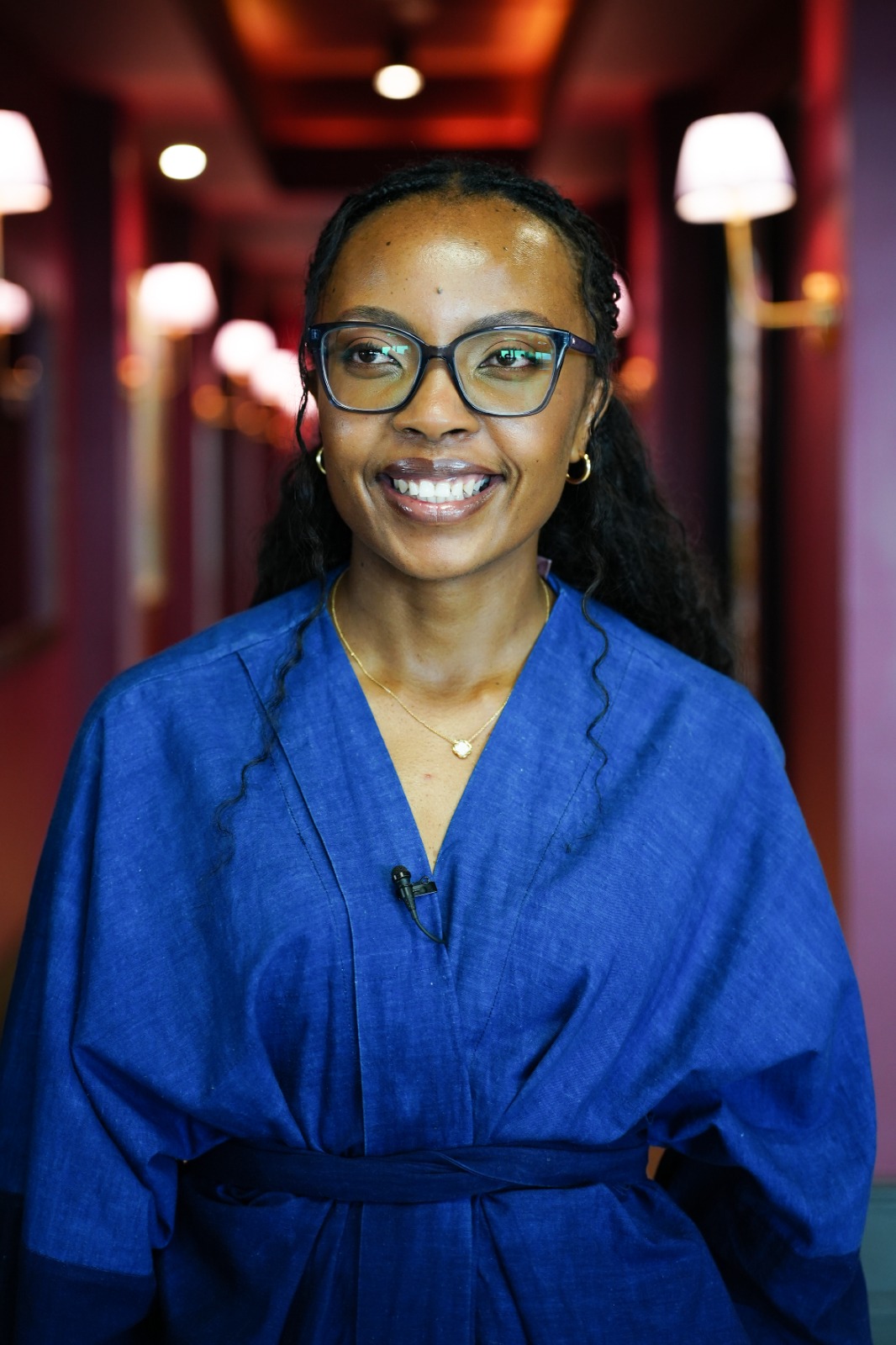
What advice would you give a young African woman who wants to build a career in investment, finance or the creative economy but doesn’t yet see many women who look like her in senior positions?
I would tell her not to wait until she sees someone who looks like her before she decides that she belongs in the room.I know how powerful representation is. There is something reassuring about seeing women, particularly African women, doing the things you aspire to do. It gives you a sense that the path is possible. But sometimes you will have to move before that representation exists. You may have to walk into rooms where there aren’t many people who look like you and decide that you belong there anyway.
Build your competence and become very good at what you do.When you combine confidence and competence you have something much more durable to stand on.
When you look at the bigger picture of your work, what do you hope you leave behind for the women and entrepreneurs coming after you?
A lot of my work has been about trying to change systems that were not necessarily designed with the creative economy in mind. But I think what has been particularly meaningful for me at HEVA is that we have had the opportunity to build an institution that starts from a different premise that these entrepreneurs are worth believing in, worth investing in and worth designing for.
We have spent years building the knowledge, systems, financial products and ways of working that allow us to see creative businesses differently. We don’t always get it right, but we have created an institution that is willing to listen, learn and adapt rather than asking entrepreneurs to constantly prove that they fit into a system that wasn’t designed for them.
I hope that the institution itself becomes part of the infrastructure of the creative economy on the continent: something that continues to shift how capital is understood, how creative businesses are assessed and, ultimately, what people believe is possible for the sector.