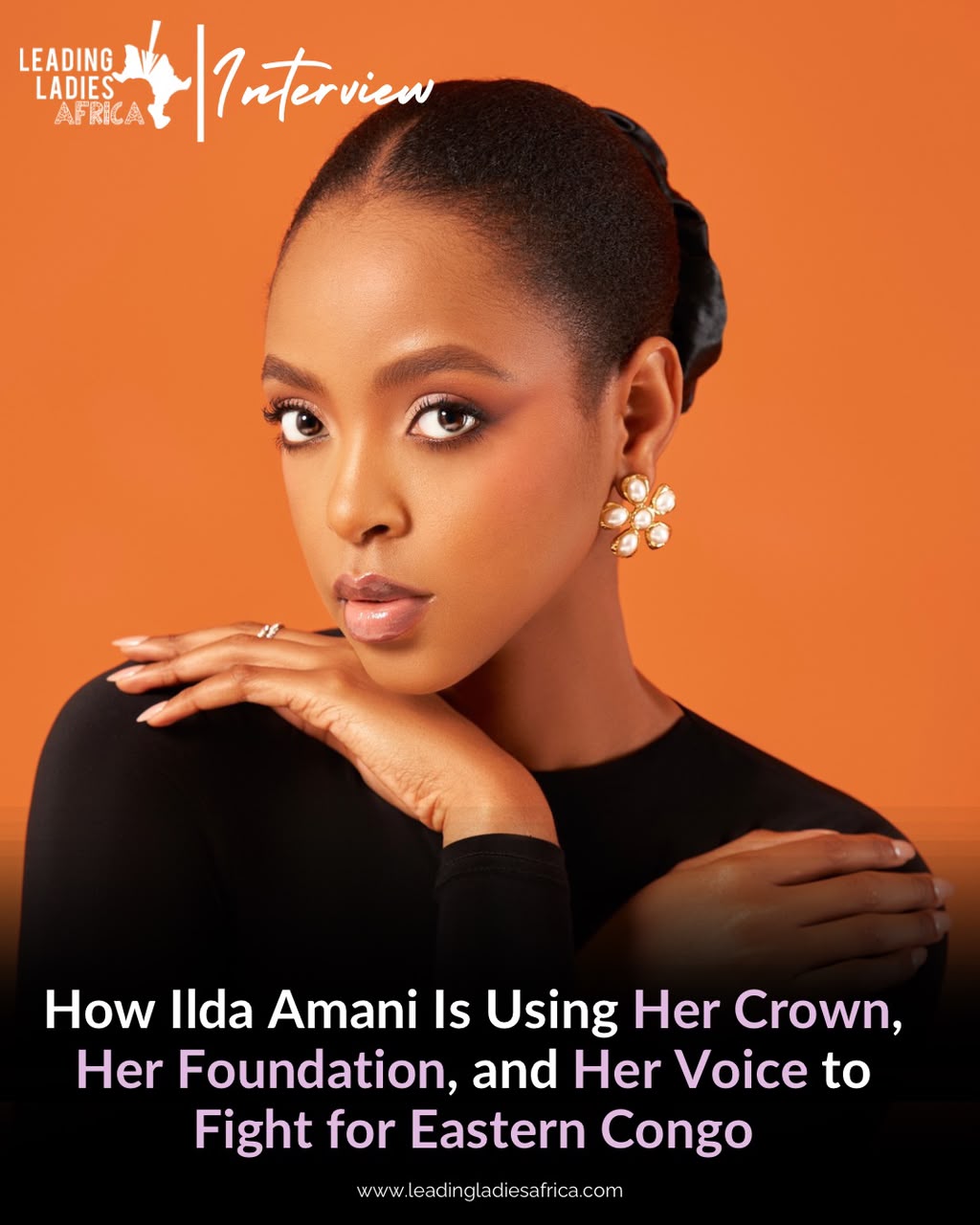
Ilda Amani grew up in Bukavu, a city she loves deeply, and a city the world has largely chosen to look away from. She grew up knowing families displaced by conflict. Neighbours living without knowing what tomorrow would bring. Women and girls subjected to violence so persistent it risks becoming invisible to the outside world. And yet she also grew up believing, from a very young age, that she was meant for a big life, one that would go far beyond just herself.
That belief built Fondation Amani Kwetu, a nonprofit dedicated to women’s empowerment, education, menstrual and reproductive health, and communities affected by conflict in Eastern Congo. It built O’MUKAZI, her first entrepreneurial venture, which failed, and from which she learned everything she needed for what came next. It built a decade-long journey through pageantry that culminated in her being crowned Miss Universe Democratic Republic of Congo 2024, marking the country’s return to the Miss Universe stage after a 38-year absence and it is now building a career in real estate, a growing speaking platform, and a public voice that refuses to let the realities of Eastern Congo remain a distant headline.
Ilda Amani Dorcas is a businesswoman, advocate, content creator, speaker, and beauty queen but above all, she is a young woman from Bukavu who decided that her circumstances would never determine the size of her ambitions, and that the only way to find out how good it could get was to get up and try.
In this conversation, Ilda opens up about building Fondation Amani Kwetu, why menstrual hygiene is an education crisis the world keeps underestimating, what she wants the international community to understand about Eastern Congo, and what she would say directly to every young Congolese girl who is daring to believe her future is still possible.
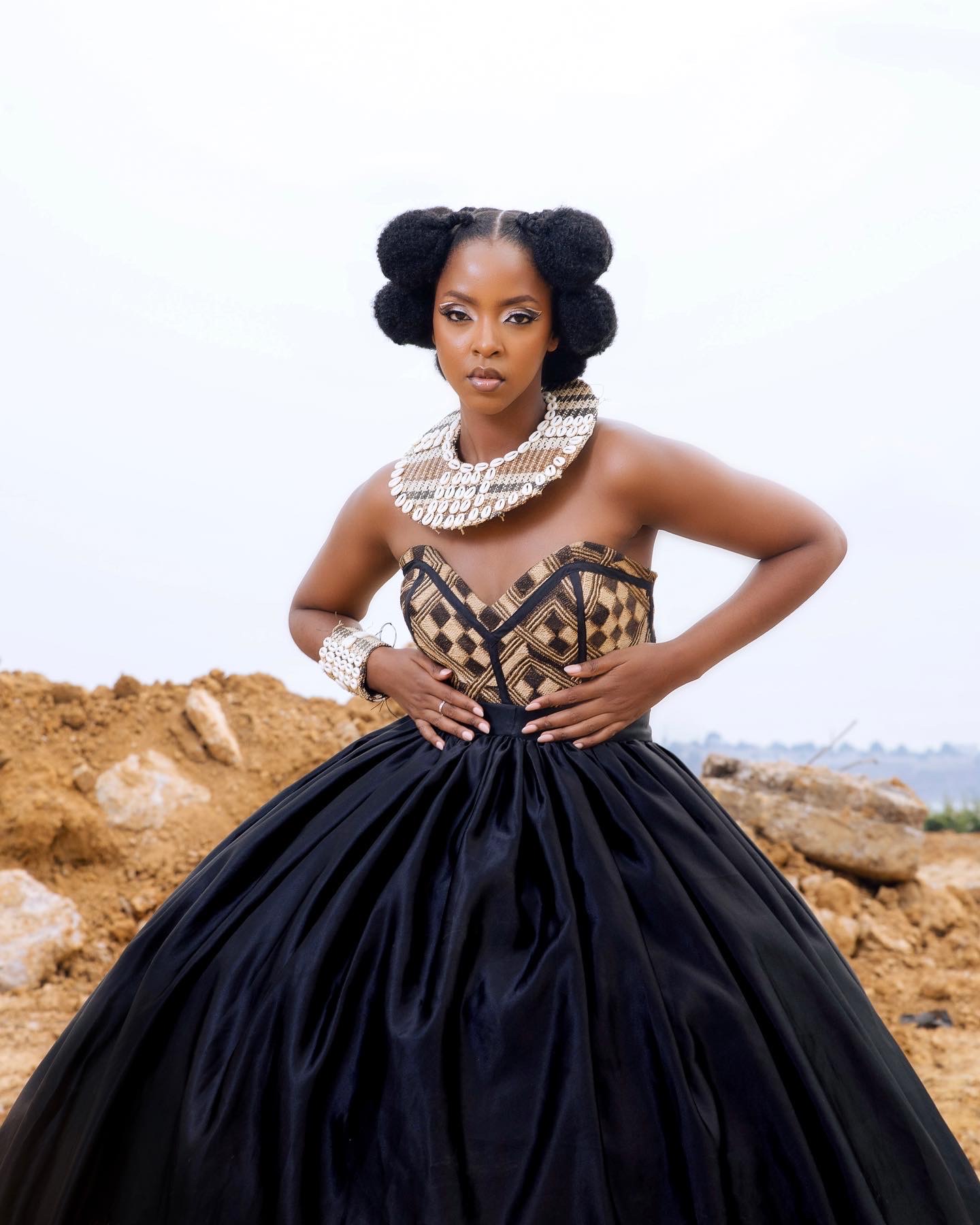
You grew up in Bukavu, a region where conflict, poverty, and violence against women are daily realities and responded by building Fondation Amani Kwetu. Tell us about the foundation and what it means to you in three sentences.
Amani Kwetu came from my desire to be part of something bigger than myself, something that will continue to impact people’s lives long after I am gone. I also wanted to create a structured system through which I would support women and girls from my region in reaching their full potential. Hearing the testimonies of women and girls whose lives have ben impacted by outreaches gives me an incredible sense of purpose and reminds me why this work matters.
Period poverty is keeping girls out of classrooms across the DRC every single month. You decided to tackle it by distributing reusable sanitary pads. What do most people still not understand about how menstrual hygiene and education are connected?
I think what most people still need to understand is that menstruation is not just a ‘women’s issue’, it greatly affects the well-being and education of young girls. For some girls, having their period means pain and discomfort but also anxiety of not having access to sanitary products or a safe space to manage it forcing them to miss school. And menstrual hygiene goes beyond distributing pads, it requires education, breaking the stigma and involving everyone, from the headmaster to the boy child. My greatest dream is to see products provided free of charge in schools because if education is a right and something as unavoidable as menstruation can prevent a girl from fully accessing that right, why shouldn’t the products she needs to manage it be part of that access?
You built a foundation, launched O’MUKAZI to create economic independence for Congolese youth, and became Miss Universe DRC 2024, all rooted in the same conviction. Where does that conviction come from, and what keeps it alive when the work gets heavy?
I think that conviction has been in me from a very young age. I always believed I was meant for a BIG life, a life that would go beyond just me. I do not even know where that certainty came from at that age but as I grew older, I understood that the only way to find out how good it can get was to get up and try.
O’MUKAZI was my first entrepreneurial venture and it failed by the way. However, I took those lessons from the failure and today I am applying them as I build my career in real estate. I failed many times before eventually becoming miss universe DRCONGO and i was absolutely petrified before launching AMANI KWETU. If my journey as taught me anything, it is that failure and fear are truly part of the journey and they help you become the person capable of carrying what you are asking for. And when it comes to what keeps that conviction alive, it’s my faith. I hold very closely to God’s promise in Jeremiah 29:11 that He has plans for me, plans for hope and a future. I believe deeply in the life I have imagined for myself, but (I know this going to sound generic) I also know that somewhere there might be a girl growing up in small town like Bukavu looking at my journey and thinking: “if she can do it, so can i”. I think knowing that my journey could make someone else believe a little more in what is possible for her gives me another reason to get up and keep going.
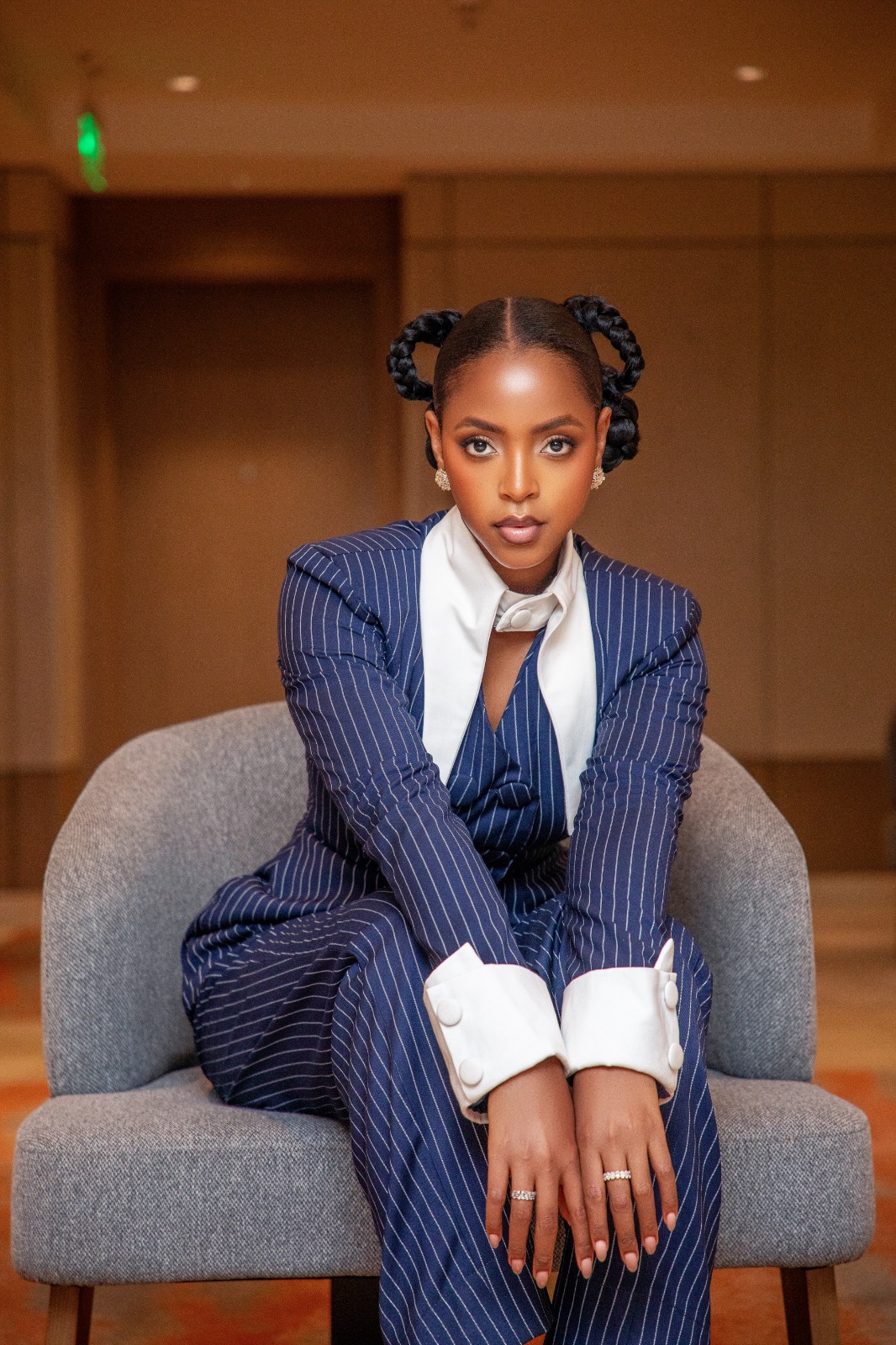
You speak openly for survivors of violence in eastern DRC at a time when the world is largely looking away. What do you want the international community to understand about what their silence costs the women and girls living through this?
For me this is deeply personal because Eastern Congo is home. I grew up in Bukavu so when I -speak about families being displaced, children growing up around conflict or people living without knowing what tomorrow will bring, I am not speaking about a distant reality. I am speaking about a place I know, a place I love and people who are my family, my neighbors and people I grew up with. I still have and friends living there today.
What I want the international community to understand is that what is happening in Eastern Congo is not juts a Congolese problem. Congo is deeply connected to the rest of the world, and this conflict affects every aspect of ordinary life. Banks in Bukavu have closed, businesses have been disrupted, access through the airport have been shut and the economy has suffered. Yet some of the minerals that make the technology we use every day possible come from our soil. We cannot benefit from what Congo gives to the world and then look away from what is happening to its people.
But beyond minerals and resources, we are talking about human lives. We are talking about families being displaced, people loosing their loved ones, children growing up surrounded by violence and women and girls being subjected to horrific sexual violence on a daily basis. These are families who want exactly what any of us would want: to live peacefully in their homes, raise their children, make plans for their future and go to bed without being afraid of what tomorrow bring or wondering whether there will even be a tomorrow. The fact that this has been happening for so long should never make it normal. If anything, it should make it more urgent. This is also why I have been using my platform to support the ongoing petition calling for international recognition of the genocide in Eastern Congo. For anyone reading this who has wondered what they can do, signing and sharing the petition is one small but meaningful way to refuse that silence. The link is available in my bio.
You are doing all of this before the age of 28. What do you want every young Congolese girl who is daring to believe her future is still possible to know about the woman who is building for her?
I would tell her to not let the environment she is in define how big or how ambitious she is allowed to be. I grew up in what is a considered a small town and I understood that sometimes you need a little bit of delusion, an almost unreasonable belief that what you imagine for yourself is possible. Because before you become something. You first have to imagine it, believe it and allow yourself to think, “it can be me”. Be audacious. Put yourself out there. don’t always wait for opportunities to find you, go after them and create them when necessary. Especially as African women, we need to let go of this idea that we should be excellent in silence. Your work can speak for you but you are also allowed to speak for yourself.
And I say this as someone who is still a work in progress. i still struggle with imposter syndrome and putting myself out there. But I am learning not to let the fear of failure
control me. So, think bigger than your circumstances, believe almost irrationally in what is possible for your life and have the courage to try. You might fail,I have too but that should never stop you from finding out just how far you can go.