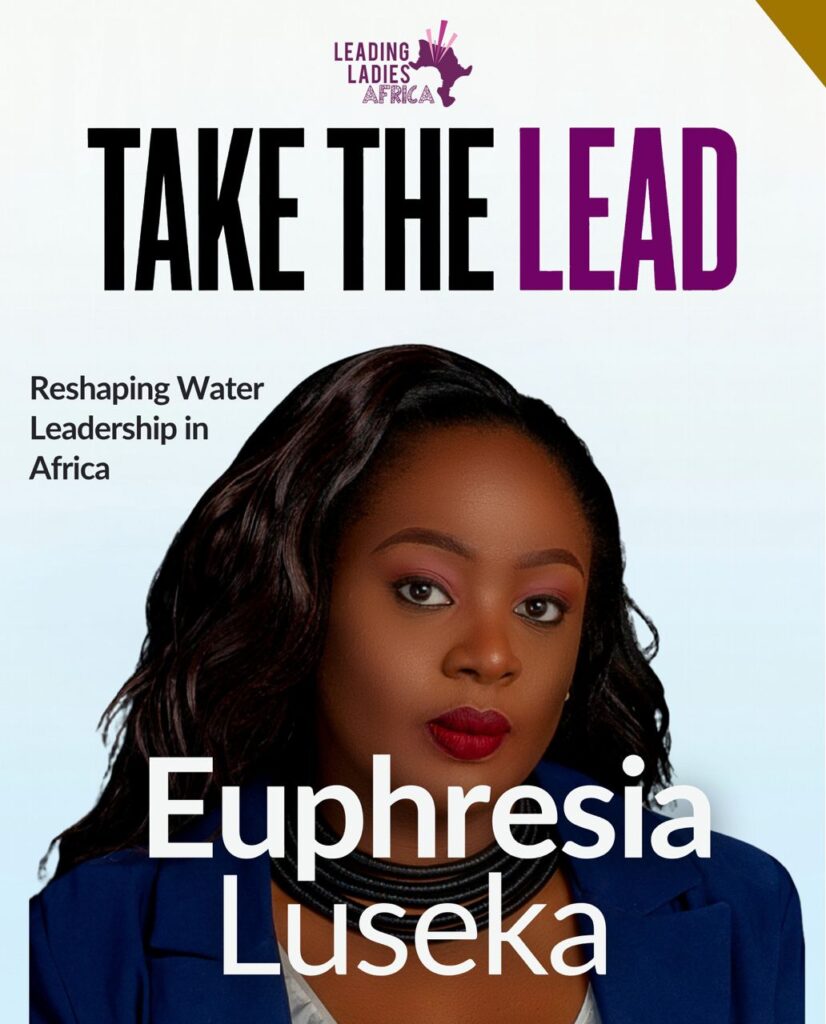
Most people think of water as a resource. Euphresia Luseka thinks of it as a system and she has spent 16 years asking one uncomfortable question: who does that system actually work for?
Growing up in Nairobi, Euphresia saw firsthand how water shaped daily life. How its absence quietly influenced choices, opportunities, and vulnerability. How the women who carried water, sold water, and managed water were everywhere, yet nowhere in the rooms where decisions about water were being made.
That early awareness became a life’s work.
Euphresia Luseka is a multi-award winning Kenyan Water Markets Systems Development and Governance Specialist with 16 years of experience across the WASH sector in more than 25 countries. She has worked with global partners including USAID, UNICEF, the European Union, FCDO, and UN-Habitat. She serves on the Management Committee of the International Water Association, co-leads at the Rural Water Supply Network, and sits on the Strategic Council of the Africa Water and Sanitation Association.
Her most defining contribution is the one she built entirely on her own time, entirely unpaid, and entirely out of conviction: the 100 African Women Leading Africa’s Water and Sanitation Future compendium, a landmark publication that documents, for the first time at continental scale, the women who have always been shaping Africa’s water systems but have rarely been seen, named, or remembered for it.
She also co-founded the African Women in WASH, Awards the first continental platform dedicated exclusively to recognising women transforming water, sanitation, and hygiene systems across Africa, with its inaugural edition drawing 3,000 participants from around the world to Yaoundé, Cameroon in February 2026.
Her message is clear, uncomfortable, and necessary:
There isn’t just a water crisis. There is a justice crisis. And once you see that, you cannot unsee it.
In this conversation, Euphresia opens up about what it truly takes to change a sector from the inside, why visibility without structural support changes very little, and what she wants every young African woman entering the WASH sector today to understand about the women who came before her and the work that still needs to be done.
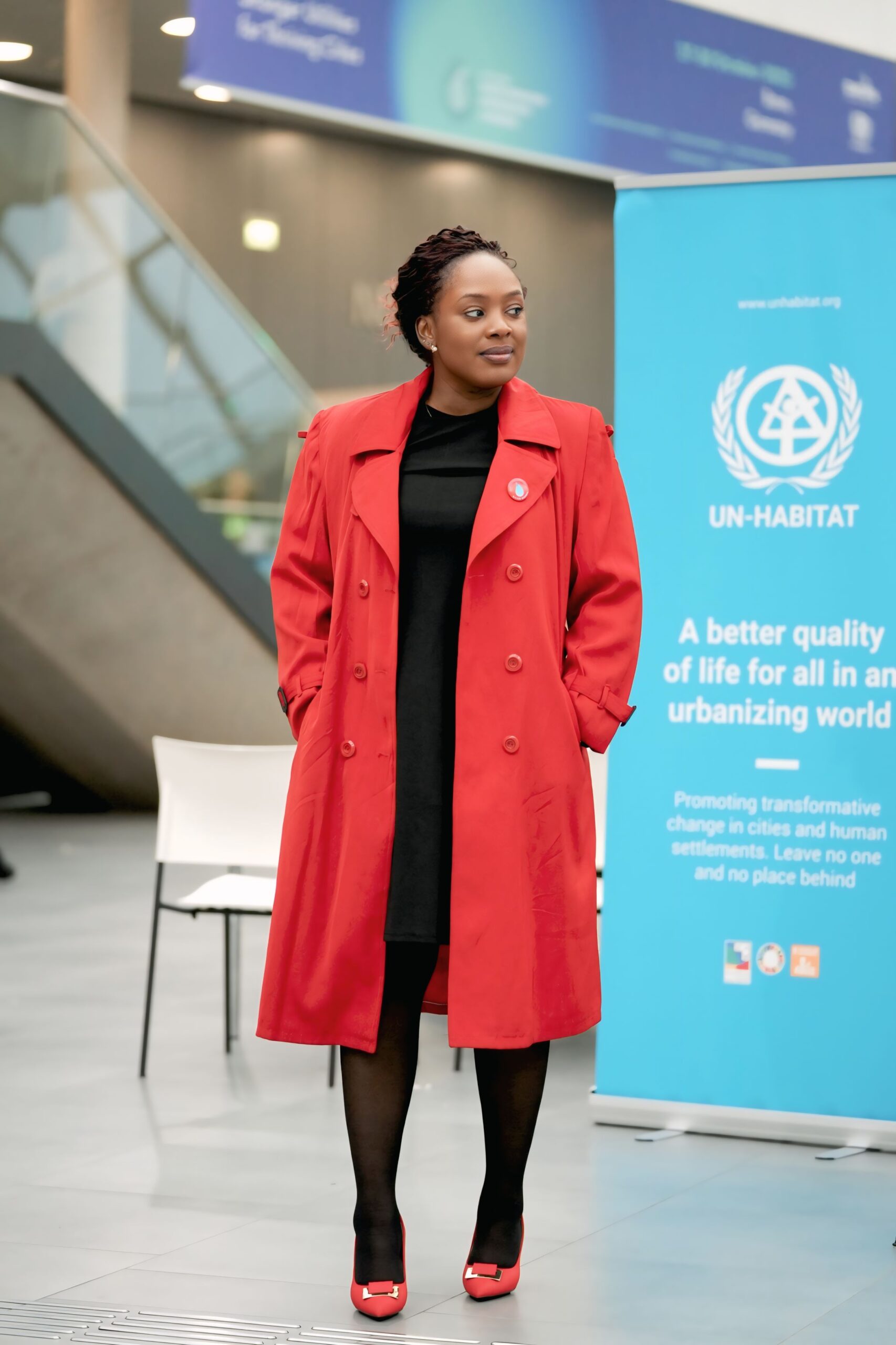
Euphresia, you have built a career at the intersection of water, governance, and advocacy. In your own words — who are you and what has this work really been about for you?
I am proudly a multiaward winning African woman in water, focused on governance, market development, business support, financing, and advancing inclusion in practice. But more than a job title, I see myself as someone trying to understand why essential systems like water remain structurally inefficient, and what it would take to change that. This work has never just been about service delivery for me. It has been about systems design: how institutions make decisions, how markets fail or function, and how we move from survival-level water access to water systems that enable economic growth, good health, dignity, and resilience.
Early in my career, I believed what I had been trained to believe; that water challenges were mainly technical. If we could design better systems, build better infrastructure, and apply the right data, we could solve them 😀
But my understanding of water started much earlier, growing up in Nairobi. I saw how water shaped daily life. How its absence quietly influenced choices, opportunities, and vulnerability like sextortion, early marriages, early pregnancies, drugs abuse, water cartels etc. Those early observations stayed with me and later helped me see water as more than a technical issue, but as something deeply connected to how societies function.
That awareness deepened in the boardrooms and decision-making tables. I experienced first what many women know too well; having your ideas overlooked, only to hear them echoed and validated when repeated by men. That invisibility, often described as the Matilda effect, forces you to confront not just bias, but the structure of power itself.
So, my defining moment was realising two things at once: there isn’t just a water crisis, there’s a justice crisis. And I didn’t need to keep waiting for a seat at tables that were never designed for voices like mine. So I made a shift. I began showing up more boldly; bringing these uncomfortable conversations to the forefront, influencing policy and regulation, and intentionally creating space for women to be seen, heard, and resourced. The pen is also mightier than the sword. I also learnt to write better as I am not an activist and missed opportunities to share my work, so I had to gain skills to share diversity, equity and inclusion issues best (DEI).
Because water isn’t just an engineering problem. It’s a power problem. A gender issue. A structural issue.
And once you see that, you can’t unsee it. It doesn’t just change how you work. It changes what you stand for, and who you stand with.
Water is not a space most people associate with women in leadership. What drew you into this world and when did you realise you were going to dedicate your life to it?
Let me start by mentioning that Women make up roughly 20%–26% of the formal water and sanitation workforce in Africa, out of this only only about 17% of top water leadership roles in Africa are held by women. Now, what also drew me into this space was not just theory or social impact or technical interest as a woman in STEM, it was the reality of what it feels like to be a woman inside it and not any woman but an african young woman as I am under 40 year old.
This is not a space most people associate with women in leadership, especially us who were trusted with leadership at a very young and work twice as harder. So when you enter it, you quickly realise what that means in practice. Being the only woman in the room, the only younger woman in the room and sometimes only african in the room. Sometimes the only one speaking. Often watching another woman in the same room reduced to taking notes while decisions are being made elsewhere – p.s. Note that taking notes or serving tea or cleaning is bad but you catch my drift.
And I don’t think we talk enough about how unsafe and structurally limiting that actually is especially when those rooms are where decisions on resources, infrastructure, and priorities are being made.
I have been in meetings where we were deciding on very basic but critical investments like toilets in water utilities, and menstrual hygiene support systems. Yet even when the issue directly affected women, we could not get the votes to move forward. Not because the solutions were not sound, but because there were simply not enough women in the room to shift the outcome.
That is when it became very clear to me: presence without numbers is not power.
When i read or hear she is the only woman! I literally fear for that woman. Being the only woman is not a symbolic achievement. It is often a constraint. Because you are expected to represent everyone, but rarely given the backing to influence anything especially in male dominated sectors like ours in STEM.
And this is where I learned something that is often uncomfortable to say out loud: this system cannot be changed by women alone. The reality is that men still hold the majority of decision-making power in these spaces. And this is confirmed by ILO At the current pace of progress, achieving equality in employment rates would take almost two centuries! So while increasing the number of women is essential for balance, progress in this sector also depends on intentional male allyship, men who are willing to question how decisions are made, use their influence to open space, and actively shift who gets heard and who gets backed. I therefore believe in not fighting men in the space but allyship
Without that, even increased representation struggles to translate into real power. Looking back, one of the most striking things about my career in the water sector is how support doesn’t always come from where you expect. In a highly technical and deeply patriarchal field, with very few women in leadership positions, I found that most of my allies were men and many of them weren’t even from my own country. What this taught me is that men can and do serve as allies. So they are not the barrier but patriarchy is the problem, and it’s a system we have to navigate, challenge, and change. Recognising this distinction changed how I approached mentorship, collaboration, and leadership.
At the same time, when women are together, not isolated as “the only one” something also changes. The conversation shifts, resistance changes, confidence changes. And structural barriers that once felt immovable begin to break open.
For me, that understanding changed everything. It meant the work was never just about being in the room. It became about changing what the room looks like who is in it, how power is distributed, and how both collective women’s presence and male allyship can be leveraged to shift decisions at scale.
Because without that combination, the system reproduces itself.
And that is what makes me stay in this sector not just to participate in the system, but to change how it functions.
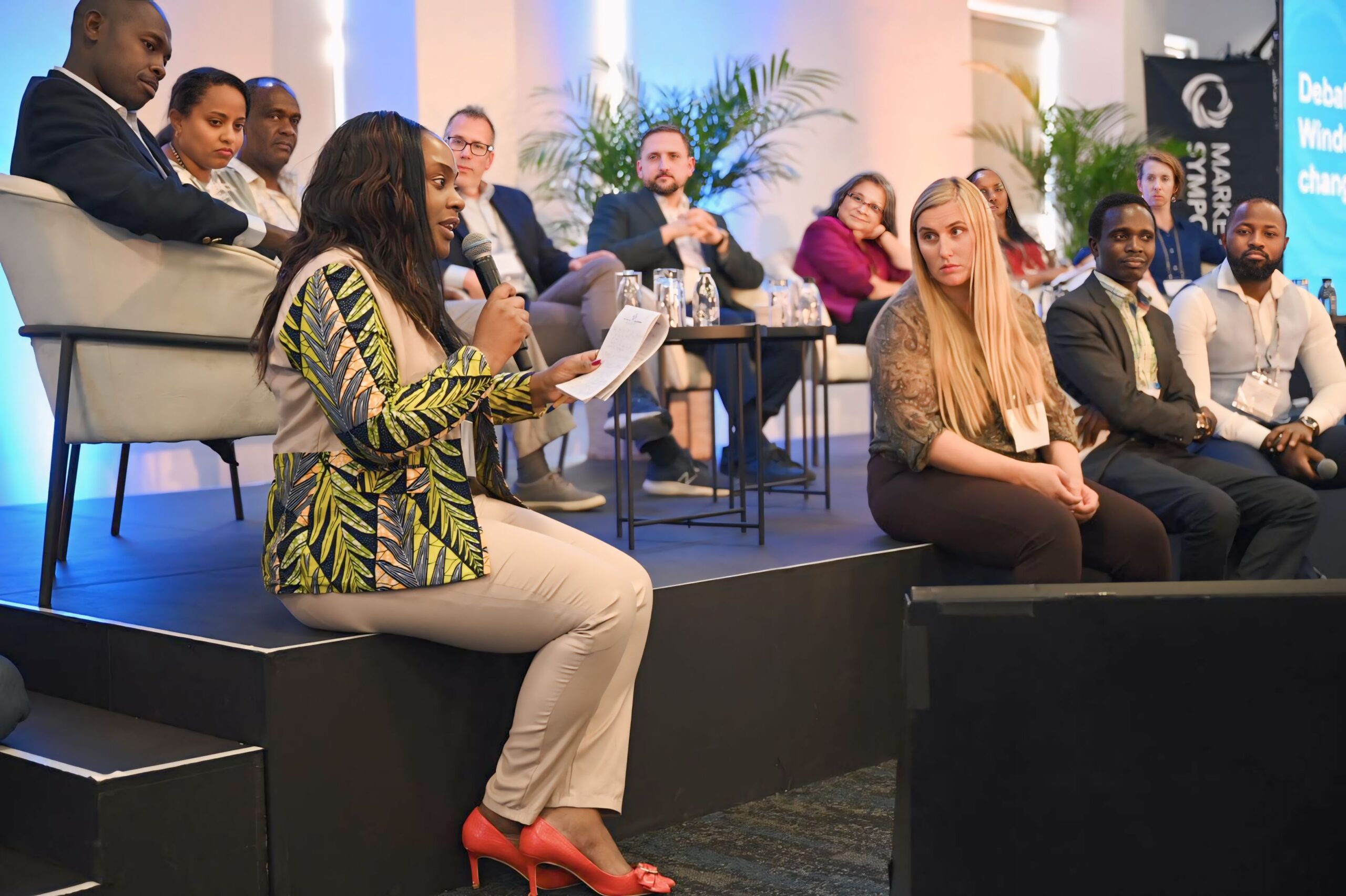
Tell us about the compendium, what is it, what does it document, and why did it need to exist?
It may sound cliché but the compendium, 100 African Women Leading Africa’s Water & Sanitation Future, is more than a publication. it is a defining record of leadership at a pivotal moment for the continent. It brings together the stories of 100 exceptional women whose work is actively transforming how water and sanitation systems are designed, governed, financed, and sustained across Africa.
It documents something that has always existed but has rarely been formally recognised i.e. that women have been central to water and sanitation systems for decades, not only as water carriers, beneficiaries, but as engineers, policymakers, financiers, innovators, entrepreneurs, and community leaders. Yet their contributions have consistently remained invisible in formal histories, policy narratives, and investment frameworks.
That invisibility is exactly why the compendium needed to exist.
For years, I have been in rooms where women’s leadership in this sector is questioned, or where it is assumed that the expertise simply isn’t there coz our cultures, norms, traditions and religion bar us. But across more than 21 countries in africa where i have worked , I have seen the opposite: african women from various religions, cultures etc shaping regulation, influencing governance reforms, advancing menstrual hygiene standards, challenging financing barriers, and redefining what equitable access actually means in practice.
So the issue was never absence. It was documentation, recognition, and legitimacy.
This compendium reclaims that narrative. It centers African women not as participants in the sector, but as knowledge producers, system designers, and decision-makers. And in doing so, it shifts the frame from externally defined ‘needs’ to locally driven models of solution, resilience, and leadership.
It is also a strategic intervention. By consolidating these stories in one authoritative volume, it challenges long-standing assumptions about who leads in WASH and provides policymakers, institutions, and development partners with a concrete reference point for engagement, investment, and decision-making.
Beyond visibility, it is designed to influence how resources flow. Because too often, there is acknowledgement of women’s work, but not corresponding financing or institutional support. The compendium deliberately pushes against that gap by presenting women-led initiatives as credible, scalable, and investment-ready.
It also creates something else that is often missing in the sector and that is connection. A pan-African network of women working across water and sanitation, enabling collaboration, peer learning, and collective influence at regional and continental level.
And finally, it is about the future. By capturing journeys, lessons, and leadership pathways, it becomes a reference point for the next generation not just to see mentors, role models, but to understand that leadership in this sector is already being rewritten.
At its core, the compendium exists because sustainable and equitable water systems in Africa cannot be built without recognising the people who are already building them. And right now, that includes women whose leadership has too often been visible in practice, but invisible in record.
This publication changes that and breaks history
When you set out to create the compendium, what were you building towards, what did you want it to look like, feel like, and do in the world?
Africa has always been a continent with a clear identity rooted in care for ecosystems, in protection of water, and in the deep value of natural resources that sustain life. And at the center of that identity are women: on the frontlines of protecting water sources, carrying the responsibility of care, using the water for their economic activities like farming, pottery, and embodying the resilience, discipline, and commitment that define African systems in practice.
That is what I wanted the compendium to feel like; not just a record of leadership, but a reflection of African identity itself. A reminder that water is not separate from who we are; it is part of how societies survive, organise, and evolve.
For me, the work is also about healing visibility in the sector. Because what we are documenting is not new it has always existed. African women have been doing this work for a long time. It has simply not been seen.
And visibility changes everything, you should read the gratitude emails from the nominated and yet to be nominated and other sector practitioners on how this has boosted their confidence, commitments to the Women in WASH.
Because once people are seen, they can be included in budgets. They can be considered in policy. They can be supported through capacity building. They can be protected through regulation. But when the first question is ‘do they even exist?’, everything else becomes impossible.
I remember meeting Esther Njuguna in Kenya while conducting due diligence for the compendium. Esther is a mother of four who has spent years pushing water carts through one of Nairobi’s largest informal settlements, selling roughly 500 litres of water a day.
What struck me was not only the scale of her labour, but the sophistication of the informal system she had built around it. She operated on trust, short-term credit, and community relationships. Customers borrowed from her. She borrowed from suppliers. Payments circulated every two weeks. In reality, Esther had already built a functioning micro-enterprise around water access.
Yet when I asked a banking executive friend whether institutions were financing women like Esther through low-interest business loans, the answer was revealing: they had never heard of her. And Esther herself did not know those financing opportunities existed.
That is the visibility gap we are talking about.
Because visibility is not about simply saying, “here are 100 women in water.” Visibility determines who gets financed, who gets trusted, who gets scaled, and who gets left informal forever.
If Esther had access to capital, perhaps she would no longer be pushing water carts herself. Perhaps she would own a water kiosk, employ young people, and expand her business.
That is what visibility can unlock. And that is part of what this compendium is trying to do.
So this is fundamentally about making the invisible visible and ensuring that recognition becomes a gateway to resources, protection, and opportunity.
The future of Africa is being written in the language of water, and that language is profoundly female.
African challenges require African-led solutions. And through this work including platforms like the 1st African Women in WASH Awards that we also did in Yaounde , Cameroon in February 2026 we are deliberately centring and celebrating the changemakers securing Africa’s water and sanitation future.
To understand these leaders, we must return to where leadership has always come from on this continent: rivers, wells, forests, and fertile soils. African women’s leadership is not a modern invention or an imported concept. It is deeply rooted in history and culture.
Across generations, women have safeguarded water sources, defended ecosystems, managed natural resources, and shaped the social and economic fabric of their communities. Africa’s progress has always been inseparable from the courage, strategy, and vision of its women.
History gives us clear examples.
Yaa Asantewaa led resistance to defend sovereignty and protect the resources her people depended on. Amina of Zaria secured wells and river trade routes that sustained regional economies. Nzinga Mbande protected ecological and strategic systems central to her kingdom’s survival. And Wangari Maathai demonstrated the transformative power of environmental stewardship through the Green Belt Movement, mobilising communities to restore forests and protect watersheds.
These were not symbolic figures. They were system builders shaping environmental governance, political resilience, and economic stability in ways that continue to echo today.
Their legacy is visible in the leadership we see across Africa’s water and sanitation sector.
The compendium reinforced what African women have always known: that gender equality is not optional. It is foundational to sustainable development.
Nowhere is this more evident than in water and sanitation.
Because WASH systems sit at the intersection of public health, climate resilience, food security, energy, and economic development. Every decision in this sector shapes millions of lives. Yet leadership has often remained narrow, excluding the very voices most connected to its daily realities.
That is what this work seeks to correct not just by documenting leadership, but by reframing it entirely.
UN Water is already using the compendium for World Water Day and World Toilet Day advocacy. When you received that email, what did that moment feel like?
When I received that email, my first feeling was actually quiet disbelief. Not because I doubted the quality of the work, but because I understood what it meant institutionally.
UN-Water is one of the highest-level coordination platforms in the global water and sanitation space. So to see the compendium being recognised and used within World Toilet Day advocacy was a reminder that stories, once documented, can travel far beyond where they begin.
But more than personal reaction, I felt a deep sense of responsibility and emotion for the women featured in the compendium. Many of them have spent years doing transformative work quietly: in utilities, communities, policy spaces, research institutions, and organisations often without global visibility or recognition. So seeing their work reflected in a platform of that scale felt significant. It felt like their contributions were finally entering the spaces where global narratives on water and sanitation are shaped.
It also connected me back to my own journey. I remember the first time I engaged in a high-level World Water Day discussion years ago, where I brought gender directly into the conversation on water systems. That moment shifted the dialogue in the room in a very visible way it opened up a conversation that had not always been centred in those spaces.
So seeing the compendium now being used in that same ecosystem felt like a continuation of that journey moving from contributing to conversations, to shaping the actual narratives and materials that influence how those conversations happen globally.
In that sense, it felt like a shift from talk to tangible influence. From raising issues in the room, to seeing those issues reflected in global advocacy tools and messaging.
And it also meant a lot from a broader perspective especially around diversity, equity, and inclusion. Because it signalled that there is space, and growing willingness, within global institutions to recognise that women African women included are not peripheral to this sector. We are central to it.
So for me, it was not just validation of the work. It was validation of the people behind the work and a reminder that what we are building is now part of how the world speaks about water, dignity, and development.
The African Union has declared 2026 the Year of Water and Sanitation. How does the compendium speak into that moment and why does the timing matter?
The African Union declaring 2026 the Year of Water and Sanitation is significant because it signals a shift in how water is being positioned not just as a basic service issue, but as a continental development, peace, economic, and resilience priority.
African Union is effectively elevating water and sanitation into the centre of Africa’s development agenda, which means the conversation is no longer only about access it is about systems, governance, financing and economic transformation.
The compendium speaks directly into that moment because it answers one of the biggest gaps in the sector: who is actually driving transformation on the ground, and are we structurally recognising them and are we funding them?
What it does is surface the women who are already shaping water systems across Africa through utilities, governance, regulation, policy, research, and community systems but whose work is often fragmented, under-documented, under funded , unlegislated or seen in isolation.
So in a very real sense, the compendium becomes an evidence base for this AU moment. It shows that the leadership capacity already exists within the continent. The challenge is no longer whether Africa has women leaders in water and sanitation it is whether our institutions are designed to see them, elevate them, and integrate their expertise into decision-making at scale.
It also goes further than visibility. It challenges institutions including the AU itself to move from recognition to structure, and to come up with deliberate gender-responsive strategies within water and sanitation policy frameworks. Because women in this sector are not statistics. They are already leading African economies, shaping resilience, and enabling development through water access, governance, and service delivery.
The timing matters because Africa is entering a period where water insecurity, climate pressure, urbanisation, and economic transformation are converging. In such a moment, leadership cannot be accidental or invisible. It has to be deliberate, documented, and connected to systems of influence.
So the compendium aligns with the AU declaration by doing something very specific: it turns recognition into visibility, and visibility into institutional memory that can inform how the sector evolves during this critical year and beyond while also pushing for the systems that ensure women are not just seen, but structurally included in shaping Africa’s water future.
What needs to change in how the water and sanitation sector identifies, elevates, and listens to its women leaders?
What needs to change is less about the presence of women in the sector and more about the systems that determine how leadership is recognised in the first place.
Right now, the sector still tends to identify leadership through very narrow lenses formal titles, visible roles, and project-based visibility. Yet in water and sanitation, a significant amount of the most influential work happens in less visible but highly consequential spaces: regulatory design, utility reform, data and accountability systems, financing negotiations, and the quiet institutional strengthening that holds systems together.
So the first shift is in how we define expertise. We need to move from recognising women only when they occupy formal leadership positions, to recognising them as system designers and decision-shapers across all levels of the sector.
The second shift is in how we elevate them. Elevation cannot be reduced to profiling, visibility campaigns, or speaking invitations. It has to translate into access to boards, regulatory platforms, financing discussions, and policy design spaces where real decisions about allocation, direction, and reform are made.
The third shift is in how we listen. Too often, women’s perspectives in WASH are engaged at the implementation or consultation stage, rather than at the agenda-setting stage. Listening must become structural meaning their insights are not just collected, but actively integrated into how systems are designed, financed, and governed.
We also need more honest conversations about what happens after women reach positions of influence. One of the difficult realities within male-dominated sectors is that scarcity can sometimes create gatekeeping among women themselves. I have seen situations where women who fought hard to enter leadership spaces then feel pressured to protect those spaces rather than widen them for other women.
But sustainable transformation cannot happen through isolated success stories. Leadership has to become generational and collective.
Part of what the compendium does is expand the field of visibility itself. It reminds institutions, funders, and decision-makers that Africa does not lack capable women in water and sanitation. The talent already exists across the continent. The challenge is whether systems are willing to look beyond familiar networks and invest more broadly and intentionally.
Because if visibility remains concentrated around the same few individuals, then opportunity also remains concentrated. And when that happens, entire generations of women working quietly across communities, utilities, research institutions, and informal systems remain locked out of financing, leadership pathways, and institutional support.
What this requires is a deeper rethinking of how the sector itself is organised.
Because at its core, what needs to change is not simply how many women are in the sector, but how leadership is defined, recognised, and legitimised within it.
So the shift is this: from a sector that notices women in water, to a sector that is actively shaped by their leadership.
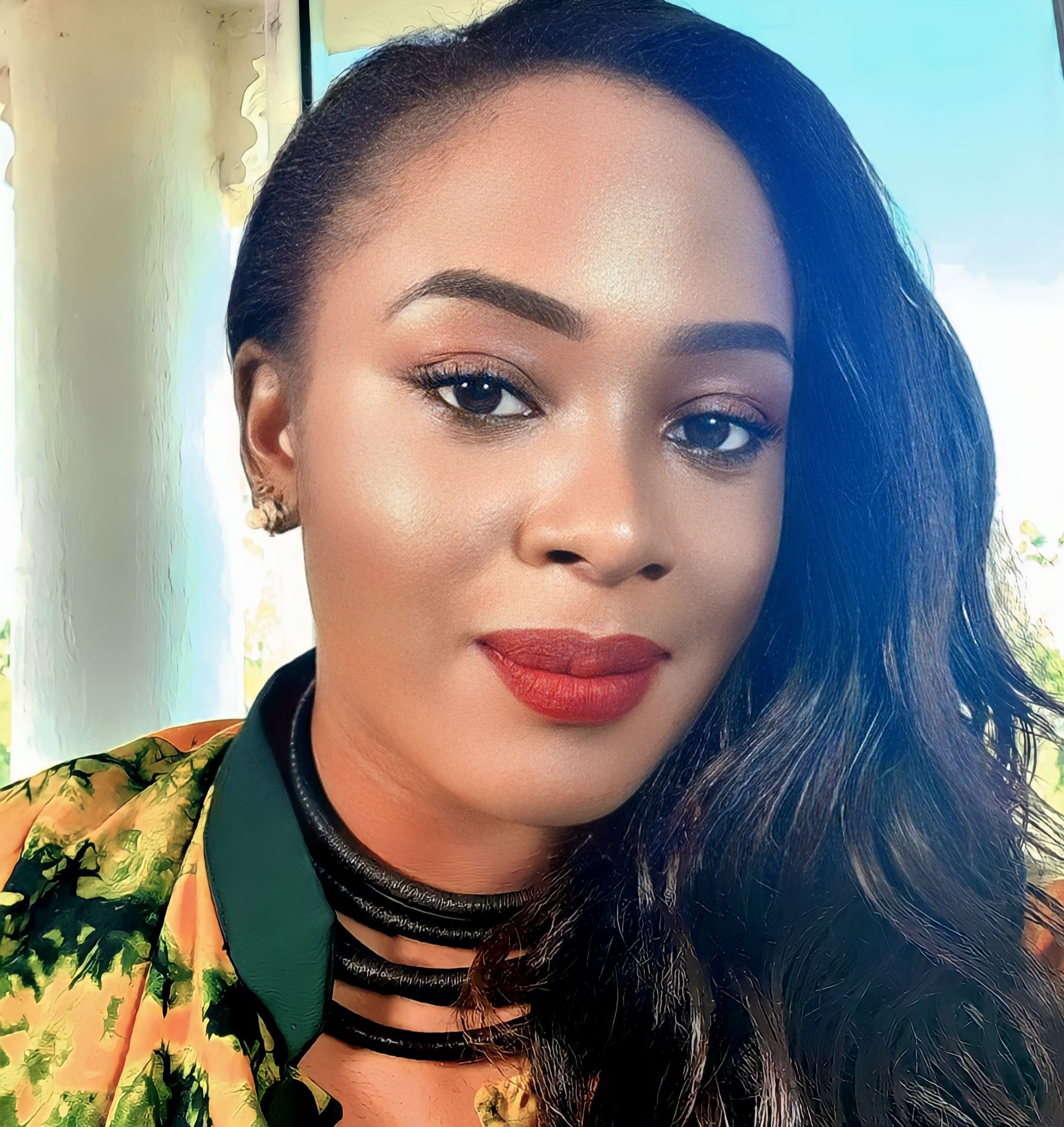
What do you want a young African woman entering the WASH sector today to take from the existence of this compendium?
I am a mentor of young african women water engineers. It is such an honour and fulfilling to be volunteering my time with them. They always ask me about female african mentors in water and I am glad i can finally share a legit list of 100 to pick from
What I want a young African woman entering the WASH sector today to take from the existence of this compendium is first and foremost this: you are not alone, and you are not the first.
For too long, one of the quiet barriers in this sector has been invisibility the sense that women in water and sanitation are rare, isolated, or exceptions. Yet the reality is very different. Across Africa, there are women who have been designing systems, shaping policy, leading utilities, driving regulation, advancing research, and working at the very centre of how water and sanitation actually function.
The compendium makes that visible.
I want her to see that leadership in this sector is not theoretical or distant. It already exists in forms that are deeply technical, highly strategic, and grounded in lived realities. And importantly, it exists in contexts that look like hers not only globally, but across African countries, institutions, and communities.
I also want her to understand that her voice matters early, not later. I did this before 40, there’s never the right moment you create it. One of the challenges in this sector has been that women are often heard after decisions are made at implementation level, or in consultation spaces that do not always shape direction. But the compendium is also a reminder that women have always been part of agenda-setting, even when they were not formally recognised as such.
So I would want her to take away confidence, but also clarity: that she does not need to wait for permission to belong in this sector.
At the same time, I want her to see the responsibility that comes with visibility. Leadership is not only about individual success; it is about shifting systems so that those coming after you find the path less isolated than you did. That is why documentation matters because what is recorded becomes reference, and what becomes reference becomes possibility for others.
And finally, I want her to see that she is part of something bigger than her own career trajectory. She is entering a sector that is already being reshaped by African women not as beneficiaries of systems, but as architects of them.
So the compendium is not just a record of who is leading today. It is an invitation to the next generation to step into that leadership with clarity, confidence, and the understanding that they are part of a long, existing continuum of women who have always been here.
The compendium is already sparking conversations across the world. Where do you want it to go next and what do you want it to ultimately change?
What has been very powerful for me is that the compendium is already beginning to do the work we hoped it would do almost organically. The feedback has been overwhelming. It is moving through the sector on its own, through institutions, partners, advocates, and sector actors who are carrying it into different spaces. And that sense of ownership means a lot to us, because it shows the sector sees itself in this work.
For me, that is important because it means the compendium is no longer just ours. It now belongs to a broader movement around visibility, recognition, and leadership in water and sanitation.
And what has been especially inspiring is seeing how many different forms that leadership already takes across the continent.\We have women like Maina from Niger, one of the first female scientists in her field working on water resources mapping in her country. We have innovators like Gemena from Senegal, who developed an application in a local dialect to help farmers access weather and agricultural information more easily. We have leaders advancing menstrual hygiene policy and advocacy at national level, including through the office of the First Lady in Sierra Leone.
What these women represent is not symbolic participation. They represent expertise, innovation, resilience, and locally grounded leadership responding directly to African realities.
And that is why the compendium matters beyond recognition. It creates connections. It allows women to discover each other’s work, learn from one another, collaborate, and begin imagining larger possibilities for themselves and their communities.
Ultimately, I want a young woman reading it to ask herself not whether she belongs in this sector, but what she can build within it.
But ultimately, I want it to move from being a moment of visibility to becoming a tool of influence.
Right now, it is sparking conversations which is important ofcourse but the next step is for it to start shaping decisions. I want it to be referenced in policy spaces, used in leadership pipelines, and considered in how institutions identify expertise in the water and sanitation sector. In other words, I want it to move from telling stories to informing systems.
I also want it to travel further into the spaces where resources are allocated and priorities are set ministries, utilities, financing institutions, regional bodies, and global platforms because that is where the real architecture of the sector is decided.
Ultimately, what I want it to change is how leadership itself is defined and recognised in water and sanitation.
Right now, leadership is still often understood through narrow measures: formal titles, visibility, and hierarchy. But across Africa, women are already shaping systems every single day through regulation, utility reform, governance, financing, research, community systems, and institutional strengthening. Much of that work is foundational, yet historically under-recognised.
So I want the compendium to challenge the idea that leadership is only visible when it is formal or senior. I want it to show that women across the continent are already influencing how water systems function, often in ways that determine whether services succeed or fail.
And beyond visibility, I want it to influence how resources flow.
Because recognition without structural support changes very little. If women’s leadership is visible, then institutions must begin asking harder questions about who receives financing, who is invited into decision-making spaces, who shapes policy, and whose expertise is considered credible and scalable.
At a deeper level, I want the compendium to contribute to something Africa has not always done well enough for its women: preserving institutional and historical memory.
Too often, African women do transformative work that disappears from formal record. And once work disappears from record, it becomes easier for systems to overlook it, underfund it, or act as though that leadership never existed.
The compendium pushes back against that erasure.
So the end goal is not simply visibility. It is influence. It is ensuring that women’s leadership is not acknowledged after the fact, but actively factored into how the future of water and sanitation is designed, financed, and governed across Africa and globally.
When all is said and done, what do you want this work to say about the woman who had the vision to create it?
I would want it to say that she understood the sector differently and selflessly and because of that, she helped shift how others saw it too.
That she understood water was never just about infrastructure or service delivery, but about power, visibility, dignity, memory, and whose leadership societies choose to recognise and give opportunities.
I would also want it to say something very human: that I volunteered my time 100% to write his compendium totally unpaid work sometimes we have to make sacrifices, and that at the beginning, she was scared, there is no right moment to act.
Because people often see the final outcome and assume certainty existed from the start. But this journey also involved doubt, risk, and stepping into spaces without fully knowing how things would unfold. And at some point, I had to make a decision to trust ourselves to trust that African women’s stories, expertise, and leadership mattered enough to be documented seriously and institutionally.
At the same time, I learned something else very quickly: you cannot build transformative work alone.
Partnerships matter. Leadership matters. Collective effort matters. Education matters. Exposure matters. And that is why collaboration became such an important part of this journey working with other experts, institutions, allies, and incredible women in water from across Africa and globally who understood the importance of what we were trying to build.
I would want this work to show that I recognised we were never starting from zero.
Women before us had already laid foundations. From the Beijing Conference and broader global gender movements, to African women who fought quietly within institutions long before visibility existed for them they set a pace for us. And I think our responsibility now is not to remain stagnant, but to continue building on what they started.
Because progress should be cumulative.
Each generation of women should leave behind footprints strong enough for the next generation to move forward with greater confidence, greater access, and fewer barriers than before. We should not have to keep starting from scratch every time.
And perhaps that is what I hope this work contributes to most: momentum.
A sense that young African women entering the sector today do not need to wait another 180 years for equity to become reality. That through documentation, visibility, solidarity, institutional reform, and collective leadership, change can move faster.
Professionally, I would want this work to say that I did not just document stories for recognition, but helped build something that influenced how leadership in water and sanitation is understood, identified, and valued across Africa and beyond.
And personally, I would want it to reflect that I cared deeply about making invisible work visible not for attention, but because systems only change when the people shaping them are properly seen, named, and remembered.
So when all is said and done, I hope it says that I contributed, even in a small way, to moving the water and sanitation sector closer to what it should be: more intentional, more inclusive in how it defines expertise, and more honest about the women who have always been driving change within it. Whatever happens we must bring the water home.