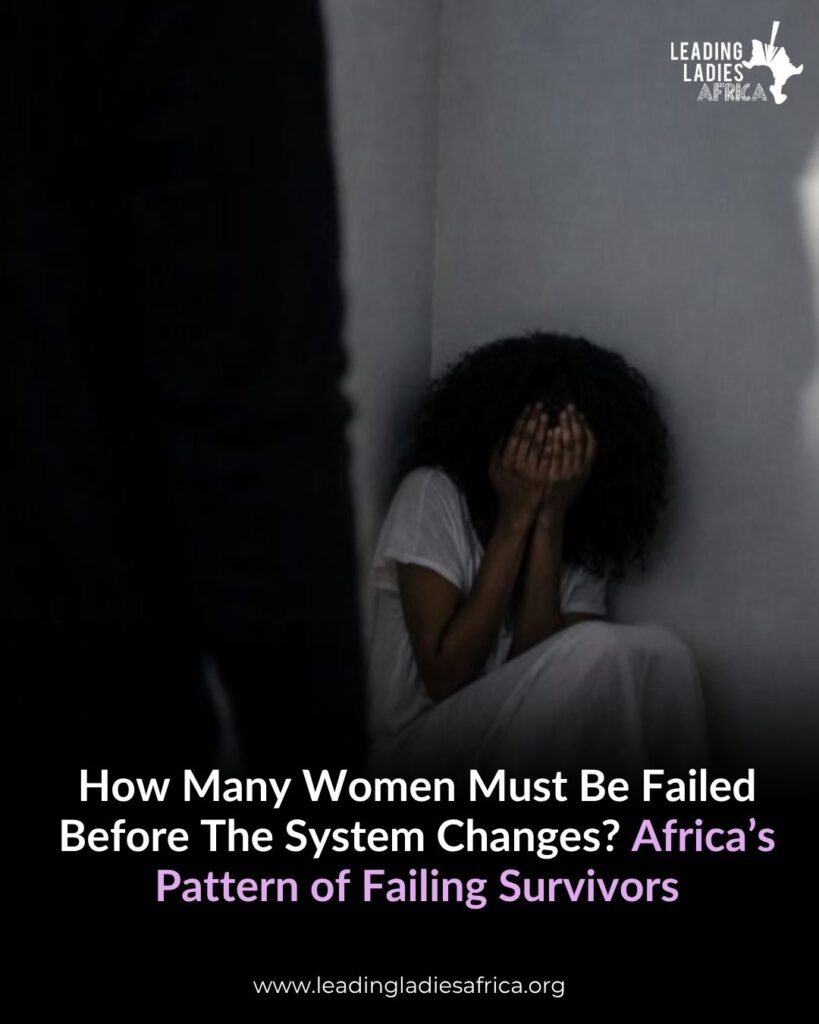
In February 2026, two women in Lagos did something that takes enormous courage. They reported their rapist.
They did not stay silent. They did not go home and try to forget it happened. They went straight to the police. They went to Mirabel Center and got medical examinations. They gave detailed statements. They identified their attacker, a man named Araromi Emmanuel who had lured them to Ajao Estate with a fake modeling offer, pulled out a knife, sexually assaulted both of them, and then went through their phones and stole intimate photos, threatening to leak them if they spoke.
They spoke anyway and the court said: no case.
What The Evidence Actually Was
Before we talk about what the court decided, let us be very clear about what existed.
Medical evidence from Mirabel Center confirming bruises consistent with forced penetration, documented immediately after the assault. The knife, retrieved by police from Araromi’s own residence. Detailed written statements from both survivors. A statement from a third friend who had knowledge of the incident. Instagram messages showing exactly how he lured them. Screenshots. A complete digital trail.
This is more evidence than most sexual assault cases ever have. Most survivors come forward with nothing but their word and the weight of what happened to them. These women came with documentation, a weapon, medical proof, and witnesses.
The court said there was no case.
The prosecution allegedly did not present the Mirabel Center medical report. The court claimed there was no penetration, despite the medical evidence documenting exactly that. The court claimed there was only one statement and no corroboration, despite two survivors and a third witness all giving statements.
The evidence did not disappear. It was simply treated as though it did not exist.
He Left The Courtroom With Their Photos
Here is the part that needs to be said clearly because it has not been said loudly enough.
Araromi Emmanuel forcibly took intimate images from both women’s phones during the assault. He has been using those images to threaten and silence them ever since. When the court concluded its proceedings and sent him on his way, allegedly telling him to “go sweep the floor”, it did not order him to delete those images.
He walked out of that courtroom still in possession of stolen intimate photographs of the women he assaulted. Still holding the threat over them. Still able, at any moment, to carry out what he promised to do if they reported him.
They reported him. The court handed him back his weapon.
“If You Don’t Have Money, Don’t Bother Going To Court”
After the ruling, one of the survivors, known online as Fems Thrift, made a video. She was crying and she said something that should make everyone who cares about justice sit with for a moment.
“If you don’t have money, don’t bother going to court.”
Both women spent money they did not have fighting this case since February. Lawyers. Transportation to multiple hearings. Time away from work. Court fees. Medical examinations. They did everything the system asks survivors to do — reported immediately, gathered evidence, cooperated fully, identified their attacker, showed up every single time they were required to show up.
The system still chose him.
This is not a failure of the justice system. A failure implies it tried. What happened here was the system functioning exactly as it has been built to function, protecting the person with the least to lose and abandoning the people with.
What This Does To Every Woman Watching
Every “no case” ruling sends a message to every woman who hears about it. The message is: do not bother.
You can have medical evidence. You can have the weapon. You can have witnesses and chat records and a full documented trail. You can do everything right. You can be braver than most people will ever have to be. And it still may not matter. The system may still choose him. You will still spend money you cannot afford. You will still relive what happened to you in a courtroom. You will still be called a liar or a woman seeking attention or someone with an agenda. And you may still lose.
So women stop reporting. They stay silent. They go home and carry it alone because Fems said what they are all thinking — if you do not have money, do not go to court.
That is not a justice system. That is a protection arrangement for the people most likely to cause harm.
What Must Actually Change
This is not a space for vague calls to “do better.” What is required is specific.
Sexual violence cases need dedicated courts with judges trained in trauma-informed justice — not regular courts where rape cases are processed alongside property disputes by judges with no specialised understanding of how sexual violence works and what it does to the people who survive it.
Prosecutors must be accountable for the evidence they present. A medical report from Mirabel Center documenting physical injury does not fail to arrive at court by accident. Someone made a decision. That decision must have consequences.
Survivors need state-funded legal representation. Justice cannot be available only to those who can afford to pursue it. The system that failed these women failed them partly because they ran out of money fighting it. That is not acceptable.
Courts must mandate the deletion of stolen intimate images and prosecute perpetrators separately for possessing them. Leaving a convicted or acquitted man in possession of images he stole from his victims during an assault is not a neutral outcome. It is a continuation of the harm.
Araromi Emmanuel’s case must be reopened. With a prosecutor who presents every piece of evidence that exists. The Mirabel Center report. Both survivor statements. The third witness statement. The knife. The Instagram messages. All of it.
Two women with medical evidence, a recovered weapon, multiple witness statements, digital records, and full cooperation with law enforcement could not get justice in a Lagos courtroom. If they could not, the question that follows is a simple one: who can?
Right now the honest answer is: almost no one.
And that answer has to change.