
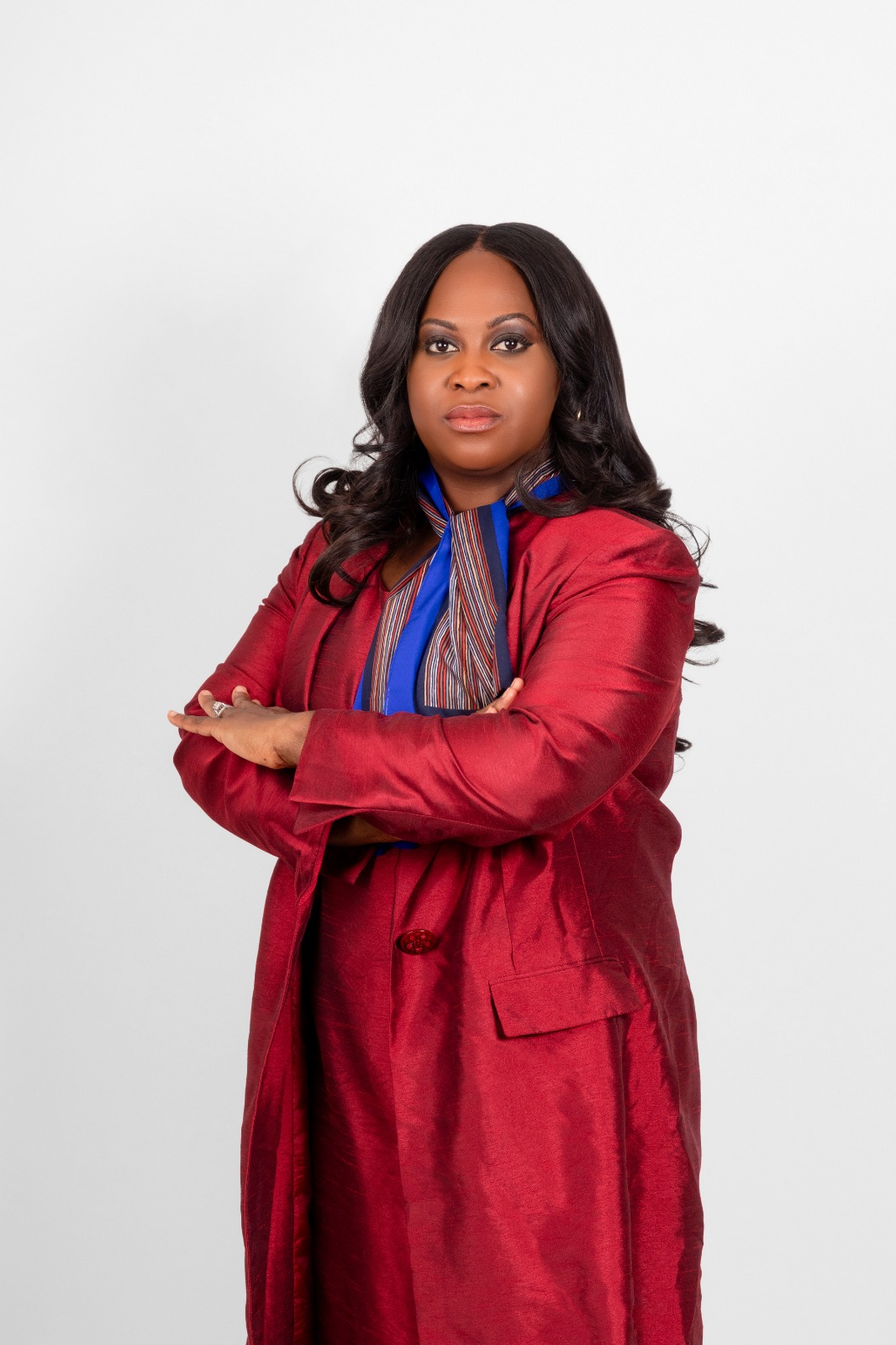
There is a question that echoes through every immigrant community, every WhatsApp group, every church hall and cultural gathering: “Who do you know?” It is the question that powers trust, drives referrals, and keeps community economies alive. For Toyin Ajisemola, that question became a calling.
A carpool mom, entrepreneur, foodie, and proud Naija girl building life in the United States, Toyin spent years as a caterer in Baltimore before a simple but powerful realization changed everything. Technology was not the missing piece for ethnic and women-led businesses. Trust was. From that insight, Kamoky was born, a platform designed to give culturally rooted businesses the visibility, infrastructure, and community they need to move from survival to scale.
A graduate of the University of Baltimore and Johns Hopkins University, Toyin brings both academic grounding and lived experience to her work. Through Kamoky, she is building an economic engine for immigrant and underrepresented communities, one connection at a time.
Read the full interview with Toyin where she opens up about the journey behind Kamoky, the obstacles that almost stopped her, and what she believes it truly takes for women to lead, build, and win together.

Tell us about yourself, who is Toyin beyond the title, what drives you, and how did your journey lead you to create Kamoky?
Beyond the title, I’m a carpool mom, entrepreneur, foodie, and a proud Naija girl building life in the U.S. At my core, I’m deeply driven by community and a genuine desire to see the people around me win.
Before Kamoky, I spent years as a caterer in Baltimore while also working in the corporate space as a USAID contractor. Catering immersed me in the heartbeat of the community through celebrations, milestones, family gatherings. And during that time, one thing consistently stood out: people were always asking for trusted recommendations. Vendors. Services. Products. “Who do you know?”
Despite all the apps and social platforms available, I realized something powerful. Technology wasn’t the missing piece. Trust was. People didn’t want random suggestions; they wanted referrals from within their communities, from those who shared their values, culture, and lived experiences.
That realization stayed with me. It became clear that community is currency and that insight ultimately led me to create Kamoky. I wanted to build a digital space that mirrors how we naturally connect offline: through trust, shared identity, and collective growth.
What was the moment or experience that made you realize ethnic businesses, especially women-led ones, needed more visibility, and how did that inspire Kamoky?
As a caterer, I spent hundreds of dollars on advertising that technically “performed.” My ads were getting views, but they weren’t converting into sales. The problem wasn’t demand. People were absolutely looking for what I offered. The issue was misalignment. My ads were reaching audiences, but not my audience and not the community that truly understood and valued my work.
That realization was pivotal. I didn’t need more visibility. I needed the right visibility.
When I looked at my own life, the pattern was clear. From the woman who braids my didi (native cornrows) under my wigs to the only person I trust to make my efo riro (vegetable soup) just right, the businesses I consistently supported were women who understood my cultural context. They didn’t just provide a service. They understood the nuances, the standards, the expectations. There was shared language, shared values, shared identity.
Yet many of these women operated within small WhatsApp threads or church groups, relying on word of mouth alone.
I knew they deserved more than quiet circulation. They deserved global visibility. That conviction became the foundation for Kamoky, a platform designed to amplify culturally rooted businesses beyond informal networks and into sustainable growth.
Every entrepreneurial journey has hurdles. What were some of the earliest obstacles you faced in building Kamoky, and how did you overcome them?
Oh goodness! In the beginning, it felt like Kamoky was all obstacles. For the first few years, challenges were constant, but so was the vision. When we launched the initial web version in 2020, the website was hacked. We had to shut it down completely. At the time, I had no technical background and very little understanding of what went wrong. Instead of giving up, we pivoted and decided to build an app.
I didn’t know anything about engineering, but I was fortunate to work with incredible early development partners who believed in the idea. Despite delays and codebase challenges, they delivered a finished product. However, when it came time to launch, we faced significant glitches and bugs that forced us to pause again and reassess.
I overcame those obstacles by coming back. I kept coming back to it. There were seasons of progress and seasons that felt like setbacks. Sometimes it was two steps forward and three steps back. But I remained fully committed to what I believe is a God-given vision. Resilience built Kamoky as much as strategy did. And now, we’re here and stronger because of it.
When Kamoky hit 1,000 users, what went through your mind, and what did it teach you about the power of community-driven growth?
When Kamoky hit 1,000 users, it was both humbling and eye-opening. Anyone in tech will tell you that 1,000 users isn’t a major milestone in terms of traction, but for me, it was a meaningful reminder of the power of community-driven growth. We’re just getting started, and there’s still so much to build, both within the app and within our community. Yet knowing that hundreds of people have found even an inch of value in something I created has been incredibly gratifying. Community growth is powerful, but it’s also invisible work: the countless emails, follow-ups, and behind-the-scenes effort that make it happen often go unseen.
How has leading Kamoky shaped your approach to leadership, particularly in supporting and uplifting other women entrepreneurs?
Leading Kamoky has made me more intentional and service-driven. I’ve learned that true leadership isn’t about being the loudest voice in the room but about creating rooms where other women can thrive.
Building a platform designed to support women and ethnic entrepreneurs has deepened my empathy. I understand the weight many women carry. We often balance business, family, finances, and often cultural expectations, all while trying to scale something meaningful. That awareness has shaped me into a leader who prioritizes access, visibility, and infrastructure over optics.
It has also reinforced the importance of collaboration over competition. When one woman wins, the ecosystem strengthens. So I lead with transparency, share resources openly, and create opportunities for connection because I know how transformative the right introduction or visibility moment can be. Most importantly, Kamoky has taught me that uplifting women isn’t about charity. It’s about equity and strategy. When women-led businesses grow, communities grow. My leadership now centers on building systems that make that growth sustainable, measurable, and collective
Have you encountered situations where being a woman in leadership presented unique challenges, and how did you navigate them?
Yes, I’ve experienced subtle undertones of hostility. The kind that many women in leadership recognize immediately, even when it’s not openly expressed. It’s rarely overt, but it’s there. And I’ve learned to trust my instincts when I sense it.
I don’t linger in environments where respect is questionable. The moment I detect misalignment in values or energy, I make strategic decisions to protect both myself and the vision. Leadership requires discernment as much as resilience.
I’m also intentional about who I bring into my ecosystem. I consult my team, assess alignment carefully, and prioritize character just as much as capability. Culture matters.
Ultimately, I navigate challenges by leading with competence. Preparation, clarity, and execution speak louder than resistance ever could. I focus on delivering results, staying grounded in integrity, and ensuring that my leadership is defined by excellence and not by the limitations others may try to project.

What advice would you give women who are aiming to step into leadership roles, whether in entrepreneurship or other industries?
I would tell them to trust their instincts. We are living in a time when stepping into your power as a woman is not only possible but necessary. More women are recognizing and honoring their inner authority, and more often than not, that intuition leads them exactly where they need to be. If you feel called to lead, that already is evidence that you carry much of the grit, resilience, and vision required to function in that capacity anyway. Leadership isn’t about waiting until you feel perfectly ready; it’s about recognizing that readiness often grows through action. Put on your best shoes and step in, girlfriend!
Where do you see Kamoky in the next 3–5 years, and how do you envision it scaling impact for women-led businesses and communities?
In the next 3-5 years, we aim to evolve from being a discovery platform to being the go-to hub for the ethnic community in the diaspora. By then we hope to be a blossoming marketplace where not just goods and services are transacted, but community as well. I envision a platform where women-led businesses can access data insights and shared marketing tools that help them make smarter growth decisions. I see Kamoky becoming a trusted economic engine in immigrant and underrepresented communities with measurable impact in job creation, revenue growth, and generational wealth building.
Looking back at your career years from now, how do you want to be remembered as a woman leader and changemaker?
I want to be remembered as someone who created lasting value in this world and work that mattered. I hope to be known as a thoughtful listener and a woman of integrity in every role I’ve held and with every person I’ve encountered. More than titles or achievements, I want my legacy to reflect character, impact, and the way I showed up for others.