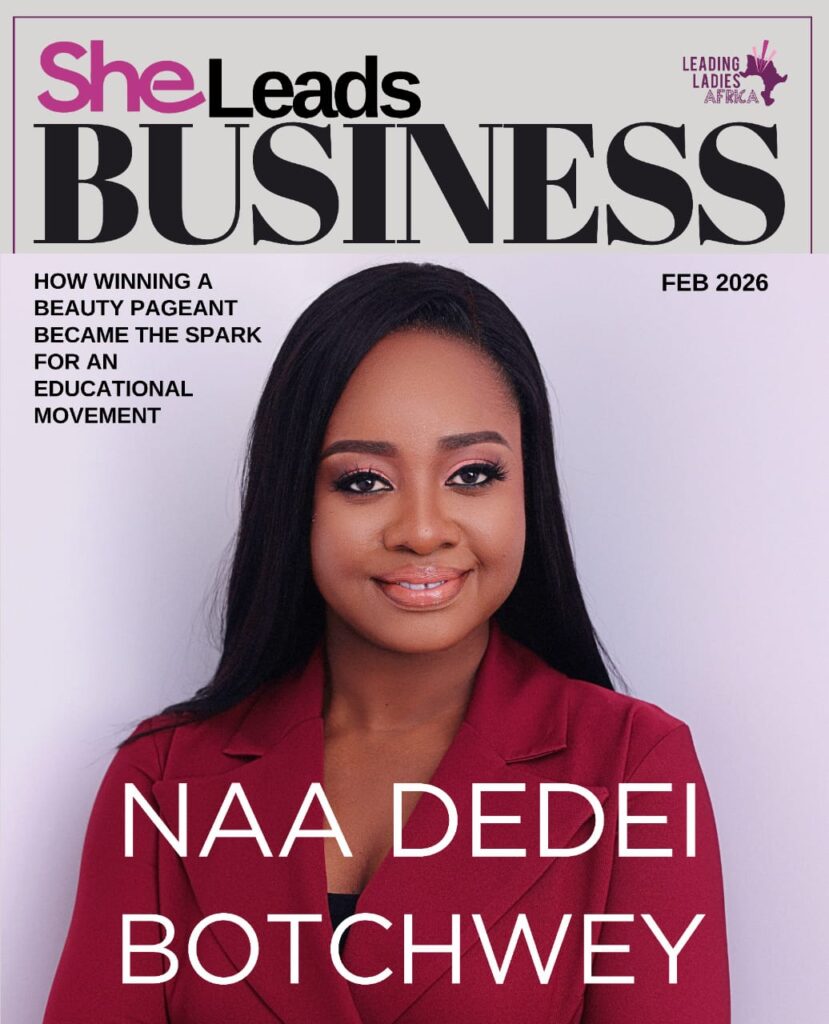
What does it actually look like to turn a “beauty queen” title into a lifelong mandate for change? For Naa Dedei Botchwey, the crown was simply a bridge to building something much larger.
Beyond the billboards and her 2020 Ghana’s Most Beautiful (GMB) victory, Naa has dedicated herself to transforming Ghana’s educational system. Demonstrating incredible personal commitment, she invested seven years of her own savings into the Naa Dedei Botchwey (NDB) Foundation to ensure inclusive education becomes a reality for women across Ghana. 🇬🇭
In our recent conversation, Naa got candid about the grit behind the scenes, from the intense discipline required to thrive in the high-pressure, “no-phone” environment of the competition to navigating the funding gap and creating sustainable real-life impact.
Read the full conversation below.
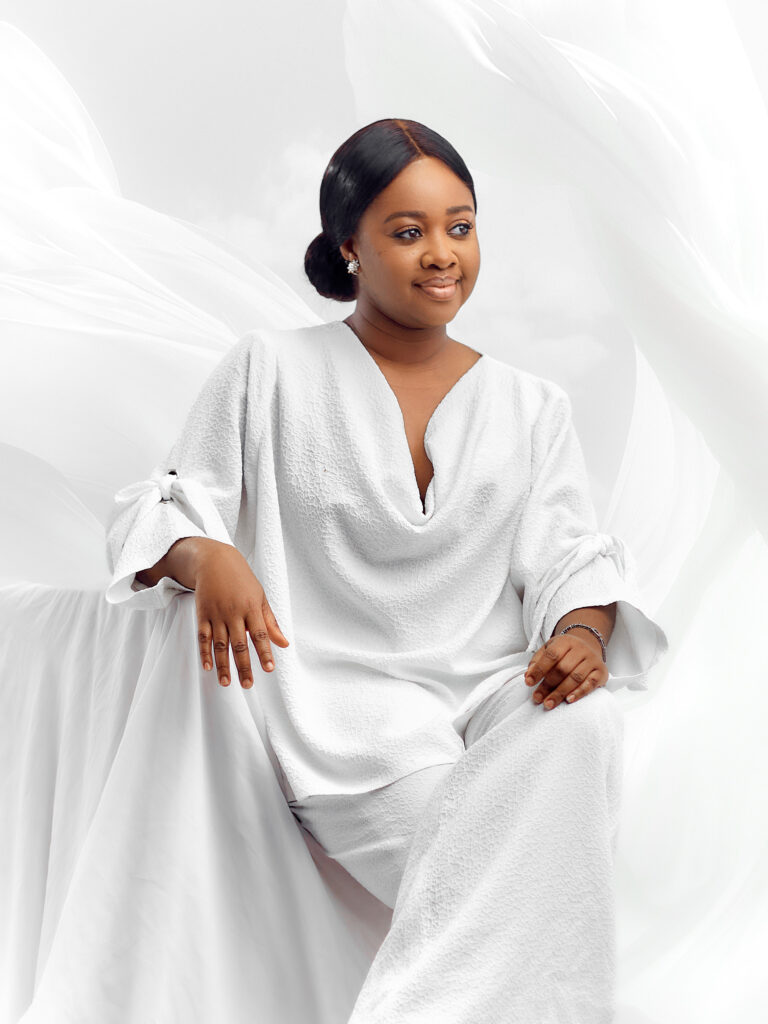
Who is Naa Dedei Botchwey beyond the pageants and public image.
A kind, playful, people-first, empathetic person who loves adventure. I’ve got big dreams, so I work hard. I’m a happy go lucky, but I can be strict about things sometimes. When I set my mind on something, I do whatever it takes to achieve it. I hate to see people intentionally do wrong. That can trigger a different side of me – We all have the other side. I’m very family oriented, I enjoy discovering things; through reading, travel or meeting people; and I love parties. You can call this a mash-up of my personality. There’s a lot more, but let’s keep this as a nut-shell.
How did it feel to win Ghana’s Most Beautiful pageant in 2020
This has always been a difficult question for me to answer. I didn’t go into GMB to win at first. But as the competition progressed, I discovered that I had a real chance and became committed mid-way. But even then, I was very okay with not winning. Getting to the finals, I could see that I had a real chance and made sure I left no stone unturned in my pursuit of the crown; but at the same time, I respected that my competitors were gifted and were equally qualified to win. When I was announced as the winner, I felt gratitude. I had my “I can’t believe I won” moment. But I also recognized how hard I worked and how far I had come, especially with the amount of support I received. So I took it really easy. It did not feel like a win for me alone. It felt like a mandate to step into bigger shoes and make it count.
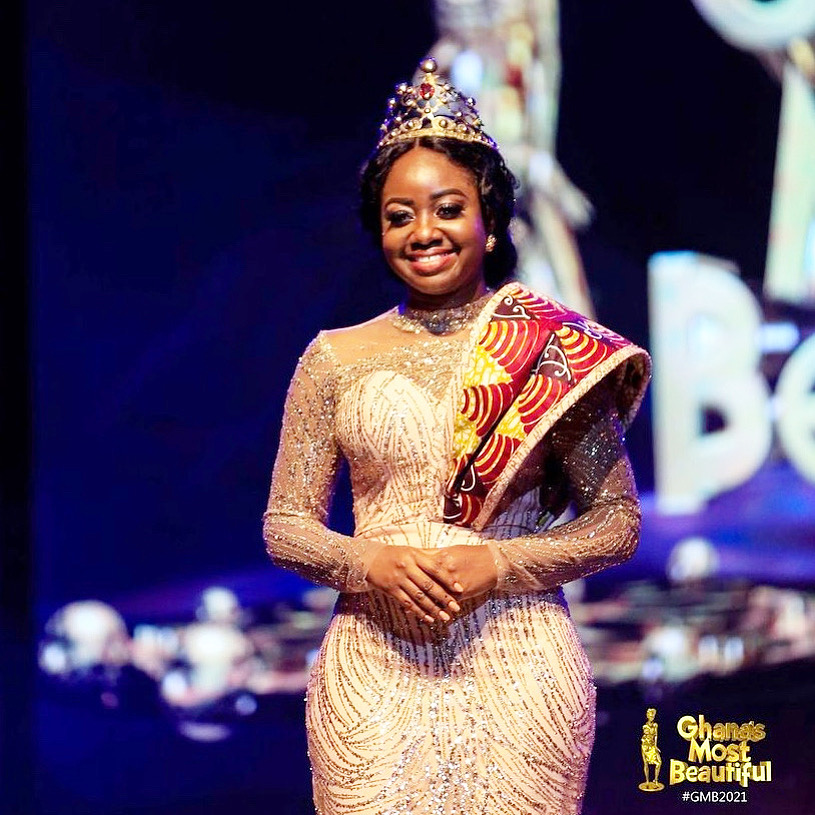
What impact did that win have on your life and career path?
It gave me the opportunity to do so many things that I had wanted to do for a very long time. For instance, I had always wanted to be on a billboard. That did not happen exactly but there was a very big branded picture of me on a Telecoms building. I also was the main character in a TV commercial which is something I had wanted for a long time. I had been auditioning to act in movies and on stage for several years, and I got chosen to do both multiple times because of the exposure I had, even sometimes, I didn’t have to no audition. These were fun bucket list experiences, and I was grateful for the opportunity to do them.
But most importantly, I launched my foundation in the field of inclusive education. That was the biggest way my life was impacted. It was a long-time dream, but I didn’t know exactly how it would materialize. So I saw GMB as the divine path to it. I have impacted so many lives under the NDB Foundation, thanks to the partners that stepped up to support me. I am still working hard to make more impact, as the foundation has come to stay.
As a result of my work with the Foundation, I became a brand ambassador for a non-profit education project associated with Oxfam. There are so many little breaks which meant so much but I can’t even remember them all.
What challenges did you face during the competition and how did you overcome them?
I was already an independent adult when I went into the competition, and the reality house system was largely shaped like boarding school. We had all necessary supplies available and did some fun activities. But we did everything together as a group and the chaperon was always present. We did not use phones, so there was little to no access with anyone not involved with GMB. As someone who’s very extraverted, that was really tough for me to adjust to. But there were no signs at all. I ensured to obey all the rules and did what I had to do daily. But it took a lot of discipline and self-restraint to not just break out of the routine, because it was suffocating sometimes. I’m by no means saying that it was bad. I am saying it was a personal challenge. I appreciated the rationale behind it and was actually grateful that I was protected from public access during the competition.
What has been the biggest challenge you have faced in running your foundation and scholarship programs?
Lack of funds, which means lack of dedicated personnel and resources. When I was still wearing the crown, it was relatively easier to get partners on board my projects. Shout outs to Trinity Oil Company Limited, Everpure Water, Kasapreko, Happy Man Bitters, Menscook, Food For All Africa, Cheezy Pizza, Laweh University, now Accra Metropolitan University, and Office of The Ga Mantse. Though during that period, I spent every single pesewa I had to make the projects possible. Is that what people call bankruptcy? Not that I had that much money, but I used all of what I had been investing for at least 7 years. But all of it was not enough to sustain the Foundation while doing the projects. So once I ran out, I had to go back to work, and it’s been a challenge running the foundation effectively while working full time.
How do you sustain partnerships with universities and traditional leaders to support women’s education?
My new strategy has been to reach out to potential partners whenever I can with my project ideas. I have executed 1 mentorship project and 1 donation project in addition to completing the Laweh University Scholarship in the last 3 years since I’ve been back at work.
I have also learned that previous project sustenance is as important as launching new projects. So I spend my down times catching up with partners and beneficiaries and doing other retainer work until time is due for the next project.
By down times, I mean times when I am not actively involved with a new project, though these are times that I am busy with corporate work.
What role did your upbringing and family play in shaping your values on education and empowerment?
Growing up, education was not up for discussion in my family. Not just my nuclear family, but the extended family as well – mum’s side and dad’s side alike. It was compulsory. I don’t know when I started school, but I remember being in class 1 at 5 years old. I grew up closely with my siblings and cousins, and everyone went to school. For the most part of upper primary to junior high school education, I had home tutors. My mother is a career teacher, has always been since before I was born. My late grand aunt was also a teacher, and sometimes, she would gather the children and share lessons that would help us in our various classes at school.
So formal education was an integral part of our culture as a family. It was never questioned nor did it come as a recommendation. Children born into my family went to school compulsorily until the tertiary level.
How do you personally balance your career in communications with your advocacy and mentorship work?
It’s been tough. I did most of my charity work under NDB Foundation during my GMB reigning year. That was smooth because I dedicated all my time to it. However, since I got back into corporate from 2022, charity work though still on-going has suffered a great deal. I have since made multiple donations to the teenage mums shelter I adopted in 2021, organized the Regional Maritime Scholars graduation, I have collaborated with partners to organized a mentorship event, and also supported the Laweh University Scholars graduation. All these were done with less of my input than I would’ve preferred but I was left with no choice. Corporate demands and when it does, you need to show up.
What advice would you give to young African women who feel limited by circumstances but want to pursue education?
Don’t give up. It is easier said than done, I know. But indeed, it is the only way. I have had my fair share of limitations when it comes to education. Even given up severally and having to pick the mantle again. If your limitations are financial like it was in my case, keep working towards attaining funds, and eventually you will get it. If it is proximity, give it time and strategize. If it is family, you will eventually outgrow it and have the freedom to make your personal decisions. You just need to keep your eyes on the prize. Whatever it is, there is a way out, and you will only find it if you don’t give up.
What role do you believe pageantry can play in leadership and national development?
The platform that pageantry offers for leadership, self-awareness and conscious citizenship is unmatched. It is not a coincidence that many pageant contestants, whether they win or not, choose to embark on social impact projects. There is something about the process from when the competition begins to when it ends for the individual, that instills the spirit of entrepreneurship and simultaneously instills the desire to serve while striving to be the best of oneself as an individual. It is in the fierceness of competition among people who are simultaneously building a sisterhood; simultaneously working together and individually to achieve daily and weekly goals. Knowing that the sisterhood is all you have even if you do not agree on everything, and learning to bond with people you are competing against, all while guided by the rules of the competition – it is leadership training and it prepares you to face the world.
What is your long-term vision for women’s education and empowerment in Ghana and beyond?
The NDB Foundation will continue to seek out partners to help put as many women as possible into school. Empowerment in not complete without education, as exemplified by Sophia, one of our scholarship beneficiaries who gained the confidence to leave an abusive marriage after enrolling into university. To paraphrase her words, something had been taken off her eyes, and she could see clearly now. Prior to her education, she received advice and desired to leave. But new information and exposure which broadened her perspective gave her a renewal of hope and strength to seek out her own healing and growth. Today, she is a degree holder and going on to pursue her legal career goals. This is what we love to see, and we will not stop until the last woman is empowered through education.
Our process includes mentorship to bridge the gap between education and career and personal development.