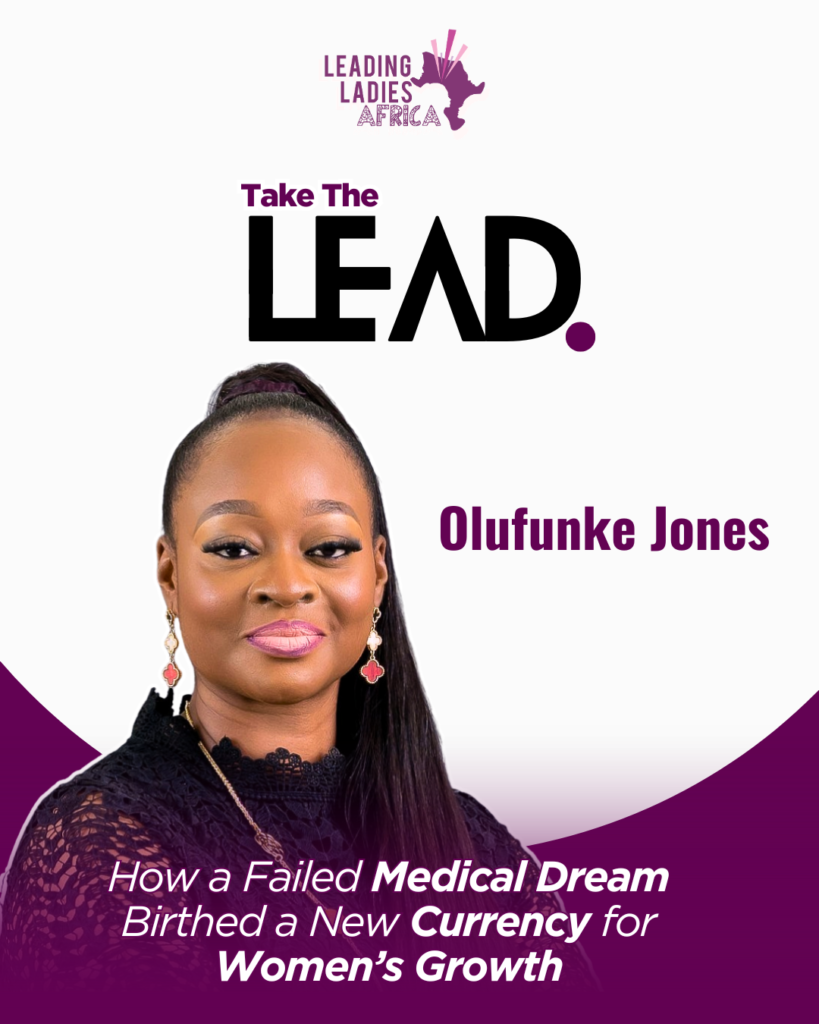
When we sat down with Olufunke Jones, we expected a masterclass in corporate strategy. After all, as a Divisional Head at Providus Bank, her resume speaks the language of high-stakes finance. But what we got was something much deeper. We got a masterclass in Integrity, Resilience, and Empathy.
Funke’s journey is a “plot twist” for the books. She started out wanting to be a medical doctor, driven by a natural urge to heal and care for people. But when life (and a stubborn Physics grade!) closed that door, she didn’t stop “healing.” She simply changed her tools. She traded the stethoscope for a seat at the banking table, realizing that if she couldn’t heal bodies, she could certainly heal businesses and financial futures.
Now, across nearly three decades in the industry, Funke has seen it all, and here are some of her biggest takeaways. Competence isn’t enough. To lead, you have to:
✨️Read the Room: Understand the silent dynamics before you speak.
✨️Master Corporate Politics: Not by “playing games,” but by navigating structural and individual power without losing your soul.
✨️Hold Your Integrity: As Funke says, “Trust is the only currency that never devalues.”
Through the Funke Jones Foundation and the SheAscends Programme, she is moving beyond “transactional banking” to “legacy building.” And now, she is on a mission to help 50 women this year move from the periphery of business to the center of the economy.
Funke is proof that you can be a powerhouse in the boardroom, a devoted wife and mother, and a spiritual guide, all while lifting others as you climb.
As she says, “What got you here, won’t get you there,” and that is the energy she’s bringing to our community today. 💪🏾
Read the full conversation below.
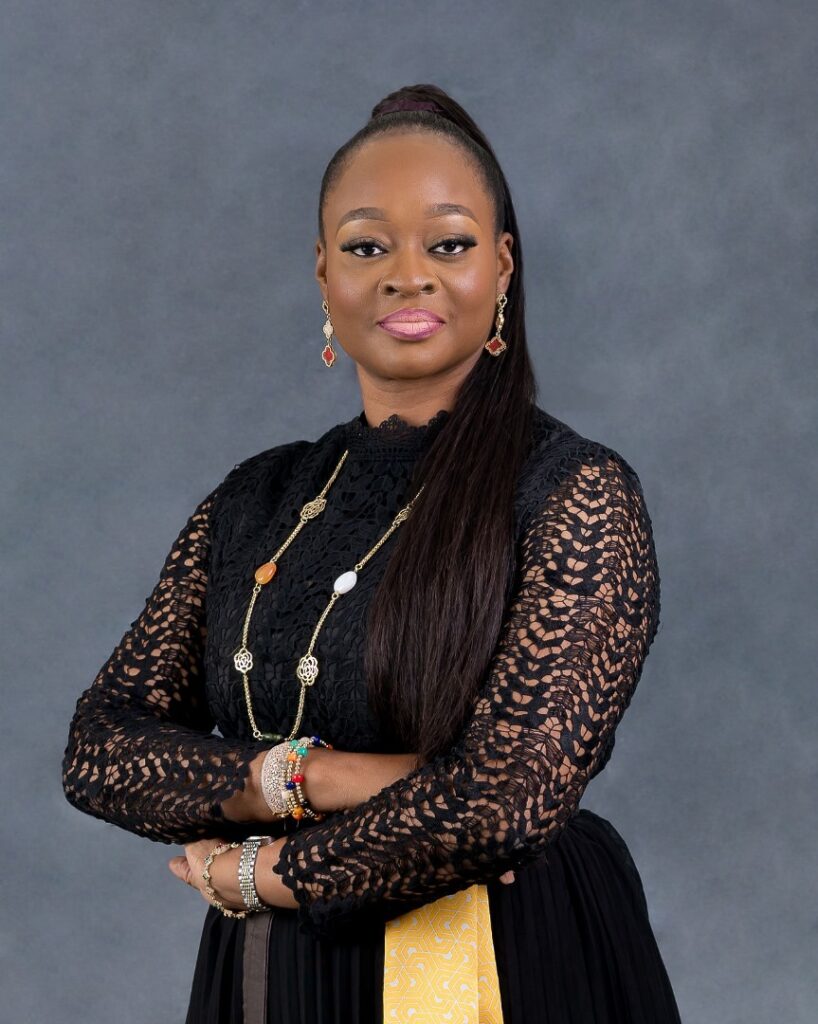
Thank you for having us. Before we dive into your incredible journey, we’d love to start with something personal: Who is Olufunke Jones when she’s not in the boardroom or championing women’s economic empowerment, and what fills your cup outside of all these remarkable roles you hold?
Olufunke “Funke” Jones is many things—but at her core, she is a servant-leader driven by purpose, faith, and a deep commitment to people. She is a champion of women’s economic empowerment, leading boldly in the boardroom and as an executive, while advocating for women to rise, lead, and thrive. She is also a wife of over 24 years, a mother of three—two grown men and a daughter—intentionally raising children grounded in values, confidence, and a strong sense of identity, equipped to face the realities of life with strength and integrity. Ministry is not something Funke does—it is who she is. A pastor by calling, she disciples, evangelizes, counsels, teaches, prays, and walks closely with people through life’s seasons. She believes in bearing one another’s burdens, building community, and pulling others into the freedom and hope found in the gospel. Over the past five years, Funke’s life has also been shaped profoundly by caregiving. Following a surgery that went wrong, she became the primary caregiver to her husband—overseeing and designing his care, coordinating hospital visits, rehabilitation, physiotherapy, and daily support. In this role, she is not only a caregiver, but a companion, therapist, advocate, and faith partner—standing steadfast in love, dignity, and prayer. As the secondborn in a family of six, Funke plays a vital leadership role within her nuclear and extended family. Family matters deeply to her—showing up, supporting one another, extending a helping hand, and ensuring that people are okay. Beyond titles and roles, Olufunke Jones is a woman whose life reflects service, leadership, compassion, and faith—present wherever she is needed, and intentional about adding value in every space she occupies.
Your academic journey is fascinating, starting with a B.Sc. in Zoology and then pivoting to an MBA and eventually Healthcare Management. That’s quite the evolution! What happened during that transition, and was there a specific moment or realization that sparked that shift?
“I Didn’t Become a Doctor, but I Never Stopped Healing. ” On my academic journey, as a young girl, I wanted to be a medical doctor. Caregiving comes naturally to me. I genuinely want people to be okay. If I had my way. If I were the president of Nigeria, the minimum expectation would be that every citizen lives well. Access to healthcare, water, food, education, and good roads, are not luxuries. A country like ours has the capacity for everyone to be okay, while ambition, excellence, and wealth creation still thrive. So, at the core of my being, I have always carried this desire: people must be okay. That was why I wanted to be a doctor. But life No matter how hard I tried, I never passed physics. And in our system, without physics, medicine, and pharmacy were simply not options. Ironically, my first job was still in healthcare. I worked at Pfizer as a young sales representative. That experience deepened my love for healthcare, but it also, revealed something else about me. Being in sales unlocked my strengths in human relationships, persuasion, and marketing. I discovered that I enjoyed convincing people—especially when what I was offering genuinely added value. If you had asked me then what I wanted to be, I would still have said, “A medical doctor.” But somehow, life redirected me. I ended up studying Zoology. And I remember my first day of orientation in the Faculty of Science when a professor said something that changed everything for me: “If you are a science student, you can be anything you want to be.” He began listing options—and the first thing he mentioned was banker. The moment he said it, something clicked. I thought, if I can’t be a doctor, then I’ll be a banker. That decision aligned perfectly with my experience at Pfizer, my love for marketing, my work ethic, my’ve been working since I was 16, and my belief that hard work is non-negotiable. So my banking journey began during my youth service at Austin Trust Bank in Warri. Within ten months, I was converted to full staff. Very early, my managers noticed that people wanted to talk to me, and that I could convince them to trust the bank with their money. I didn’t stay long in operations before I was moved into marketing.
Out of almost 27 years in banking, I have spent over 24 years in marketing and relationship management.This was why an MBA became necessary, it gave me a robust understanding of business, strategy, leadership, and management. But even in banking, even in marketing, I never lost my core.My approach to clients has always been different. I work with one mindset:I want to take care of you. I want you to be okay. I want to solve your problem. I empathize deeply with my clients’ visions, missions, and struggles. I throw myself into their businesses, not just as a banker, but as a partner. That has become my personal differentiation strategy and has shaped my leadership style throughout my career.There is an interplay between my desire to care for people and my strengths in communication, leadership, empathy, discipline, and consistency. That combination is what sets me apart. So how did healthcare come back into the picture?Over five years ago, beyond my interest in pharmaceuticals as a business, I found myself deeply intrigued by hospital systems and healthcare management. I always believed that one day, after banking, I would be part of redefining healthcare in Nigeria. I dreamed of building world-class hospitals here, reducing medical tourism, and keeping both talent and capital within our country.
Twenty-five years in banking is no small feat, especially in a landscape that’s constantly evolving. Thinking back to your early years in the industry, what were some of the hardest lessons you learned, and how did they shape the leader you are today?
Over 25 years in banking is no small feat.The industry has evolved constantly, and I’ve had a front-row seat to that change. I started my banking career around the year 2000, at a time when there was widespread fear that global systems would crash. I remember just getting into banking and hearing all the anxiety about Y2K. But the year came, Microsoft rebooted, and life went on. What did follow, however, was a wave of transformation, regulation, technology, digital banking, corporate governance, ESG, and a gradual but important increase in women taking seats at the boardroom table.The landscape kept shifting, but my stability came from lessons I learned very early in my career.There are three key lessons that shaped me.First: confidence and courage in your values.Defining my core values early gave me focus and stability in an evolving environment. Whenever things got complicated, I returned to my values to check alignment, between what was happening around me and the choices I needed to make. My three core values are integrity, diligence, and hard work.These were shaped by very real experiences—especially during my youth service and my early banking years as a 23-year-old. Working as a teller, experiencing audits, navigating losses, and receiving leadership counsel taught me something important: the corporate office is not as simple as it looks. Those moments taught me to reach the room, but also to stay anchored.There were situations that could easily have made me shift ground or give up. I remember a moment when money was lost, no one could clearly account for it, and fingers naturally began to point. As a young woman of 23, my response was to insist on an audit, to call internal control all the way from Lagos. Looking back today, I would do the same thing again.Because in banking, integrity is not optional.Trust is currency.The second lesson was learning to read the room. As I grew, I realised that competence alone is not enough. Being able to observe, listen, and understand the dynamics in a room is a critical leadership skill. You must know when to speak, how to speak, and what the room requires of you in that moment.The third, and perhaps the hardest, lesson was understanding politics early.Especially for someone like me, open, blunt, values-driven, and committed to truth—this was a necessary maturity point. Every corporate organisation operates with three forces of power:
Structural power, Individual power, and political power. Ignoring any of these is costly.Understanding the interplay between them—without compromising integrity—is vital for long-term leadership success. Diplomacy, timing, and discernment matter. You can stand for truth and still understand nuance.Today, with the benefit of experience, I observe more, read the room better, and navigate politics with wisdom—while still upholding trust, integrity, and values.These lessons have sustained me across 25 years of banking—and they continue to shape how I lead. 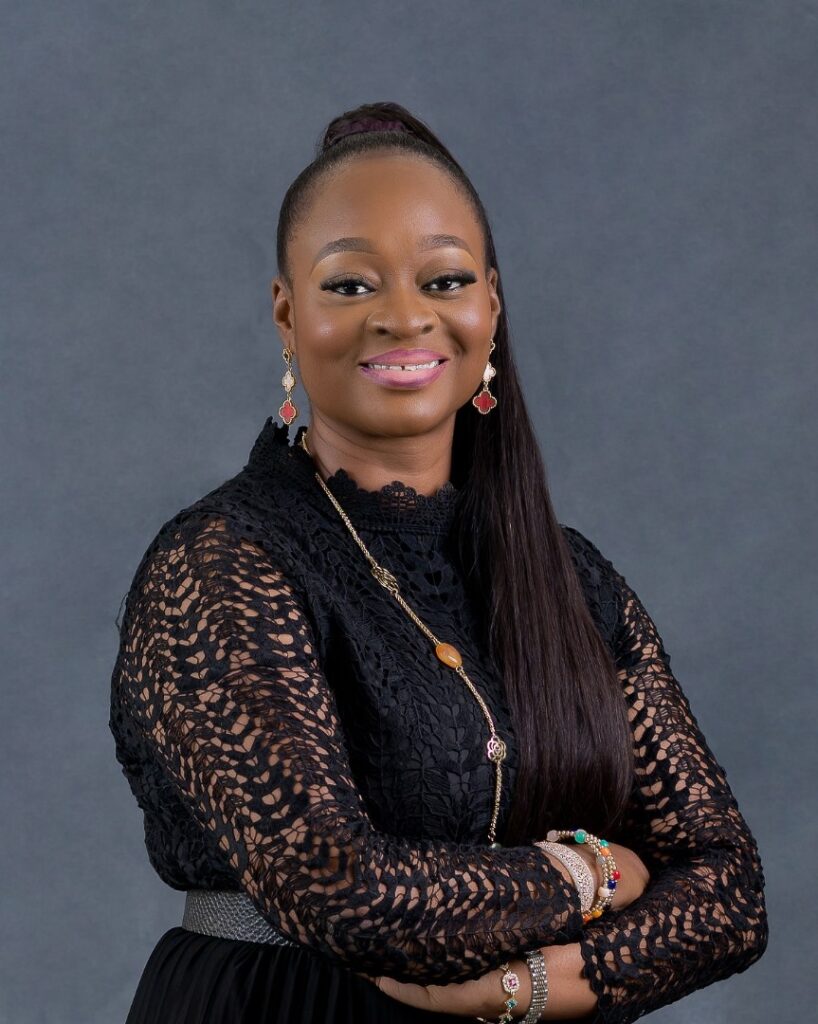
As the Divisional Head of Corporate Banking at ProvidusBank, you’re operating at the intersection of finance, strategy, and leadership. How are you leveraging this role to not just drive business growth, but also create pathways and opportunities for other African women?
As the Divisional Head of Corporate Banking at Providus Bank, I operate at the intersection of finance, strategy, and leadership. I have intentionally leveraged this role to create pathways and opportunities for women—not in theory, but in execution.Corporate banking at Providus spans six key segments across the economy, including airline and travel, FMCG, pharmaceuticals and healthcare, fintech, financial institutions, oil and gas, manufacturing, real estate, and agribusiness. What I have consistently observed is this: there is no sector of the economy where women are not actively participating—from upstream, midstream, and downstream oil and gas to real estate, agribusiness value chains, and manufacturing.My approach has never been transactional. For over ten years—starting from our early days in business banking and now across corporate, large corporate, and international corporate banking—I have adopted a partnership model with women who seek my counsel and collaboration. The goal is not just access to finance, but institution-building.I work with women to move beyond having a business idea on the periphery, to strategically leveraging the opportunities within the banking ecosystem—capital, advisory, risk structures, partnerships, and execution frameworks—to build sustainable businesses and lasting legacies.Over the years, I have supported women to:• Build and own hospitals• Scale healthcare partnerships into full institutions• Expand oil and gas ventures into real estate and infrastructure• Grow agribusinesses through intervention funds, grants, and strategic partnerships• Compete effectively in airline and travel through instruments such as IATAbacked guaranteesAcross sectors, my first responsibility when a woman sits across from me is mindset shift. Many women believe they must have everything perfectly figured out before they approach. I help them understand that every business starts with an idea, and that scale is achieved through relationships, structure, and strategic leverage.
Every idea is a seed. What determines growth is how well that seed is nurtured.I provide hands-on advisory, ensuring transactions are well articulated, governance and structures are properly designed, and sustainability, performance, and execution are embedded from the start. From there, we support continuous scaling and growth. I can say confidently that many women feel assured knowing I am overseeing their transactions. That trust is built on consistency, credibility, and a reputation for delivery. When projects come in, my role is not just to fund them, but to inspire, structure, and ignite the confidence required to build something enduring.This is not just banking for me. It is leadership. It is legacy. And it is my commitment to seeing women thrive across every sector of the economy.
Your Women in Leadership experience at London Business School offered a global lens on leadership. What did it reveal about the strengths African women bring, and the challenges they still face, especially in male-dominated sectors like banking and finance?
My London Business School experience in 2024 gave me something invaluable—a truly global perspective on leadership. I often say I wish I had taken that programme five years earlier, because the lessons were both eye-opening and transformative. For the first time, I experienced a profound shift in how I understood office politics—not just as a local or African phenomenon, but as a global leadership reality. I also had a mindset shift around growth, learning, and leadership identity.One of the most powerful moments for me was realizing that the challenges women face in leadership are not uniquely African.
Our class was made up of women from over 21 nationalities, and in our small-group, safe-space conversations, we discovered that the themes were universal, tokenization, suppressed voices, limited access to decision-making, and the constant need for women to work harder to break doors that open easily for others.That realization brought both comfort and clarity. Comfort in knowing I was not alone—and clarity in understanding that there are strategic ways to navigate these challenges globally.The programme also deepened my appreciation for mentorship. I was assigned a mentor who continued to follow up with me for nearly nine months after the programme. That experience reinforced for me how critical mentorship is in leadership growth—especially for women.
Another key area of growth was negotiation, learning how to negotiate not just deals, but influence, space, and authority. Understanding that I am not alone in these challenges significantly boosted my confidence and sharpened my leadership approach. One quote from my professor truly disrupted my thinking: “What got you here will not get you there.”That statement forced me to re-evaluate how I defined leadership. Leadership, I learned, is not about doing all the heavy lifting—it is about strategy, direction, influence, and solution-building. It is about thinking at a higher level and enabling others to execute.The entire experience lasted just one week, but it changed everything for me.It also shaped a firm decision: going forward, whether my organization sponsors me or not, I will personally invest in international leadership development. I have committed to budgeting for at least two global learning engagements every year—because leadership requires a broad worldview, not isolation within an office.That experience redefined my leadership identity, and I am looking forward to more such engagements as I continue to evolve, learn, and lead with greater clarity and impact.
Let’s talk about the Funke Jones Foundation and the SheAscends Program. Growth-stage capital for women entrepreneurs is critically needed across Africa, yet access remains a persistent barrier. What inspired you to launch this accelerator, and what gaps in the ecosystem are you specifically trying to fill that others might be overlooking?
The Funke Jones Foundation and its flagship initiative, the SheAscends Programme, were born out of years of observation, frustration, and conviction about one critical gap in our system: How women access capital.This was not an emotional decision, it was an informed one. It was shaped by my professional experience in banking, my long-standing work supporting women-led businesses, my exposure to peer-to-peer lending models, and my deep involvement at the risk management and credit structuring level of the financial system.
Over the years, I have seen first-hand how the cost of funding in the Nigerian money market, high interest rates, short tenors, and rigid repayment structures, places an unbearable burden on women entrepreneurs. The high default rates we often discuss are not primarily issues of integrity or character. They are largely a function of structural pressure, the weight of repayment choking otherwise viable businesses.
For over 10–15 years, I have intervened privately and individually in women-owned businesses, and one conclusion became unavoidable: something is fundamentally broken in the system when it comes to funding women. The current interest rate regime is simply not sustainable for long-term business growth.I have participated in grant-giving through other foundations, but my heartbeat has always been women’s businesses. I believe deeply that when women are properly funded, they don’t just run businesses—they build institutions and legacies.
As I approached my 50th birthday this year, people asked the usual questions: What are you buying for yourself? How are you celebrating?But my heart kept returning to impact. I am wired for empathy. I am happiest when other people are okay. And I knew this was the season to formalise the impact work I had been doing informally for years.So I decided: I wanted my 50th year to impact at least 50 women.That decision coincided with a series of speaking engagements around International Women’s Day, where I spoke extensively on access to capital for women. Those conversations further reinforced my belief that this is not a funding problem, it is a systems problem.The SheSAscends initiative is our response.It is built on the conviction that women need a different financing model—one that provides safety, dignity, and room to breathe. A system where women can access capital without the fear of drowning, with repayment structures that support growth rather than suffocate it.Beyond funding, we recognise the power of financial literacy, consistent savings, and compounding growth. SheAscends brings these elements together—capital, education, discipline, and structure—to help women grow state capital, build wealth, and scale sustainably.This is a journey. I may not articulate every detail of the destination yet, but I am absolutely clear about the direction. This is the beginning of a system that will redefine how women access capital, one that empowers them to build enduring businesses, strong institutions, and lasting legacies. Because when a woman is empowered, a society is empowered.
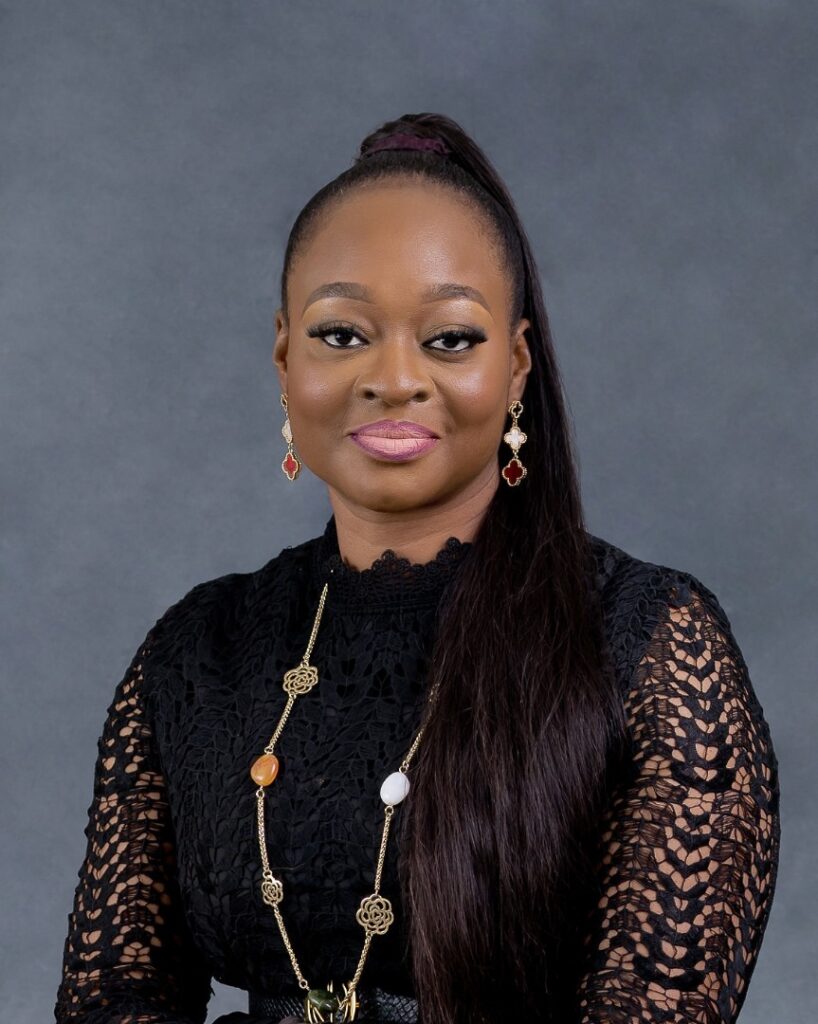
If you could leave one legacy through your work, what would it be? And what message would you want to pass on to the next generation of African women leaders coming up behind you?
I am envisioning a transformative journey for women, where they break free from constraints and unlock their full potential ! The SheAscends initiative empowers women to shift their mindset, embracing abundance and limitless possibilities.
This journey focuses on supporting women in;- Cultivating inner strength and confidence, recognizing their worth and capabilities. Building sustainable businesses and institutions that create lasting impact and wealth.- Fostering collaborations that uplift and support, celebrating collective growth.- Redefining how relationships with men focuses on mutual respect, and cocreation as partners.By embracing this mindset, women can:- Own their power and agency- Create lasting legacies- Drive positive change in their communities. This holistic approach will inspire women to become catalysts for transformation while unlocking their full potential and creating a brighter future for the family and society at large.