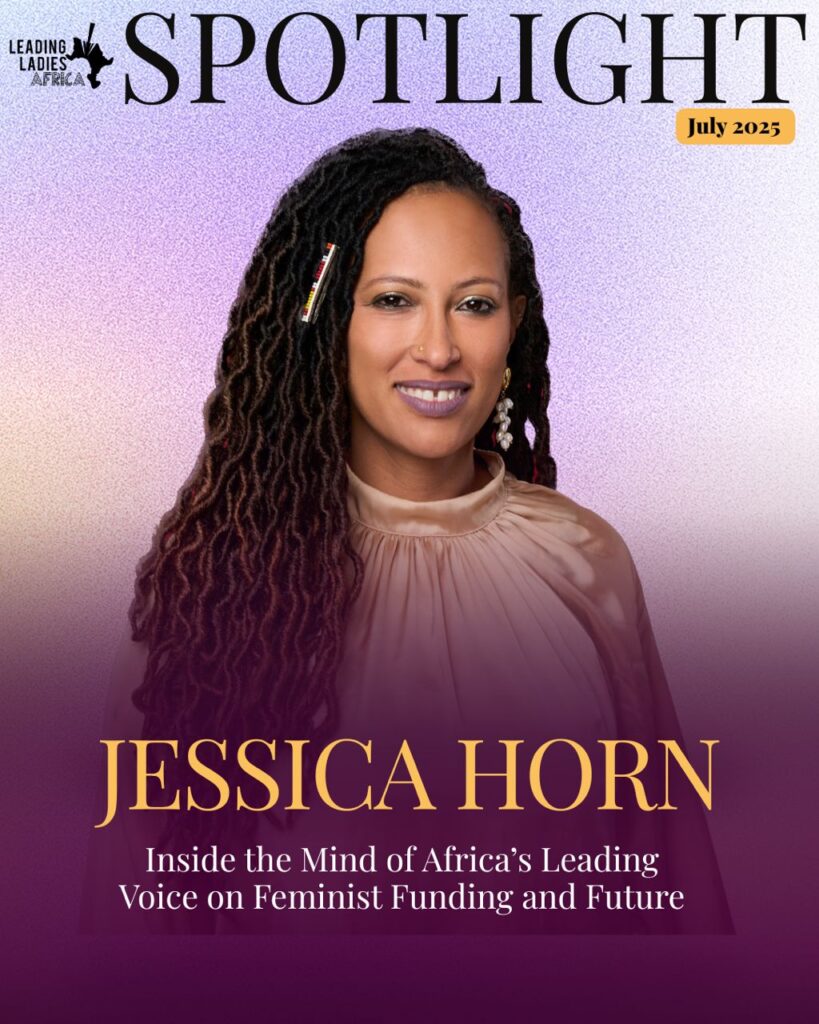
How do you build the future while healing the past?
Jessica Horn has spent two decades doing exactly that, pushing money, memory, and imagination toward liberation.
From co-creating FRIDA and UHAI to leading Ford Foundation East Africa, Jessica has been at the forefront of feminist formations that challenge not just who gets funded, but how, why, and for what kind of future.
She’s lived on five continents, worked in over 56 countries, and still believes the best strategy begins with listening to African women’s stories—from tattooed skin in Benin to boardrooms in Nairobi.
In this deeply personal and no-holds-barred conversation, Jessica opens up about the radical joy of writing, why the feminist movement needs archivists as much as activists, and what leadership has taught her about power, integrity, and building from love.
As she reminds us: “You can do this work from anywhere. But it must be done with deep love for your people, and a deep embrace of our human diversity.”
Read the full interview below
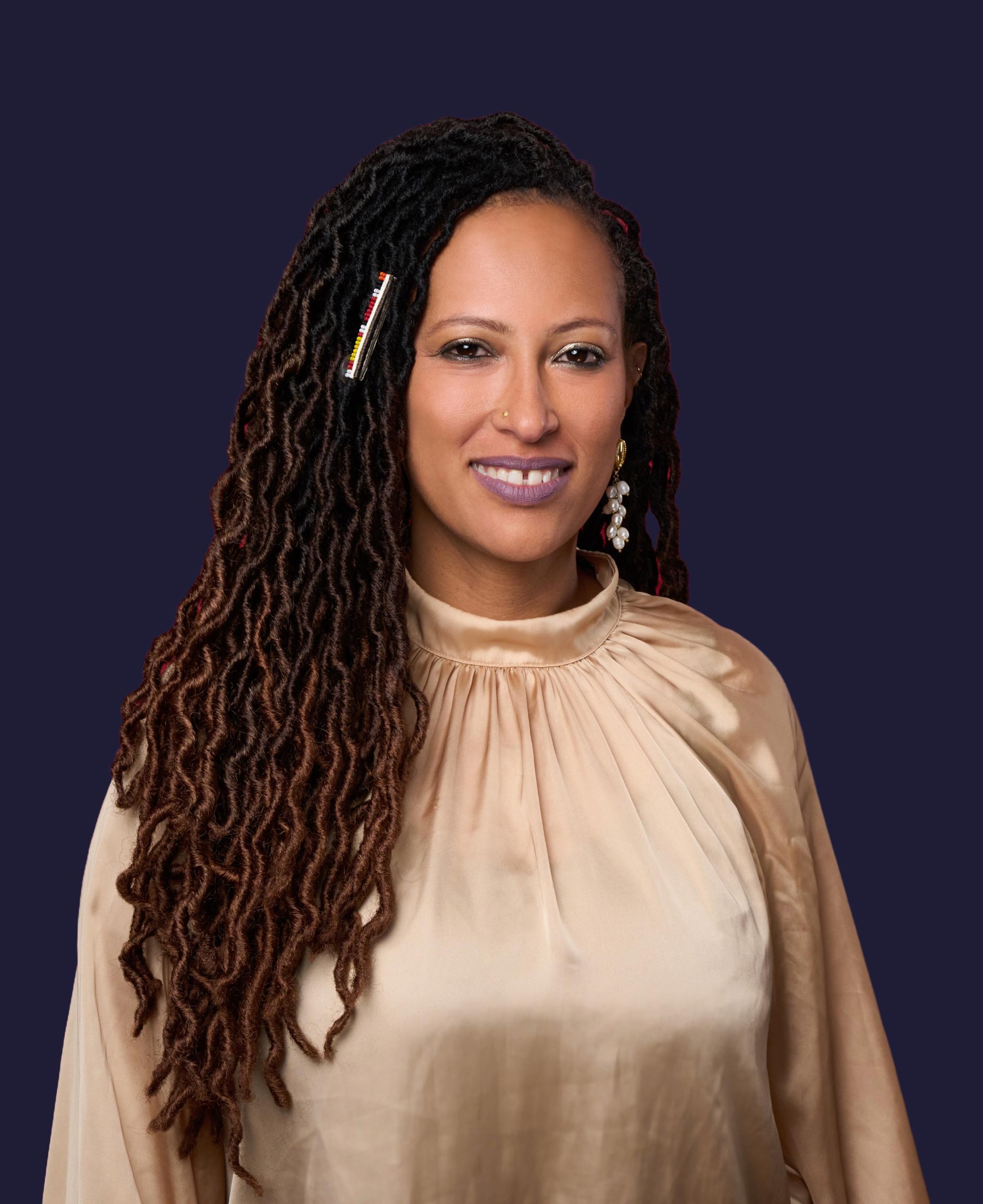
Hello Jessica! Thank you for taking your time to speak with us at LLA. In your own words: Who is Jessica, and what does she do?
I am a senior philanthropy leader, a futures thinker, a writer, a team and ideas-builder and a proud panAfrican feminist. In the broadest sense, I contribute to resourcing social justice and feminist transformation through ideas, funds, new intervention methods and stronger strategic vision.
I came to this through work to affirm women’s right to health and bodily autonomy. Perhaps given a midwife turned academic of a mother, I was always interested in embodiment and what it means to live full healthy joyful lives in our own bodies. I was an HIV and AIDS peer educator in my teens, I studied medical anthropology and much of my earlier professional life was focused on work to end violence, support sexual and reproductive rights policy and practice and build out strategies for activist wellbeing.
I entered philanthropy in my mid 20s and was at that time one of comparatively few young African and indeed black women in global philanthropy with a grantmaking budget and serving on global donor boards. It has been a tremendous experience to help shape new visions of philanthropic practice from a global majority standpoint.
You’ve lived on five continents and traveled to over 56 countries—how have these experiences shaped your feminist worldview and commitment to African women’s liberation?
Travel has unfortunately confirmed to me that patriarchal oppression is global. There is nowhere on this earth where women and girls are fully safe or respected. I am grateful though to have seen the world from the vantage point of the global majority, having spent most of my life in Africa and the Pacific, and connected via friends and colleagues to Latin American, Asia and the Middle East. It has given me a rich sense of global histories of transformation and how they are interconnected- through political solidarity and practical actions but also through literature, music, dance, food.
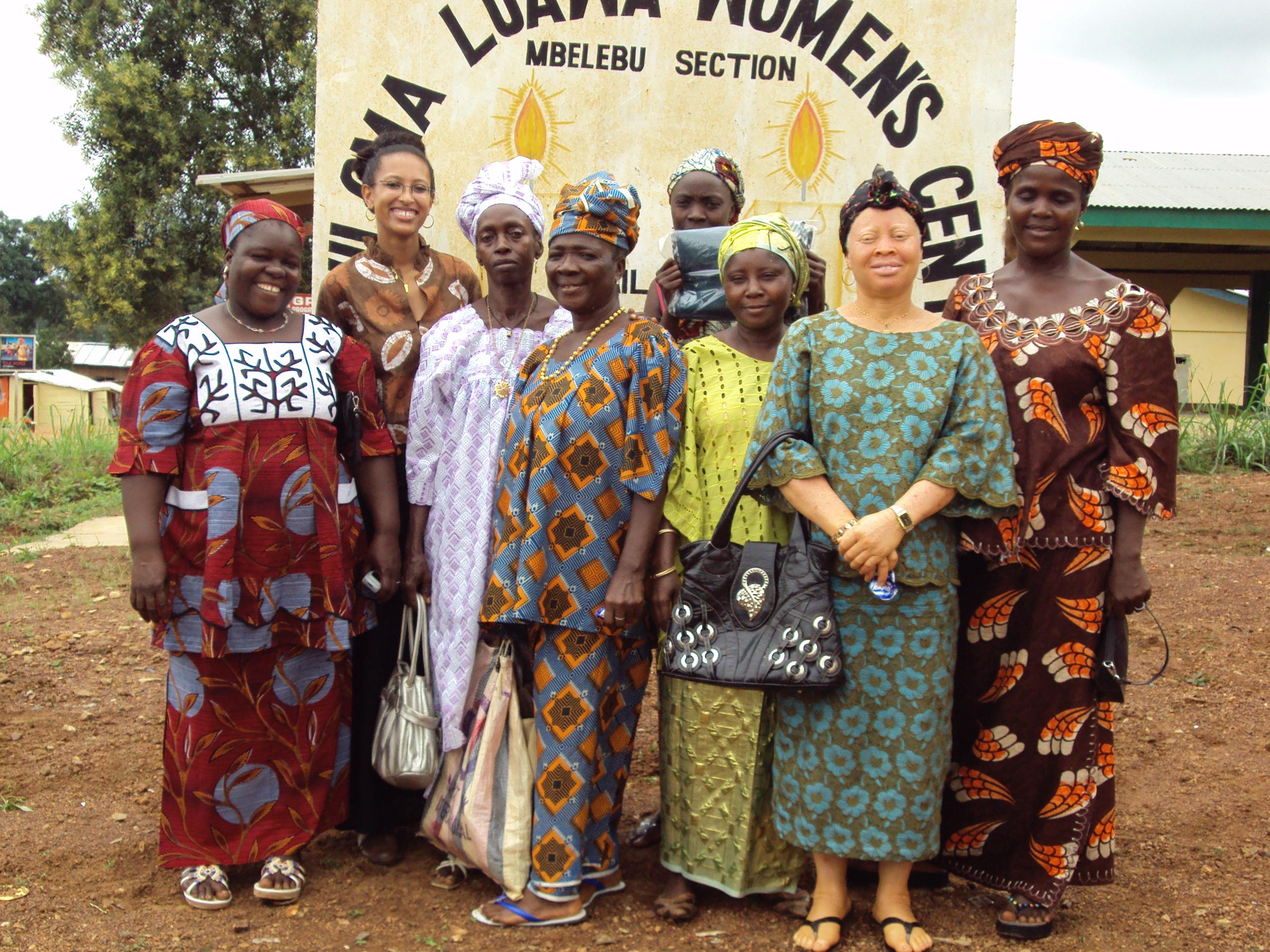
In Accra I created an art installation around African sheroes in the courtyard of a community of Afro-Brazilians who had returned post-slavery. In Beirut I met migrant African domestic workers organising against abusive labour conditions. Through the African Feminist Forum I met some of the women who contributed to Africa’s liberation from colonialism.
Africans in our great diversity have always been central to the thinking and practices of transformation, although this contribution is only minimally cited. Actually I wrote African Feminist Praxis: Cartographies of Liberatory Worldmaking to help chronicle African women’s activist agency and the many ways it has helped to shape better worlds.
What was your earliest memory of injustice that made you realize the world needed feminist resistance, and that you had a role to play in it?
My earliest memories in general are from Lesotho where my father was a university professor. Lesotho was heavily involved in organising to end apartheid in neighbouring South Africa. Women were of course completely integral to the anti-apartheid struggle. So I guess my earliest memory is of a racial injustice that was profoundly gendered, both in its impact and in the organising against it. It helped me recognise very early on that Africa already had feminist resistance, and that this resistance would always be attentive to multiple oppressions.
You’ve been part of monumental feminist formations—from co-founding the African Feminist Forum to shaping initiatives like AMANITARE and FRIDA. What have been the most powerful lessons you’ve learned from collective organizing across the continent?
I was lucky to have entered an African feminist movement that was multigenerational and panAfrican in character, seeking to craft feminist freedoms that were global in scope. I have had the privilege to be in community with independence era activists as well as African feminists from the Vienna, Cairo and Beijing generation that had shaped international policy and law on women’s rights in the 1990s. They were clear on the fact that if you want to win you have to address structural power. You have to get in there and engage the state, rework mainstream power, and demand presence, voice, recognition, protection and resources. They also taught me that you have to be brave. They faced down colonial violence, dictatorships, military rule, civil war, apartheid, and the silencing force of social stigma. They built movements and they also built organisations. And they wrote, they theorised and produced literature.
My generation pushed us to look at power in the personal domain. To consider how patriarchy impacted our emotional lives, our sexuality, and to begin the conversation about mental health. We have also had to contend with the sharp rise of the religious fundamentalisms and the explosion of communication technologies which has fundamentally reshaped organising.
This work is a life commitment not a day job. You can do it from wherever you work formally, but what makes the difference is working with a deep love for your people, a deep respect for women, and a deep embrace of our human diversity. And you must always make sure that you have a base of solidarity to fall back on, because backlash is inevitable.
As someone who helped co-design participatory philanthropy, how do you think funding can better support African feminist movements today—especially those led by young women at the grassroots?
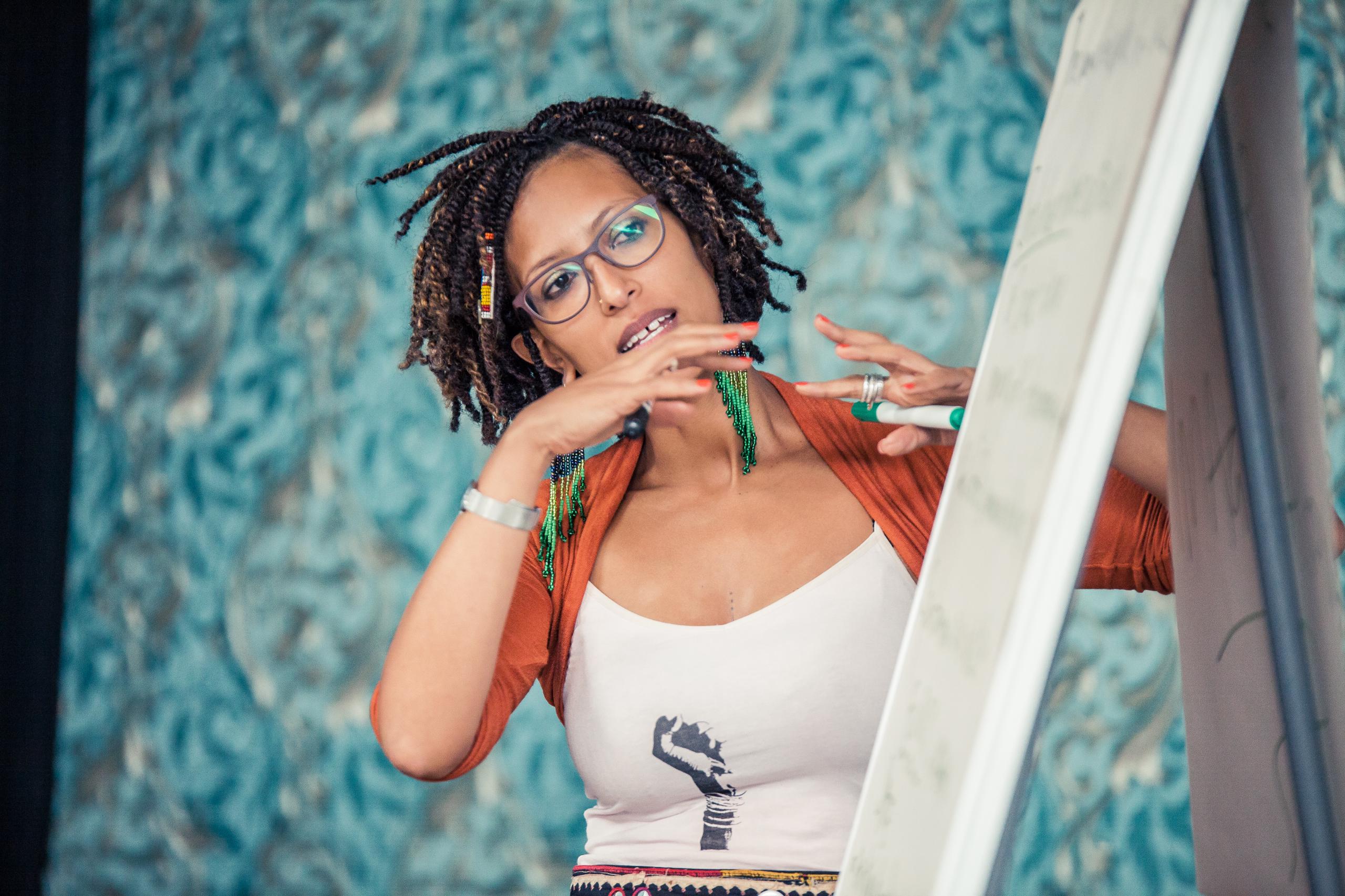
There’s now a sufficient evidence base to affirm that it is both necessary and more effective to resource social justice initiatives with core, flexible and medium to long term support. We also know that resources need to be accessible administratively and shouldn’t have excessive requirements that shift the focus away from the programming and towards bureaucracy. Participatory is one example of ways to shift the power dynamic around who decides what is funded, and to draw on peer expertise to shape grantmaking strategy.
However this current moment, with its sharp cuts in aid and philanthropic funding is actually a very direct invitation to reconceptualise resourcing for Africa feminist movements overall. How do we create genuine sustainability in this work? How can we be more creative in resourcing strategies and leverage from different sources as relevant- individual giving, mutual aid, income generation, impact investing, diaspora philanthropy, demanding more from government especially on service delivery? Crucially, where is the African money for this work? Its time we truly step up to fund our own agendas.
You are well renowned for your writing. How do you use creativity—especially storytelling—as a tool for resistance and healing?
I am a high aesthetic person and I am also adventurous, so creative in the sense of having an inclination to refresh my imagination and encourage new ways. At both the African Women’s Development Fund and at the Ford Foundation East Africa I led on projects to tell stories of transformation through the office walls. At AWDF we installed murals across the entire building in Accra that depicted women’s movements from across the continent. In Nairobi I worked with curator Rosie Olang’ Odhiambo to revive the art collection of Ford’s new office, adding women artists to the collection as well as a wall of historic photographs of East Africa’s luminary women changemakers.
Writing has been my most consistent medium though. I love to write, and I have always written across forms as I have a bibliography of action research, opinion, practitioner guides, policy briefs, poetry, academic texts and even film. Whatever I produce I research though. I beleive in citation as both a form of rigour and a form of respect for the lineages of thinking that make what I write possible. We are never alone doing this work. I have had the privilege of incredible mentors. Ama Ata Aidoo was my literature professor, and I have had many other fiercely intelligent and generous teachers along the way. Hope Chigudu is one of my most consistent sources of inspiration as a voice who has always urged us as Africans to weave a more maverick sensibility into how we organise. All of these teachers taught me the responsibility that comes with transmitting ideas, and in them I also learned the power of imagination to engage deeper human questions and offer grounds for healing and repair.
Tell us about your project, The temple of her skin. What inspired this project, and what does it teach us about embodiment and history?
The Temple of Her Skin is a visual documentary project around African women’s tattoo and scarification stories. I am co-developing it with Beninoise healer and doula Sakli Laurence Sessou whom I met in the tattoo community. I had been travelling across the continent and through the diaspora, noticing how a new generation of women were getting extensive tattooing that held deep meaning for us. I reached out to a few people to interview them about it, and Sakli Laurence is the one who followed up. We decided to develop the project together and have already had two exhibitions as well as a feature on CNN. For me this is a project where my fascination with the body and my interest in documentation and community-building all come together. Our bodies carry all of our lives.
When you are quiet and actually listen to what African women are saying through our skin it opens whole other worlds of understanding. These stories speak to how deeply connected we are to our ancestries but also to our contemporary realities, how much violence we experience and how much we have to heal from. How much power and agency we have to carry, how funny and ironic we can be; how rich, textured and diverse our vantage points are.
As a leader in philanthropy, policy, and grassroots organizing, what has been the most fulfilling—and the most challenging—part of your journey?
The most fulfilling has been to see how persistence with ideas pays off. I’ve been an early contributor around ideas and methods such as participatory philanthropy, evidence-based prevention of violence against women and futures-based strategy in African feminist work that are now widely embraced. The most challenging has been navigating the reality that not everyone on the side of the ‘good’ has worked on themselves and their shadow side enough. People can be undermining, discriminatory and unethical in their use of power. We are all raised in societies where inequality is the norm, and so we all have to commit to analysing and changing our own deeply held biases and practices if we are going to work together in constructive ways.
You’ve led regional grantmaking at Ford Foundation and directed programmes at AWDF. How do you balance visionary strategy with staying grounded in the realities of African women’s lives?
I am a feminist as a political commitment rather than a job, so it means that my core relationships are in feminist movement, in feminist community. As part of our accountability to the things we believe in we must always stay connected to and learning from people most marginalised and most affected by oppression, to be in genuine community with people. I don’t just sit at a desk, I am always out and about, in dialogue, co-creating, supporting and mentoring where I can. I have a very inspiring group of African feminist friends, and we nourish each other where we are and also across geographies and time zones.
What has leadership taught you about yourself?
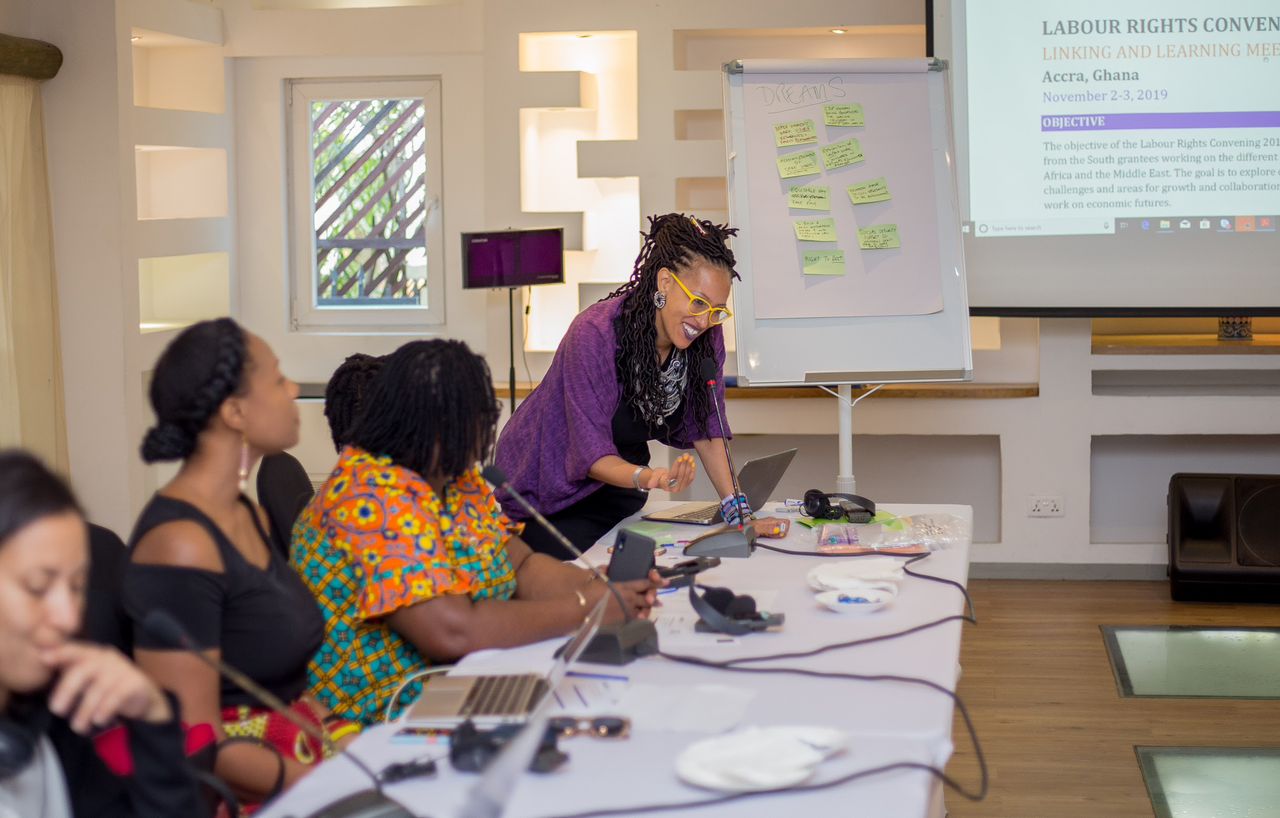
I am very comfortable with collaborative power and with ‘sharing the mic’. My interest is not in being the boss per se, but in using the authority accorded in leadership to encourage deeper focus and more creative thinking about how we make impact. I have learned however that that most people hold on to normative ideas of power and still want you to maintain steep hierarchies- to be an oga. Despite this I insist on experimenting with a more egalitarian approach as I don’t think we will achieve equitable power relations outside if we can’t even model them within! When you work with money, ethical questions are always on the table.
I have a very deeply felt commitment to integrity around this. Any resources you work with in philanthropy are meant to advance the mission of better worlds, not self-aggrandisement. You have to uphold that. Lastly, I have come to embrace that I am both highly creative and highly organised. I lead with a mix of laughter, imagination, and very serious commitment to excellence.
You’ve been instrumental in creating spaces for young feminist leadership. What do you want emerging African feminists to know, and what do you want them to do differently?
It is wonderful to see younger African feminists continuing the most progressive of the politics we have created and expanding it further. I love the audacity, the joyfulness, the creativity, and the boldness in voicing. I also love what newer generations are teaching us about social media and tech as mediums they are native to.
On the question of doing differently, every generation responds to the zeitgeist and its hard to ask for people to behave otherwise. I suppose the only thing I would say – to any generation still engaged today – is know your African feminist history and cite it! Also don’t forget that you have to work across the ecosystem of power if you want durable change. It can never be just about changing ourselves, or changing community, or changing narratives, or law and policy or the political economy. Its all interconnected.