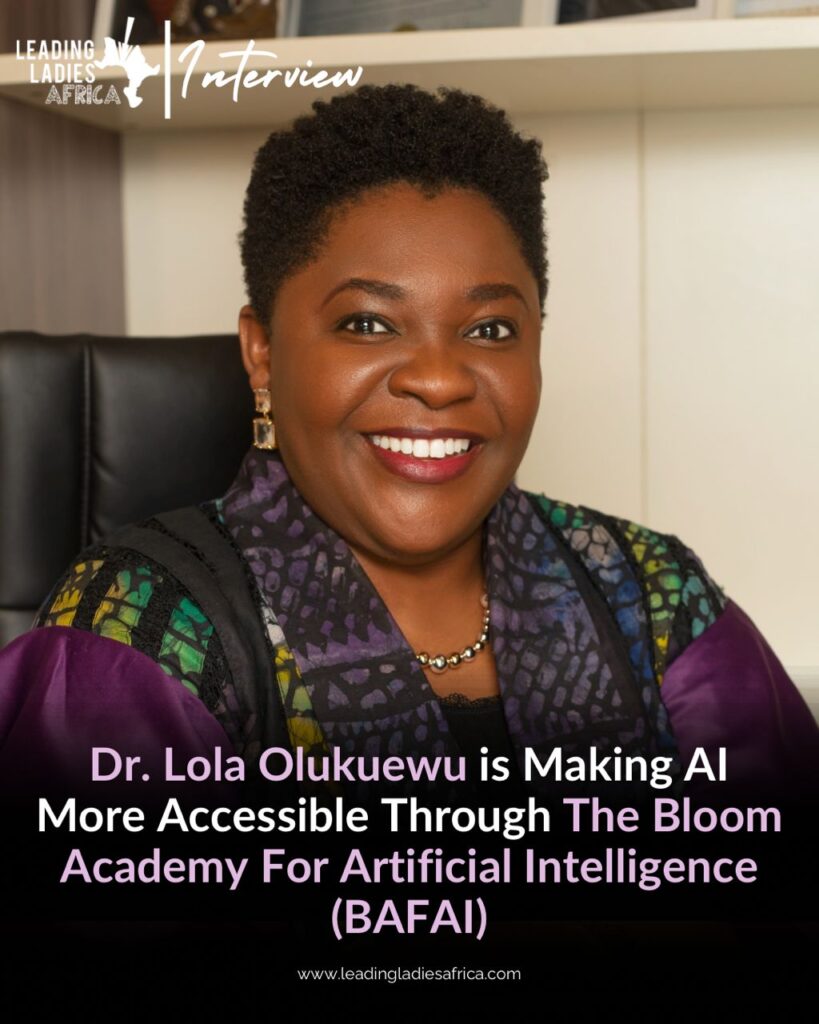
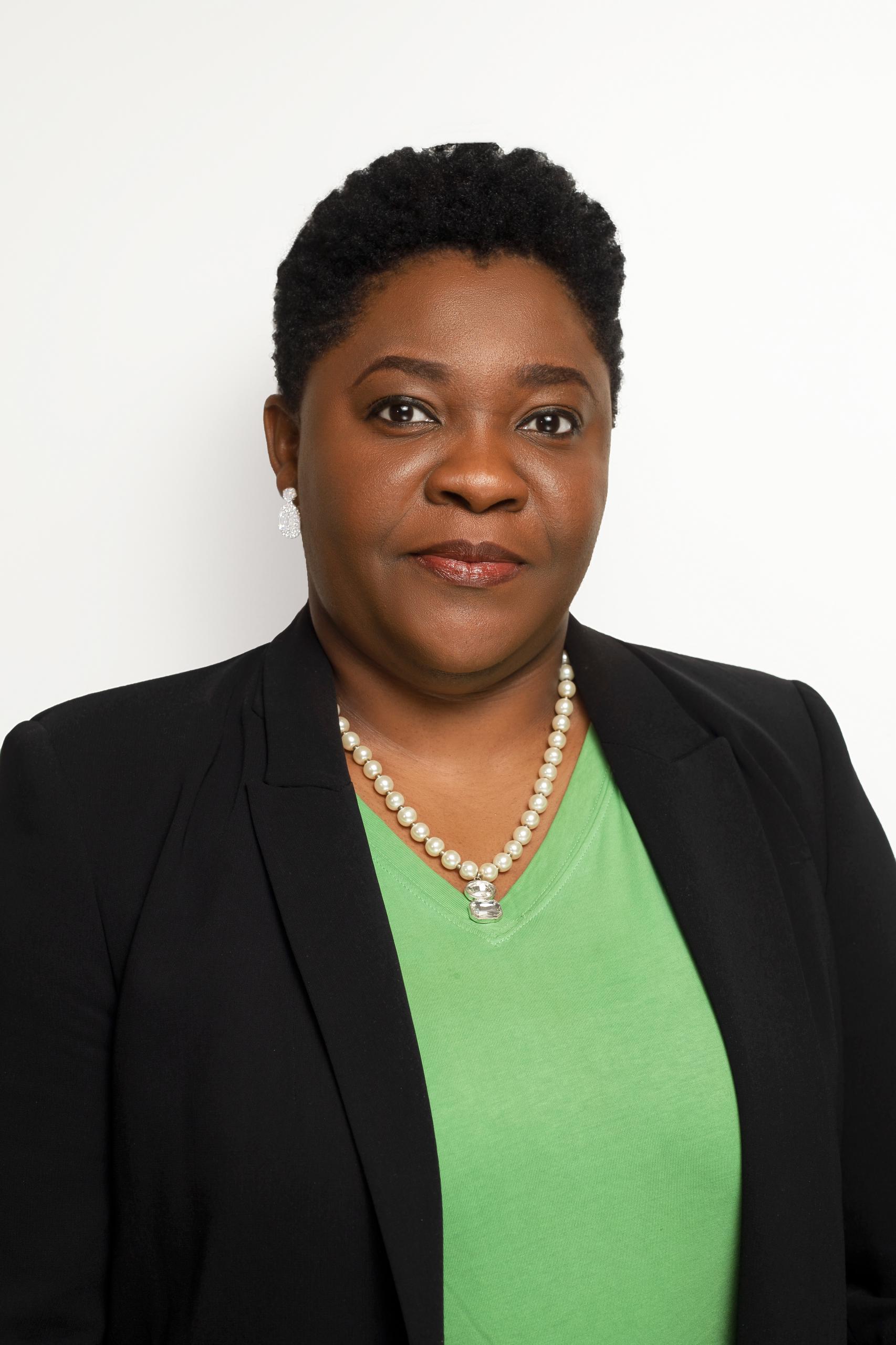
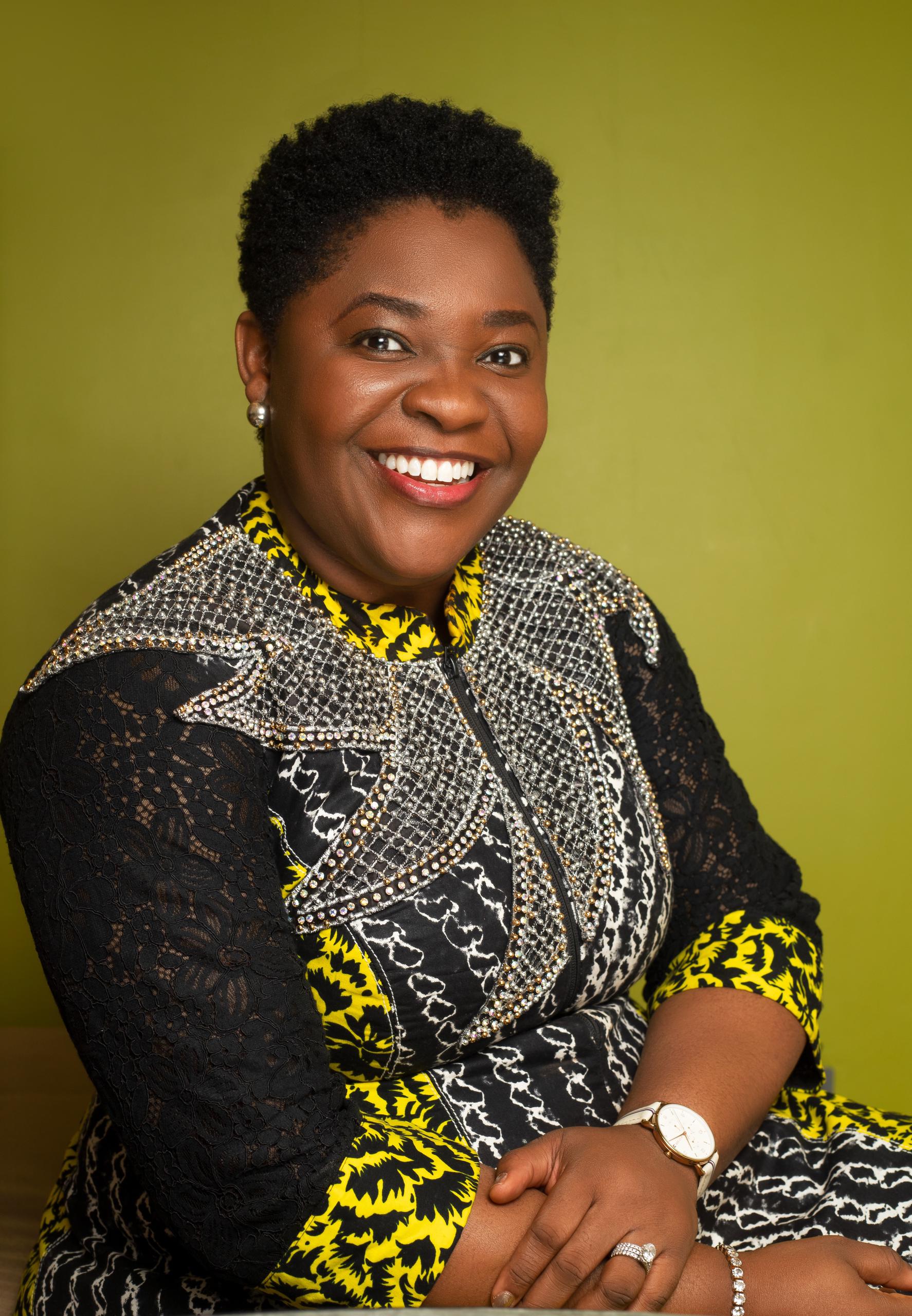
Meet Dr. Lola Olukuewu, a serial entrepreneur, AI investor, founder of BAFAI (The Bloom Academy for AI), and the visionary making sure Africa doesn’t get left behind in the AI revolution.
Across real estate and tech, Lola has built businesses do not just generate profit, but also possibility. But it was her curiosity (and concern) about how AI was reshaping the world that sparked a deeper mission: making AI accessible, relatable, and empowering for underserved communities across Africa and the global South.
Now, with the launch of BAFAI, she’s democratizing AI education with a practical, heart-first approach—making sure AI isn’t just for coders or Silicon Valley insiders, but for everyday Africans who want to build smarter, lead boldly, and shape the future on their own terms.
As co-founder of Ordibl, a fast-growing AI agentic product, and a certified Chief AI Officer, Lola is also helping steer the continent’s AI governance conversations, locally and on global stages like the United Nations.
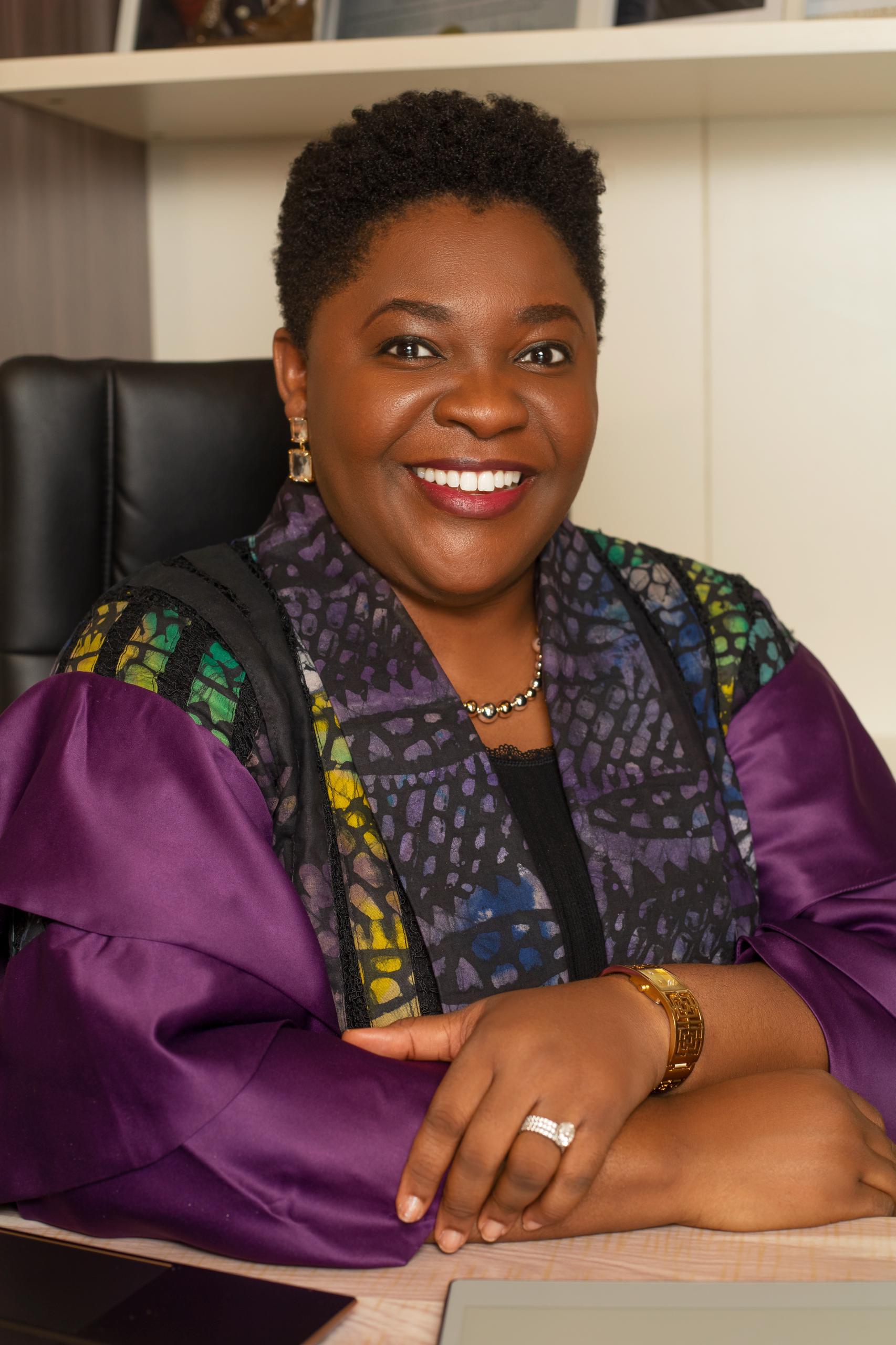
In your own words, who is Dr. Lola Olukuewu?
Thank you for the question. I am a builder of ideas, businesses, and people. As a serial entrepreneur of over 2 decades, I believe deeply in the power of possibilities as a solutions provider through business. I wear many other hats: An AI Governance advocate, AI investor, and co-founder for an AI agentic product called Ordibl. I am also a certified Chief AI Officer, educator and founder at BAFAI, one of the leading causes for AI education and empowerment in Africa and by extension, the global south. Behind all these is a polymath driven by impact and empathy.
I have launched ventures across real estate, hospitality, and tech industries, however, it was my curiosity and concern about the widespread disruption and impacts of AI on my businesses and those of many others that led me into the world of AI. Today as a passion, I am focused on helping individuals especially in underserved communities not just understand AI, but use it to change their own narratives positively.
As a mentor and constant learner, I believe that technology, when inclusive, is one of the most powerful tools for developmental transformation in any region.
So who is Dr. Lola Olukuewu? A visionary who shows up heart-first, positioned to make room for others at the table of the future.
Fantastic! you’re one of Africa’s most successful female entrepreneurs – how did your journey into entrepreneurship begin?
Thank you! That means a lot to be honest, my journey into entrepreneurship didn’t start with a big idea or a perfect business plan. It began with a need. A need to solve problems around me, and a desire to create opportunities where there were none.
Growing up, I was always curious. I asked a lot of “why nots?” why not create solutions for things that felt broken? That curiosity evolved into a mindset: if I couldn’t find what I needed, I’d try to create it. That is how my first set of businesses started, from jewelry (created and sold beaded pieces), to frozen dairy, to a boutique, to native fabrics, to beddings, etc.
From there, it became a habit. Starting and running businesses successfully became my thing, all the while juggling mainstream career development with those. I kept growing in experience and expertise, and with consistency in excellence, big brands started trusting me with their projects. What started as curiosity grew with trial, error or success, and then became my niche. Entrepreneurship helped me to start building something for the long haul, for legacy, and for tangible impact in lives.
What have been the high points of running several successful businesses?
There have been many rewarding moments, but a few high points really stand out for me not just because of the business wins, but because of what they meant beyond the numbers.
One of the biggest highlights has been seeing ideas that started in a notebook turn into real solutions, that even employ people, improve others, and open doors of opportunities for many others. There’s something powerful about walking into a place that once only existed in your mind and then watching others find and pay for the value created by that idea, and also have others build their own lives through it.
Another high point is mentorship and team building. Building successful businesses has allowed me to work with incredible talents and watch them grow. I’ve had the joy of mentoring young people especially women and seeing them rise into leadership in their careers, or start their own ventures, and step into their own purpose.
Of course, launching BAFAI is a major high point for me. It combines my passion for technology, education, and social impact in one space. Knowing that we are giving people — many of whom never thought AI was for them, a real chance to learn, build, and lead in this new world. That’s deeply fulfilling.
And then there’s the quiet but powerful high point of the win brought by resilience, surviving setbacks, pivoting through uncertainty, and still showing up. For every milestone we celebrate publicly, there is a backstory of grit. And I see that as a high point too because it means we’re still standing, still building.
And the low, points what have the challenges been – and what have you learnt from overcoming them?
The challenges of entrepreneurship have been just as defining as the successes.
One of the biggest low points for me has been navigating seasons of uncertainty, moments when a business wasn’t growing fast enough, or when funding fell through, or a strategy didn’t deliver the results we hoped for, or having to lay a business to rest, after pouring your heart and soul into it. As a founder, especially in Africa, you don’t always have the safety nets others might. You’re constantly innovating, often with limited resources, and still expected to deliver excellence.
Another challenge has been people, finding the right team, managing expectations, and learning to let go when it’s necessary. Not everyone will share your vision or work ethic, and that can be painful, especially when you’ve invested emotionally in building together. I have learned that growth sometimes requires difficult decisions, and as a leader, you have to choose vision over comfort.
I’ve also had to face imposter syndrome, particularly in male-dominated industries like real estate and tech. But over time, I’ve learned to lean into my authenticity and understand that leadership isn’t about having all the answers, it’s about courage, clarity, and commitment.
What these experiences have taught me is resilience. They’ve taught me to listen, to pivot quickly, and to stay transparent and humble.. Every challenge has sharpened my focus, expanded my empathy, and strengthened my belief that purpose-led businesses can, and should thrive even when the odds are stacked high.
Did you always know that you would be an entrepreneur and what would you say prepared you for this journey?
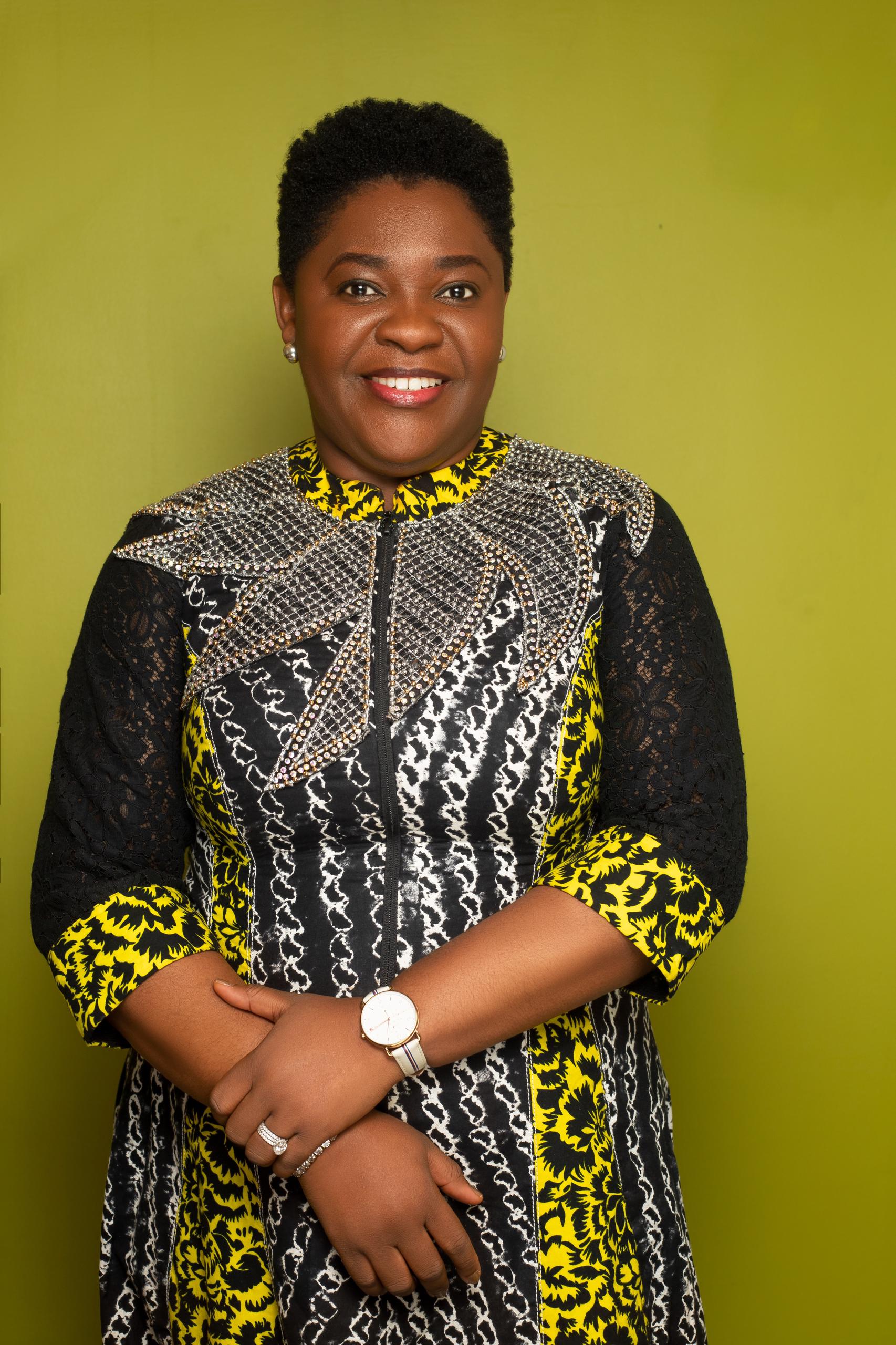
Honestly, no. I didn’t always know I would be an entrepreneur. But I think the signs were always there. I’ve always had this inner drive to build, to fix, to create something where there was nothing. Even as a young girl, I was constantly thinking of better ways to do things, always asking “what if?” or “why not?”
What truly prepared me for entrepreneurship was life itself. The combination of experiences, exposures, and even failures. My early career experiences taught me structure, discipline, and problem-solving. But it was stepping out of my comfort zone, starting that first venture, taking risks, hearing “no” and pushing forward anyway, that really laid the foundation.
Also, growing up in an African environment where resourcefulness was a way of life shaped me. You learn to be creative, to stretch possibilities, and to turn limitations into innovation. That mindset has served me well in business.
And of course, mentorship and faith. Having virtual people who challenged me to dream bigger, and having a strong belief in something greater than myself, those have been anchors. They have kept me grounded, especially in moments where giving up seemed easier than pressing on.
So while I didn’t always see this exact path coming, I believe every step I took, the wins, the detours, the difficult decisions were preparing me to become the entrepreneur I am today.
Lets talk about your latest venture – The Bloom Academy For AI, or BAFAI as its most popularly known. What is the idea behind it?
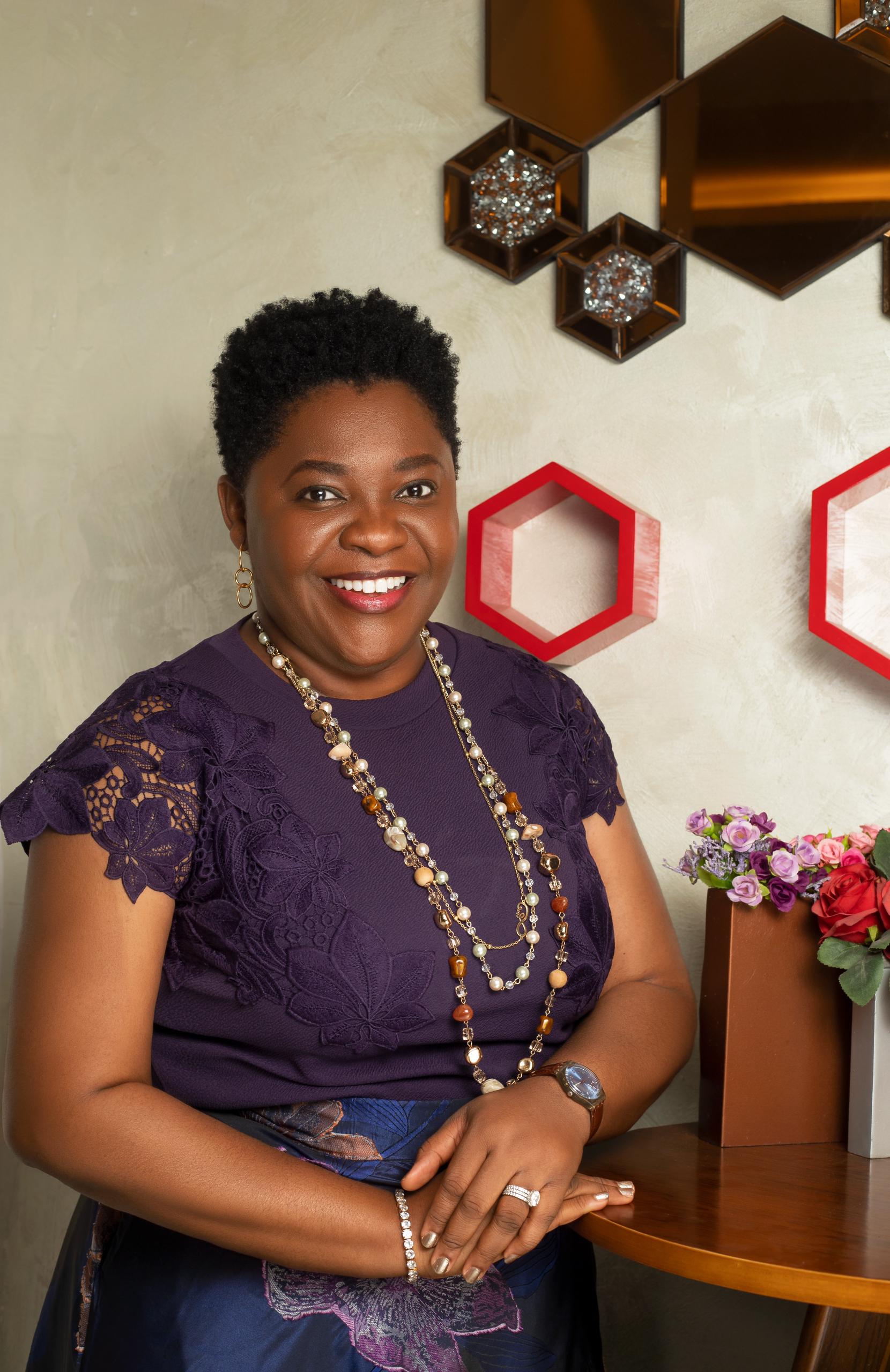
Yes indeed! BAFAI is a deeply personal and purpose-driven vision to me.
The idea behind The Bloom Academy for Artificial Intelligence (BAFAI) was born out of a very clear gap I kept seeing over and over again – brilliant, ambitious people across Africa and other developing nations and continents not participating enough in the AI revolution simply because they lacked affordable, useful and applicable knowledge access, adequate exposure, or a technical background. That concerned me profoundly.
AI is changing everything from how we work, to how we live, to how we solve the world’s most complex problems. But when you look around, the opportunities to learn and apply AI are still locked behind high costs, intimidating jargon, or limited to people in tech-heavy fields. That’s where BAFAI comes in.
BAFAI was created to democratise AI education, to make it simple, affordable, and applicable enough to empower our learners professionally. BAFAI is for everyone who is not just a spectator, but who strongly desires to participate and partake in the transformative realities of AI, a phenomenon that has come to challenge the status quo. While safety and governance remain very crucial topics around AI, we cannot ignore the threats and opportunities it has also brought, and how we need to position ourselves to also make a great change in the world of AI.
The academy is designed to meet people where they are. We offer Track 1 which is free, and beginner-friendly, and Track 2 (intermediate) for deeper, career-focused learning. Everything is self-paced, practical, and designed with real-world cases. We are not just teaching people about AI – we are preparing them to think with it, work with it, and grow with it.
At its core, BAFAI is about bridging the gap between talent and opportunity, and giving people, especially from developing nations, the tools to “bloom” in the age of AI.
Awesome! why AI though? what is it about AI that makes it an extremely important field to partake in?
Great question and one I love answering because the “why AI” for me is both practical and personal.
AI isn’t just another tech trend, it’s a foundational shift in how the world operates. From healthcare to finance, education to agriculture, and many many more, AI is transforming every industry and faster than most people realize. It’s not just shaping the future, it’s rewriting the present.
But what makes AI particularly important for me and for BAFAI is that it represents both a risk and a chance: a risk, because millions of people may be left behind if they don’t understand how it works or how to use it; and a chance, because in an unprecedented way, access to knowledge can level the global playing field in a very real way.
AI is not just for coders. It’s for decision-makers, creators, business leaders, and everyday people who want to stay relevant, build smarter, and solve problems in better, much more profitable ways.
More than anything, I believe AI has the potential to help us reimagine progress especially in developing countries. We can use it to tackle challenges much more faster, create jobs, empower young people, and close long-standing gaps in education, healthcare, and opportunity.
So “why AI?”
Because if we don’t shape it, we risk being shaped by it.
And at BAFAI, we want to make sure people are not only ready, they’re in control, they’re building, and they’re thriving.
Do you think Africa is ready for AI? Both on the consumer side, and the policy/governance side?
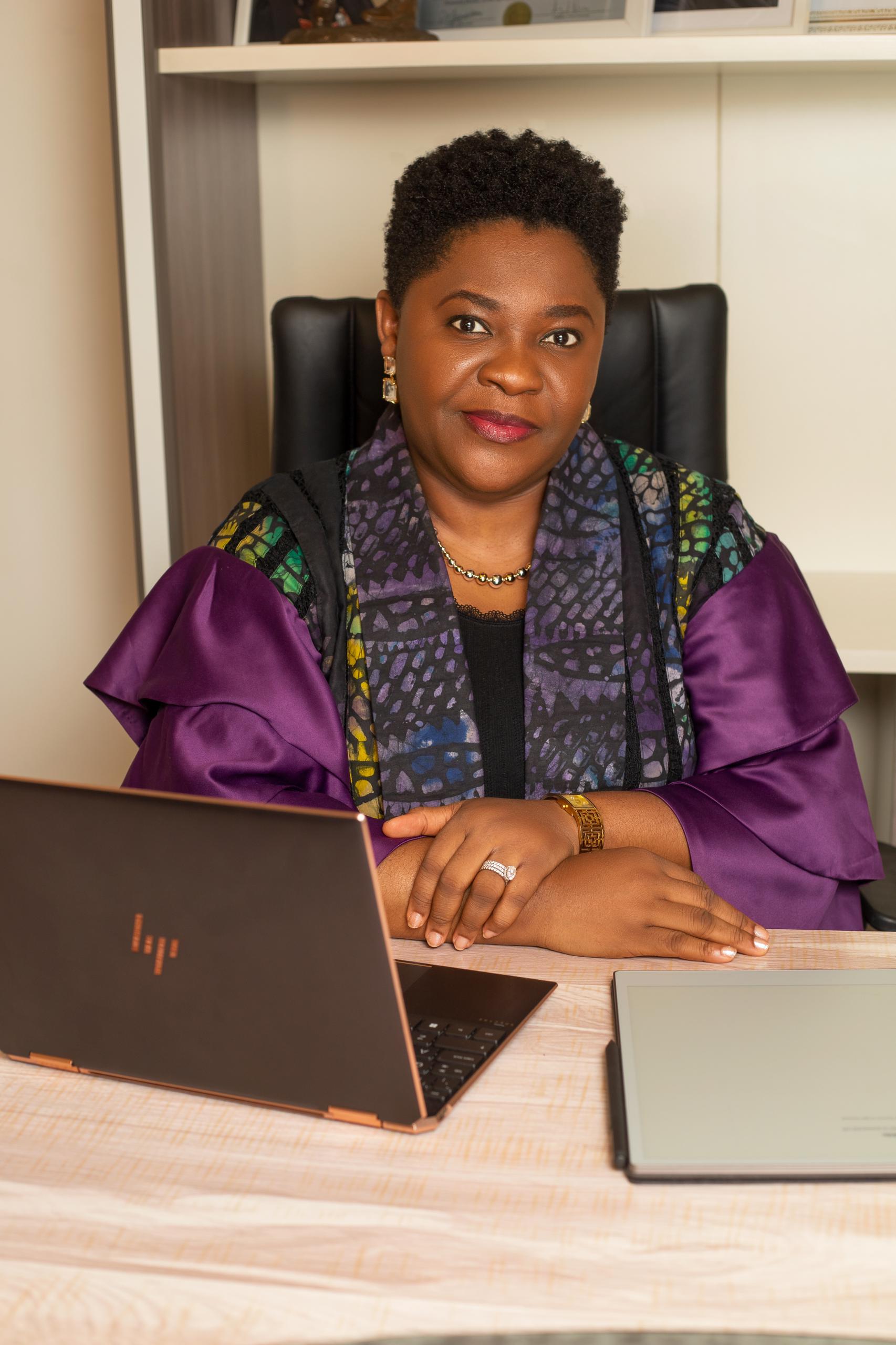
That’s a powerful question and the honest answer is: Africa cannot afford not to be ready for AI.
On the consumer side, yes. We’re more ready than we often give ourselves credit for. African youth are tech-savvy, creative, and already adapting AI tools in their everyday lives. The hunger to learn is there. What has been missing is access, guidance, and platforms designed with our context in mind and that’s part of what BAFAI is working to change.
On the policy and governance side, we still have a long way to go. Many countries are still playing catch-up in terms of digital infrastructure, data governance, and AI strategies. But the potential is there, and I believe this is the critical window for African leaders to step up not just as consumers of foreign AI solutions, but as shapers of local AI innovation that reflects our values, languages, and realities.
We need more investment in education, stronger collaboration between government and tech ecosystems, and more women and underrepresented groups in decision-making rooms. The good news is, we’re seeing movement slowly, but surely.
So while the ecosystem isn’t perfect, the momentum is undeniable. The real question isn’t if Africa is ready, it’s whether we’ll seize this moment to lead, rather than follow. And that’s exactly what we at BAFAI are doing..
You’re a faith-based entrepreneur – how does that shape how you show up in the world of business?
Absolutely. My faith is the foundation of everything I do. It shapes not just how I run my businesses, but how I see people, how I handle challenges, and how I define success.
Being a faith-based entrepreneur means I lead with purpose over profit. Don’t get me wrong, revenue and growth are important, but for me, business is first a platform for impact, service, and obedience to the beckon of purpose. I believe I’ve been entrusted with resources that are meant to solve real problems and lift others up, not just build my own name.
Faith also grounds me in seasons of uncertainty. Entrepreneurship comes with highs and lows, and my relationship with God reminds me that I’m never building alone. That trust gives me clarity in decision-making, humility in leadership, and peace even when outcomes are out of my control.
It also influences how I treat people, clients, team members, partners. I aim to show up with integrity, compassion, and accountability. I truly believe that how we do business is ministry. It’s where our values are tested and where we get to reflect light in spaces that need it.
So yes, faith is my compass. It’s what keeps me building with heart, leading with vision, and staying anchored in a world that often rewards shortcuts. For me, success is obedience, building what I’ve been called to build, and doing it in a way that honors God and impacts lives.
What is your advice for young women and girls who are considering becoming entrepreneurs?
My advice to young women and girls is this: you are more capable than you think, and the world needs what you carry. Don’t wait for the “perfect” time, the perfect capital, or the perfect confidence. Start with what you have, where you are, and grow from there.
Entrepreneurship isn’t about having it all figured out. It’s about showing up with courage, learning as you go, and refusing to let fear or society define your limits. You may not have a blueprint, but you can be the blueprint especially for other girls watching you silently and thinking, “maybe I can too.”
Surround yourself with people who challenge you, support you, and remind you of your ‘why.’ And don’t be afraid to fail. Failure isn’t the opposite of success. It’s often the doorway to it. Every mistake will teach you something valuable. The real loss is in not trying.
Also, don’t be afraid to lead differently. Bring your empathy, your intuition, your faith whatever makes you you. That’s your superpower. You don’t have to become someone else to build something great.
And finally, build for impact, not just income. When purpose drives your work, resilience becomes easier, and your success becomes deeper.
You belong in every room. And if the room doesn’t exist yet, build it!