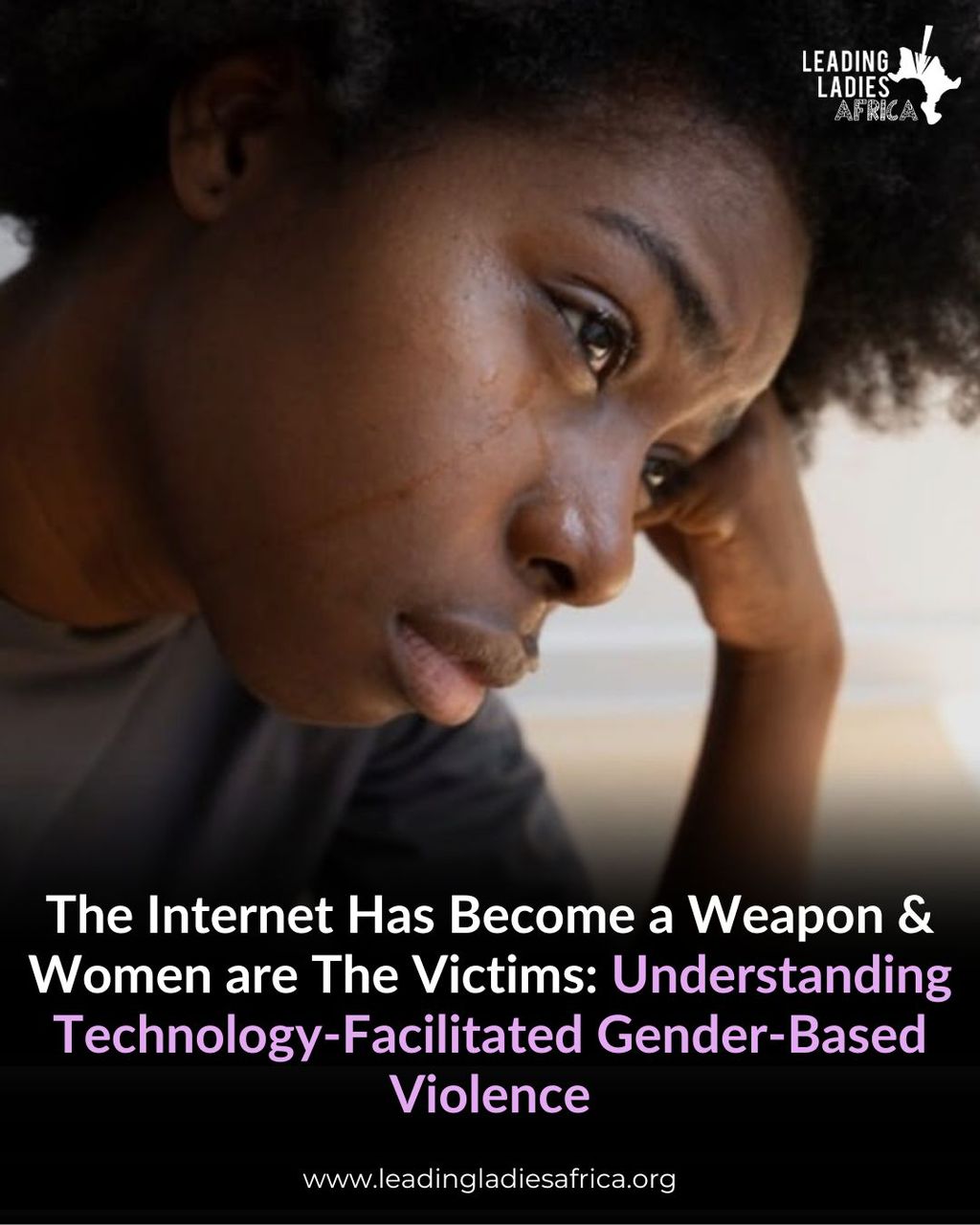
Modupe was 16 when she first joined Facebook. Like many teenagers, she was curious, excited, and open to connection. When someone reached out, she didn’t think much of it. They spoke every day. He asked questions, she answered. It felt like friendship, maybe even trust. Then came the request. A photo. Then another, more intimate one. She hesitated, but he reassured her. It was just between them. Weeks later, that same photo was everywhere. Her classmates had seen it. Her community had seen it. Her family had seen it. What was once private had become public. What was once trust had turned into betrayal and when Modupe did what we always tell survivors to do, when she went to the police, she was laughed at.
Modupe’s story is not an isolated one. It is part of a growing, often misunderstood crisis known as technology-facilitated gender-based violence (TFGBV), a form of violence that happens through our phones, our apps, and the very platforms we use every day. But to truly understand TFGBV, we need to go beyond the term. We need to understand the forms it takes and the real women living through them.
When Messages Become Weapons: Online Harassment
It often starts subtly. A comment. A message. A joke that goes too far but online harassment is rarely just one message. It is repeated, targeted, and intentional. It is designed to wear someone down, to make them feel unsafe in spaces they once enjoyed. Kenyan content creator Azziad Nasenya knows this reality too well. As her popularity grew, so did the attacks. Her posts became magnets for sexualised comments. Fake accounts began using her name and photos. Rumours spread easily, quickly, and without consequence. What looked like “banter” to some became a constant stream of digital violence to her. Online harassment is not just about words, it’s about power
When Watching Turns Into Control: Cyberstalking
There’s a difference between being seen and being watched. Cyberstalking crosses that line. It is the persistent monitoring of someone’s online presence, often creating fear and paranoia. For Phemelo Mashweshwe in South Africa, it started with a fake account. Then another. And another. The accounts used her photos, her bio, even her updates, almost in real time. They followed her friends. They sent messages. Some of those messages included suspicious links that led to hacked accounts. It felt like someone was always watching. Always copying. Always one step behind. Cyberstalking distorts your sense of safety.
When Intimacy Is Weaponized: Image-Based Abuse
Image-based abuse is what happens when private, often intimate images are shared without consent. It is betrayal, amplified by technology. It is what happened to Modupe. What made her story even more devastating wasn’t just the leak, it was the aftermath. The whispers, the comments, the shame placed on her instead of the person who violated her trust. Image-based abuse thrives in silence and stigma. It depends on the world blaming the victim instead of the perpetrator and too often, that’s exactly what happens.
When Reality Is Manipulated: Deepfakes
If image-based abuse uses real images, deepfakes create entirely new ones. Deepfakes are AI-generated or manipulated videos and images that make it appear as though someone said or did something they never did.
Nigerian senator Natasha Akpoti-Uduaghan experienced this when a manipulated video surfaced online, falsely showing her promoting a fraudulent investment scheme. In Tanzania, student leader Alice Robert faced a similar attack when edited images were circulated to discredit her during her campaign. These were calculated attempts to damage credibility, destroy trust, and control public perception. Because in a digital world, seeing is no longer believing, but the damage still feels real.
When Your Identity Is No Longer Yours: Doxxing & Impersonation
What happens when someone takes your identity and uses it against you?
Doxxing exposes your private information, your number, your address, your personal details, often inviting others to harass you. Impersonation takes it a step further, creating fake accounts that look like you, speak like you, and act like you. For Phemelo, impersonation was dangerous. Her friends couldn’t tell what was real anymore. Trust broke down. Fear took its place because when your identity is no longer yours, neither is your safety.
When Desire Becomes Violence: Sexual Harassment & Sextortion
Not all digital violence is subtle. Some of it is explicit, aggressive, and immediate. Unsolicited sexual messages. Explicit images. Threats. For Rhassila Mainassara in Niger, it started with a simple message, “hello.” Moments later, it escalated into something degrading and violating. She froze. She deleted the messages. She stayed silent because shame is one of the strongest tools abusers use. Sextortion takes this further, threatening to release intimate content unless demands are met. It turns fear into control.
When Words Cut Deep: Hate Speech, Defamation & Online Mobbing
Sometimes, violence doesn’t look like threats. It looks like comments but when those comments are coordinated, targeted, and gendered, they become something more dangerous. When Kenyan senator Gloria Orwoba wore stained clothing to protest period poverty, the internet responded with ridicule instead of reflection. She was called “disgusting.” “Attention-seeking.” “Mad.”
What should have been a conversation about menstrual equity became an opportunity for public shaming. Similarly, media personality Annitah Raey faced waves of cruelty after sharing her health condition. Online mobbing—when groups collectively attack an individual, amplifies harm. Because it’s not just one voice. It’s thousands.
The Pattern We Don’t Talk About Enough
Across all these stories, one thing is clear: Women are not being attacked for what they do. They are being attacked for existing, boldly, visibly, unapologetically, online. TFGBV is not random. It is systemic. It is rooted in the same gender inequalities that exist offline, now amplified by technology and perhaps most dangerously, it is often normalized. Dismissed as “trolling.” Excused as “banter.” Ignored as “just the internet.” But for the women experiencing it, it is none of those things.
It is real.
Reclaiming Digital Spaces
The internet was meant to be a space for connection, growth, and opportunity but for many women, it has become a space of fear. That doesn’t mean it has to stay that way.
Organizations like Womankind Worldwide, UN Women, UNFPA, Gender Rights in Tech, and Paradigm Initiative are doing critical work to make digital spaces safer. One powerful starting point is the TFGBV Playbook by Womankind Worldwide, a resource designed to help individuals understand, identify, and respond to these forms of violence because awareness is not just information.
It is protection.
Where Do We Go From Here?
Every time we dismiss online abuse, we make space for it to grow.Every time we stay silent, we make it easier for it to continue but every time we learn, speak up, support survivors, and demand accountability, we push back. The internet should not be a place women survive. It should be a place they thrive and that future starts with understanding exactly what we’re up against