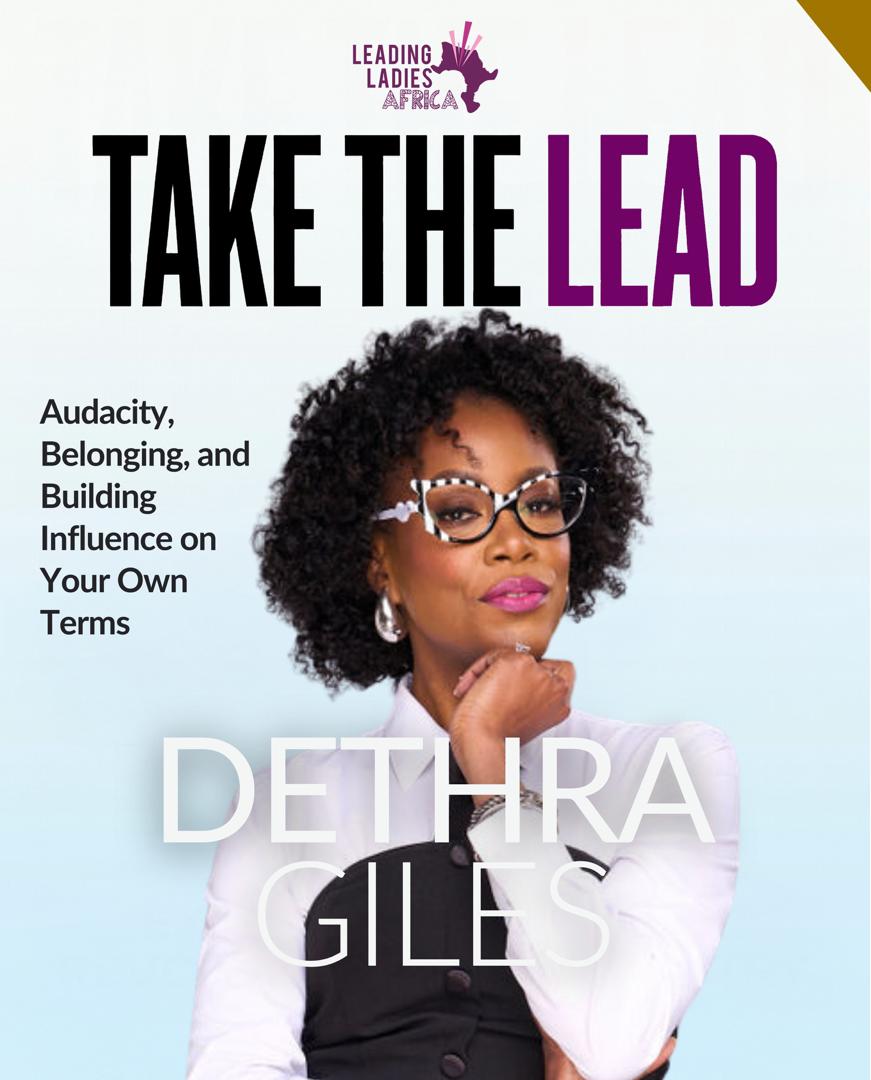
In a world full of confidence coaches, Dethra Giles does something different, she brokers audacity.
As a strategist, culture guardian, and self-proclaimed Audacity Broker, Dethra has spent her career doing what most people avoid; walking into the hardest conversations and showing others how to do the same. Her DARE™ framework has moved through Fortune 500 boardrooms, government halls, and startup war rooms, leaving behind something rare: people who know how to speak with precision when the stakes are highest.
But behind the frameworks and the stages is something more grounded. A wife of 24 years. A mother. A woman who believes joy is strategic, legacy starts at the dinner table, and that confidence without action is wasted.
In this conversation, Dethra gets candid about the quiet deceptions that keep talented women small, what audacity actually looks like on a Monday morning, and why inclusive leadership is an operating system.
This is not a conversation about feeling ready. It is about acting anyway. Read the exclusive conversation with Dethra Giles, The Audacity Broker.
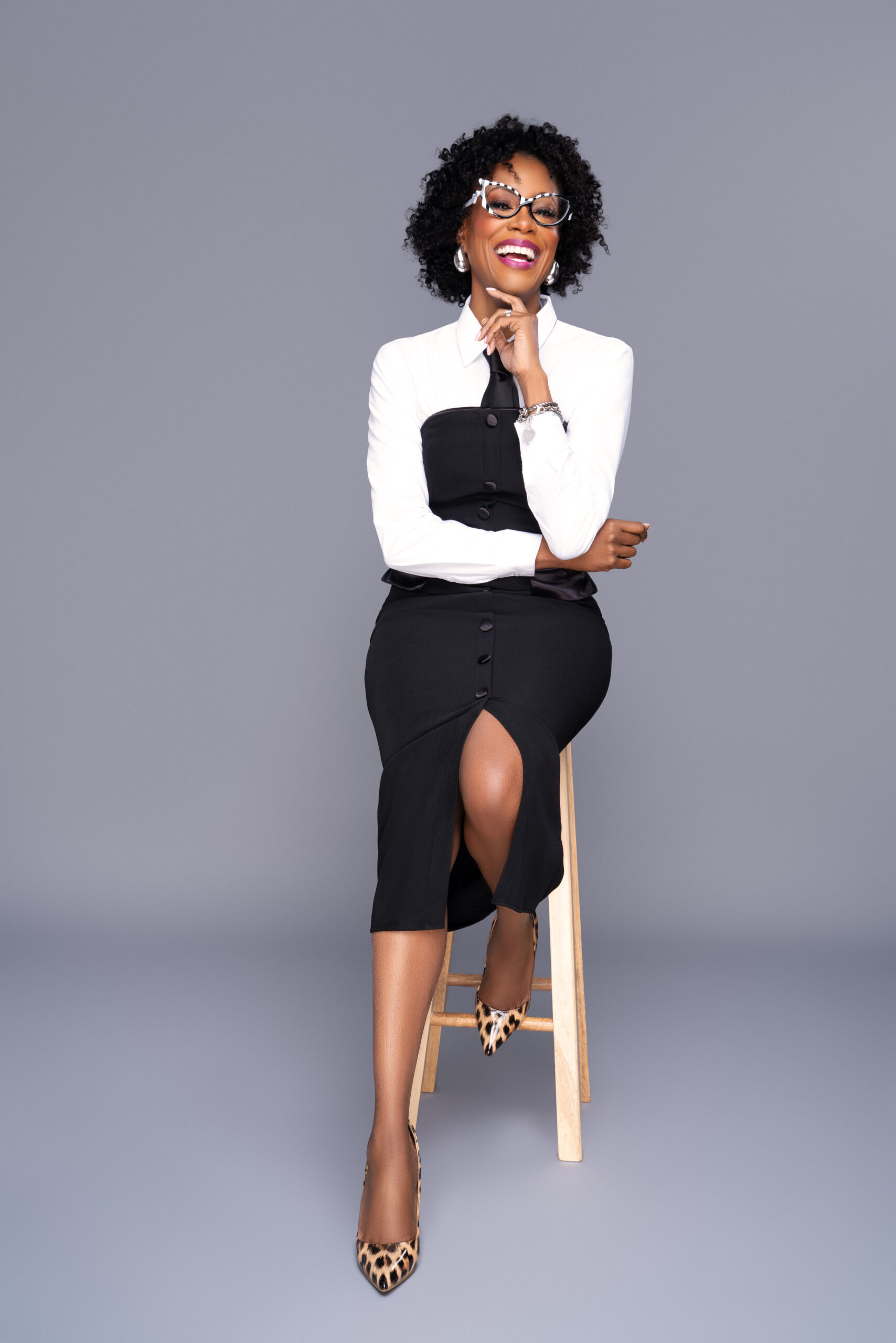
The world knows you by your work but we want to know the woman behind it. How would you describe who Dethra Giles is?
The world may know me for DARE™, for high-stakes conversations, for helping leaders protect culture when pressure rises. But behind the frameworks and stages is something far more grounded.
I am The Audacity Broker. I help powerful people move.
Most professionals do not lack confidence. In fact, research shows people tend to overestimate their ability more than underestimate it. The issue is not belief. The issue is action.
Confidence is internal. Audacity is behavioral. Confidence says, “I think I can.” Audacity says, “I will.”
That philosophy is not just professional. It is personal.
I am a wife of 24 years. A mother of two. A daughter. A friend. The woman who still laughs loudly at dinner, who protects her peace fiercely, who believes joy is not indulgent but strategic.
The discipline of audacity shows up in my home long before it shows up in a boardroom. It is choosing hard conversations in marriage instead of silent resentment. It is modeling courage for my children instead of perfection. It is staying rooted in my faith and values while building businesses that scale.
Who is Dethra Giles? I am a strategist who understands power dynamics. A culture guardian who knows how quickly performance erodes when communication fractures. A woman who believes clarity is currency and hesitation is expensive.
I do not teach people to feel confident. I train them to act when something is at risk. To speak when silence would cost them. To exit when staying would diminish them.
Behind the executive presence is a woman who loves deeply. Behind the authority is someone who has done her own internal work. Behind the global frameworks is someone who knows that legacy starts at the dinner table.
I broker audacity. Because belief without movement is wasted.
You’ve built an entire career around helping people communicate when everything feels like it’s falling apart. What was the moment in your own life when you realized that mastering difficult conversations was your calling?
There wasn’t a lightning strike moment. It was a revelation.
It happened during the first real argument my husband and I ever had while we were dating.
I was raised in a family of vocal warriors. We loved deeply, but we fought loudly. We knew how to raise our voices. We knew how to sharpen our words. We knew how to win.
So when we disagreed, I did what I had always done. I raised my voice.
He looked at me like I had two heads and they were both spinning.
He paused and said, “What are you doing?” I said, “We are arguing.” And he calmly replied, “Not like that. We do not raise our voices at each other.”
I was stunned.
It had never occurred to me that disagreement did not require volume. It had never occurred to me that intensity did not equal effectiveness. I had no tools other than the ones I had watched modeled my entire life.
What fascinated me was this: he had clearly been raised differently. He knew how to disagree without escalating. But he did not know how to teach it. He could demonstrate it, but he could not explain it.
That moment unsettled me in the best way.
I realized something powerful: most of us inherit communication patterns, but very few of us are taught communication skills. We repeat what we saw. We defend what we learned. And we assume our way is the way.
That argument changed the trajectory of my life.
I went on a journey to study conflict, narrative, power dynamics, and what happens in the brain when we feel threatened. I became obsessed with learning how to separate emotion from escalation. How to disagree without destruction. How to protect connection without sacrificing clarity.
What started as personal curiosity became professional calling.
Because I began to see the same thing everywhere. In marriages. In leadership teams. In executive boardrooms. Brilliant people. High stakes. No shared tools.
That first argument taught me something foundational: mastering difficult conversations is not about personality. It is about pattern interruption.
And once you learn how to interrupt the wrong pattern, you can build a better one.
That is when I knew this was not just something I was interested in. It was something I was built to teach.

You coined the term “audacity expert” — a title that feels bold and intentional. What does audacity actually look like for a woman in a Monday morning 9-to-5, sitting in a room full of people who don’t see her power yet?
First, let me lovingly correct “Audacity Expert.” I am The Audacity Broker.
An expert studies audacity. A broker activates it. And that distinction is critical.
Audacity is not noise. It is not arrogance. It is not theatrics. Audacity is disciplined action in moments where hesitation would cost you.
So, what does audacity look like for a woman in a Monday morning 9-to-5, sitting in a room full of people who do not see her power yet?
It looks like preparation that borders on unfair advantage. It looks like speaking once, clearly, instead of five times apologetically. It looks like asking the question everyone else is whispering about but is too politically cautious to raise. It looks like managing up without announcing it. Setting expectations with your leader so they can advocate for you when you are not in the room. It looks like documenting your wins instead of assuming your work speaks for itself. It looks like not shrinking your voice to make other people comfortable with your competence.
And for many women, especially women of color, it looks like navigating the double bind without internalizing it.
You are told to be strong, but not intimidating. Confident, but not aggressive. Assertive, but not angry.
So, audacity becomes precision. It is knowing when to press and when to pause. When to challenge and when to reframe. When to call out behavior and when to strategically outmaneuver it.
Audacity in corporate spaces is rarely dramatic. It is calculated.
It is the woman who volunteers to present the data instead of just building the deck. It is the woman who says, “I would like to be considered for that stretch assignment,” instead of waiting to be discovered. It is the woman who, when interrupted, calmly says, “I’d like to finish my thought.” It is the woman who understands that excellence alone does not guarantee visibility, so she pairs performance with positioning.
Confidence says, “I know I am capable.” Audacity says, “I will make it undeniable.”
Rooms do not automatically recognize power. They recognize signals. Audacity is how you send the signal. Not recklessly. Not emotionally. Not defensively. Strategically.
For a woman in that Monday morning meeting, audacity is not about dominating the room. It is about refusing to disappear in it.
Audacity is how overlooked talent becomes undeniable influence.
You talk about a “quiet deception” that tells people they don’t belong in rooms they’ve earned. How does that deception show up specifically for women in corporate spaces and how can they fight it?
I call it the quiet deception because it rarely screams. It recruits you.
It does not have to say, “You do not belong here.” It makes you do the work for it. It quietly invites you to question your own worth. Your value, your ability to exist in the room you already earned. That is what makes it deceptive. It feels internal, but it is often conditioned.
For women in corporate spaces, especially women who are the only one or one of few, this deception shows up in subtle but persistent ways. It shows up when you over prepare because you assume one mistake will confirm someone’s bias. It shows up when you soften your ideas before presenting them. It shows up when you attribute your success to luck but your mistakes to incompetence. It shows up when you hesitate to negotiate because you do not want to seem difficult. It shows up when you wonder if you were invited to the table for optics instead of impact.
The danger is that sometimes the deception attaches itself to real experiences. An interruption. A dismissive comment. A missed opportunity. A moment where your expertise was ignored until someone else repeated it. So now the doubt feels justified. But evidence is not identity.
This is where the R in my DARE framework becomes critical. Review the narrative you have accepted as fact. Not every uncomfortable moment is proof you are unqualified. Not every closed door is confirmation you are incapable. Not every silence is rejection.
When you do not review the narrative, you inherit it.
The quiet deception thrives in interpretation. It grows when you internalize what was never yours to carry. So, you fight it strategically.
You separate feedback from fact, bias from ability and discomfort from disqualification. You document your wins, you build allies who will say your name in rooms you are not in, you ask directly for the stretch role and you finish your sentences when interrupted.
You stop negotiating with your own value before anyone else has the chance to.
Belonging is not a feeling. It is a decision reinforced by behavior. And the quiet deception only wins when you confuse discomfort with disqualification.
Your DARE™ model has transformed how thousands of professionals navigate conflict and tension. What’s the one mindset shift women in leadership need to make first, before any framework can even work for them?
Before any framework can work, including DARE™, there is one mindset shift women in leadership must make first:
You must believe your voice is critical, not optional.
Many women enter high-stakes conversations seeing their contribution as a “nice to have.” They think they are helpful. Insightful or supportive but not essential.
If you see your input as optional, you will deliver it that way. You will hedge or soften or wait to be invited into the conversation. You will present critical strategic insight as polite suggestions.
Audacity and the DARE™ model do not work from hesitation. They work from clarity and action.
If you believe you are peripheral to the outcome, you will avoid tension. You will not press for precision. You will not challenge faulty assumptions. You will protect perceived harmony instead of protecting results.
But your perspective is not “nice to have” decoration, it is directional.
You don’t need an invitation to speak when you were already invited into the room. And, you were invited into the room because your thinking changes outcomes.
Frameworks don’t create power — they give you the tools to walk in your own power. They require you to own the power and authority you already have and walk in it.
When you know the value you add in any given situation, you show up differently.
You Describe with authority. You Acknowledge without shrinking. You Review narratives without apologizing. You Engage because the outcome requires your clarity.
So have your value decided before you walk in the room.

From your perspective, what does inclusive leadership look like in action, particularly for leaders responsible for shaping team culture and decision-making?
Inclusive leadership is not a value statement. It is not a workshop. It is not a policy. It is an operating system. And this is exactly why we are seeing backlash around DEI right now.
Because much of what organizations called inclusion was never systematized. It was layered on top of existing structures like icing on a cake. It looked good, photographed well and felt sweet in the moment. But when the heat came — economic pressure, political scrutiny, performance demands — that icing melted and what was revealed underneath was the original structure, unchanged.
Icing cannot stabilize a cake. It only decorates it.
When inclusion is not embedded into the operating system, it will always be vulnerable to the climate. True inclusive leadership is systemic. It produces inclusive results whether anyone announces them or not.
Let me give you an example outside of corporate life:
Globally, between 65 percent and 75 percent of adults have some level of lactose intolerance. We have had this data for decades. Yet dairy has historically remained embedded in food guidelines and school lunch systems. Milk is free in many school cafeterias. Water often is not. According to national health data, approximately half of school-aged children in the United States are not adequately hydrated. Yet the system continues to produce milk consumption at scale.
Do you think the person serving lunch decided milk should be free and water should cost a dollar? No. They are operating inside a system that produces its intended outcome regardless of personal belief. That is how systems work — they create predictable results. This is why performative DEI fails. It asks individuals to override a system that was never redesigned.
Truly inclusive leaders do something different. They start with the outcome. They ask: What would equitable advancement look like? What would distributed influence look like? What would fair evaluation actually look like?
Then they design for it.
They standardize how stretch assignments are offered. They formalize sponsorship expectations. They audit promotion data instead of debating anecdotes. They clarify evaluation criteria instead of relying on subjective readiness. And, they codify all of this.
When inclusion is embedded in the operating system, you do not need reminders — you just see inclusive results.
Inclusive leadership is not about convincing people to care more. It is about building structures that produce inclusive outcomes whether they think about it or not. Because systems will always produce what they were designed to produce.
So the real question is not, “Do we value inclusion?” It is, “What is our system designed to reward?”
If inclusion is not designed into the system, the system will design it out — and inclusive leaders make sure it is not designed out.
What do you want every woman reading this to walk away doing differently?
What I want every woman reading this to walk away doing differently is simple, but not easy.
Stop waiting for certainty.
Too many brilliant women are delaying action because they are waiting to feel completely ready, completely validated, completely sure. Meanwhile, rooms are making decisions. Opportunities are being brokered. Influence is being assigned.
If you are already excellent, the answer is not more work. It is more precision.
I want you to decide your value before you walk into the room. Not after someone affirms it. Not after a title confirms it. Before.
When your value is undecided internally, you will negotiate against yourself externally. You will soften your recommendations. You will position your insights as optional. You will interpret tension as rejection instead of engagement.
That has to stop.
Make your ambition visible. Clarify how decisions are made. Identify who actually brokers opportunity inside your organization. Attach your work to enterprise impact, not just task completion. Manage up strategically so your leader can articulate your value when you are not present.
And when conflict shows up, do not retreat from it or weaponize it. Use it. Describe what is happening. Review the narrative you may be accepting as fact. Engage for clarity, not for ego.
Most high-performing women are not struggling because they lack competence. They are struggling because they underestimate how much influence requires intentional positioning.
Excellence earns respect. Influence earns advancement.
So I want every woman reading this to stop confusing exhaustion with effectiveness and silence with strategy. Stop assuming the room will decode your value without assistance.
Your voice is not decorative. It is directional. Your presence is not symbolic. It is strategic.
The world does not change because powerful women think differently. It changes because powerful women act differently.
So walk away from this article with one decision: have your value decided and then act like it.
When it’s all said and done — the stages, the frameworks, the lives changed — what is the legacy you want Dethra Giles to leave behind?
When it is all said and done, I do not want my legacy to be stages or titles or even frameworks with my name attached to them.
I am a wife. I am a mother. I am a daughter. I am a friend. Those roles matter to me more than any spotlight ever could. If my children grow up understanding how to engage conflict with clarity instead of chaos, that is legacy. If my marriage continues to be strengthened by the very principles I teach, that is legacy.
But beyond my home, I want something bigger than my name.
I do not care if people remember Dethra Giles.
I care that the way people engage one another changes.
If the United Nations were to use DARE to navigate an international dispute and no one ever mentioned me, that would be enough. If companies embed conversational competence into their cultures so thoroughly that conflict becomes productive instead of destructive, that would be enough. If families start describing instead of accusing. If leaders start reviewing their narratives before reacting. If people begin treating one another just a little bit nicer because they understand how to hold tension without harm, that would be enough.
I want my legacy to be systemic, not symbolic.
I want it embedded in how people think before they speak. In how they listen before they respond. In how they choose resolution over ego.
One conversation at a time.
We change how we engage, and engagement changes outcomes. Outcomes change cultures. Cultures shape nations.
That is the ripple I care about. Not applause. Not recognition. Impact.
If, one by one, people learn to engage with more clarity, more discipline, and just a little more kindness, the world becomes more livable.
And if that shift happens, whether my name is attached to it or not, the legacy will have done its work.