There’s a moment most women remember with perfect clarity: the moment someone believed in them before they had anything to show for it. Maybe it was the mentor who answered an email from a stranger because something in the message felt urgent. Maybe it was the woman who made a phone call on your behalf when you didn’t even know the door existed. Maybe it was the person who looked you in the eye during your worst moment of doubt and said, “You’re not quitting. Not on my watch.”
International Women’s Day 2026 asks us to “Give to Gain,” and while the theme sounds polished and official, the women in this story have been living it long before it became a hashtag. They know that mentorship isn’t a neat transaction where advice flows one way and gratitude flows back. It’s messier than that, more human than that. It’s late-night voice notes and honest feedback that stings before it helps. It’s introductions that feel small in the moment but change entire trajectories. It’s one woman deciding another woman’s future is worth her time, her access, her truth.
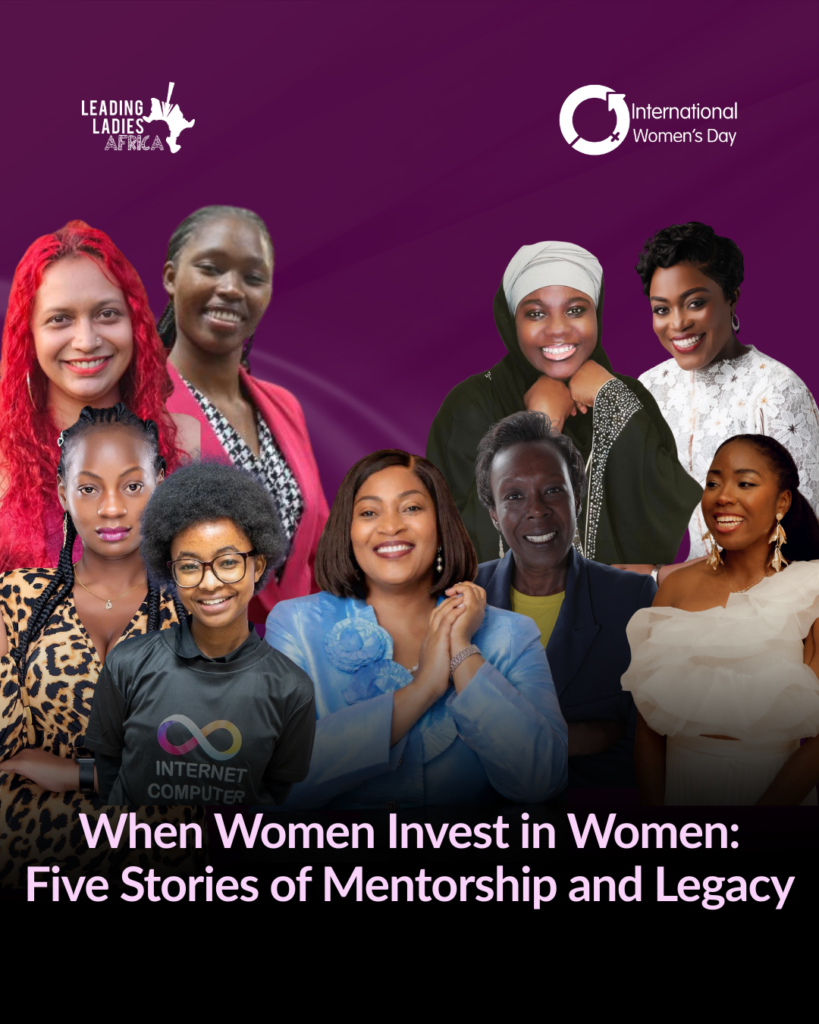
This March, we asked women across Africa to nominate the mentors who changed their lives. We expected stories. We got revelations. Hundreds of women wrote to us about the moments that shifted everything, the conversations that stayed with them for years, the investments that compounded in ways no one predicted, the belief that arrived exactly when it was needed most. The mentor-mentee pairs you’re about to meet show what happens when women refuse to gate-keep, when they choose to open doors instead of closing them behind themselves, when they understand that their own success means nothing if no one else gets to rise too.
This is what Give to Gain looks like when it’s real.
Dr. Azeezat Fajembola, Global Disaster Management Specialist, New York & Dr. Adaeze Oreh, Consultant Family Physician & Former Commissioner for Health, Rivers State
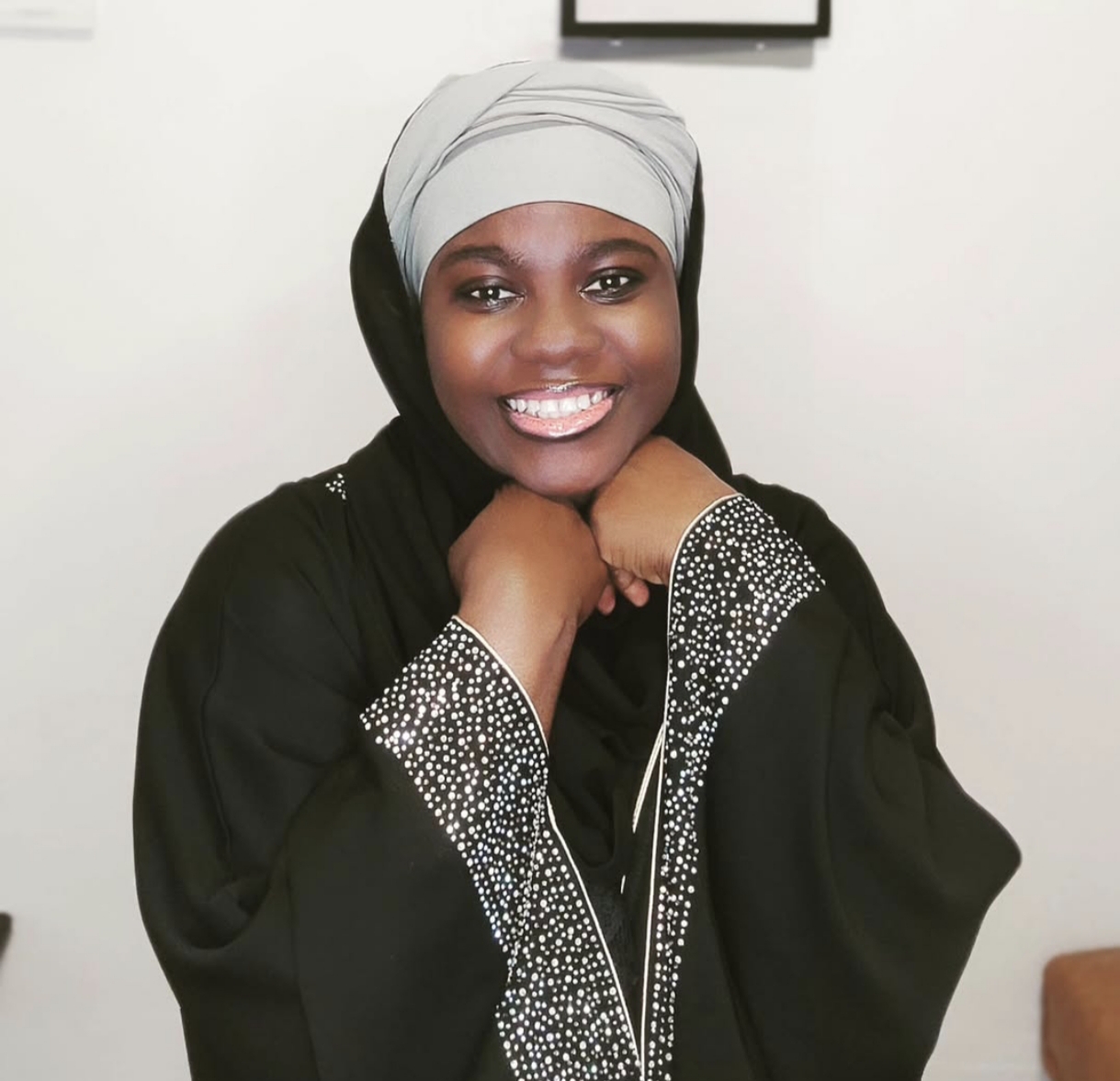
Her Story
Dr. Azeezat Fajembola describes Dr. Ada as someone who shows up exactly when needed, often without being asked. “There are many occasions like that,” she says. “There was a time I was like, does she know what’s happening in my life? I am a private person, but sometimes she just sends random messages with prayers and it’s the exact words I needed. It shocks me every single time.”
The messages often came with a refrain Dr. Azeezat still carries: “She tells me ‘You’re a shining bright star,’ or ‘keep shining.’ Many people find me intimidating, so these are words I rarely hear. It means a lot to me to find positive reinforcement in a world that wants me to dim my light.”
But there was one moment when Dr. Ada’s support went beyond encouragement, it shaped how Dr. Azeezat approaches advocacy entirely. It happened at her first event at the United Nations in New York.
“From the ID office, I was met with disdain because I was carrying a baby,” Dr. Azeezat recalls. “I remember the receptionist saying, ‘Why not drop the child at daycare?’ From her countenance you could just tell she never birthed a child. At the United Nations main gates, I was stopped and entrance was refused despite my pass.”
Dr. Azeezat wasn’t just frustrated about being denied entry. “I was frustrated not because I was denied entrance, but because I had faced similar scenarios as a professional during that period that the world made me feel it was a sin to be a wife and mother, and yet be ambitious.”
She reported the incident to the organization she was representing, and they formed a communication group to resolve it. But when they asked if she was comfortable filing a formal case against the security team, Dr. Azeezat hesitated. “I was scared. I was a new resident in New York and I was already ruffling feathers.”
So she called Dr. Ada.
“She encouraged me and emphasized it was not just for me, but for every mother who would like to access the institution in future,” Dr. Azeezat says. “If it was not for Dr. Ada, I would have closed that case and never stepped at the United Nations Headquarters again, because I am a very peaceful person. Anything that might make people receive queries or lose their jobs, as long as lives are not lost, I rarely indulge in it.”
When asked how Dr. Ada has changed the way she shows up for other women, Dr. Azeezat’s answer is clear: “Positively, significantly, differently. Those are the words I can use to describe the change her presence has made on my relationship with other women.”
She points to something deeper than professional guidance. “We are very similar yet different, and some of those differences are that she’s Igbo and a Christian. I am from Nigeria, a country where tribal and religious wars are norms. It’s easy for her to say, ‘I want my legacy to only be for the Christian folk, or Igbo tribesmen,’ but she isn’t soaked in religionism or tribalism. I show up for other women kindly, without any discrimination, because of what I am exposed to while also not abandoning myself. I learnt that from her.”
When asked what “Give to Gain” means in the context of Dr. Ada, Dr. Azeezat says: “An icon that cannot be deceived to gain nor forced to give. Giving to her is natural. When she’s not giving to me, she’s giving to others. Some people give to win cheap societal points, but not her. You can see her pathway of giving and know this is giving rooted in genuineness.”
“She has given me beyond being a mentor, that is a responsibility which is a privilege to me, no one owes a mentee that,” Dr. Azeezat adds. “In sum, her face reminds me of intentional kindness.”
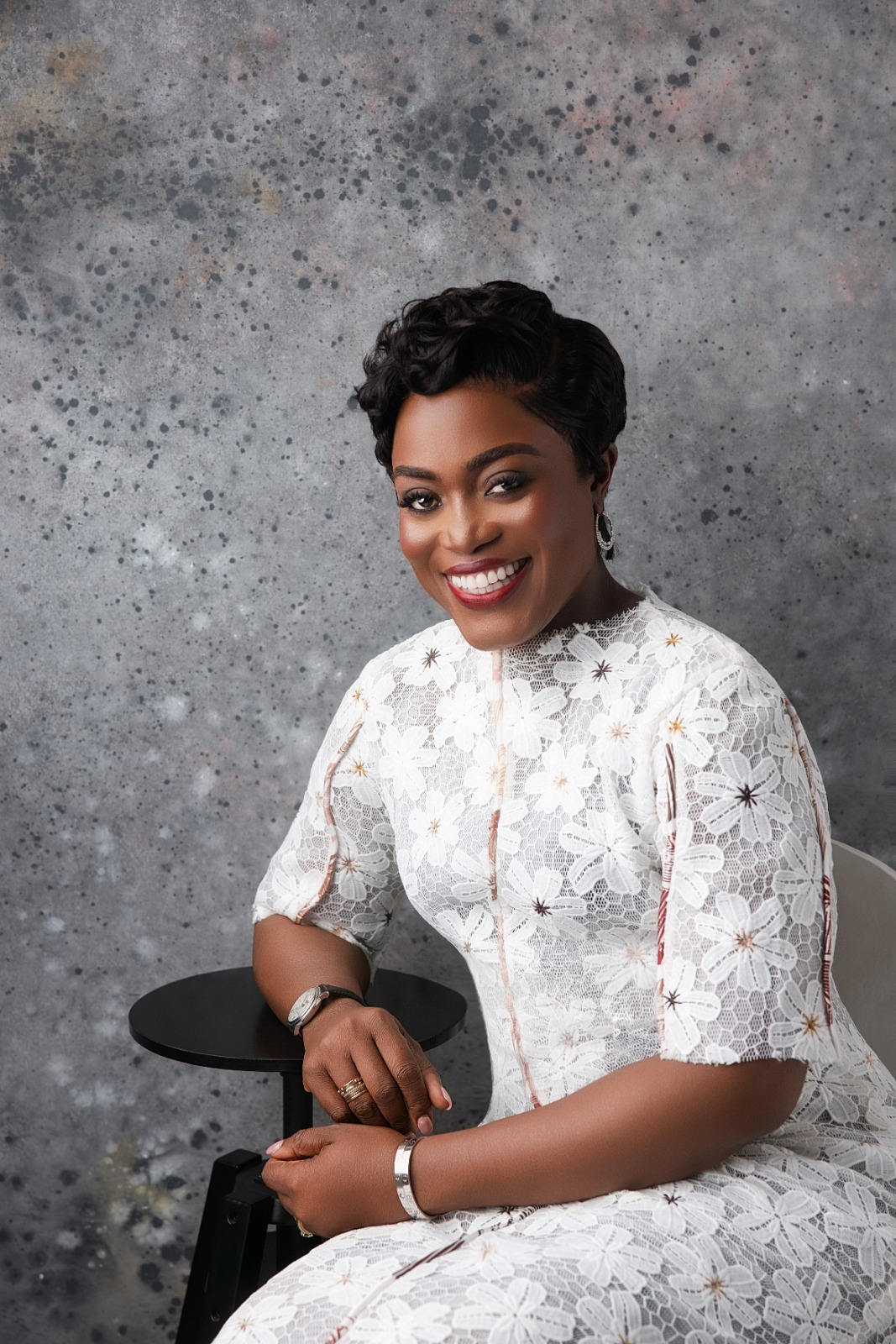
What She Gave
Dr. Adaeze Oreh’s approach to mentorship is rooted in a belief she’s held for years. “For the longest time, I have believed that experience is the best teacher, but it does not necessarily need to be one’s personal experience,” she explains. “Mentoring for me is a way to share one’s lived experiences — in career, academics, or just life itself — with someone else who is also navigating life. By supporting other women through mentoring, we can help them build an arsenal of resources that can help them navigate the often murky terrains of various spheres — work, school, community, society, family, and even friendships.”
When asked what “Give to Gain” means to her personally, Dr. Ada references a quote: “There’s a quote I love from writer and artist Mary Anne Radmacher: ‘As we work to create light for others, we naturally light our own way.'” She continues: “The theme ‘Give to Gain’ illustrates the reciprocity of giving. Often, we look at giving from the lens of losing something as we give out. However, by giving of ourselves and our gifts in keeping with this theme, we stand to reap enormously from that interaction.”
Mentoring has shaped Dr. Ada as much as it has shaped her mentees. “Mentoring others has greatly enriched my life, broadened my horizons on life, and allowed me to deepen my approach to situations from trans-generational perspectives, and made me personally invested in the success and growth of many different women across the world who are doing truly amazing things.”
When asked what goes through her mind when she sees her mentees winning now, Dr. Ada’s answer is immediate: “It is the most heartwarming feeling seeing my mentees winning. Watching from the sidelines and cheering them on as they stretch themselves and do the work needed to get them to where they need to be. Seeing them smash barriers, own stages, earn fiercely competitive scholarships and fellowships, grow from where they were just one year before, or even just two weeks before, all while juggling relationships, homes, families and other responsibilities, and still managing to look great. Simply inspiring!”
Christine Alfons, Founder & Executive Director, Safe Engage Foundation, Kenya & Nandini Tanya Lallmon, Research Scholar & UN Religion Fellow, Malta
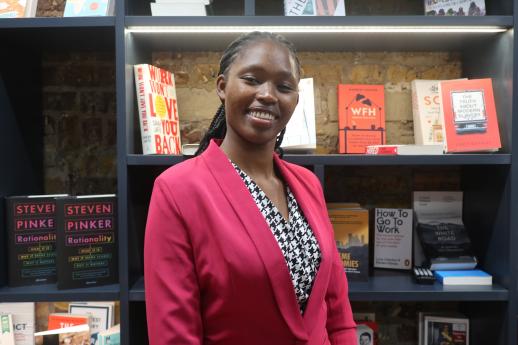
Her Story
Christine Alfons was leading Safe Engage Foundation with passion, but she was also navigating uncertainty. “At a time when I was leading Safe Engage Foundation with passion but navigating uncertainty, she saw beyond the visible work,” Christine says of Tanya. “She saw the weight I carried, the potential I had not fully stepped into, and the leader I was becoming.”
What Tanya gave wasn’t just advice. “More than advice, she gave me clarity by helping me sharpen my vision, refine my strategy, and expand my thinking from grassroots impact to systems-level change,” Christine explains. “She challenged me to think bigger than programs and to focus on legacy. She pushed me to position youth leadership not as a supporting voice, but as a driving force in shaping policy and national conversations.”
The mentorship shifted how Christine saw herself and her work. “Through her mentorship, I learned how to translate lived experience into influence and how to sit confidently in rooms where decisions are made,” she says. “Because of her guidance, I began to see myself not only as a community activist, but as a continental leader. That shift changed my path. It strengthened my courage to pursue spaces like the Obama Foundation Africa Leaders Program, to engage more boldly in policy advocacy, and to build Safe Engage Foundation with long-term sustainability and strategic depth.”
Tanya guided her privately and also championed publicly. “She did not just encourage me privately; she championed me publicly,” Christine says. “She nominated me for the World of Difference Award by The International Alliance for Women, and in 2021 I was recognized as a recipient. That moment was more than an award. It was validation that our grassroots work in Kenya mattered globally.”
Christine is clear about what that validation meant: “She didn’t just guide my work, she transformed how I see myself.”
When asked to describe what Tanya gave her, Christine lists specifics: “She gave her time when she did not have to. She shared her networks without hesitation. She opened doors quietly and stood behind me publicly. She offered honest feedback, not flattery. She invested in my growth with no expectation of recognition.”
“And because she gave, I gained confidence, strategy, perspective, and courage,” Christine says.
The story doesn’t end there. “What I have gained, I now give forward,” Christine explains. “I pour into the young women and girls we serve at Safe Engage Foundation. I mentor emerging youth leaders in Kenya who are challenging harmful practices like female genital mutilation and child marriage. I create safe spaces because someone first created one for me.”
“Her giving multiplied. It did not stop with me,” Christine says. “‘Give to Gain’ is not transactional in our story, it is transformational. She gave to me, I gained strength, and that strength now reaches hundreds of women and girls each year. That is the ripple effect of mentorship and that is the legacy she continues to build through every woman she chooses to believe in. Her giving did not end with me, but it multiplied through me. That is the true meaning of ‘Give to Gain.'”
What She Gave
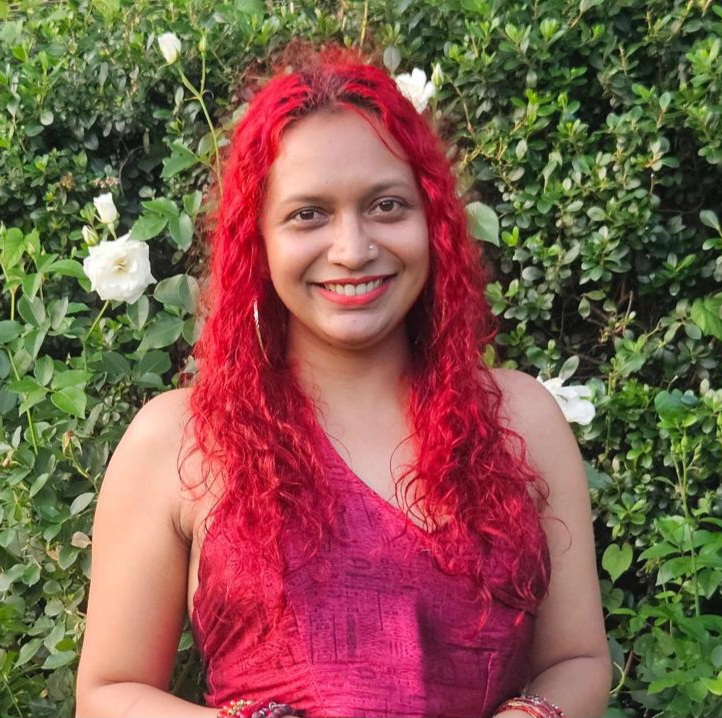
Tanya Lallmon’s investment in mentoring is rooted in lived experience. “I invest in mentoring other women because I know what it means to navigate systems that were not designed for you, and to rise in spite of that,” she says. “Throughout my professional journey, I have had to build pathways where none existed. I understand how isolating leadership can feel, especially when you are young, when you are challenging power, or when your work confronts deeply rooted social norms.”
When she mentors women like Christine, Tanya sees it as more than personal support. “When I mentor women like Christine Alfons, I am investing in structural change. I am investing in leaders who are transforming communities, influencing policy, and protecting the rights of women and girls through organizations like Safe Engage Foundation.”
“Mentorship, for me, is simply an extension of solidarity,” Tanya explains. “When I see a woman carrying a heavy vision, like Christine, building safe spaces through Safe Engage Foundation, I do not ask if I can support her, but how I can support her. I invest in mentoring other women because I know how powerful it is when someone truly sees you before the world does.”
When asked what “Give to Gain” means to her personally, Tanya’s answer centers on multiplication, not extraction. “‘Give to Gain’ means understanding that impact expands when power is shared,” she says. “It means sharing knowledge, access, opportunity, strategy, lessons from failure, policy insight, and global connections without gatekeeping. It means celebrating another woman’s rise as deeply as your own.”
She points to a specific example: “When I nominated my mentee, Christine Alfons, for the World of Difference Award by The International Alliance for Women, I did it because I believed her work deserved global recognition. When she won the trophy, the gain extended beyond the personal realm, it was collective. Her visibility meant more protection for girls, more credibility for her advocacy, more doors opening for her community. When her work scales, when laws shift, when girls are safer, we all gain.”
“‘Give to Gain’ is not about return on investment. It is about ripple effects,” Tanya says. “When you give sincerely, be it time, networks, wisdom, or encouragement, the gain shows up in transformed lives, stronger movements, and women who stand taller because someone once stood behind them.”
Mentoring has changed Tanya as much as it’s changed her mentees. “Watching my mentee navigate different political, cultural, and social landscapes, like Christine’s work confronting FGM and child marriage in Kenya, reminds me that leadership is contextual. I learn from her constantly. Our mentorship is never one-directional, it is reciprocal growth,” she says. “Through mentoring, I have become a better strategist, a more empathetic leader, and a more courageous one.”
She continues: “Mentoring has also humbled me. I learn so much from my mentee by witnessing her courage, her creativity, and her refusal to accept harmful norms as inevitable. Watching Christine build safe spaces for women and girls through the Safe Engage Foundation reminds me why I started this work in the first place. It keeps my purpose alive. It has made me more intentional about how I show up.”
“It has also healed parts of me,” Tanya adds. “There is something powerful about supporting another woman at a stage you once stood in, uncertain, ambitious, hopeful. In guiding her, I often see my younger self and in affirming her, I affirm who I once was. Mentorship has made me more conscious, more courageous, and more committed to legacy over ego.”
When asked what goes through her mind when she sees Christine winning now, Tanya says: “Pride, but also possibility. When I see Christine stepping into global leadership spaces, influencing county policy, or being recognized internationally, I do not think: ‘I helped build that.’ Instead, I think: ‘This is what happens when women believe in women.'”
“And then I look at her now, fully in her power, and I realize she was always meant for this,” Tanya continues. “What goes through my mind is gratitude. Not because I shaped her success, but because I was privileged to witness her growth up close. There is something sacred about seeing a woman you believed in become everything you knew she could be, and more.”
“I think about the girls who will never experience violence because she intervened. I think about the young leaders she now mentors. I think about the ripple effect. And I feel hope,” Tanya says. “Because every time a mentee wins, it is proof that investing in women is not symbolic, it is strategic. It changes communities. It shifts power. It rewrites narratives. Their wins are not the end of the story. They are the beginning of the next generation of leadership.”
Merry Koko, Accountant, Liberia & H.E. Chief Dr. Jewel Howard-Taylor, Vice President of the Republic of Liberia
Her Story
Merry Koko describes what H.E. Chief Dr. Jewel Howard-Taylor gave her in clear terms: “She has provided me with far more than an education through her foundation; she has given me a voice and the confidence to stand independently and believe in my own potential.”
“Through her integrity and resilience, she has instilled in me a renewed sense of hope for the future,” Merry says. “Her strength has guided me with wisdom, empowering me to approach life with a positive and determined mindset.”
But the support went beyond academics. “Beyond academic support, she has been a remarkable mentor, emotionally, spiritually, and intellectually,” Merry explains. “She believed in me even before I fully believed in myself, consistently encouraging me to grow beyond my limitations. Her unwavering focus and discipline have helped me gain clarity about my purpose and direction in life.”
The impact of that mentorship has shaped not just Merry’s present, but her vision for the future. “Because of her influence, I am inspired not only to pursue personal success but also to give back meaningfully to my nation and the world at large,” she says. “She has modeled what true leadership, compassion, and dedication look like, and her example continues to shape the person I am becoming.”
“Her impact on my life is profound and lasting,” Merry says. “I am deeply grateful for her mentorship, guidance, and the opportunities she has provided, all of which have prepared me to move forward with confidence and purpose.”
When asked how her story reflects “Give to Gain,” Merry is specific about the exchange: “My story reflects ‘give and gain’ because it shows how one person’s investment in me created transformation, not just for me, but for the future impact I will have on others.”
“She gave me education, mentorship, confidence, emotional and spiritual guidance, and belief in my potential,” Merry explains. “She gave me opportunities, clarity, and hope. She invested her time, integrity, and resilience into shaping my growth.”
“In return, I gained independence, self-confidence, wisdom, purpose, and a positive mindset,” Merry continues. “I gained the courage to use my voice and the clarity to understand my life’s direction. Most importantly, I gained the desire to give back to my nation and the world.”
“That is the true meaning of ‘give and gain,'” Merry says. “Her generosity did not end with me, it multiplied through me. What she gave produced growth, empowerment, and a commitment in me to serve others. My story shows that when someone gives intentionally, the gain goes beyond personal success; it creates a cycle of impact, leadership, and transformation that continues from one generation to another.”
What She Gave
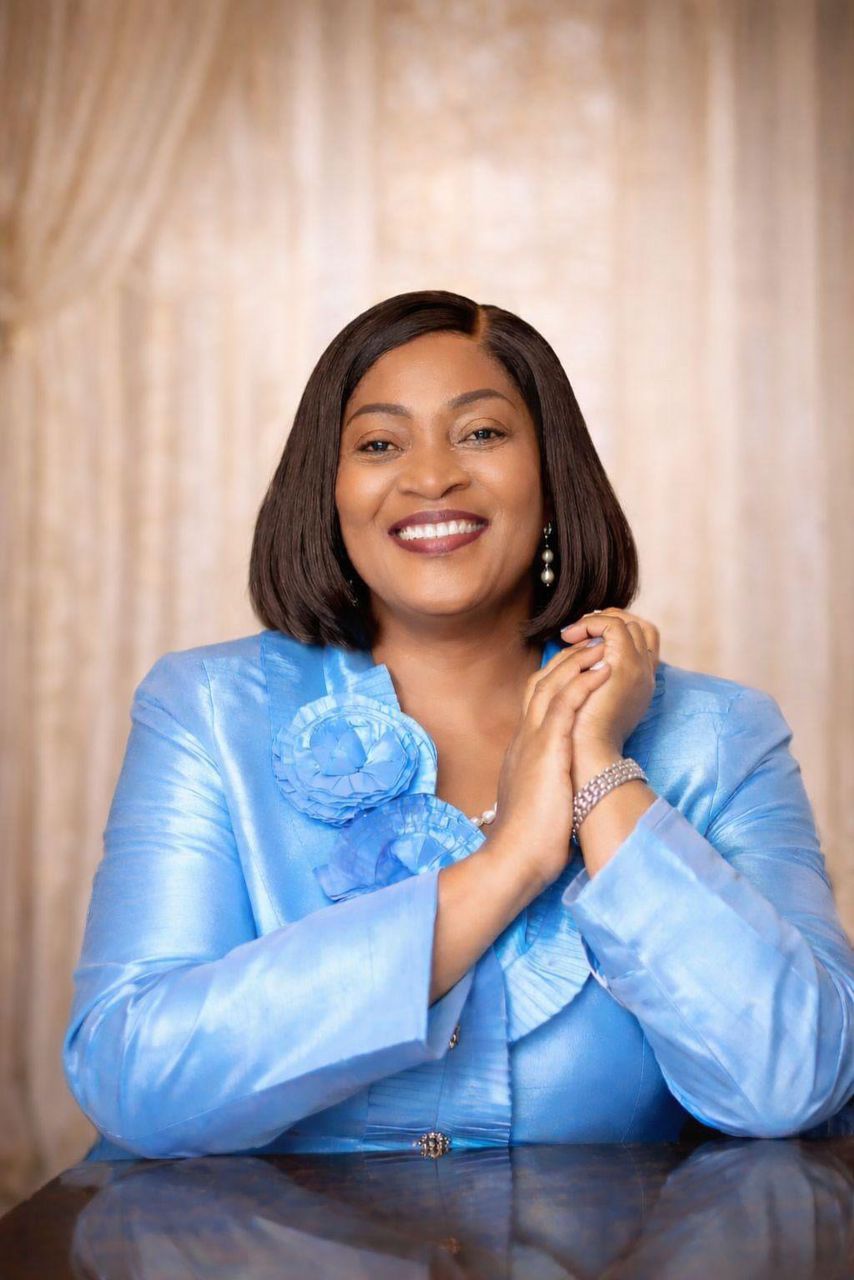
H.E. Chief Dr. Jewel Howard-Taylor’s commitment to mentoring is rooted in her lived experience as Liberia’s first female Vice President. “As the first female Vice President of the Republic of Liberia, my life’s journey has required me to enter rooms where women were historically absent and to lead in spaces not originally structured for our voices,” she says. “Having walked that path, I feel a profound responsibility not merely to succeed personally, but to ensure that others are prepared, positioned, and confident enough to walk through those doors, and build new ones.”
“I invest in mentoring women because I recognize that mentorship is not an act of charity; it is an act of nation-building. It is legacy in the making,” she explains. “When a woman is empowered, the impact is exponential. She strengthens families, stabilizes communities, advances institutions, and contributes meaningfully to national development. Empowered women do not rise alone, they elevate ecosystems around them.”
H.E. Chief Dr. Taylor speaks to the power of representation: “During my years of service in both the Legislative and Executive branches of government, I witnessed firsthand how visibility reshapes imagination. When women see other women leading at the highest levels of governance, diplomacy, and policy, it recalibrates what they believe is attainable.”
“I am equally committed to intentional generational transfer,” she continues. “Governance, resilience, diplomacy, faith, and endurance are lessons forged through experience. They must be passed forward deliberately so that progress is sustained and not restarted with every generation.”
She adds: “Moreover, women often shoulder extraordinary responsibilities, within families, institutions, and national structures, frequently without recognition. Mentorship provides space for renewal, strategic growth, and courageous ambition.”
“Ultimately, leadership is stewardship,” H.E. Chief Dr. Taylor says. “It is not measured by tenure in office, but by the lives shaped and the leaders developed. I mentor because I firmly believe Liberia, Africa, and the global community cannot achieve their fullest potential while half of their human capital remains underdeveloped, underrepresented, or underestimated.”
“Every woman empowered strengthens the architecture of leadership,” she concludes. “Every girl mentored dismantles limitations before they are ever constructed.”
When asked what “Give to Gain” means to her personally, H.E. Chief Dr. Taylor says: “‘Give to Gain’ is not simply a principle I advocate, it is a discipline I practice. Throughout my years in public life, I have learned that the most meaningful returns are not derived from accumulation, but from contribution. Every significant advancement in my journey has required sacrifice of time, comfort, personal ambition, and at times, personal peace.”
“Giving is an investment in something greater than oneself,” she explains. “It is my belief that when I share knowledge, I secure someone’s future. When I give someone an opportunity, I am executing God’s instructions to do good to others. When I give encouragement, I cultivate someone’s ability to change their destiny.”
“To me, ‘Give to Gain’ means to sow long before recognition arrives,” she says. “It means prioritizing people over transactions and impact over applause. It is the understanding that true gain is not measured by title or position, but by transformative influence in the lives of those we are called to serve.”
“It also reflects the enduring principle of seed and harvest: what is planted in faith, discipline, and generosity will return, often multiplied, though not always immediately visible,” she adds. “On a deeply personal level, I have come to understand that even adversity can be given; surrendered to divine purpose, entrusted to God, and transformed into strength for others. In that surrender, one gains resilience, clarity, and grace. For me, ‘Give to Gain’ is the quiet law that governs meaningful leadership and sustains enduring legacy.”
Mentoring has changed H.E. Chief Dr. Taylor in profound ways. “Mentoring has refined me in ways that no public office ever could,” she says. “While executive leadership demands decisiveness, firmness, and resilience, mentorship requires a different strength; the strength to listen without agenda, to guide without control, and to believe in someone’s potential even before they fully recognize it themselves.”
“It has deepened my patience. Growth is neither instant nor linear. Walking alongside emerging leaders has taught me to honor process and trust timing,” she explains. “It has truly strengthened my humility. Mentorship is not a one-directional exchange. Often, the mentee’s innovation, courage, and perspective sharpen and expand the mentor’s own worldview.”
“It has brought healing to me and to others,” she continues. “During seasons of personal and national challenge, investing in others gave greater meaning to my own experiences. Shared lessons become pearls of wisdom. Transferred insight ensures sustained continuity.”
“Most importantly, mentoring has refined my definition of leadership,” H.E. Chief Dr. Taylor says. “True leadership is not authority exercised, it is influence multiplied. It is not about being followed; it is about developing leaders who are capable, ethical, and even greater than oneself. Mentorship has shifted my measurement of success. I no longer define success solely by policies shaped or offices held, but by the caliber of leaders rising and sustained beyond my tenure.”
When asked what goes through her mind when she sees her mentees winning, H.E. Chief Dr. Taylor says: “When I witness my mentees leading institutions, shaping policy, building enterprises, and transforming communities, my first response is gratitude to God. I pray continually that I remain aligned with His purpose — to serve, to uplift, and to leave the world better than I found it.”
“Mentorship is often quiet labor,” she explains. “It unfolds in private counsel, in difficult but necessary correction, and in prayers whispered long before public victories are seen. When I observe their success, I am reminded that no sacrifice or sincere investment, especially one entrusted to God, is ever wasted.”
“I also experience profound humility,” she says. “Their achievements are their own. I may have advised, encouraged, or opened doors, but their discipline, integrity, and perseverance are the true engines of their success. Mentorship is not about producing replicas; it is about releasing distinct, confident leaders.”
“Beyond personal pride, I feel reassurance about the future of Liberia and our continent,” she continues. “Each woman who leads ethically, with competence and reverence for God, affirms that the next generation is prepared to carry forward responsible leadership.”
“Above all, I see legacy, not in name recognition, but in continuity,” H.E. Chief Dr. Taylor says. “When those I once mentored become mentors themselves, I know the cycle of empowerment remains intact and expanding.”
“When they win, my thought is never, ‘Look what I accomplished.’ It is, ‘Look what is possible,'” she concludes. “And in that moment, I am reminded that leadership fulfilled is leadership transferred.”
Moumi Awudu, Austrian Law Graduate & Co-Founder, African Law Students’ Organization (ALSO) & Margaret Akullo, Criminologist & Founder, Mindset-to-Output Mentorship Programme
Her Story

Moumi Awudu carries something Margaret Akullo told her everywhere she goes: “One thing Margaret often talks about is ‘mindset to output,'” Moumi says. “The idea that the way we think ultimately shapes the results we produce. That has really stayed with me.”
“It has helped me approach challenges with a more intentional and positive outlook,” she explains. “Whenever things feel uncertain or overwhelming, I remind myself that the mindset I bring into a situation will influence what I’m able to create from it.”
But there was a specific moment when Margaret’s mentorship shifted Moumi’s trajectory entirely. “When Margaret and I met, I was in the middle of a project I had already been working on for about six months. I had just launched it, and it was probably the most stressful phase because so many things still felt uncertain,” Moumi recalls.
“I never intended to give up completely, but I did start questioning whether the project should become much smaller than I originally planned,” she says. “What really helped was that Margaret could see the potential and long-term vision behind it, even when I was starting to doubt it myself. She encouraged me to think bigger and to step into opportunities I might have otherwise dismissed.”
Margaret’s encouragement was practical, not abstract. “Sometimes she would simply say, ‘Just reach out to this person,'” Moumi explains. “She pushed me to take bolder moves and helped me increase the confidence in my own strengths and capabilities.”
One of the battles Moumi faced was internal. “One thing I struggled with a lot was imposter syndrome and fully assuming leadership positions without feeling guilty about setting certain standards and boundaries for the people I worked with,” she says. “Margaret regularly affirms me and actively models the qualities of a true and integral leader, which in turn has tremendously impacted and inspired me both professionally and personally.”
When asked how Margaret has changed the way she shows up for other women, Moumi’s answer is immediate: “Margaret has shown me what genuine support between women can look like. Despite having such an established and accomplished career, she is incredibly down to earth, approachable and very compassionate and understanding.”
“What stands out to me most is how sincerely she takes people’s ideas and passions seriously,” Moumi says. “When she supports something, it feels real and wholehearted. Seeing that has inspired me to show up in the same way for other women, to encourage them, to support them and to open doors where I can, and to take their ideas seriously.”
When asked what Margaret’s face reminds her of when she thinks about “Give to Gain,” Moumi says: “For me, Margaret really embodies that idea. Her support never feels transactional or self-serving. When she believes in someone or something, she genuinely stands behind it.”
“In a world where a lot of things can feel transactional, she shows what it means to pour into people simply because you want to see them succeed,” Moumi continues. “The fact that she has stayed connected with many of her mentees over the years says a lot about her character. I feel very honoured that our paths crossed.”
What She Gave
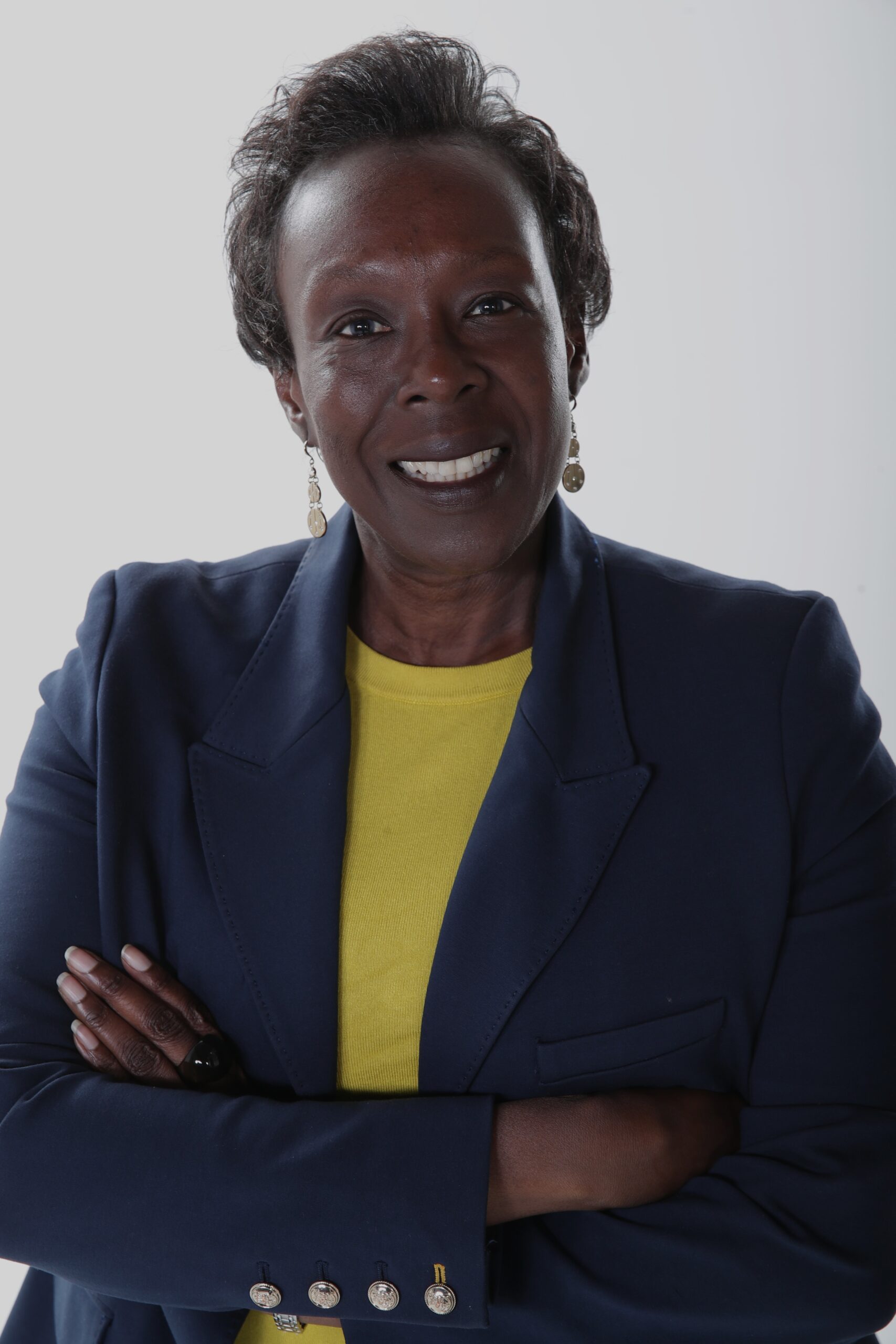
Margaret Akullo has spent over three decades working across Africa, Europe, Asia, and Latin America, strengthening justice systems with global institutions including the United Nations. But when asked why she invests in mentoring women, her answer is personal, not institutional.
“I invest in mentoring women because I know how powerful it is when someone recognises your potential before you fully see it yourself,” Margaret says. “After more than three decades working across Africa, Europe, Asia and Latin America — with global institutions including the United Nations — I navigated spaces where African women were routinely underrepresented. Those experiences were not just professional; they were formative.”
Through her Mindset-to-Output Mentorship Programme, Margaret has seen what happens when women are given the right tools. “Through my Mindset-to-Output Mentorship Programme and my talk on Resilient Leadership in Multicultural Environments to 36 African women, I have seen first-hand what happens when women are given the language, structure and confidence to lead,” she explains. “Lived experience only becomes truly meaningful when it is shared — and sharing it with the next generation of African women leaders is where my purpose lives.”
She connects her work directly to the IWD 2026 theme: “The UN’s IWD 2026 theme — Rights. Justice. Action. — is not abstract to me; it is the thread running through thirty years of my career in criminal justice reform. Mentoring is where those principles become personal: ensuring the next generation of African women know their rights, lead with justice and act with intention.”
When asked what “Give to Gain” means to her personally, Margaret says: “‘Give to Gain’ is, for me, the very essence of purposeful leadership. When you invest your time, knowledge and encouragement in another woman, you create a ripple effect that extends far beyond the two of you.”
“Throughout my career, I learned that progress is rarely individual — it is built through guidance, collaboration and shared wisdom,” she continues. “The gain is not material; it is generational. I see it when a mentee steps into a room with confidence she did not have six months earlier or launches an initiative she once thought was beyond her reach. That is the real return.”
“When I spoke to 36 African women on resilient leadership in multicultural environments, the energy in that room reminded me why giving matters so deeply,” Margaret adds. “When one woman rises with intention and integrity, she expands what is possible for every woman who comes after her.”
Mentoring has changed Margaret in ways she didn’t anticipate. “Mentoring has fundamentally deepened how I lead and how I listen,” she says. “Earlier in my career, leadership was largely associated with position and authority. Mentorship taught me that influence is far more powerful when it is relational and intentional.”
“Each mentee brings fresh perspectives and questions that challenge me to keep evolving — they are, in that sense, mentoring me too,” Margaret explains. “My Mindset-to-Output framework was shaped as much by those conversations as by my own experience.”
She recalls a specific moment: “One mentee, after years of guidance, wrote that she was stepping into entrepreneurship ‘equipped with emotional intelligence’ and ‘ready for a new chapter’ — and reading that reminded me that our role as mentors is not to create followers, but to build independent leaders.”
“Mentoring has also reinforced something I believe deeply: transformation begins in the mind and must always be translated into action,” she adds.
When asked what goes through her mind when she sees her mentees winning now, Margaret says: “I feel an enormous sense of pride — but more than pride, I feel a deep sense of reassurance that mentorship truly matters. When I see a mentee leading an initiative, speaking with authority in a room she once found intimidating, or stepping into a role she previously doubted she deserved, I am reminded that potential almost always needs structure and encouragement to fully emerge.”
“The discipline and courage are entirely theirs — I simply helped them see what was already there,” she says. “One of the greatest privileges of this work is watching women move from uncertainty to decisive, purposeful leadership. As part of Leading Ladies Africa’s Give to Gain series, I hope my story demonstrates that when African women are supported to think strategically and act with integrity, their leadership does not just change their own lives — it changes the communities around them.”
Mirriam Njeri, Bitcoin Learner & Community Member, Kenya & Lorraine Marcel, Financial Activist & Founder, Bitcoin Dada
Her Story
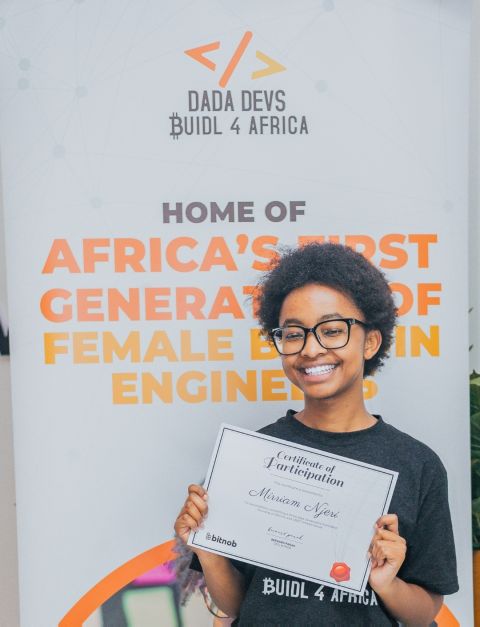
Mirriam Njeri describes what drew her to Lorraine Marcel’s work from the very first encounter: “How she carries herself and relates to others is something admirable. When I went for the bootcamp, it was an all-women type and that already made me happy. Then the team including my mentor, were organising and they were so nice to us. They made us feel accepted.”
But the experience didn’t stop there. “Afterwards, I joined an organisation by her called Bitcoin Dada where we are taught more about Bitcoin for free,” Miriam explains. “She brings on board amazing speakers and the fact that all that is done for free without making us feel like we are begging is just massive.”
When asked how her story reflects “Give to Gain,” Mirriam is specific about what the experience felt like. “When I attended the bootcamp, the fact that it was an all-women space immediately made me feel safe and excited. It felt intentional,” she says. “The team, including my mentor, didn’t just organize an event, they created an environment where we felt seen, accepted, and genuinely welcomed. Their kindness wasn’t forced. It was natural. They gave us their time, patience, and encouragement without expecting anything in return.”
The generosity continued when Mirriam joined Bitcoin Dada. “Later, when I joined Bitcoin Dada, I experienced that same spirit of generosity on a deeper level. The education is offered for free. She brings in incredible speakers and exposes us to real opportunities in the Bitcoin space,” Miriam says. “What stands out to me the most is that we are never made to feel like we are begging for knowledge. Everything is given with dignity and intention.”
“To me, this is ‘Give to Gain,'” Mirriam concludes. “By giving knowledge, support, and access freely, she gains a strong, empowered community of women who grow, build confidence, and carry the mission forward. I am one of those women, and that is the real gain.”
What She Gave
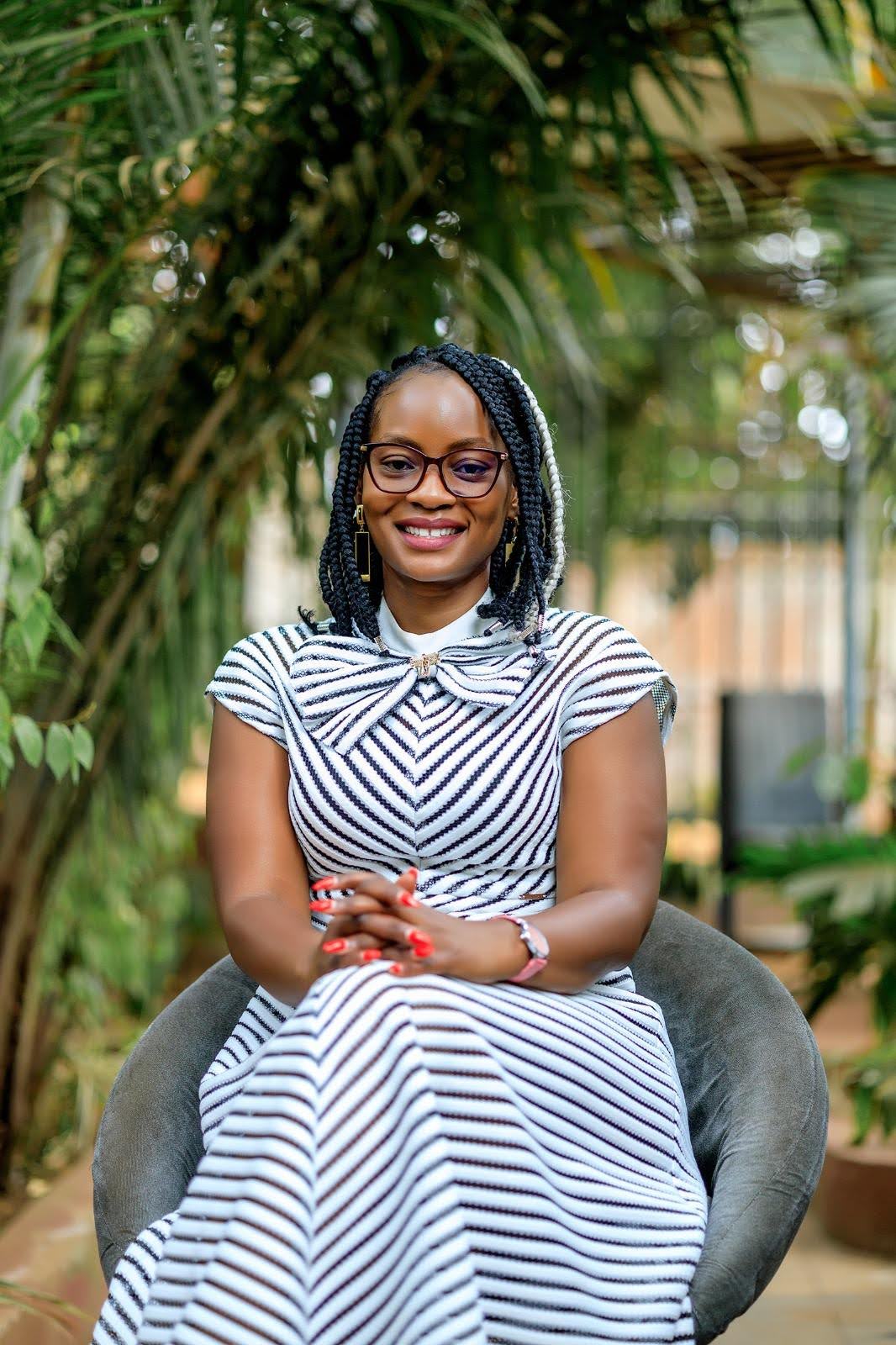
Lorraine Marcel’s investment in mentoring is rooted in her own experience navigating spaces where African women were rarely present. “I invest in mentoring women because I understand how different a journey can feel when someone walks beside you,” she says. “When I began my path in Bitcoin and technology, there were very few African women in the spaces I was entering. I was often learning while navigating environments that were not designed with us in mind, and that experience could feel isolating and discouraging.”
“My own path has not been easy, but I believe it does not have to be as difficult for the women coming after me,” Lorraine explains. “Creating smoother pathways for others is my way of leaving the world better than I found it.”
She continues: “Mentorship became my way of changing that reality. It is about opening doors, but also about affirming that women deserve to occupy rooms that have historically excluded them. Often, what holds women back is not a lack of talent or ambition, but invisible barriers — limited access, fewer networks, and systems that were not built to accommodate their growth.”
Lorraine believes representation itself creates change. “I strongly believe that when more women step into leadership positions, those barriers begin to weaken. Representation challenges long-standing norms, expands what is considered possible, and makes it easier for other women to rise without facing the same resistance. Leadership creates visibility, and visibility creates access.”
“When one woman gains knowledge, confidence, and opportunity, she rarely keeps it to herself,” Lorraine says. “She opens doors wider, shares resources, and supports others navigating similar paths. That ripple effect is powerful. It confronts inequality, softens systemic obstacles, and creates pathways where there were once walls. This is how lasting change begins — by ensuring that progress for one woman becomes progress for many.”
When asked what “Give to Gain” means to her personally, Lorraine says: “To me, ‘Give to Gain’ represents a mindset of abundance in a world that often teaches scarcity. Many spaces encourage people to guard access, hoard knowledge, and treat opportunities as limited resources. I have learned that real growth works differently. Sharing does not reduce value – it multiplies it.”
“Every time I have invested in someone else, whether through mentoring, teaching, financial support, or simply offering encouragement at the right moment, I have gained something far deeper than I expected,” she explains. “Giving expands perspective. It builds meaningful community. It brings the quiet, indescribable fulfilment of watching someone recognize their own potential and step boldly into it.”
“More importantly, giving creates impact that travels far beyond what we can immediately see,” Lorraine continues. “When you invest in one person, you influence the lives they will touch, the doors they will open, and the limitations they will challenge. A single act of support can echo across families, communities, and future generations.”
“I have come to understand that the most powerful impact is rarely loud or instant. It moves through people. It grows through shared knowledge. It multiplies through opportunity,” she says. “Giving is therefore never a loss, it is an investment in a future bigger than yourself. It is how legacies are built and how collective progress becomes possible.”
Mentoring has transformed Lorraine in unexpected ways. “Mentoring has transformed me in ways I did not initially expect. It has made me more patient, more reflective, and more conscious of the responsibility that comes with leadership,” she says. “When people look to you for guidance, you begin to understand that leadership is not just about direction, it is about example. You become more intentional about your actions, your values, and the standards you set, because you realize someone else may draw courage from simply watching how you navigate your own journey.”
“Mentoring has also reshaped my understanding of impact,” Lorraine adds. “It has taught me that meaningful change is rarely instant. Growth often unfolds quietly, through moments of doubt, vulnerability, and persistence that many people never see. Watching the women I mentor push through uncertainty and gradually step into their confidence has deepened my respect for the process of becoming.”
“Most importantly, mentoring has redefined success for me,” she says. “I no longer measure it solely by personal milestones or individual achievements. I see success in the doors my mentees walk through, in the confidence they build, and in the opportunities they create for others. Their growth feels like an extension of my own journey. In lifting others, I have discovered that leadership is not about standing ahead, it is about rising together.”
When asked what goes through her mind when she sees her mentees winning, Lorraine says: “More than anything, I feel overwhelming pride. There is something deeply special about watching women I once supported grow into confident leaders, innovators, and decision-makers in their own right. In those moments, I see their courage, their persistence, and the quiet battles they overcame to reach where they are.”
“Witnessing their journeys unfold is incredibly fulfilling, and knowing that I was part of their early steps is a privilege I carry with gratitude,” she continues. “Their achievements feel like shared victories and powerful reminders that the guidance, time, and belief we invest in others can shape futures in meaningful ways.”
“Above all, these moments fill me with hope,” Lorraine concludes. “They reaffirm my belief that when women rise, societies become more inclusive, more balanced, and safer for everyone. Greater participation of women in leadership, innovation, and community-building strengthens institutions, nurtures more empathetic systems, and creates environments where more people can thrive.”
The theme for International Women’s Day 2026 is “Give to Gain” and these women have shown us what that looks like when it’s lived, not just posted.
It looks like Dr. Ada sending prayers at the exact moment Dr. Azeezat needed them, even though she never said she did.
It looks like Tanya nominating Christine for an award because she believed her grassroots work in Kenya mattered globally.
It looks like H.E. Chief Dr. Taylor investing her time, integrity, and resilience into shaping Merry’s growth with no expectation of recognition.
It looks like Margaret opening doors through her network in Ghana and then pushing Moumi to walk through them confidently.
It looks like Lorraine making Bitcoin education free across 13 African countries and creating spaces where women like Miriam are never made to feel like they’re begging for knowledge.
It looks like intentional kindness, reciprocal growth, legacy over ego, ripple effects that don’t stop.
This is what happens when women refuse to rise alone. When they understand that their success means nothing if no one else gets to rise too. When they give deliberately, sincerely, and without gatekeeping and discover that what they gain is far greater than what they gave.
Every woman empowered strengthens the architecture of leadership. Every girl mentored dismantles limitations before they are ever constructed and every mentor who chooses to invest creates a future where the next generation doesn’t just survive but lead.