
In a world where deepfakes spread faster than the truth, Peninah Kímiri stands firmly on the side of women’s safety, dignity, and agency.
She’s the globally recognised GBV specialist who understands that digital violence is not “virtual”—it’s personal, political, and painfully real.
Across 20+ countries, she has helped teams, companies, and communities rebuild their protection systems with one principle in mind: women should not have to outsmart the very technologies built around them.
Peninah leads with courage, clarity, and a commitment to making digital spaces safer for every woman who dares to be seen.
Read the full conversation below.
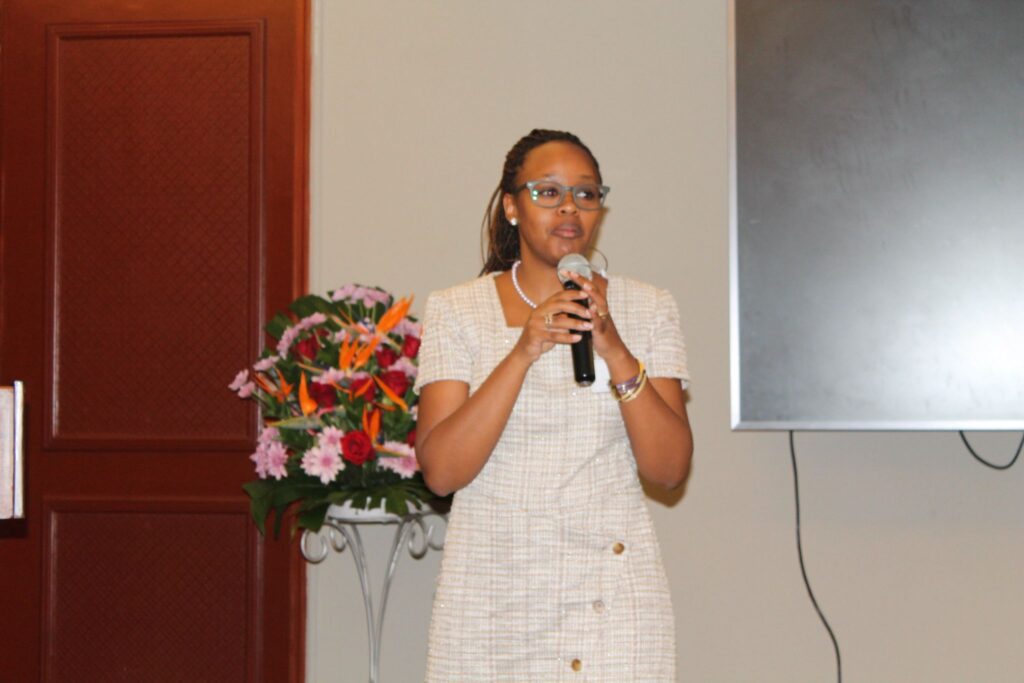
Many people say digital violence feels “invisible” until the harm becomes physical. What do you wish more people understood about how online harm spills into real-life danger?
Digital violence feels invisible only because people imagine the internet as separate from everyday life. In reality, it is woven into our homes, workplaces, school corridors, and political spaces. Online harm changes behaviour long before it escalates to physical danger. Survivors stop posting, stop attending class, avoid certain roads, or withdraw from community spaces because the threats follow them offline.
What I wish more people understood is this: the screen does not soften the violence, it extends it. Online abuse gives perpetrators proximity, even when they are physically distant. It gives them an open window into someone’s life, their routines, their contacts, their vulnerabilities. And once a woman is afraid, her world begins to shrink. That shrinking is the real danger.
And this is why the “invisible” harm matters. We see everyday examples offline: a girl who collapses in school and is dismissed as dramatic, only to be later found pregnant; a child pulled out of class because adults decide she will “corrupt” others; a survivor blamed for grooming because her school uniform “showed her shape.” When society already minimises offline violence against girls, it is even easier to ignore its digital manifestations until the consequences become undeniable.
During our LinkedIn Live session, you mentioned how old forms of violence are finding new digital tools. In your experience, how does tech make it easier for perpetrators and harder for survivors?
Technology lowers the cost of harm for perpetrators. They no longer need to be physically near a woman to intimidate, monitor, or shame her. A phone number, a leaked photo, a shared device, a password—these become tools of control. Generative AI has now taken it further by making fabrication effortless. A man can manufacture an intimate image or a false narrative in minutes.
For survivors, the difficulty multiplies. The evidence spreads faster than they can contain it. Reporting mechanisms are slow, unclear, or unresponsive. Stigma is immediate and often brutal. And in many African contexts, digital harm is still dismissed as “not real,” so survivors are fighting for both safety and recognition.
The imbalance is stark: the tools that make harm frictionless for perpetrators place heavy emotional, social, and financial burdens on survivors.
And when “responsibility” is framed through patriarchal logic, like asking whether a man is “the victim of reputational damage” when a survivor outs them on social media when other avenues have failed her, or putting the onus on girls to act, speak, or behave in a particular manner to prevent harm, the digital layer becomes one more place where victim-blaming can flourish. Technology amplifies the power imbalance already present in these conversations.

We often say “men need to be allies,” but people interpret that differently. What does meaningful allyship look like to you, not performative, but real?
Real allyship is a practice. Women have done plenty of talking and teaching, and allies have listened and learned. I also think it takes a willingness to unlearn and to examine how power operates in their relationships, workplaces, and online spaces. It means interrupting harmful behaviour, not only when the world is watching, but in private group chats, family conversations, and professional settings. It also means unlearning the idea that women have to do the talking and teaching, and for men to take it up.
Allyship means using privilege to create safety. That can look like supporting stricter reporting standards in tech teams, amplifying women’s voices instead of speaking over them, and challenging policies or jokes that normalise violence.
Most importantly, it means listening to women without defensiveness, without explaining away the harm, without minimising it, without demanding proof, but taking responsibility for making spaces safer. “Believe women” means that we take reports seriously enough to link them to support; it is not about misandry. Misandry and misogyny are not symmetrical. Misandry does not exist as a structural force shaping policy, safety, opportunity, or bodily autonomy. Misogyny, in contrast, has centuries of systemic reinforcement. That is why jokes from women about men do not have the same material consequences as jokes men make about women. One reflects frustration; the other reflects power.
And real allyship requires honesty about this imbalance. In the same way we challenge narratives that blame a pregnant schoolgirl while protecting the adult who groomed her, we must challenge narratives that centre men’s discomfort but ignore women’s danger.
Deepfakes, data leaks, and sextortion are new tools in old patterns of violence. How can women reclaim control over their digital presence in an era where tech is weaponized against them?
Control begins with clarity. Women have the right to decide how they show up online, what they share, and what boundaries they set. In a world where deepfakes and sextortion are used to undermine that autonomy, reclaiming control requires three layers.
First, practical measures: strong authentication, reviewing privacy settings, limiting location sharing, and intentionally curating digital circles. These steps are not about fear; they are about agency.
Second, collective protection: building networks where women alert each other to threats, help document abuse, and offer rapid support when harm occurs. Abuse thrives in isolation; safety strengthens in community.
Third, demanding accountability: calling for platforms and policymakers to put survivor-centred safeguards in place. Women should not be asked to outsmart systems that were never designed with their safety in mind.
Reclaiming control is not about hiding. It is about reshaping the digital environment to respect women’s humanity.
And it includes naming the conditions that make girls vulnerable long before they enter digital spaces, misinformation about their bodies, silence around consent, and cultures that punish them for violations they did not choose. These early harms echo into adulthood and shape how women experience digital risk.
Leadership comes with visibility, and visibility comes with risk. What do you want women in public-facing roles, politicians, journalists, and creators to know about protecting themselves without shrinking their voices?
Visibility is power, and power attracts resistance. The goal is not to retreat or ignore, but to go in prepared.
Women in public-facing roles should think of digital presence the way we think of safety planning in humanitarian contexts: layered, proactive, and grounded in risk awareness. That means understanding your threat landscape, who targets you, how, and why. It means having a system for archiving evidence, setting boundaries on your platforms (e.g., maintaining a list of muted/blocked words), and establishing a small circle of trusted people who can help monitor attacks.
Most importantly, I want them to know that the burden of protection should never require them to shrink their voice. Their leadership is needed. Their analysis is necessary. Their visibility opens doors for younger women who are watching. The responsibility for creating safer digital spaces sits with institutions, platforms, and communities, not solely with the women who dare to lead.
And for those women, especially in contexts like Kenya, where institutional failures are common, from comprehensive sex education to reproductive health care to justice systems, it is crucial to remember that the instability around them is not their fault. Their voices matter precisely because public institutions often fail the most vulnerable.
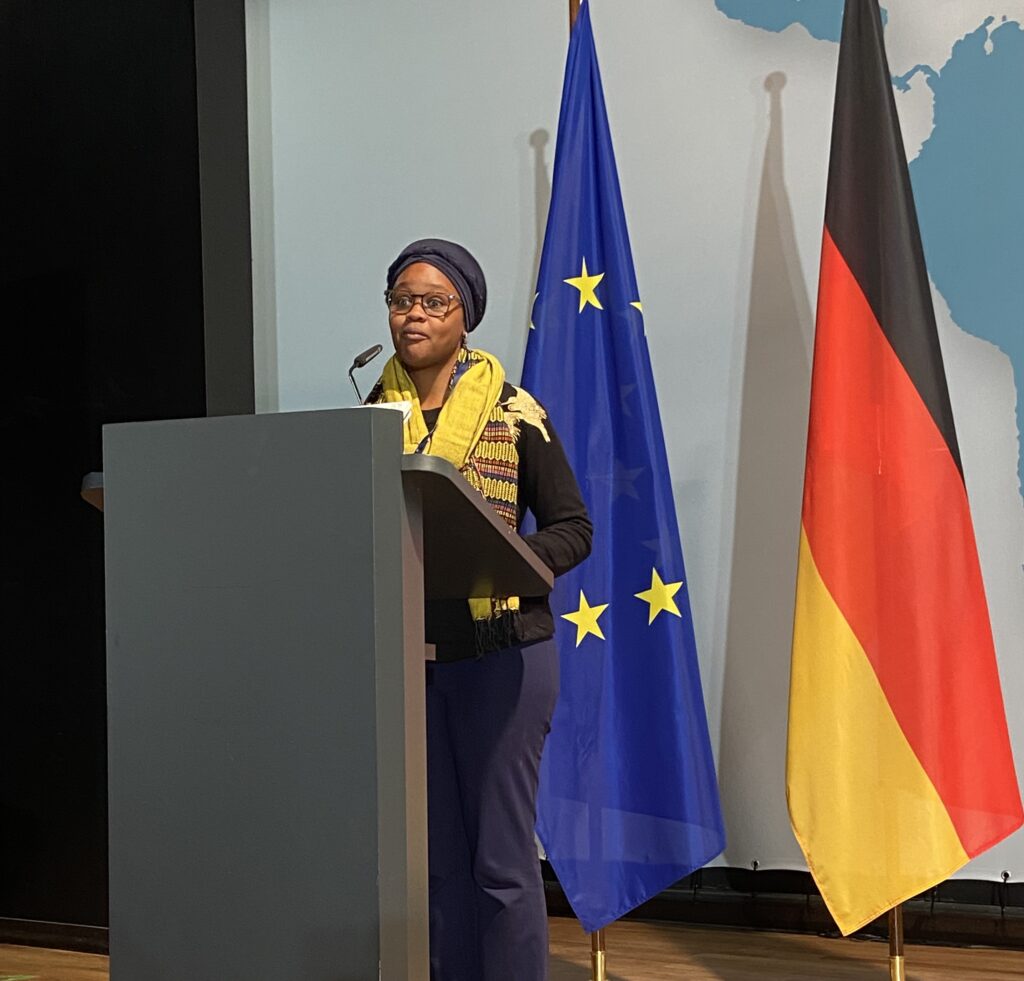
If you could speak directly to a young woman who’s experiencing digital harassment right now, what step could she take in finding herself again?
The first step is to separate the harm from your identity. What is happening to you is not a reflection of your worth, your intelligence, or your dignity. It reflects someone else’s misuse of power.
Then, reach for connection. Speak to someone you trust. Shame isolates, but solidarity rebuilds a sense of self. Let people who care about you help carry the weight, whether that is documenting evidence, reporting accounts, or simply reminding you of who you are beyond the moment of harm.
Seek professional help where you can. Psychosocial support will be crucial and will scaffold you as you decide if you want to go the formal legal route.
And finally, remember that healing is not linear. The harm done to you is real, undeserved, and does not define the future you can build. It is entirely valid to step back to protect your peace, and equally valid to return when you feel ready. What matters is that you do not lose yourself in the violence inflicted on you. You are more than what was done to you, and your voice still matters in every room, digital or physical.