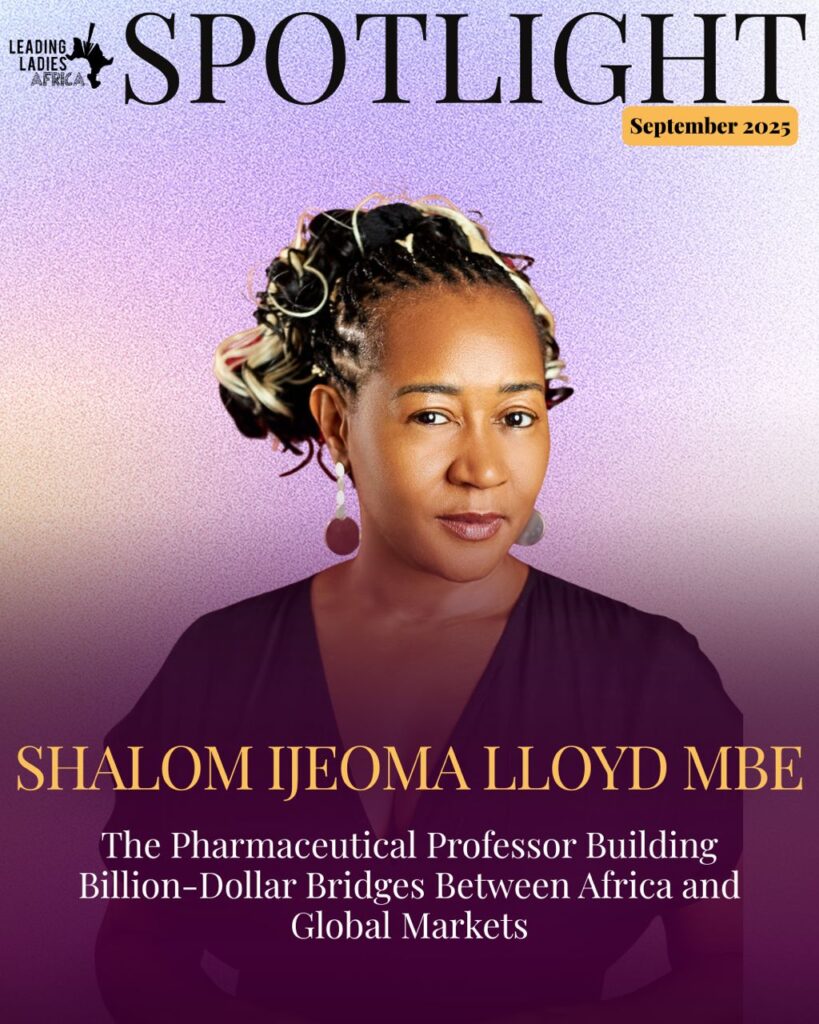
Thank you for spending time with us today, Prof. In your words, who would you say Shalom Ijeoma Lloyd MBE is, and how would you describe what she does?
I am an everyday woman who dares to believe that purpose, impact, and profit can coexist. I am a proud Nigerian and British citizen, a mother of three, a scientist, and an entrepreneur who has built small businesses that continue connect Africa to the world. My work spans pharmaceuticals, ethical beauty, and trade, but at the heart of it all is a simple mission: to use business to empower others, especially women, and to leave the world better than I found it.
Everything I do, whether it is leading Naturally Tiwa Skincare in the UK, contributing to shaping clinical trials across Africa, managing JE Oils Nigeria in the shea sector, or officially bringing The Body Shop to Nigeria, is driven by the same purpose, to use business as a force for good (I can sing this like a song, all day, every day).
I was born in Nigeria, raised with African values of community and resilience, and educated in the former Soviet Union and the UK. My dual heritage has shaped me into a bridge-builder helping me describe myself as a bridge between Africa and the world, someone who strives to bring people, ideas, and opportunities together across borders, showing that a woman can succeed with purpose, impact, and profit in equal measure.
So, who is Shalom? I am a woman who believes in the impossible, a believer that with integrity, courage and passion, one can achieve anything. I am a champion of women and someone who knows that when you empower a woman, you empower a nation.
What I do is quite simple, I try to solve problems. From building Naturally Tiwa Skincare out of my son’s eczema journey, pioneering clinical trial diversity through eMQT, or leading The Body Shop into Nigeria, my mission is the same – to create impact, empower others, and build a legacy that will outlive me.
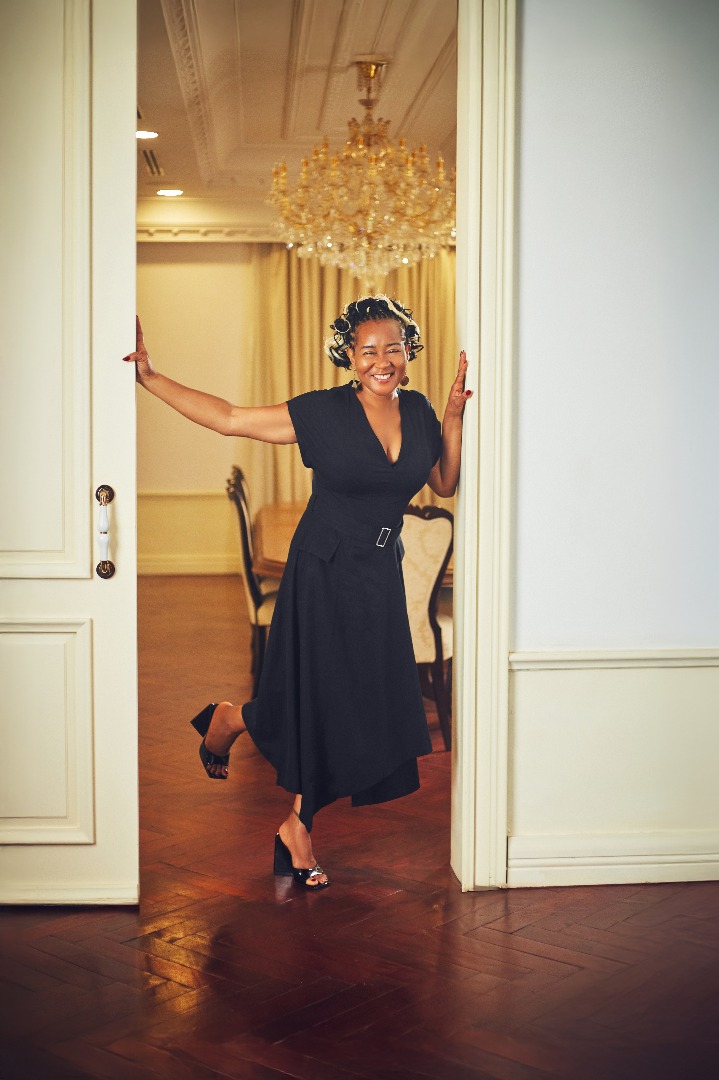
Awesome! How did this journey begin for you — from being an award winning entrepreneur to being at the forefront of clinical research?
My journey has never been a straight line, it has been dots that connect beautifully in hindsight. It began with science. I was a sixteen year old from Nigeria on a scholarship to study pharmacy in the former Soviet Union. I arrived in Ukraine without speaking a word of Russian, but I left six years later with a BSc and MSc in Pharmacy. Living in Ukraine as a young black woman came with challenges, but it also gave me resilience, courage, and the conviction that my success or failure would be determined by me.
I started as a pharmacist with a passion for science and innovation. After returning to the UK, for almost three decades, I worked in the global pharmaceutical industry, building a career I loved. I worked in and managed global teams, led innovation projects, and played a role in bringing life-saving medicines to patients around the world.
Yet life had another twist for me. In 2014, after four (4) cycles of IVF, I gave birth to twins. My son Joshua was covered in eczema, and no cream or treatment seemed to help. Desperate, I turned to my African roots and heritage, started mixing and experimenting with simple, natural raw and traditional ingredients to achieve three things – reduce inflammation, redness and itching. Within three days, Joshua’s skin transformed. That moment changed everything. Naturally Tiwa Skincare was born, not just as a company, but as a calling to blend science, innovation, and African tradition.
But my journey did not stop at skincare. Working in pharma industry which gave me a front-row seat to global health inequalities, I saw the lack of diversity in clinical research and the exclusion of African patients. That led to my role at Emerging Markets Quality Trials (eMQT), where making clinical trials more diverse and inclusive by opening doors to Africa became a possibility. At the same time, my father’s death from cancer made me determined to play my small part in changing health outcomes in Africa. My career may look like multiple strands, but in truth, it is one tapestry woven together by a single purpose: impact. My journey has been and continues to be about using every opportunity, every challenge, and even personal pain, to create solutions that change lives.
For me, it has never been about titles or sectors, it has and will always be about solving problems with courage and compassion.
Last year, you were recognized in His Majesty The King’s New Year Honours List 2024 and awarded Member of the British Empire (MBE) for services to International Trade and Women in Business. Talk us through how that experience was for you?
Receiving the MBE was one of the most humbling moments of my life. It wasn’t just recognition of me as an individual, it was a recognition of the women in Nigeria who pound shea kernels every day under the hot sun to produce shea butter, of the young African professionals pushing boundaries in clinical research, and of the power of trade to transform communities. Walking into Windsor Castle that day, I carried my family, my ancestors, and every woman who has ever been told “you can’t” on my shoulders. It reminded me that ordinary people can achieve extraordinary things when driven by purpose.
It was surreal. To see my name on the list felt like the world paused for a moment, I must have read it a hundred times to believe it. But the truth is, the honour wasn’t just about me, it was about my children seeing what is possible and the legacy I want them to inherit, about every woman who quietly leads but rarely gets recognised, every woman who has ever been told her dreams were too big. The MBE is not mine alone, it belongs to every person whose story and struggle has shaped my journey.
It is not just an award, it is a personal milestone, it is a symbol. It shines a light on African women, on ethical trade, and on the power of combining purpose with profit. It represents the fact that an ordinary woman can stand tall on the global stage while remaining true to her roots. It shows that our stories matter, that our impact matters, and that when we walk in purpose, the world notices.
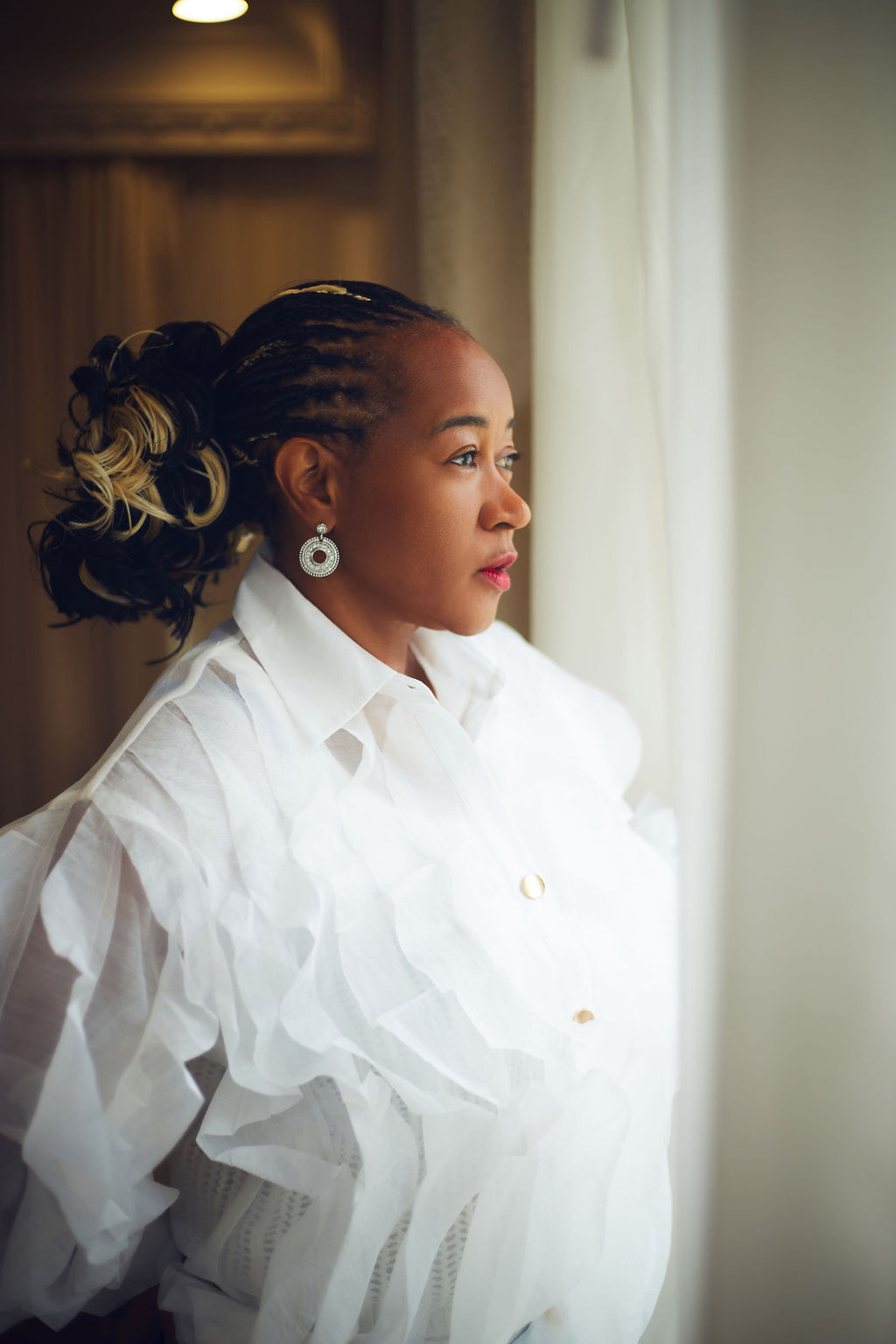
You refer to yourself as a ‘UK Export Champion,’ can you share in detail what that means and why it’s important?
Being a UK Department for Business and Trade Export Champion means I was chosen to share my real-world exporting experience, the highs and the hurdles, to inspire other businesses to take their products and services global. I use my platform to show that we can change preconceived narratives, that we can build businesses rooted in trade, not aid, and ensure the benefits flow back into our communities.
By exporting our expertise, our products, and our talent, we build self-reliance, create jobs, and change the narrative about what can be achieved on the world stage.
Being a UK Department for Business and Trade Export Champion means advocating for international trade. To me, it is a role that perfectly reflects my life’s work. SMEs are the backbone of any economy! Up to £250 billion could be added to the UK economy if women started and scaled new businesses at the same rate as men – a significant economic potential highlighted in the Alison Rose report on Female Entrepreneurs in the UK.
Why is it important? To me, it is about showing the economic benefit that I can derive from my dual heritage. Africa does not need more aid, Africa needs trade. We need to shift from dependency to self-determination. Anywhere in the world, trade builds infrastructure, creates jobs, and unlocks the potential of our people. For me, standing in that role means I get to show businesses, both in the UK and in Africa that we can trade ethically, sustainably, and profitably. It is about building bridges, not walls.
You have brought a beloved British brand, The Body Shop into Nigeria. What made you decide to take that step now? And how has the reaction from the market been?
Nigeria is the most populous country in Africa, and Africa itself is the youngest, fastest-growing continent in the world. By 2050, one in four people on this planet will be African. So why not now?
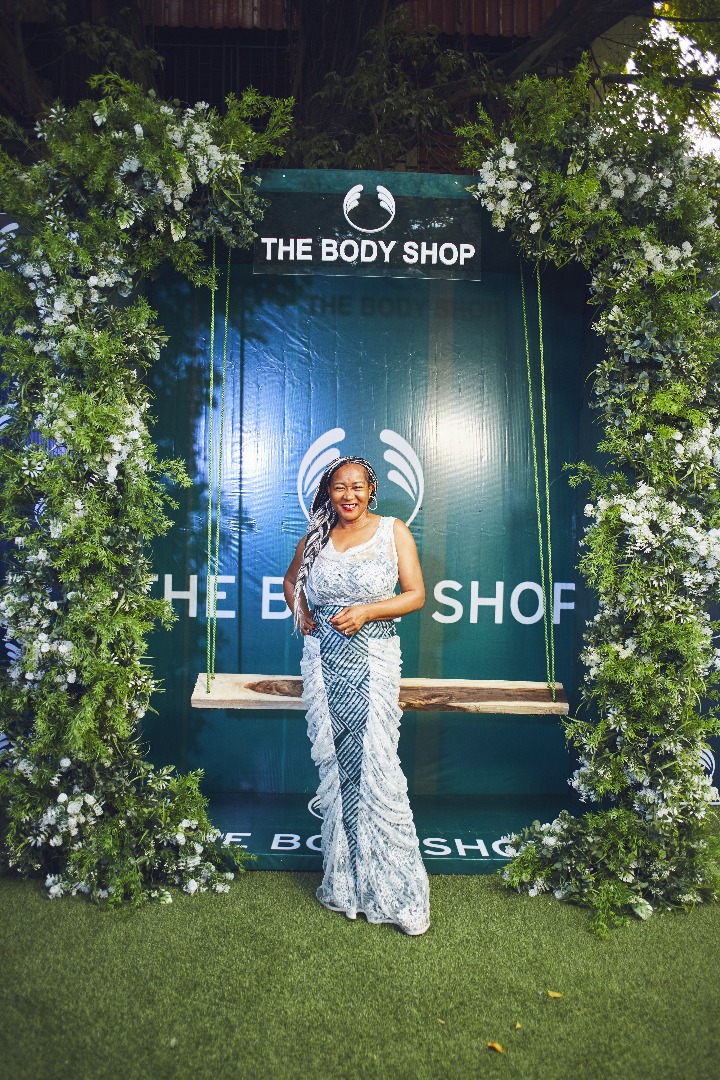
The Body Shop and I share the same DNA: ethical, sustainable, and purposeful. Nigerians already knew and loved The Body Shop, but they were forced to buy from unofficial outlets. I wanted to give Nigerians the real deal, with authenticity, ethical sourcing, and global quality. Our first launch into Nigeria, in fact into West Africa in Abuja on the 8th of March this year was electric! Abuja welcomed us with open arms, and Lagos, being the commercial heart of Africa, is an even bigger opportunity. The reaction has been incredible, because Nigerians are discerning, they want quality, they want value, and they want products that work.
Bringing The Body Shop to Nigeria felt like the most natural step. I am British Nigerian, I have lived the brand’s values of ethical, sustainable beauty for nearly a decade through Naturally Tiwa. The reaction has been overwhelming, and that feeling of “about time too!” makes my heart sing!
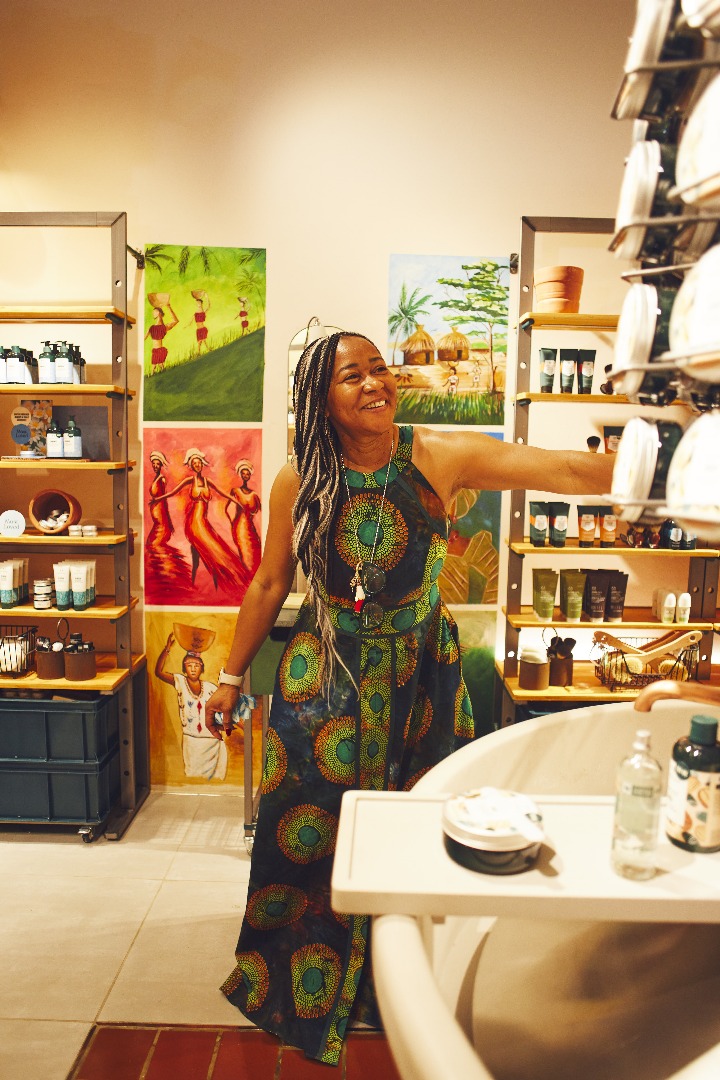
This is not just about retail expansion, it was about bringing an iconic British, already known and respected brand with values of sustainability and activism into a market that is hungry for it. What excites me most is that The Body Shop Nigeria is not just about beauty, it is about activism, empowerment, and rewriting narratives with nature at the core.
In the video where you gave insights into the journey of bringing products in, you highlighted the astronomical clearing and customs fees. What can the government do to ease these burdens for entrepreneurs like yourself?
Entrepreneurs in Nigeria are not afraid of hard work, we know how to hustle. But unnecessary costs and unpredictable fees kill competitiveness and discourage innovation. What government must do is create a transparent, predictable, and supportive framework for imports, especially for companies like ours that are bringing in not just products, but jobs, investment, and global trade. Lowering barriers would unleash entrepreneurship on a scale the world has not yet seen from Nigeria.
Government must see entrepreneurs not as obstacles but as partners in nation-building. Reducing bottlenecks, ensuring transparency in processes, and lowering astronomical fees will encourage more businesses to import ethically and sustainably, create jobs, and contribute to the economy. We don’t ask for handouts, just a fair environment to thrive. Naija has great potential, if we thrive, the economy thrives. SIMPLE!
The Nigerian government recently suspended raw shea nut exports for 6 months — what are your thoughts on this development?
This is a game-changing policy. Nigeria has the largest number of shea trees in the world, yet we have been exporting raw nuts and letting other countries profit from processing. By banning raw exports, the government has said – let’s keep the value here. This will protect rural women, encourage investment in local processing, and put Nigerian shea butter on the global map.
This is a turning point. For too long, Nigeria exported raw shea at low value, only to import processed butter at a premium. The suspension forces us to build capacity, protect our processors, and bring value back to our women. Shea is not easy, it requires grit and long-term vision, but this ban gives Nigeria the chance to finally claim its rightful place as a global leader in shea butter production.
At JE Oils, we welcome this decision. It means better prices for processors and more support for our women, and we are ready for the long haul.
From Naturally Tiwa Skincare to The Body Shop Nigeria, your work consistently champions African women, whether as producers, entrepreneurs, or consumers. What does women’s leadership in Africa look like to you, and what do we need more of?
To me, women’s leadership is not about titles, it’s about influence. It is not always about holding political office or corporate titles. It is about resilience, and legacy. It looks like rural women turning raw shea into gold to feed their families. It looks like young graduates choosing courage over conformity. It looks like our women breaking stereotypes in STEM. It looks like mothers raising the next generation of leaders while pursuing their own dreams.
What we need more of is inclusion. More women in boardrooms. More women at policy tables. We need more women in decision-making roles, but we also need more men who advocate for women —our fathers, brothers, uncles, sons who see our power not as a threat, but as a shared future. who see that empowering women empowers everyone. Women’s leadership in Africa is about lifting as we climb and leaving no one behind.
For young African women watching your journey, what three lessons would you share about building something meaningful that lasts?
First, start with what is necessary, then do what is possible, and soon you will be doing the impossible. Do not wait for perfect conditions to begin, start with what you have.
Second, prepare even when no one is watching. Opportunity always comes to those who are ready. Preparation is your insurance policy.
Third, do not fear failure. Failure is not the opposite of success, it is the pathway to it. Every great innovator, every leader you admire, has failed many times. What matters is how you rise.
Finally, if you could distill your life’s work so far into one sentence, a form of manifesto, what would it be?
I am an ordinary African woman proving that with purpose, impact, and profit, we can change lives, that with passion and persistence we can shape industries, build legacies that outlast us and show the world that Africa’s time is now.