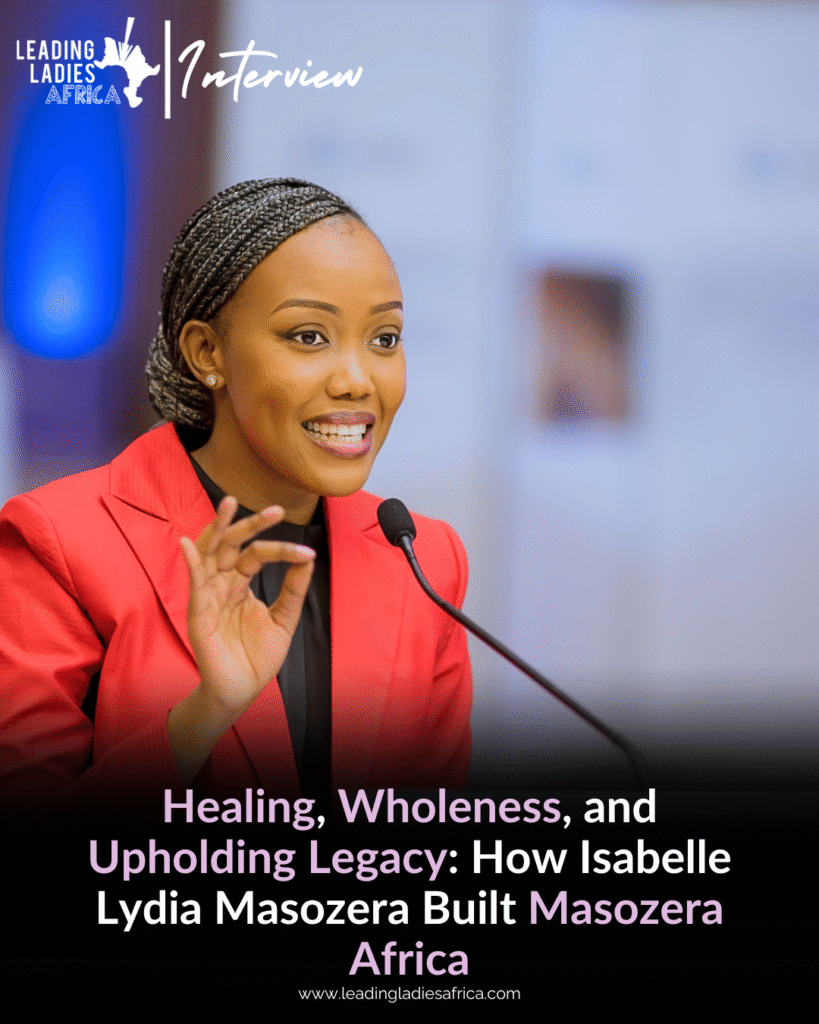
For Isabelle Lydia Masozera, wellness is not a borrowed concept, it is deeply African. Rooted in her father’s conviction that gender equality is our heritage, not an imported idea, Isabelle grew up believing that women deserve not just a seat at the table, but the right to belong there fully. That legacy is at the heart of everything she has built with Masozera Africa.
Her story is one of pain transformed into purpose. After enduring deeply personal and traumatic experiences in 2014, Isabelle discovered that healing was survival. Years later, she would turn that truth into Masozera Africa, a sanctuary where African women can bring their stories, their struggles, and their strength, and find wholeness in community.
Through her work, Isabelle has shown that healing is not an individual pursuit but a collective rhythm. Whether moderating high-level forums, curating Fearless Conversations, or building support groups where women can laugh, cry, and rise together, she is teaching us that to be well is to be connected. To be whole is to be seen.
Her vision is bold: a continent where African women reclaim wellness as their birthright, and where leadership grows not from wounds, but from wholeness. And with every story shared and every community circle formed, that vision is becoming a reality.
Read our exclusive interview with Isabelle Lydia Masozera
Your father, Fred Masozera, was a vocal advocate for gender equality and deeply influenced your values. How does his legacy continue to inform your work with Masozera Africa?
My father taught me that gender equality wasn’t an imported idea, it was an African value. He believed that every girl deserved to sit at the table, not because she fought her way in, but because she belonged there. That conviction is woven into Masozera Africa: creating spaces where women do not just survive, but thrive with dignity, voice, and visibility. His legacy is a constant reminder that to be well is to stand in your fullness… something our continent has always known, but too often forgotten.
While gender equality is often spoken of in policy rooms and conferences today, my father lived it at our dinner table. Decisions in our home never excluded my voice. That lived experience taught me that equality must be culture, not just conversation.
In 2014, you endured deeply personal, traumatic experiences that later planted the seeds for founding Masozera Africa in 2021. Can you share how these moments shaped your purpose and vision?
2014 was a year that stripped me of everything familiar; home, certainty, even identity. It was painful, but it also birthed clarity. I discovered that healing is not a luxury; it is survival. Years later, Masozera Africa came from that truth, that African women deserve spaces that honor their pain but also awaken their power. My vision is to normalize conversations around trauma, motherhood, and resilience… and to show that wellness is not imported; it is rooted in who we are as Africans.
For me, that season didn’t look like wellness retreats or meditation apps. It looked like asking my friend/ daughter’s Godmother to watch her so I could cry or sleep. That raw survival is what made me realize African women need wellness that is practical, communal, and honest.
You began your career as a journalist and public relations expert where you hosted Prime Time Live and founded Rubicom. How did your time in the media pave the way for your community-centered mission?
Media trained me to hold stories with responsibility. Behind every headline was a human being. That awareness followed me into Masozera Africa, where storytelling isn’t just about visibility, but about healing. Media gave me a voice; community work gave that voice purpose.
In contrast, so much of today’s media prioritizes clickbait and clout. My work insists on slowing down: asking the question that brings healing, not just headlines. That’s the bridge between my media career and Masozera Africa.
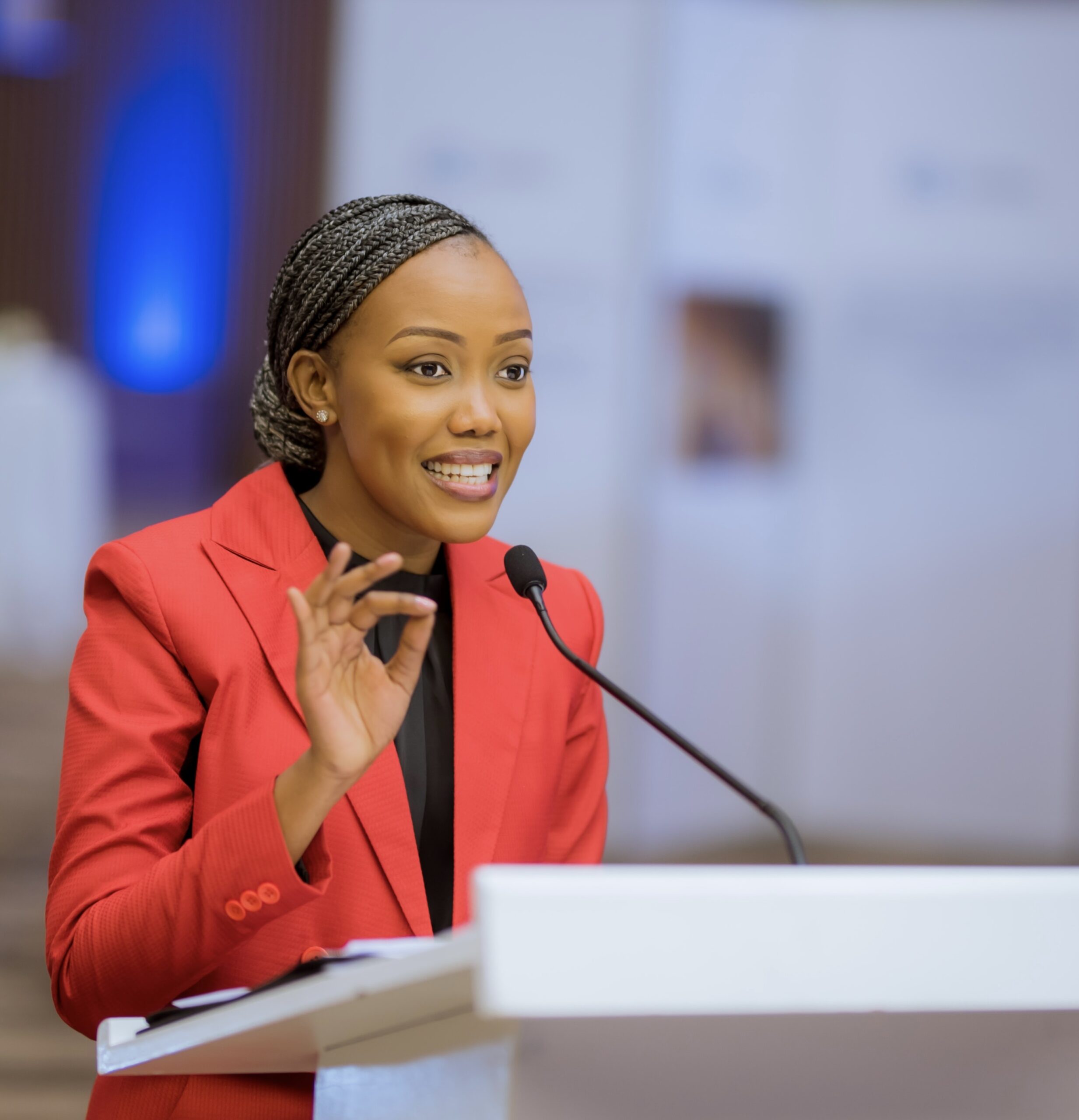
Masozera Africa serves as both a “digital couch” and a tangible safe space for African women to share stories, heal, and grow. What inspired that holistic approach to wellness and community-building?
I wanted to create what I needed myself, a place where women could log on and exhale, or walk into a room and feel seen. In Africa, we have always gathered around fire, around food, around story. The “digital couch” is simply our grandmother’s wisdom meeting the modern world. To be well is African, and that means wellness must be accessible, communal, and rooted in belonging.
On Instagram, wellness looks like green juices and Bali retreats. But in my grandmother’s Africa, wellness looked like sitting around a pot of stew, talking until the heaviness lifted. The digital couch is that spirit; belonging translated into today’s language.
Offline, Masozera Africa Support Groups offer anonymous, supportive environments. Can you describe a moment when you saw the real-life impact of this work?
I recently watched a mother of a child with autism walk into a support group exhausted and isolated. By the end of that session, she was laughing through tears, holding hands with another mother who understood. It was evident: healing isn’t found in isolation, it’s unlocked in community. That moment captured why I have built this space.
That is the difference between silence and solidarity. No glossy program could have given her what that circle of women did in a few hours… to feel seen, understood, and no longer alone.
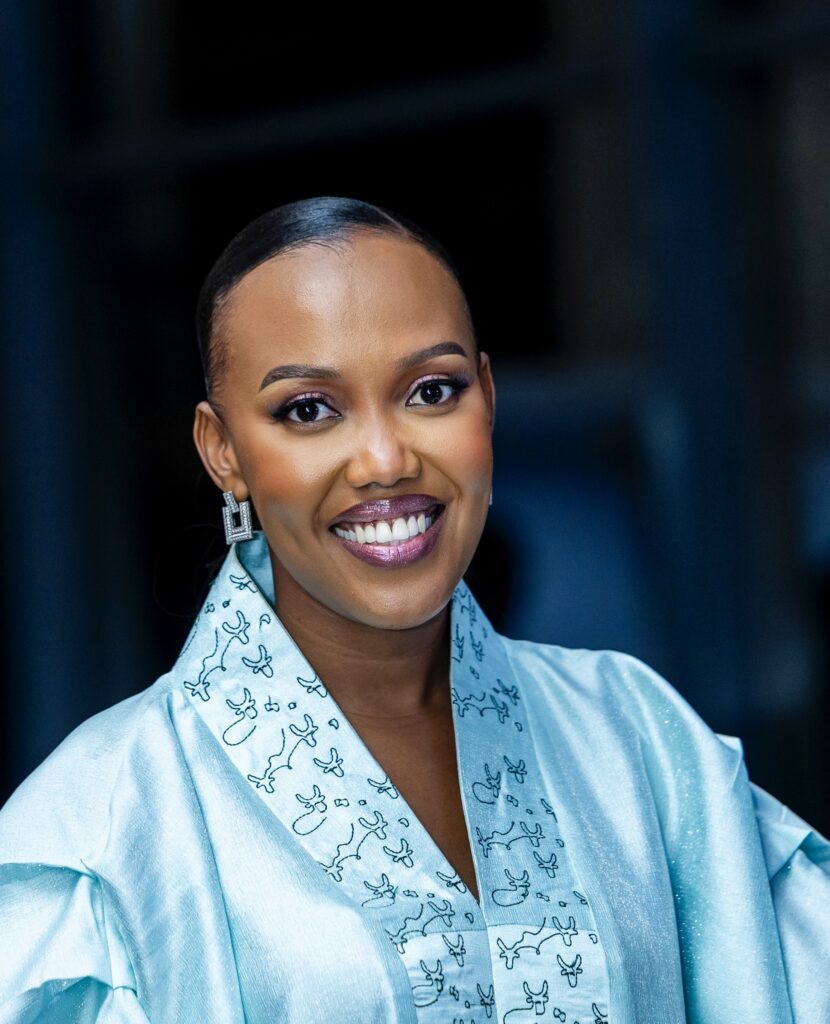
As a sought-after moderator and MC, having interviewed heads of state and moderated high-profile forums. How do you prepare to hold such spaces with authenticity and sensitivity?
I walk in with research, but also with humility. Every stage I hold is someone’s story at stake. My responsibility is not to perform, but to connect, to create a space where truth feels safe enough to emerge.
Authenticity is not something I switch on; it’s how I choose to live.
Mainstream panels today can feel like theater. The MC is chasing clout, the question is about shock value, the stage becomes performance. Instead of going for the flashiest moment, I often asked the question that allows say a young activist to challenge a minister, and for both voices to be heard. That’s the difference between performing and facilitating truth.
When facilitating “Fearless Conversations” through your podcast and editorial content, how do you navigate difficult emotions, like trauma or grief, while uplifting listeners with hope?
I hold space the way I wish someone had held it for me. I don’t rush pain, and I don’t sugarcoat it. But I always point to light not as a cliché, but as a possibility. Hope is not the absence of grief; it’s the decision to keep moving, together.
Too often, healing is framed as a private, almost individualistic pursuit… go to therapy, read a book, fix yourself. But I believe systems heal when people heal together. Energy is medicine, and when we gather in community, that energy multiplies. The Healing Couch was born from this vision: a space where women can come as they are, sit in truth without performance, and hold each other through the things that are too heavy to carry alone. It’s not just an event; it’s a prototype for what I believe the world needs; spaces that rehumanize us, where the collective body becomes the medicine.
For example, in one conversation, a friend shared about loss. We didn’t avoid her grief, we sat in it together. But we also spoke about how she now honors the life lived. That balance of truth and light is where healing happens. And when we do it side by side, not in isolation, something larger than us begins to shift. That’s the vision I carry: to make collective healing not the exception, but the system.
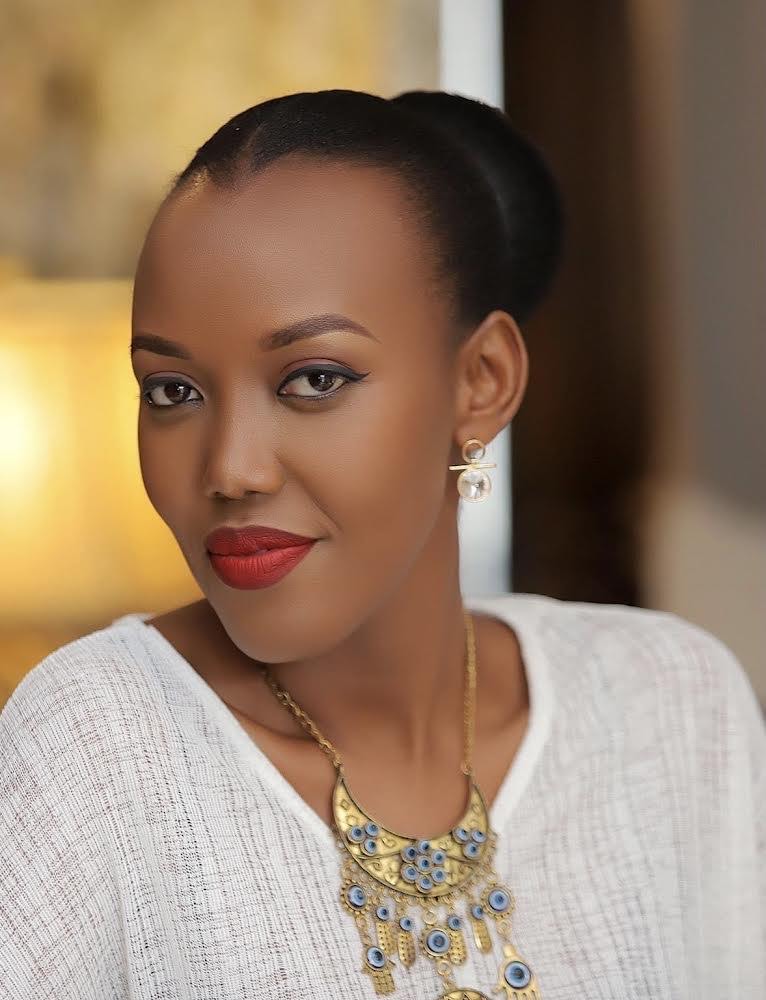
Your platform features series on trauma, motherhood, inspiration, and more. How do you curate and balance such deeply personal stories with broader wellness themes?
I listen for the rhythm between vulnerability and resilience. Every story has both. We talk about trauma, yes, but also about joy, faith, and creativity. Wellness is not one-dimensional, it’s layered, just like African womanhood.
On social media, stories are often curated for aesthetics, only the glossy parts. At Masozera Africa, we curate wholeness: the grief, the laughter, the resilience. That’s what makes our storytelling different.
Curation, for us, is stewardship. We don’t choose stories because they are trending; We choose them because they carry medicine for the community.
You’ve emphasized holistic wellness, mind, body, soul, for African women. What does a holistic healer’s journey look like to you personally, and how do you model that for your community?
For me, it looks like telling the truth about my own struggles with anxiety, depression, insomnia, and unhealthy copying mechanisms… while also showing that healing is possible. I don’t present perfection. I present process. That, to me, is the most honest model of holistic wellness; a journey, not a performance.
In the West, wellness is often packaged as a polished finish line. For me, it has looked like on a call crying on the bathroom or kitchen floor, then choosing therapy or prayer the next day. That honesty, the real, messy in-between… is what I want women to see.
Through Masozera Africa, I model that by being honest about my own rhythms: therapy, prayer, silence, dance, and storytelling. Healing is not an image; it is a lifestyle of returning to balance.
Masozera Africa recently pledged mentorship in finance, marketing, and personal development for women graduates of Rwanda’s Women in Business Initiative. Why did you choose those areas, and what outcomes are you hoping for?
Because wellness without economic empowerment is incomplete. Women cannot heal fully if they are financially vulnerable. Finance, marketing, and personal development are the backbone of independence. My hope is that women not only build businesses but build confidence, networks, and futures they own.
A meditation app will not help a woman who can’t pay rent. By mentoring in these areas, we’re saying: your financial stability is part of your healing. It’s not wellness or empowerment; it’s both!
Looking ahead to the next five to ten years, what legacy do you envision for Masozera Africa, and for the women who find strength, healing, and community through your work?
In ten years, I want Masozera Africa to be more than an organization, I want it to be a system, a rhythm, a remembered way of healing. A digital sanctuary, yes, but also community hubs across the continent where women gather to heal, to build, to lead. I want it to be a place where African women reclaim wellness as their birthright, and where leadership emerges not from wounds, but from wholeness.
Too many legacies are measured in buildings or bank accounts. Mine will be measured in women who no longer apologize for existing, who have healed enough to dream audaciously.
Wellness is often portrayed as imported; my vision flips that narrative. Africa is not catching up; we are teaching the world what it means to belong, to heal, and to thrive.
The legacy I envision is simple, yet profound: a continent where to be well is African, and when African women are well, the world is too.