What really happens when the weight of home expectations meets a woman’s leadership ambitions?
Can both truly thrive side by side, or does one eventually give way?
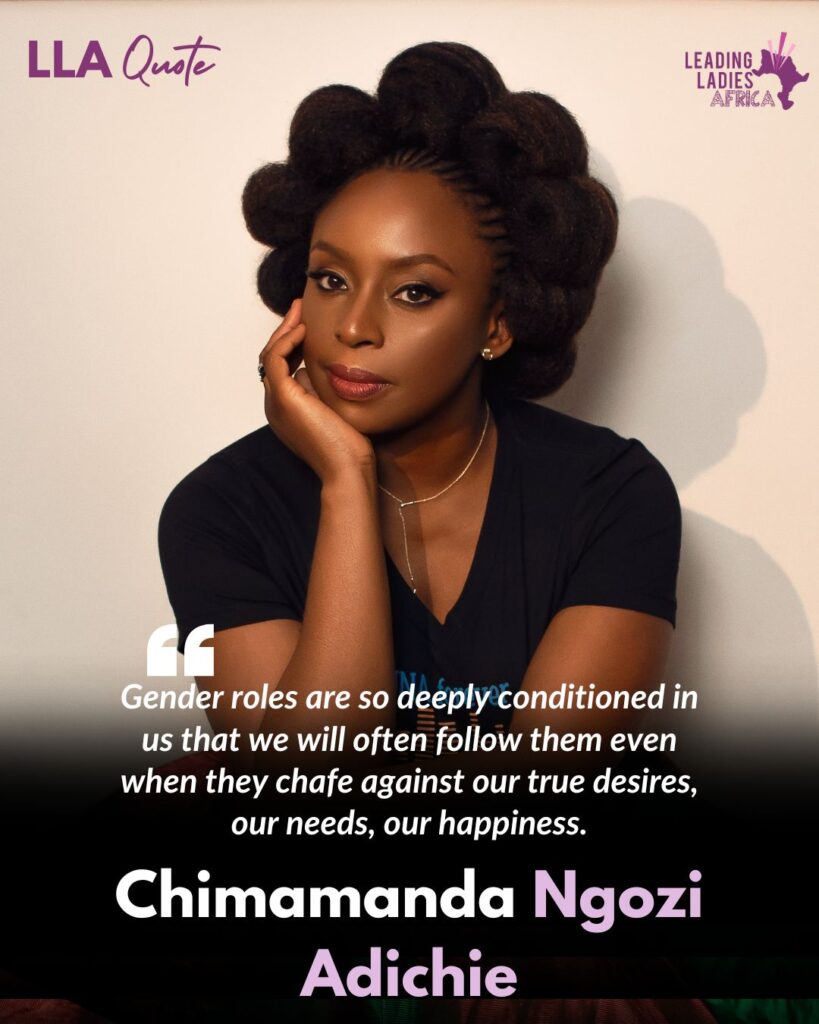
Chimamanda Ngozi Adichie once put it beautifully (and bluntly):
“Gender roles are so deeply conditioned in us that we will often follow them even when they chafe against our true desires, our needs, our happiness.”
And if we’re honest, many women know this truth first-hand. Stepping into leadership doesn’t mean society’s expectations fade. Often, they grow louder.
In many African homes, women are the ones who make sure everything runs.
From meal plans to school runs, family events to remembering who’s allergic to what, the “mental load” is always there.
It’s not just the physical tasks, but the expectation to be ever-available, endlessly nurturing, and, somehow, flawless at home and brilliant at work.
What that causes is burnout, slowed career growth and sometimes, even stepping back from opportunities you’ve worked years to earn.
Ellen Johnson Sirleaf, Africa’s first elected female head of state, once said:
“The success of any society depends on the full participation of all its citizens, including women.”
And full participation is impossible when the load at home isn’t shared.
When women are told to “do it all,” we all lose. Leadership tables miss out on voices we need. Innovation slows and the gender gap stretches even wider.
What We Can Start Doing
Share the Load at Home — Let’s normalize shared responsibility. Not “helping,” but owning the work together.
Challenge the Scripts — As Adichie urges, question “because you’re a woman” whenever it comes up as an expectation.
Build Supportive Systems — Workplaces must be intentional about flexibility for leaders with caregiving duties.
Champion Each Other — Women in leadership can model balance and use their platforms to push for it.
When women are freed from the weight of unrealistic domestic expectations, they don’t just rise in leadership, they transform it. The question is not whether women can balance home and leadership; it’s whether society is ready to share the load so they don’t have to do it all alone.
The path forward demands a cultural shift, one where leadership potential isn’t dimmed by invisible labour, and where a woman’s ambitions are supported, not scrutinized. Because when women lead without constraint, everyone wins.
So I’ll leave you with this: What will it take for us to create a world where women can lead fully, without carrying a double burden?